The Prado Museum began 2026 by dedicating the third edition of its itinerary to Isabel de Farnesio, and her role as patron. The Prado in feminine; In October he paid tribute to Christina of Sweden, on the occasion of her fourth centenary, reviewing her sculpture collections and providing her with a publication; and culminates this year by hosting an overwhelming exhibition about Mariana of Austria. This time, however, the exhibition does not emphasize its sponsorship work, but rather its constant appearance in images that contributed to disseminating and promoting the power of the Hispanic monarchy in one of its most complex stages.
Mariana, second wife of Philip IV, mother of Charles II and diffuse presence, and therefore very attractive, in the mirror on the back wall of Las Meninaswas the woman with the most power among the Spanish queens between Isabel the Catholic and Isabel II, as Miguel Falomir stressed yesterday, and that circumstance and the very high number of portraits she starred in, in different typologies and with rich symbolism, are more than enough reasons to grant her an exhibition that represents an exceptional opportunity to understand the dynamics of court portraiture and, furthermore, those that operated in Velázquez’s workshop. As queen, queen regent or queen mother, we will find her figure in a greater volume of compositions than those dedicated to her father-in-law, Philip III, or to her husband; many of them have been restored for the occasion.
Noelia García Pérez, responsible for the three editions scheduled so far of The Prado in femininecurate a journey aimed at shedding light on the figure of a queen not very present as a subject in historiography until recent times. When she assumed power from the death of Philip IV, to whom she was married at the age of thirteen, until her son’s coming of age, she had to face an economic situation close to bankruptcy, the weakness of the borders and tensions with France and Portugal, and the opposition of Juan José of Austria, the out-of-wedlock son of the previous monarch who favored the uprising in Aragon and Catalonia and fueled criticism of the queen and her supporters, Juan Everardo Nithard and Fernando de Valenzuela. Adverse reactions that permeated public opinion and eroded her authority: her foreign origin tended to be accentuated (despite being the daughter of the very Spanish María Ana de Austria, in fact sister of Philip IV) and her supposed dubious morality, due to her close relationship with Valenzuela. Current studies, as we said, have offered a more balanced view of his personality and his government and, in part, this same sample is the result of them.
The portraits that we will see now in the Prado often represent the answer real to that climate of mistrust and an attempt to underline his authority through allegories and symbols: a visual legacy of extraordinary richness. Our last queen belonging by birth to the House of Austria was taken to canvas, again and again, from her early childhood until her death and a good part of these canvases are part of the Prado collections. Of the hundred or so pieces that make up this project (real likenesses, mostly female), approximately half are treasured by the Madrid museum and the rest correspond to loans, highlighting those from the Vienna Kunsthistorisches Museum.
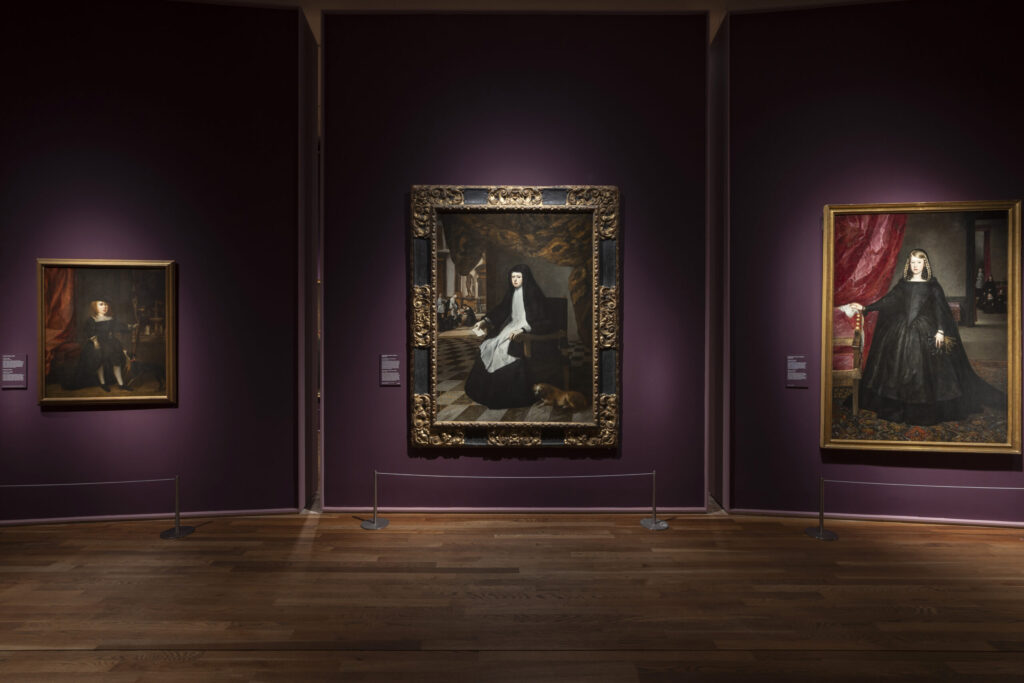
Image of the “Mariana of Austria” exhibition rooms. Photography: © Museo Nacional del Prado
The exhibition is organized into four chronological sections, the first corresponding to her transition from archduchess to queen. At first her marriage to Prince Baltasar Carlos was negotiated, but given his early death her marriage was finally arranged with his father, Philip IV, widower of Isabel de Borbón and, at the time, her uncle, three decades older. The young age of Mariana of Austria, therefore, could be an obstacle to guaranteeing the succession, hence the portraits that were made of her at that time – Frans Luycks was the author of many of them – present her with a more mature appearance than her real age. So much so that there were popular warnings to the king to Don’t be fooled by the canvasessince the damage could affect the entire monarchy.
After marrying by proxy, Mariana traveled to Madrid, passing through a dozen cities that celebrated the wedding with public celebrations and ephemeral architecture. That joy was very evident in Pavia and Milan, then governed by the Spanish monarchy; In the latter, a triumphal arch was designed that has been recreated in the Prado and the completion of the façade of its Duomo, still unfinished, was even simulated. That ceremony, in short, brought hope of prosperity and peace and also that of an heir; It would be held in Navalcarnero in 1649 and, after it, the new queen settled in El Escorial.
His time as a consort is the focus of the second section of the exhibition. Velázquez was in Italy at that time, so it was Martínez del Mazo who took the first portraits of Mariana, already married. One of them, now in the Prado, comes from the Kunsthistorisches because it was sent as a gift to the Court of Vienna, to be received by Ferdinand III, his father.
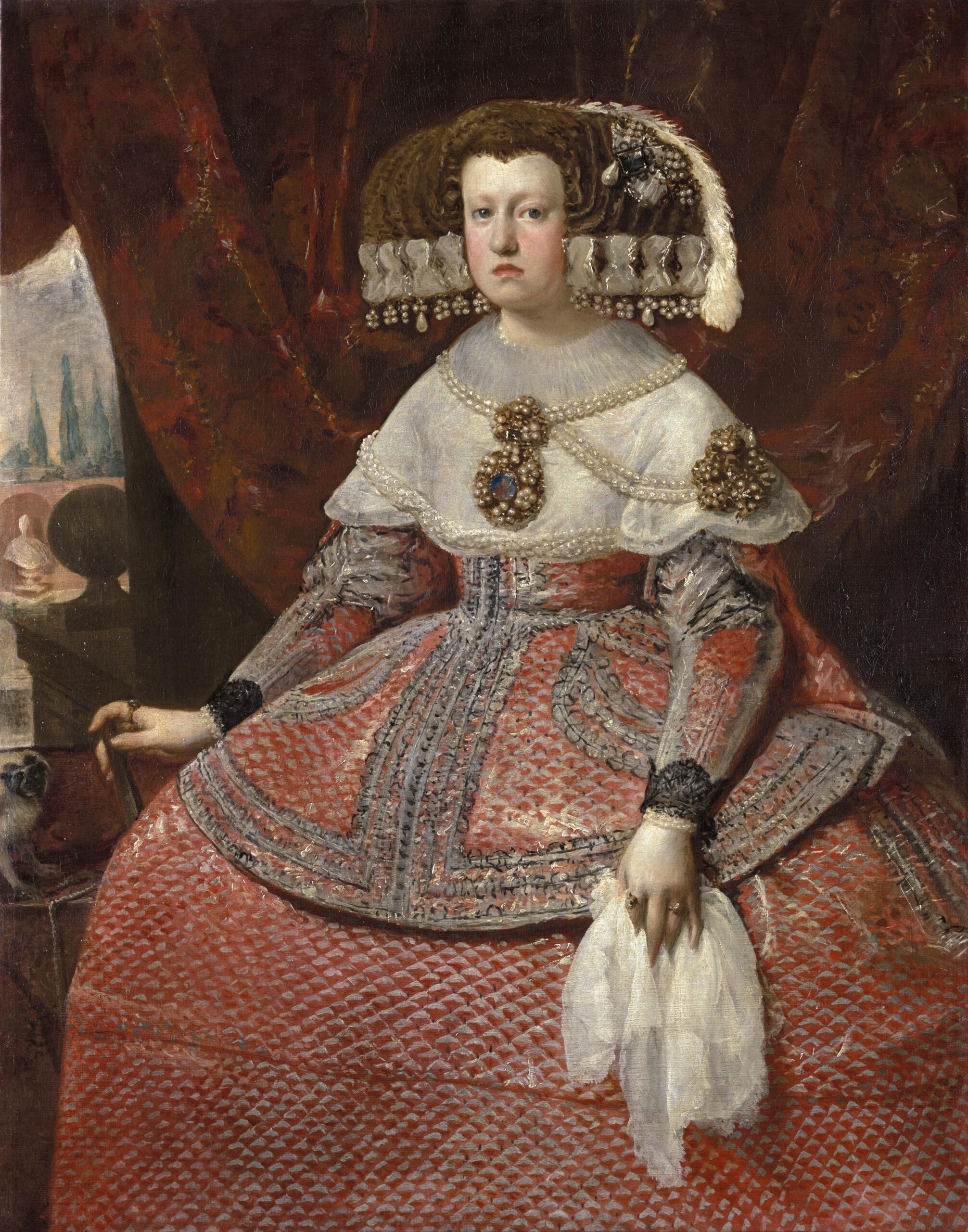
Attributed to Juan Bautista Martínez del Mazo. Mariana of Austria in red dressaround 1650. Kunsthistorisches Museum, Gemäldegalerie, Vienna
However, the canonical portrait model of the queen at this time would end up being configured by Velázquez himself upon her arrival and would be widely reproduced: standing and wearing a child’s guard, she stretches her right arm towards the back of an armchair while holding a handkerchief in her left hand, and in the background there is a table clock. Three versions of it are preserved, two of them in the exhibition; It must be remembered that the high demand for portraits of the royal family and the high diffusion of their models led to the multiplication of images of different formats and qualities. They were normally workshop copies that affect the fortunes of those schemes.
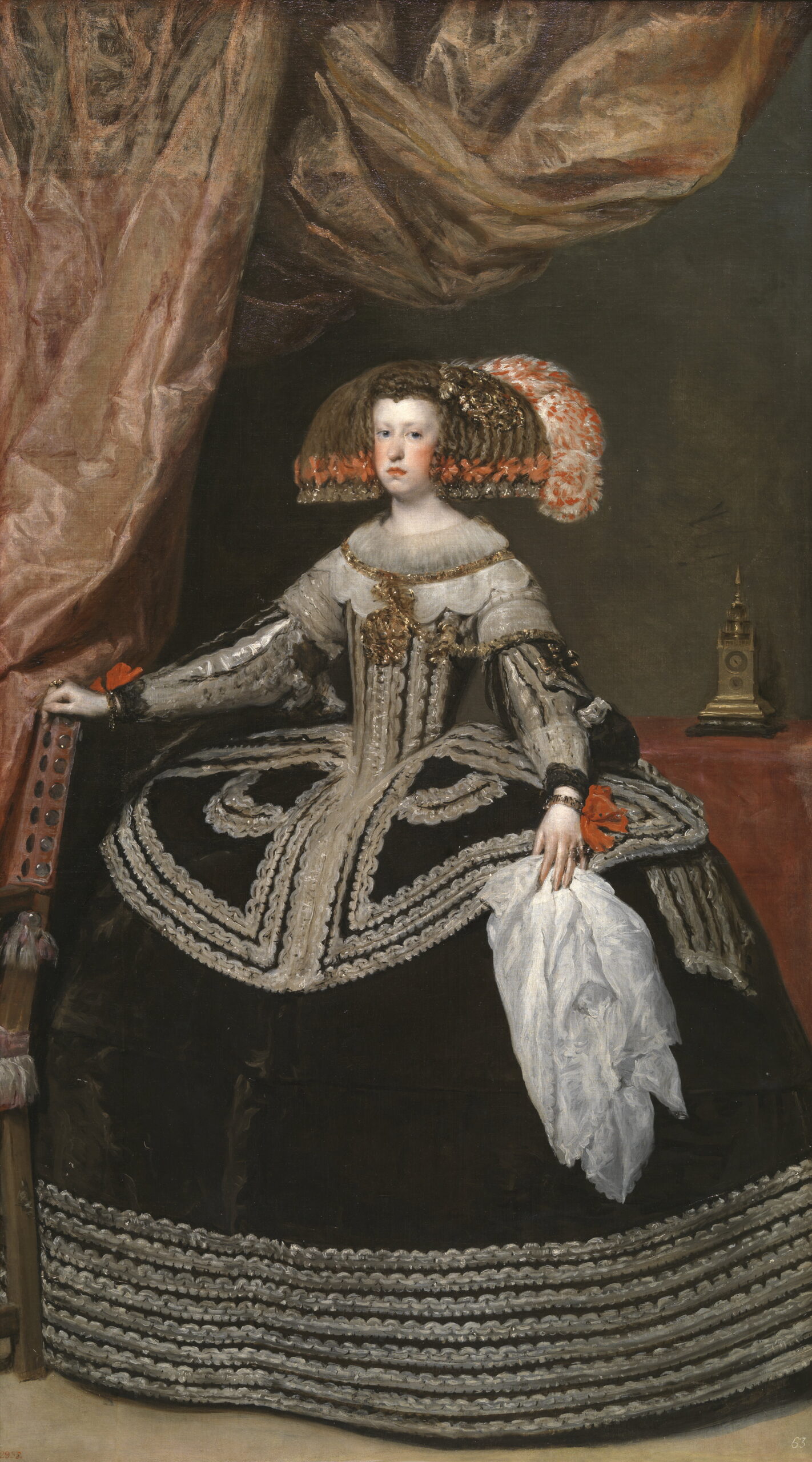
Velazquez. Queen Mariana of Austria1652-1653. National Prado Museum
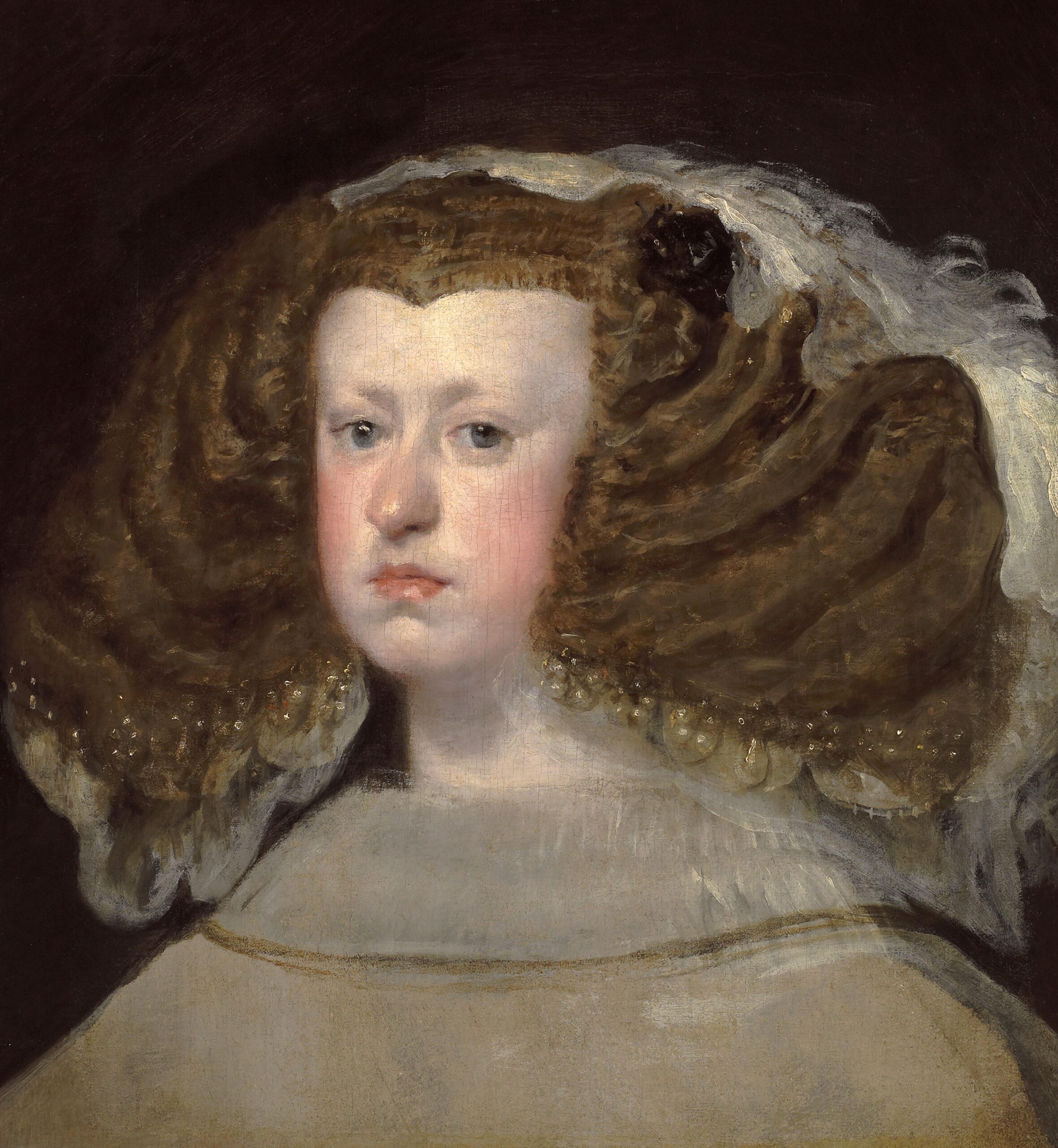
Velázquez also painted another very elegant portrait, smaller in size and focused on the face and hairstyle, in which the clothing and ornaments were more sketched. It would be equally replicated in other paintings and sculptures; Sometimes the typologies from both sources were mixed, also in terms of clothing, essential in the construction of the image of a queen.
Denia was the first place where she set foot on the peninsula and we know that a tailor was already waiting for her there; Not without reluctance on the part of his Austrian family, he wore Spanish fashion, including the aforementioned infantry pants. For this exhibition, Lorenzo Caprile’s workshop has made reproductions of two of her dresses, focusing on their interior structure.
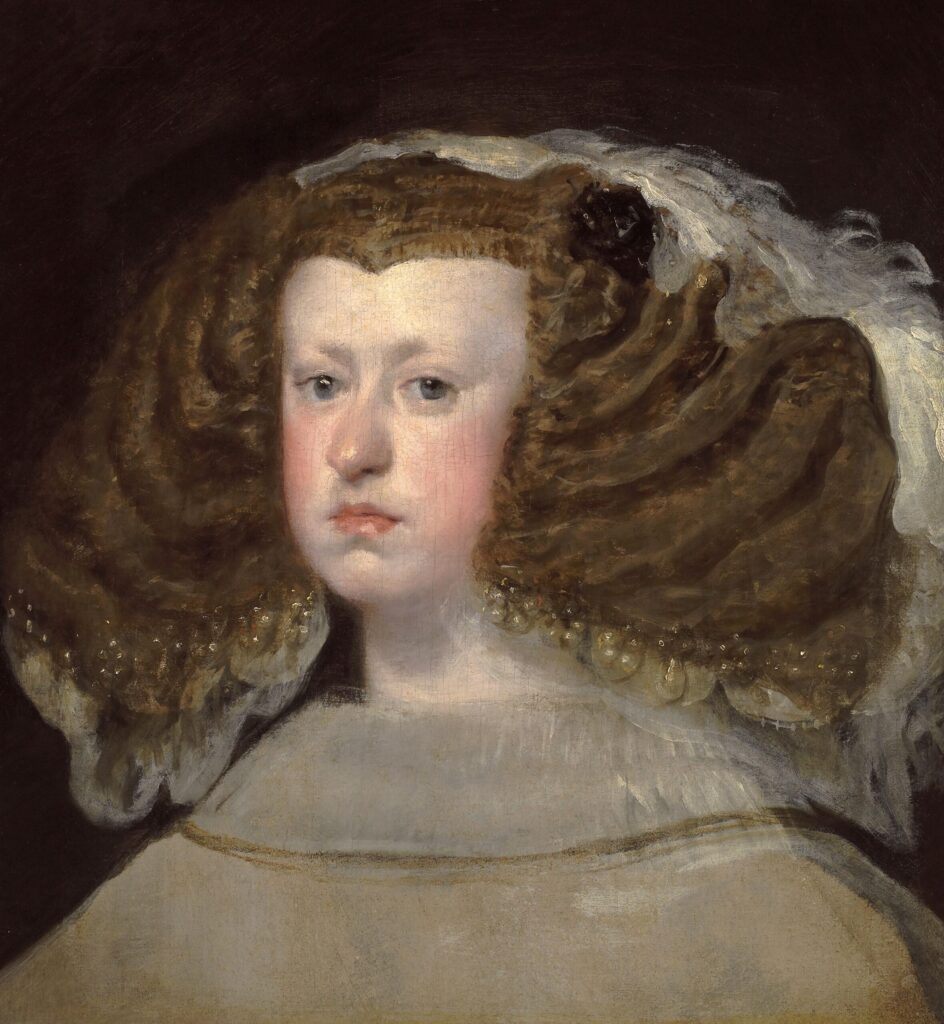
Velazquez. Queen Marianacirca 1656. Meadows Museum, SMU, Dallas
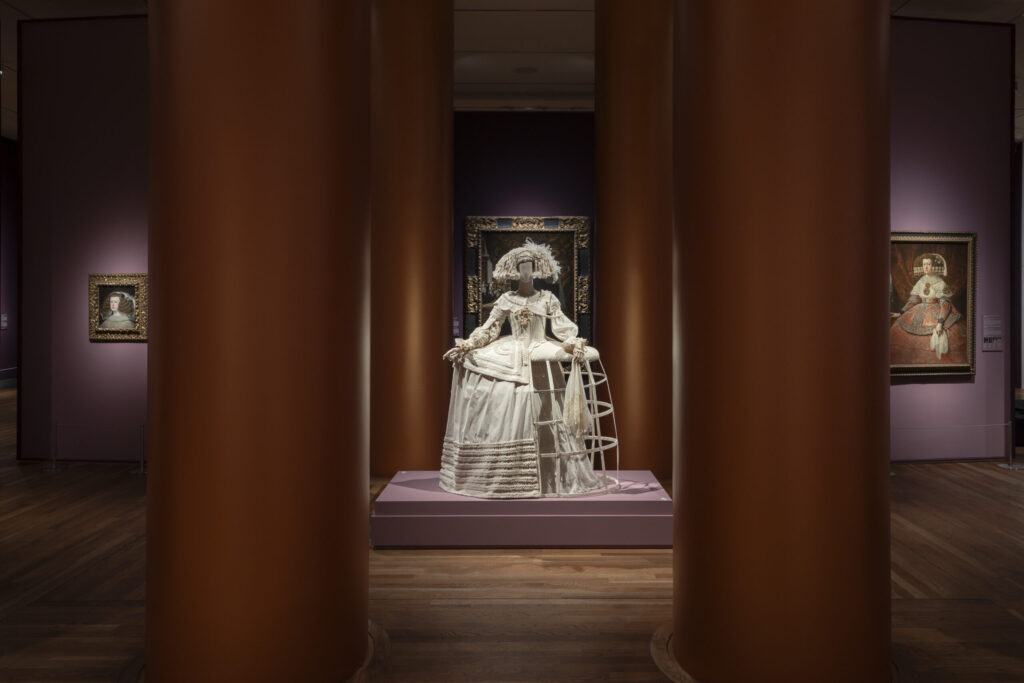
Image of the “Mariana of Austria” exhibition rooms. Photography: © Museo Nacional del Prado
When Philip IV died and Mariana of Austria became regent – we enter a third section here – the image of the queen was radically transformed. As a widow, she would henceforth wear the well-known black and white nun’s dress, which evokes mourning, fidelity and virtue, but also luxury and elegance; with him she would be represented until the end of her days.
From the National Gallery comes one of the most attractive portraits of her by Martínez del Mazo, in turn copied several times: it shows a virtuous, legitimized and capable monarch, attending to conventions already present in portraits of other women of the House of Austria and also to then-modern references. Her ring indicates commitment; a little dog alludes, as always, to fidelity; The figure of Diana the huntress emphasizes her moral rectitude and the seated typology is an emblem of power.
The painter reinforced the authority that he wanted to transmit – and that, unlike power per se, cannot be inherited, but must be earned – by placing it in the Hall of Mirrors, where Philip IV had received the official dignitaries.
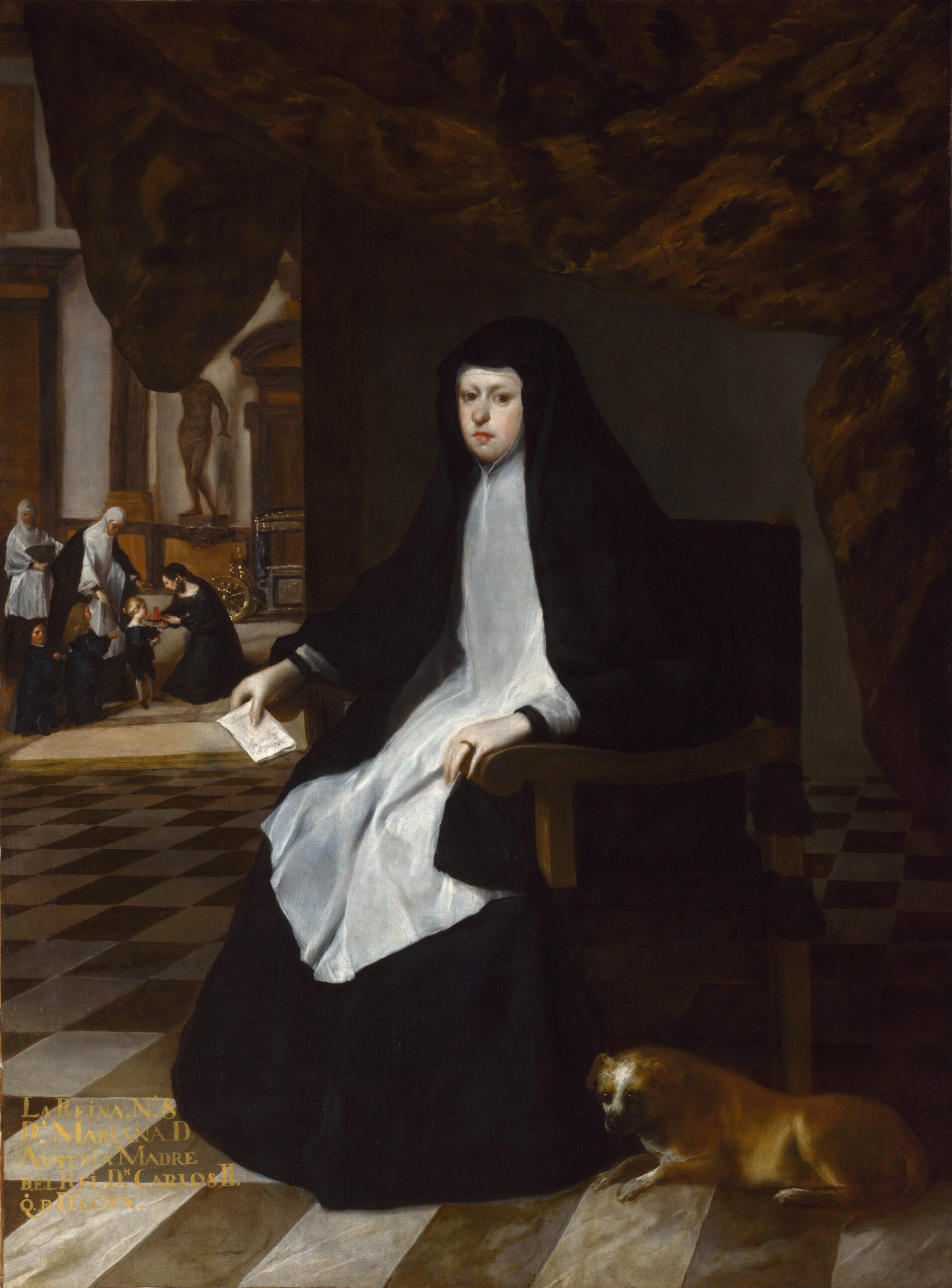
Juan Bautista Martínez del Mazo. Queen Mariana of Austria in mourning1666. National Gallery, London
Another very eloquent and rarer typology in images of power is embodied in the exhibition by a double portrait of Mariana and Charles II as a child (he had ownership of the reign and she ruled in his name). It has arrived from Prague, its authorship is unknown – it is believed to be double – and it places mother and son inside a medallion held by the figure of Hispania and contemplated by the one who symbolizes religion, who looks at them with nostalgia. Philip IV had probably just died.
We will also contemplate in the Prado abundant royal iconography (medallions, coins) at the service of the transmission of power of both – the rumors founded around the poor health of Charles II did not take long to arrive – and some portraits of the child king whose ultimate objective was to show him strong and capable. One of them, equestrian and by Luca Giordano, does not contain symbols or allegories, but responds to the imagination: he appears on horseback and in a corvette position when we know that he could not walk. His model was Velázquez’s Baltasar Carlos, also an equestrian.
In any case, the most eloquent images of the regency of Mariana of Austria were given to us by Carreño de Miranda in two portraits of mother and son in that Hall of Mirrors: she ruled, while he learned to be king. In both compositions we must emphasize the care in the treatment of space, with a Velazqueño echo, and the presence of hanging paintings, which have been brought to this exhibition and reinforce the desired message of virtue, legitimacy and justice: we refer to Judith and Holofernes by Tintoretto, Felipe II offering the infant Don Fernando to heaven and Ticio by Titian and an equestrian portrait of Philip IV, by Martínez del Mazo based on a model by Rubens.
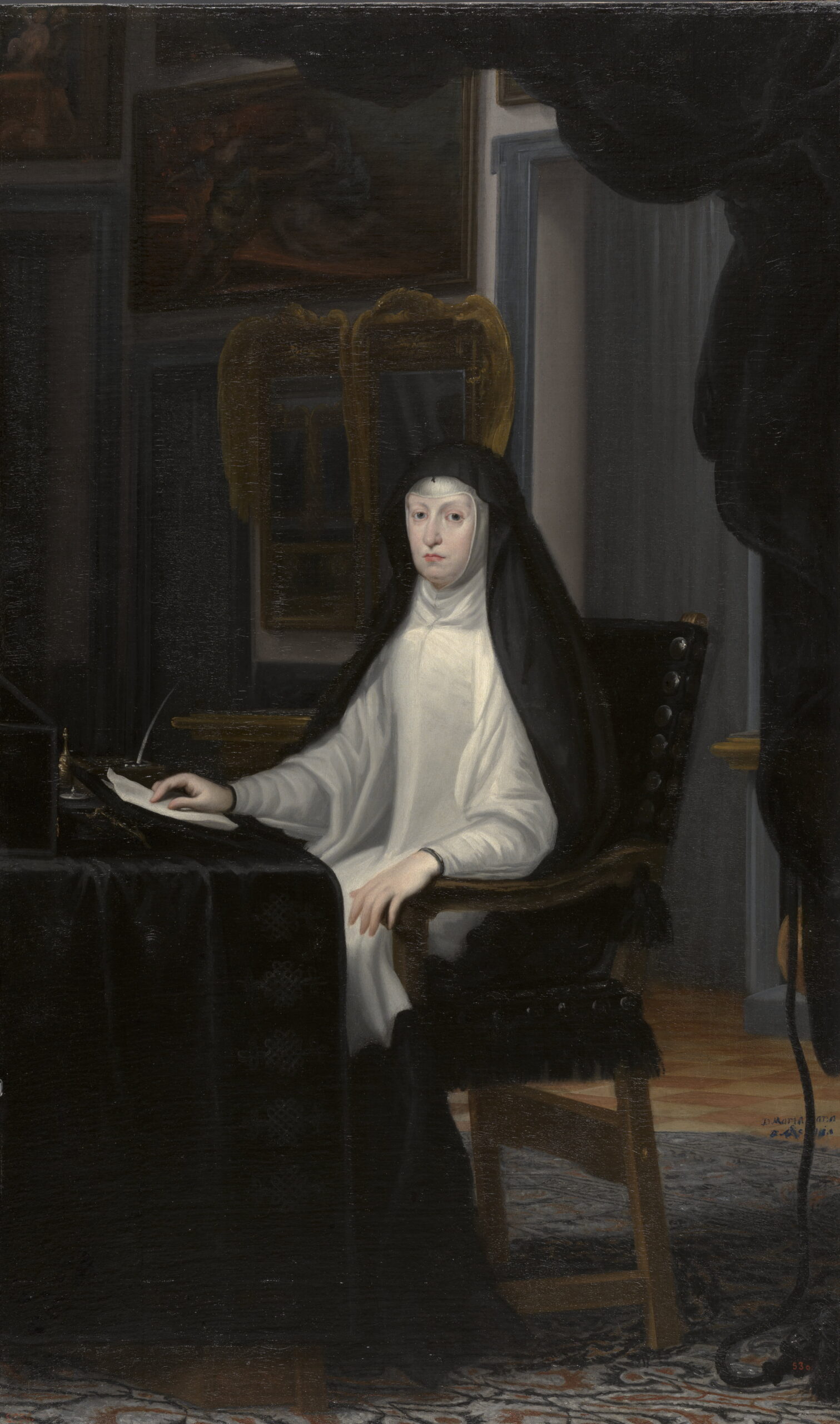
Juan Carreño de Miranda. Mariana of Austria, queen regentaround 1671. Museo Nacional del Prado
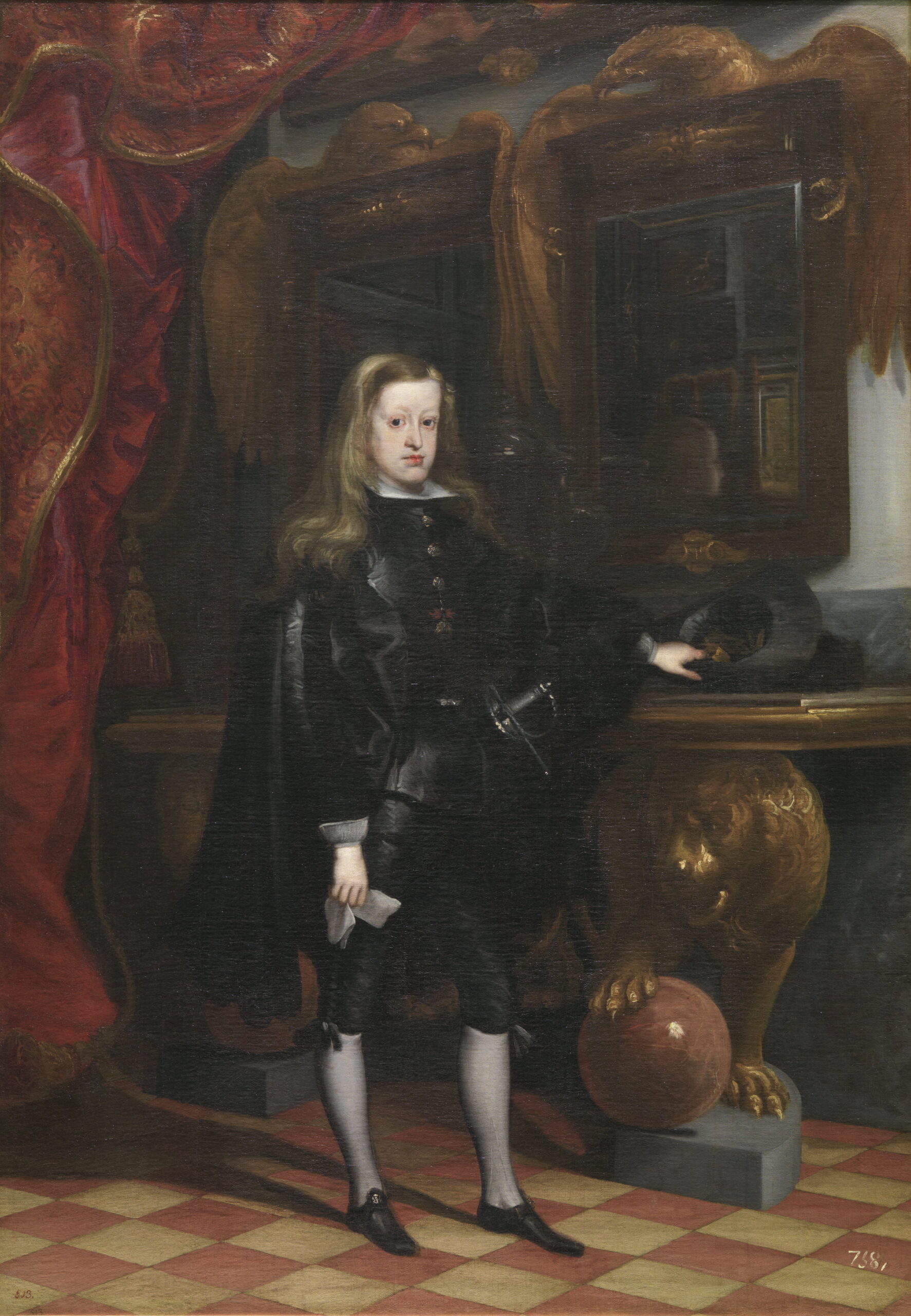
Juan Carreño de Miranda. Charles IIaround 1675. Museo Nacional del Prado
The last chapter of the tour is opened by two portraits of Charles II and Mariana of Austria, again by Carreño de Miranda and arriving from Rohrau Castle: he is placed in the Hall of Mirrors, as grand master of the Order of the Golden Fleece; her, in an environment similar to the one in which Velázquez painted her for the first time.
Confined to the Alcázar of Toledo between 1677 and 1679 for managing to prevail at the court of Juan José of Austria, upon his death she returned to Madrid, where in a composition in the Prado we will see her on the platform of an auto-da-fe, along with her son and her daughter-in-law María Luisa de Orleans, his first wife. She took positions in the face of Charles II’s two marriages and also in the face of the foreseeable succession conflict – in favor, unsuccessfully, of José Ferdinand of Bavaria -: her numerous portraits from that time did not present her exercising royal responsibilities, but neither did they devoid of political relevance. The devotional book gained ground.
The last room of the exhibition, dazzling, gives us a display of royal female faces from the Catholic queen to Mariana herself, a gallery of queens, regents and governors who wove a tradition of power and devotion. To his image, and to the consolidation of the iconography of the Hispanic monarchy, Tiziano, Antonio Moro, Pantoja de la Cruz, Sánchez Coello, Sofonisba Anguissola, Van Dyck and Claudio Coello contributed; also to establish an eloquent narrative about feminine power in the Modern Age.
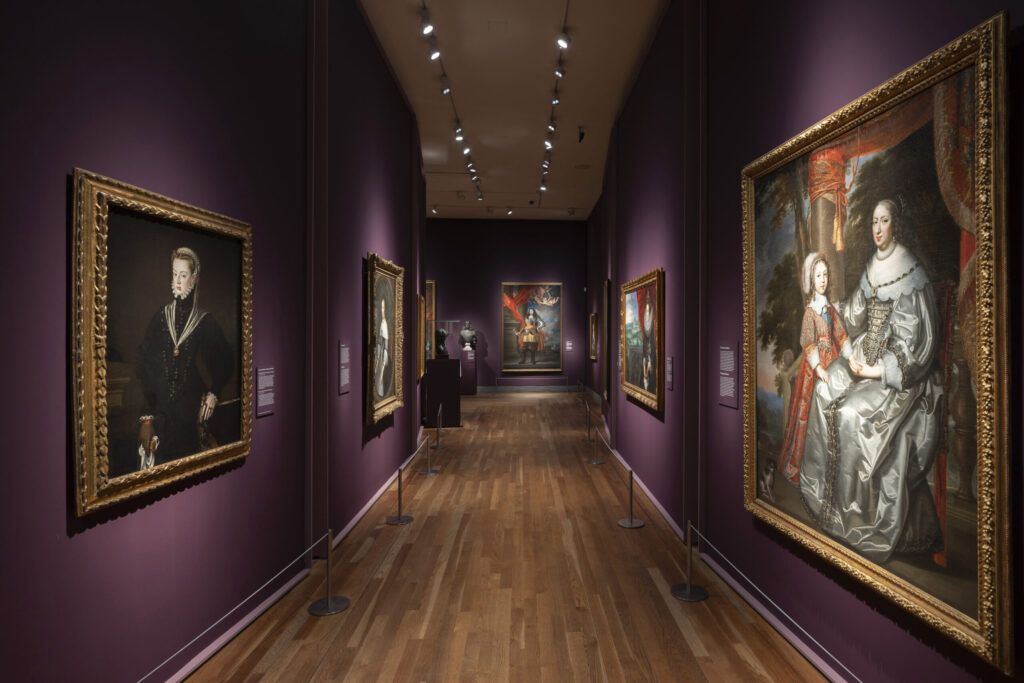
Image of the “Mariana of Austria” exhibition rooms. Photography: © Museo Nacional del Prado
Mariana of Austria
NATIONAL PRADO MUSEUM
Paseo del Prado, s/n
Madrid
From November 26, 2026 to March 28, 2027