Barcelona,
Literature returns to the exhibition activity of the Center de Cultura Contemporània of Barcelona – it has always been present in its parallel programming – after the commemoration, in 2013, of the anniversary of the death of Roberto Bolaño.
From today we can visit there, under the curation of the essayist Neus Penalba, the exhibition “Rodoreda, a forest”, which vindicates the current validity of his texts in thematic and formal terms and highlights the many dualities that aroused his novels, in which reality and fantasy, cruelty and candidness fit.
Precisely the themes most addressed in her writings – innocence, desire, suicide, uprooting, ridicule or metaphysics – structure the route of an exhibition that also reminds us that many began to read the Barcelonan after the reissue, eight years ago, of her posthumous novel. Death and springin which, again in a very refined way, he delved into intimate darkness.
It is common for its characters to spy, to desire, to witness deaths or drownings, to transform… and also to do so among botanical tropes, which is why the space occupied by the exhibition has been designed as a forest whose rooms are organically related. We will learn about her literary and vital roots, her experience of exile, the backbone that the shock of war was for her, the desire to branch out her references until reaching fundamental writers, painters and filmmakers, the highest cups-levels of her literature and, finally, the seeds that she came to deposit. The latter will be pieces created for the occasion by visual artists who have been inspired by their stories: we are talking about painting, drawing, engraving, sculpture, photography, installations, documents and audiovisuals.
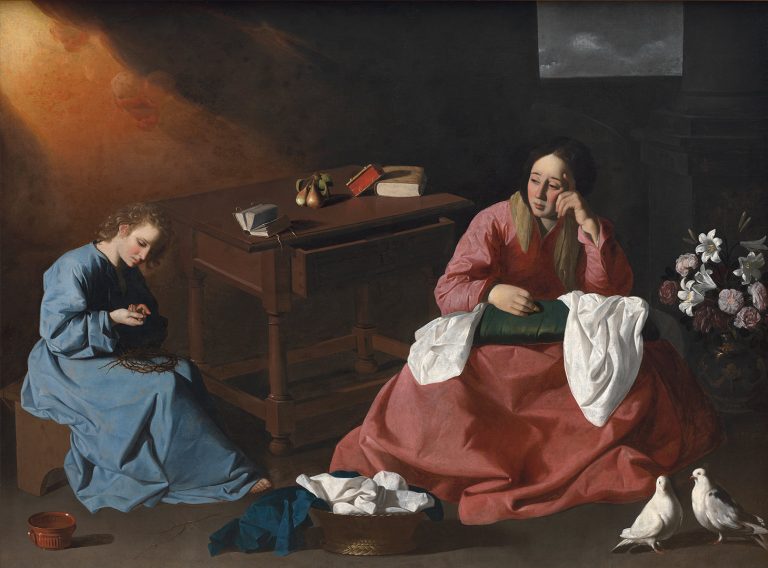
Before, room by room, we will be able to contemplate works by essential authors of the 20th century that connect implicitly or explicitly with the concerns of the creator of Diamond Squaresuch as Remedios Varo, Pina Bausch, Marc Chagall, Leonora Carrington, Picasso, Suzanne Valadon, Ramón Casas, Fina Miralles, Joan Ponç, Tura Sanglas, Dora Maar, Toni Catany or Man Ray.
In recent years, there has been a tendency to approach Rodoreda’s work from two contradictory approaches: the one that places her, almost perennially, in an innocent kindergarten and the one that turns her into a writer. gore attached to forests of terror. This project aims to invite us to overcome these labels and understand their work from the complexity, attending to the ambiguities that make balance possible.
The presence of nature in her stories and novels not only alludes to a lost and mythologized children’s paradise (nor, of course, to the love of a sensitive author for flowers), but to the first stage of the most turbulent human emotions, those that the assembled plastic artists have also dealt with.
The confusion, in any case, arises from the tone of the narrators of their stories, often candid regardless of their age: this is the case of Natàlia in Diamond SquareCecilia in Death and spring…The writer emphasized that seeing the world with the eyes of a child, in constant fascination, does not mean being stupid, but quite the opposite. Thus, from the perspective of his innocents, he made his readers reach both the sweet and the terrifying.
Their flowers can be beautiful, but they can also be poisonous, and the forests they bloom next to are not exactly welcoming. Among their children, we will see pathetic or twistedly perverse traits and when they grew up, they were not trying to integrate into the adult world, but rather to reveal its secrets. Ultimately, they will express their distance from a violent environment with which they do not identify through suicide, even conceived on some occasion (Trip to the town of the hanged men) as liberation from an unmanageable desire.
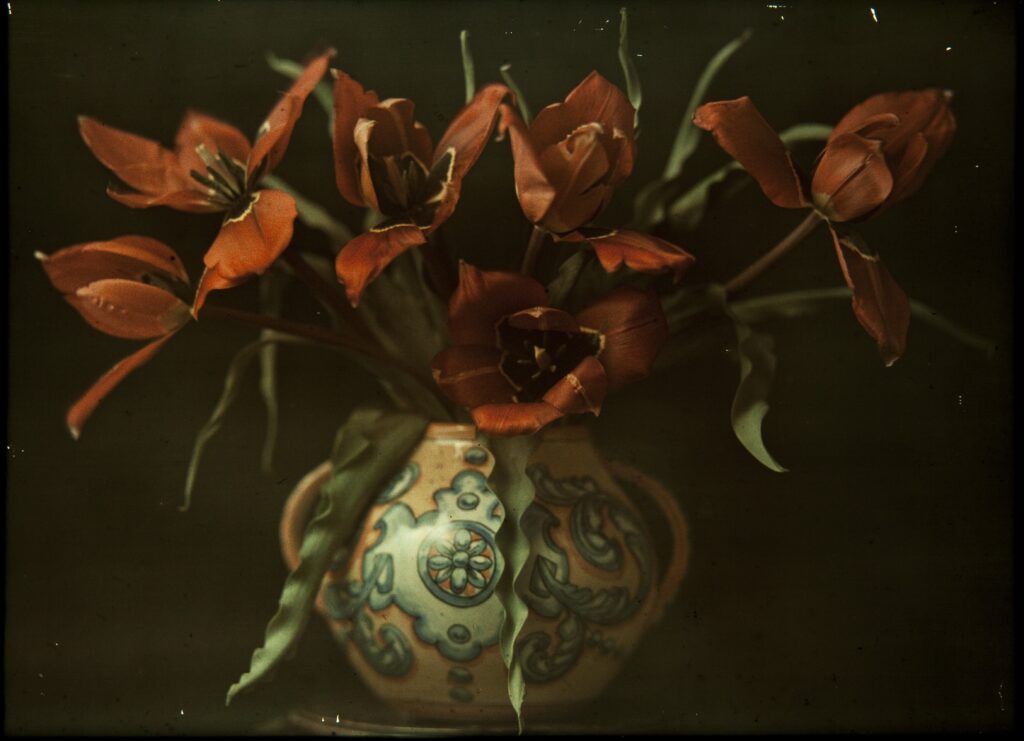
That force, that of desire, is given its own section in the exhibition. Rodoreda expressed the games of domination that could result, but he did so, usually leaving aside sexual stereotypes.
As for the war, it had an obvious mark on her life (she was a refugee), and on her production, but in the latter indirectly. It does not refer to the front, but to those who try to live in the rear. It is inevitable to imagine that the scenes he witnessed in Paris occupied by the Nazis will be reflected in the putrefactive bodies that appear in his pages and that, realistically or allegorically, the conflicts form the backbone of his work. Surely it is Diamond Square her novel that contains more references to the Civil War, but she insisted that she did not want to write chronicles and that, when history appeared in her texts, she did so unconsciously: My historical time interests me in a very relative way. I have lived it too much.
Exiled for three decades, she did not return to Catalonia until after Franco’s death. From Geneva he imagined the houses and streets of Barcelona, which he described again and again, and there he also gave shape to his fantastic novels; In some cases, the city merges with the protagonists of his texts, such as the orphan Cecilia Ce in Camellia Street.
The heart of the exhibition is dedicated to metamorphosis, linked to desires for liberation that lead to profound changes – in line with his own exile. The exiles in his texts are not, in reality, only exiles from the homeland: they are loners, witches, homeless people, deserters, prisoners or misfits in various ways, who draw on literary tradition, but which it tends to merge with nature: water, fire, the moon.
Most of Rodoreda’s novels and many of his stories are narrated in the first person by someone who, after a real or figurative death, recreates his previous life. It is the case of Diamond Square, Death and Spring either The salamanderwhere a woman seems to tell her misfortune from an amphibian body. These are monologues of split voices that narrate from the other side of any type of metamorphosis.
And the last area of the exhibition has to do with the soul and the definitive transformation that awaits us all when it is going to theoretically free itself from its body. Angelic presences, evanescent spirits that only the purest can perceive, and those that wander in sorrow are common in Rodoreda.
He was interested in synthesizing sources: he combined Platonic references to the river Lethe or the myth of the winged chariot, he was inspired by Hindu texts on reincarnation or he narrated the transfer of the soul according to the beliefs of Catalan folklore. In his childhood, spiritualism was not a strange practice and perhaps there was greater evidence that the line that separated reason and madness was not so obvious.
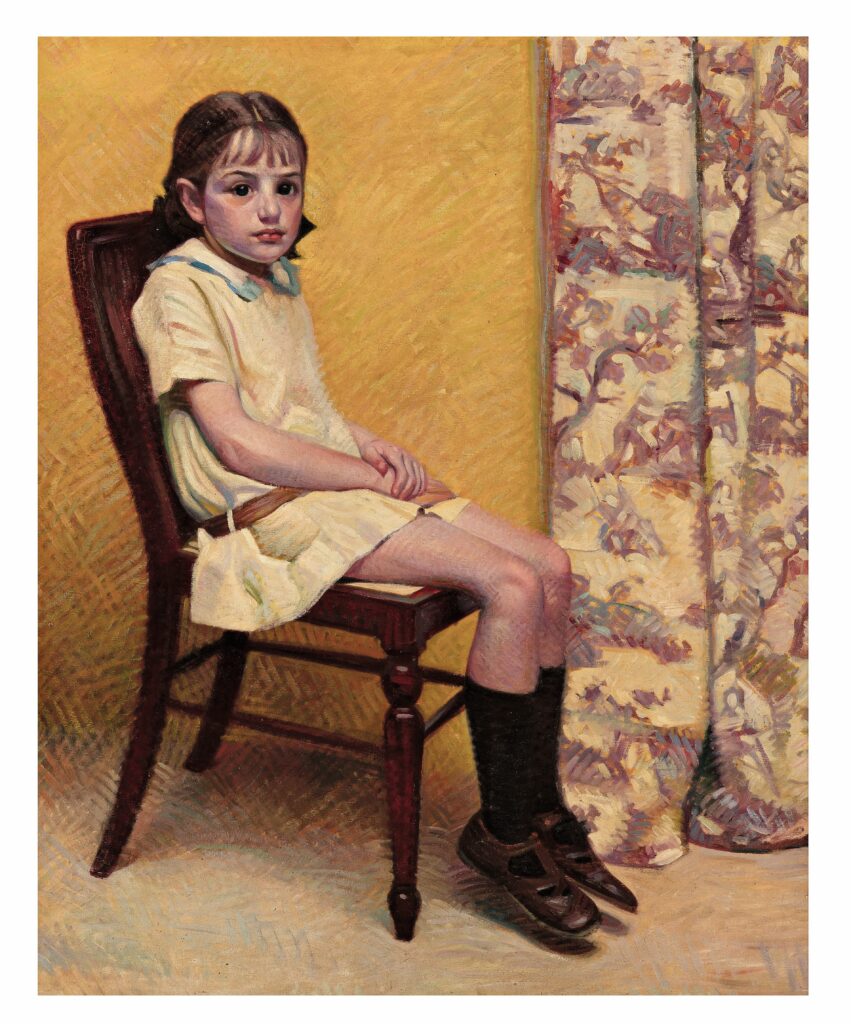
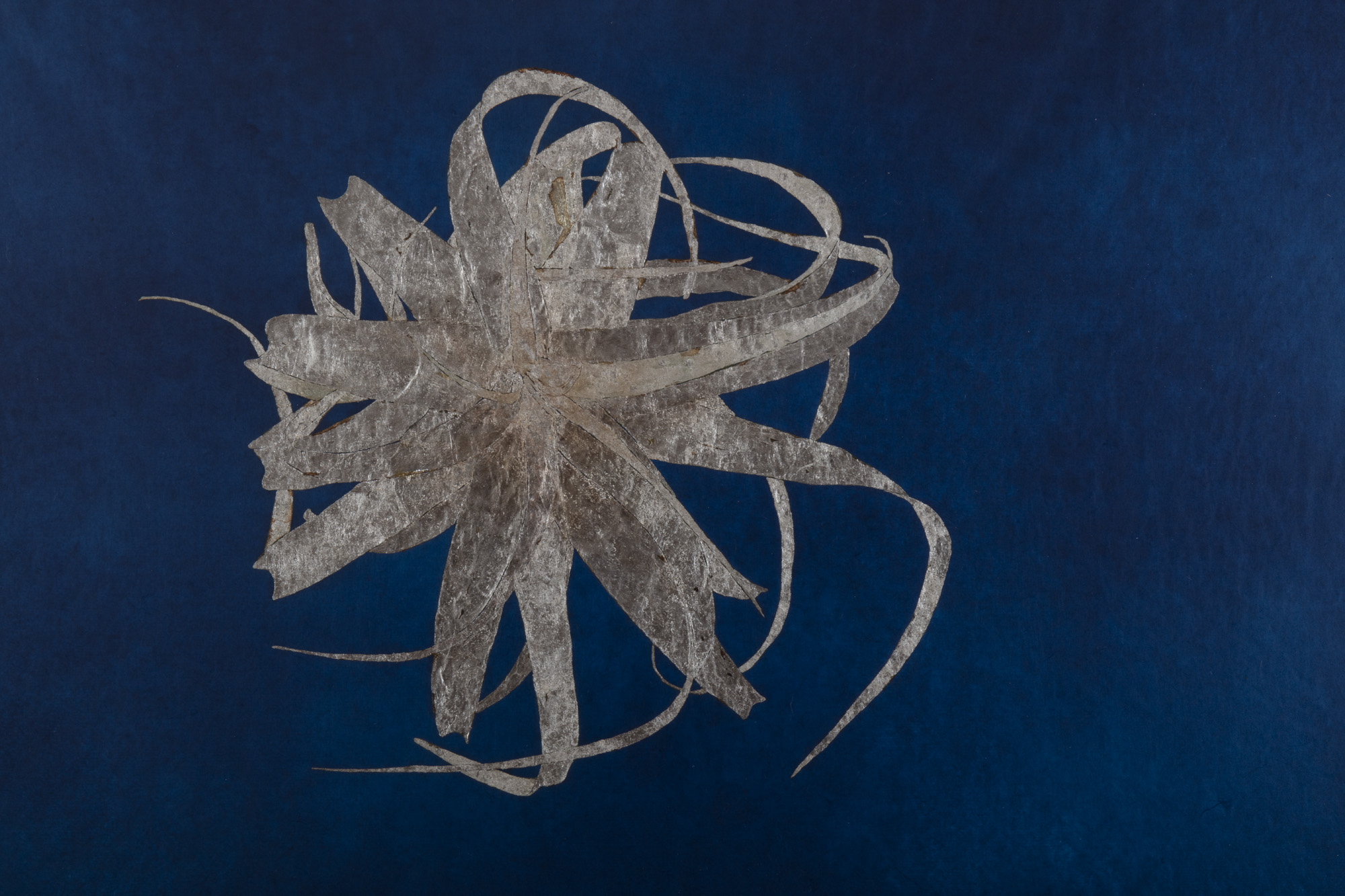
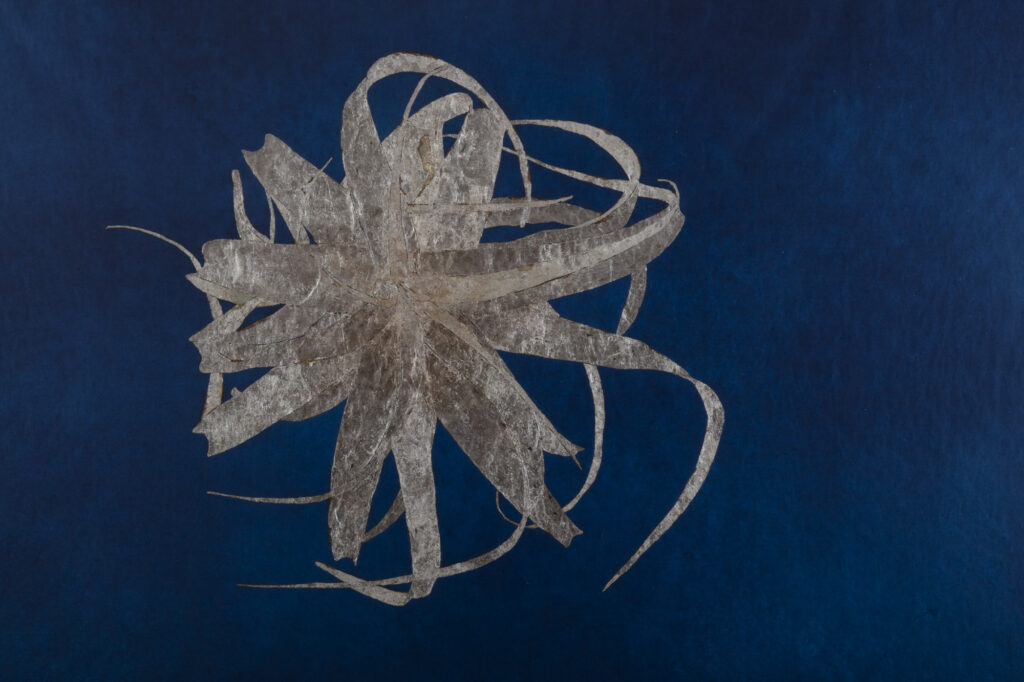
This proposal is completed by the artists who have created newly created works for the exhibition based on Rodoreda’s texts: Oriol Vilapuig, Mar Arza, Èlia Llach, Carlota Subirós and the Cabosanroque collective.
The first has used various media (drawing, photography, video, objects) to compose a mural in the shape of an inverted tree, alluding to the dualities and tensions in this author’s novels between what can be said and what cannot; Arza shows us two paper and cement sculptures that refer to the violence against desire and against individuals present in Death and spring; and Èlia Llach shows us an installation that interweaves photography, painting and sound to underline the impact of historical episodes on individual lives and the darkness that can engulf the attentive reader of the Catalan.
Carlota Subirós, meanwhile, has brought to the CCCB echoes of her theatrical version of The square and the Diamond; and the Cabosanroque bring us a sound installation based on the combination of beauty and horror in some of Rodoreda’s literature.
“Rodoreda, a forest”
BARCELONA CONTEMPORARY CULTURE CENTER. CCCB
C/ Montalegre, 5
Barcelona
From December 5, 2025 to May 25, 2026