The Department of the Interior was instructed, by presidential decree, to install signage around the National Museum of American History (NMAH) aimed at warning of “inaccuracies” conveyed by its exhibitions. The signs should also redirect visitors to other places providing more reliable information on American history.
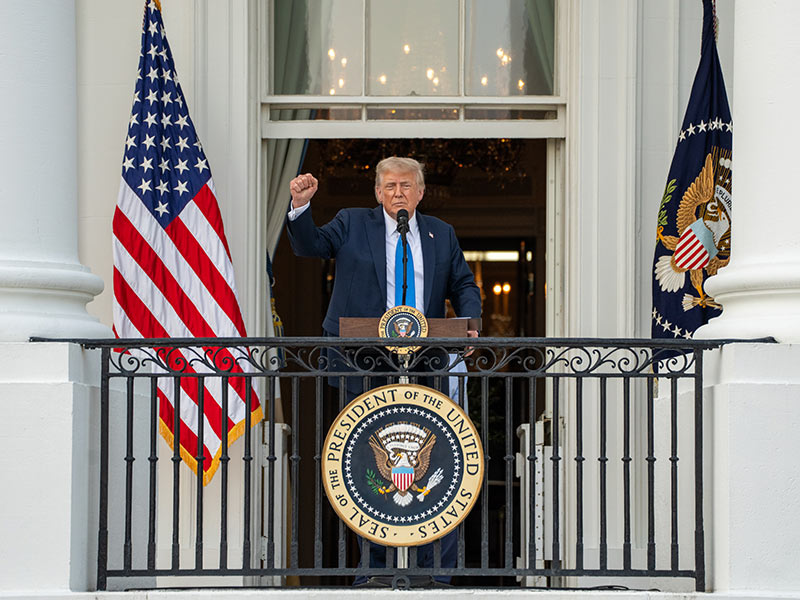
“Saving American History from a Destructive Ideology”this is the objective of the decree, signed on July 24 by the President of the United States. He denounces a partisan attitude and a lack of objectivity on the part of the museum and, more broadly, the Smithsonian Institution. Donald Trump thus inflicts yet another blow on the administration of the largest American cultural and scientific network, which he accuses of politicizing history to the detriment of what he describes as “truth and reason” since the start of his second term.
The decree comes after the Smithsonian Institution came under strong criticism from the White House, which criticized it for not having properly celebrated the 250th anniversary of the Declaration of Independence of the United States, on July 4. It is also a continuation of a report by the Domestic Policy Council (the domestic policy council of the United States) published precisely on this occasion, which attacks in around a hundred pages what is perceived as a “ideological control” exercised by the NMAH. More specifically, the report judges that the museum management uses history as a “political instrument intended to divide, demoralize and discourage our citizens” and denounces a “extreme political activism”. The signage provided for in the decree must also inform visitors of the conclusions of this report.
During two hearings held at Congress earlier this month, NMAH director Anthea Hartig defended her teams’ approach: “When historians talk about rethinking a traditional narrative, that doesn’t mean erasing it, but adding the testimonies, voices, and objects that previous narratives left out, so that more Americans can see themselves in the national story. ». The Smithsonian also benefited from the support of the American Historical Society, the oldest American scholarly society bringing together historians and professors, which praised the work of the institution while denouncing “political interference” exercised by the Trump administration.
Funded 60% by the federal government, the Smithsonian’s cultural establishments seem more exposed to political decisions than private museums, which represent the majority of the American institutional cultural landscape. But the “arm-length” policy by which they are managed, which refers to remote management where the State subsidizes without having any authority over artistic content, is supposed to guarantee the independence of their remarks. This is why the decree does not provide for direct intervention in the programming of the NMAH, but aims to install these signs on sidewalks and spaces managed by the National Park Service, over which the executive power can exercise more direct influence. New Mexico Democratic Congresswoman Melanie Stansbury accused the government of“abuse of political power, motivated by an ideological desire to rewrite American history”.
For the moment, it is not guaranteed that the decree will take effect. Organizations have the right to file a complaint in a federal trial court, and can hope to obtain a temporary suspension of the decree, or even its limitation or its annulment. In January 2025, the executive order freezing federal funding sparked complaints from some states and beneficiary associations, which led to its temporary suspension and, ultimately, its withdrawal by the White House.