Tomorrow the Tate Modern in London inaugurates an anthology dedicated to the vibrant work of Julio Le Parc that has practically coincided with the death of the Argentine artist, on May 30. Organized, until then, with the close collaboration of this author and his workshop, the exhibition will feature more than sixty works representative of his seven decades of career, including interactive installations, captivating light sculptures and geometric abstract paintings.
Arranged in a sinuous route, like a labyrinth, the exhibition wanted to be faithful to the purposes of Le Parc: above all, involve the viewer, using optical effects, sensory experiences and physical interactions so that the public can become aware that their role is not an accessory in the generation of contemporary artistic creation.
Born in Mendoza and graduated from the School of Fine Arts of Buenos Aires, he had Lucio Fontana among his first teachers and became involved in the avant-garde currents developing in the Argentine capital. In 1958, in his thirties, he moved to France and joined the Parisian creative scene of the time, revitalized as the effects of the war began to be overcome.
The London exhibition opens with the series Surfaces and with studies and early paintings in gouache and black and white, created after his arrival in Paris. These modular paintings use repeated geometric shapes and mathematical principles to articulate optical illusions in which patterns appear to change, rotate or flash before our eyes, as in Instability (1959) and Progressive Sequences (1959). Le Parc also experimented with retinal persistence, in pieces in which high-contrast motifs leave a negative impression long enough to be visible against a white background, inviting the viewer to “complete” the work with their own eye movements.
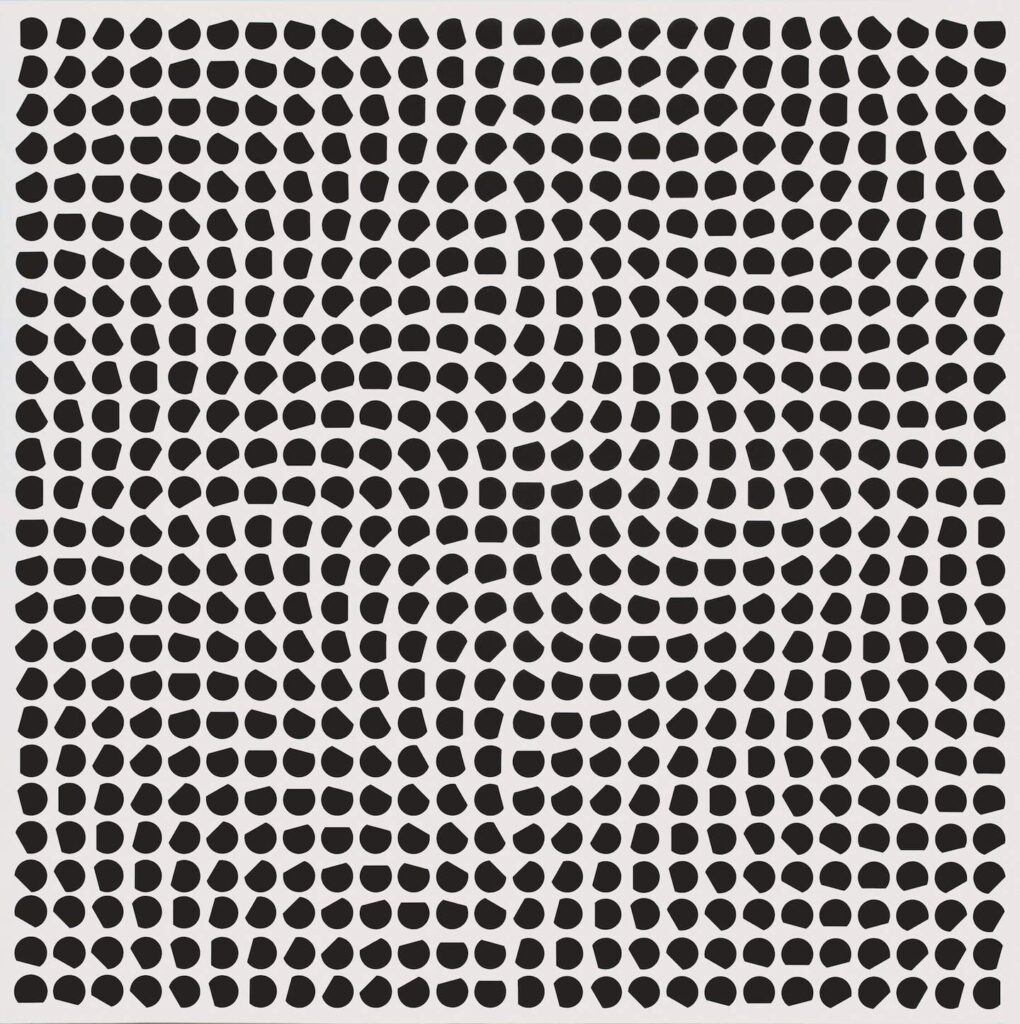
Julio Le Parc. instability, 1959–1991. © ADAGP, Paris and DACS, London 2026
Visitors will also have the opportunity at the Tate to become part of the renowned luminokinetic works of Le Parc. Initially emerging in 1959 as a series of Light Boxes —sculptures that contained sheets of transparent acrylic plastic and light sources to create hypnotizing sequences—these installations soon evolved to become this artist’s key proposal: the Continuous light mobileswhich he presented in 1960.
Spotlights combined with reflective or transparent moving elements give rise to dynamic kaleidoscopic images that transform before the observer: Continuous Light Mobile (1963) features suspended elements that move in response to air currents generated by visitors’ movements, further underscoring the importance of spectators in Le Parc’s practice. Light distortion effects are also explored in Unique Continual Light Cylinder (1962), as well as in the large-scale installation Vibrating Light – Tulles (1968). This aspect of his creation extends beyond the walls of the exhibition, with a new monumental installation, Continual Light Mobile (2026), which has been installed in the foyer of the Tate’s Blavatnik Building and will remain there for the duration of the exhibition.
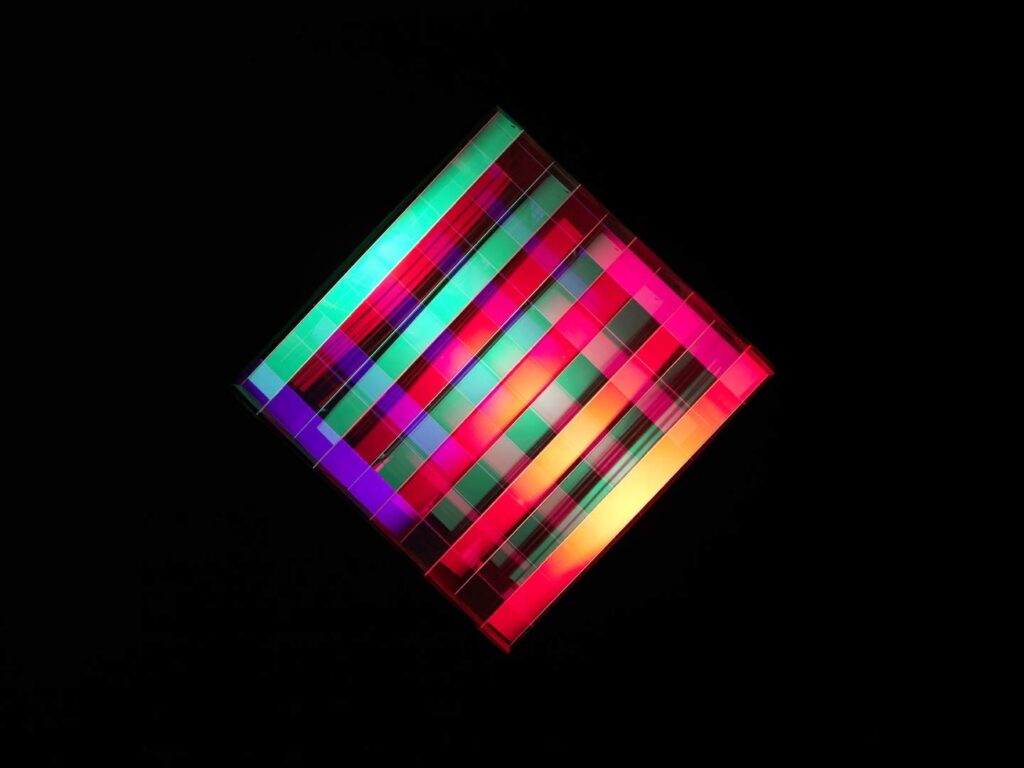
Julio Le Parc. Continual Light Box1963-2013. © ADAGP, Paris and DACS, London 2026
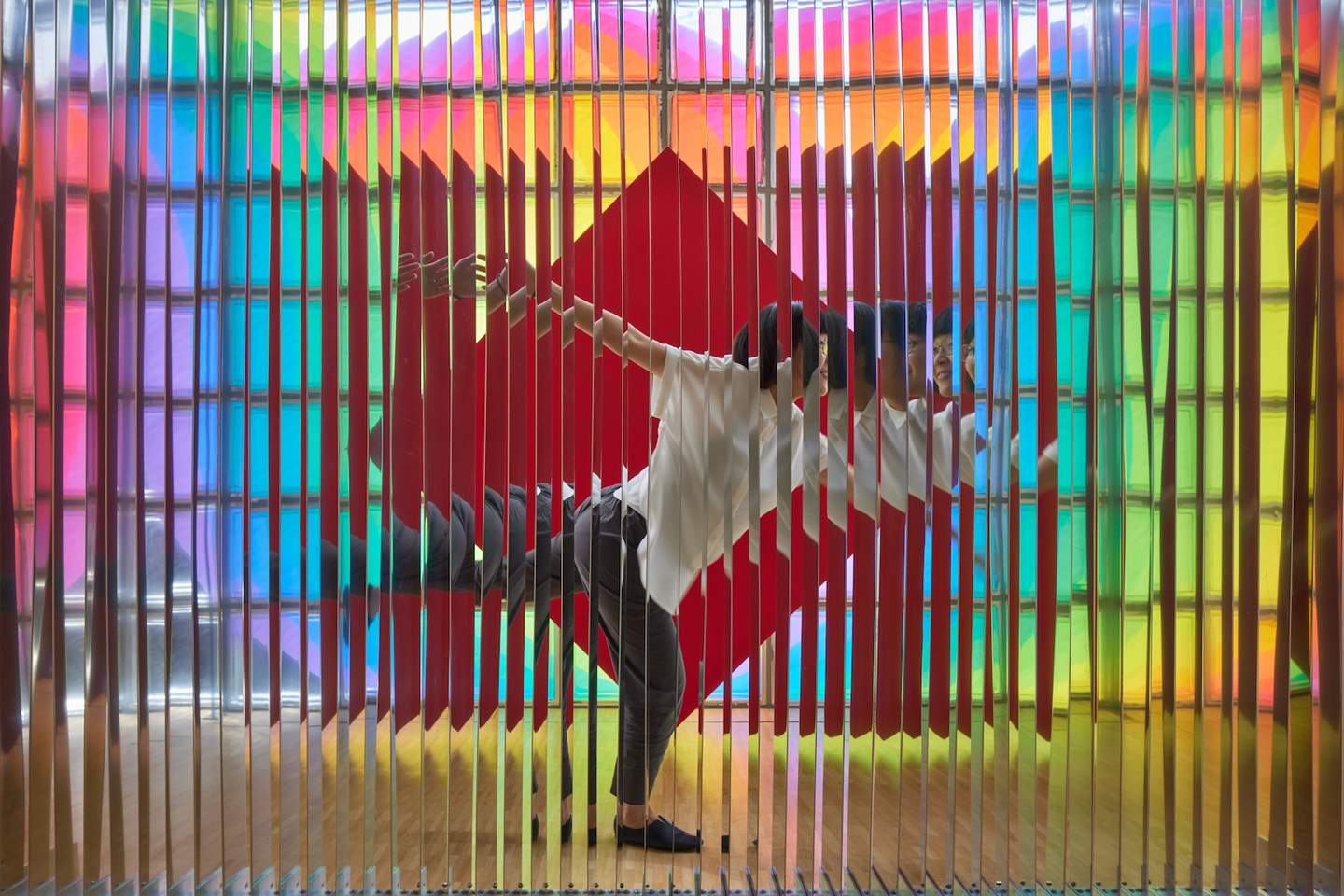
Other pieces open up to even deeper physical participation. It is the case of 64 Reflective Blades (2017), which encourages viewers to move between a painting and a screen with a row of reflective stainless steel strips, fragmenting and distorting their reflection while integrating them into the work itself. Installations from the game room from Le Parc, as Ensemble of Eleven Surprise Movements (1965) and Pattern to Manipulate (1967), which invite visitors to interact directly with the works of art by pressing buttons, rotating elements or performing other playful actions.
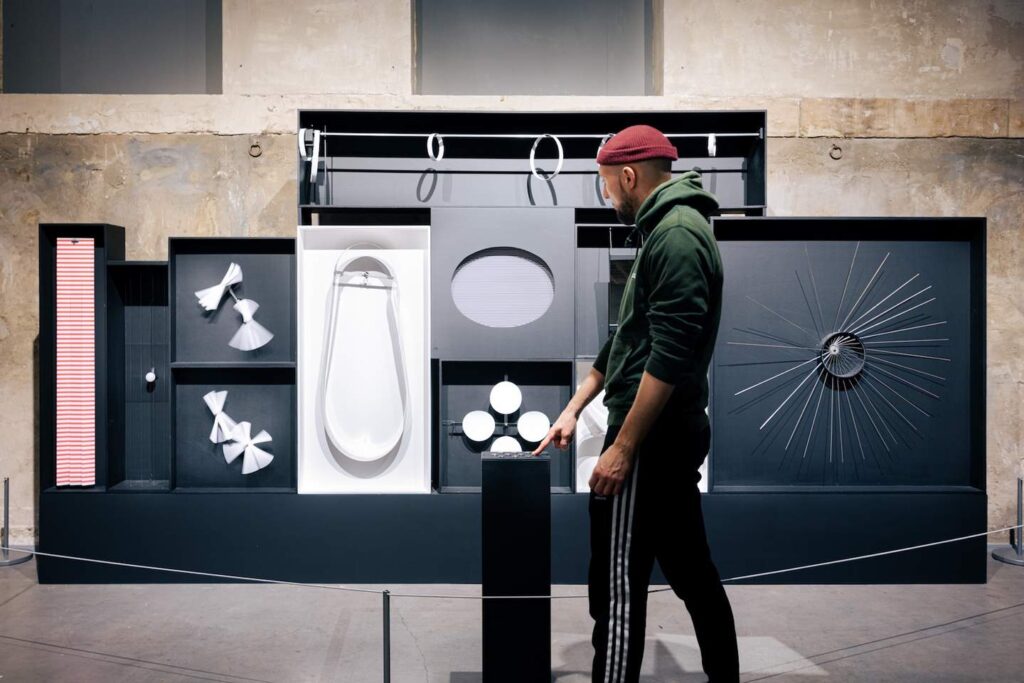
Julio Le Parc. Eleven Surprise Moments. Contemporary Art Fair 104 Paris, 2022
The exhibition will conclude with works that attest to Le Parc’s continued exploration of color, from his early experiments to his recent paintings. Much of his work was characterized by the use of a fourteen-tone palette, first developed in 1959 in works such as Color Projecta series of small gouaches in which this author extrapolated all the possible chromatic variations of his palette. He continued to investigate the possibilities of chromaticism and black and white patterns throughout his career, especially in his iconic paintings with wave motifs, such as Waves 176 (2024), and in its later series Modulations and Alchemies.
It will highlight the impressive Blue Sphere (2001-2022), acquired by the Tate in 2024, which demonstrates how Le Parc’s later sculptural work extended the projection of his previous mobiles and kaleidoscopic light installations.
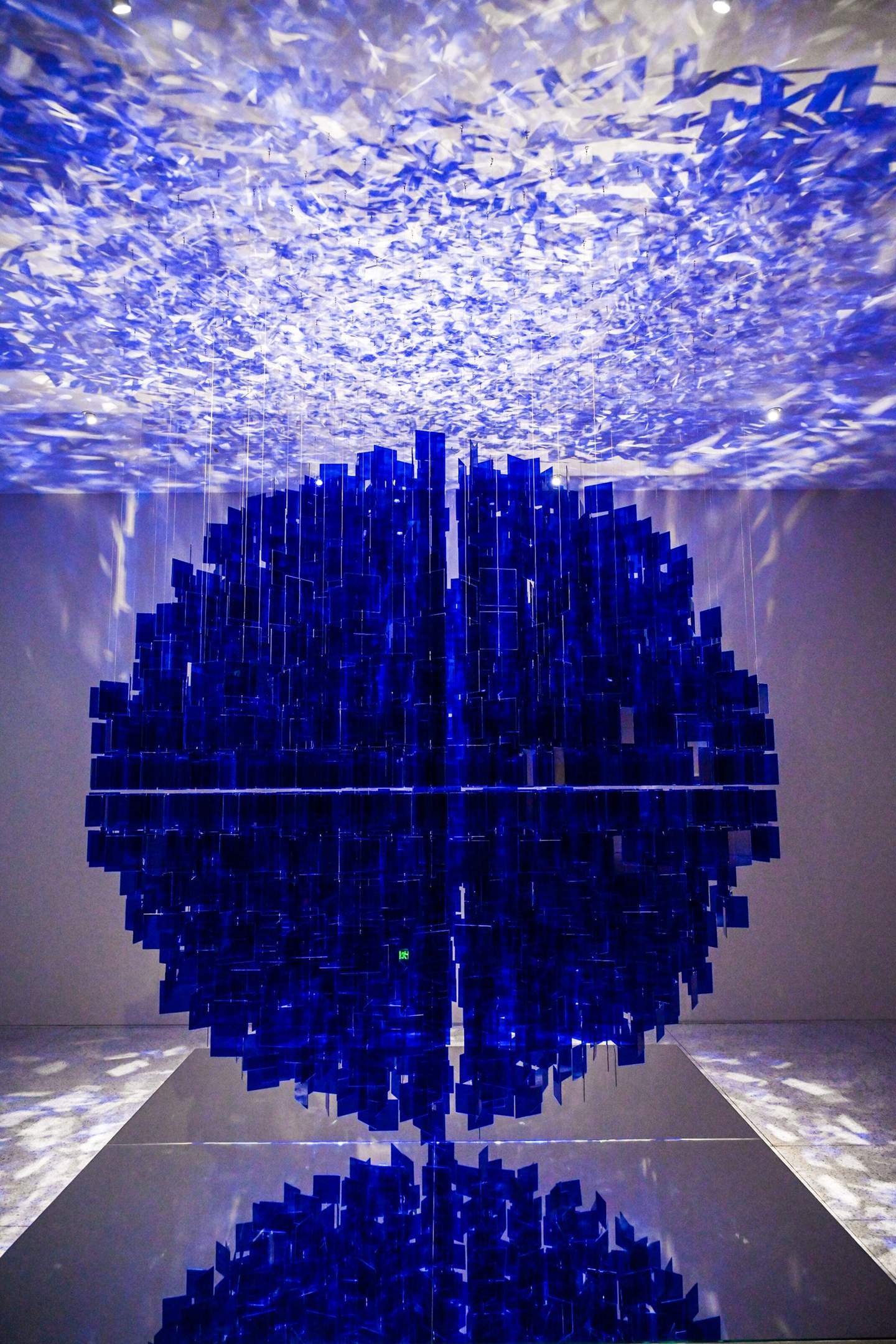
Julio Le Parc. Blue Sphere2013. © ADAGP, Paris and DACS, London 2026
Between his first and most recent works there are, however, some common convictions: Le Parc did not assume a definition of art as a produced object that brings together characteristics inherited from the past and adds others that are the result of its time or the personality of its author, but rather that creation constitutes for him, before and above any material consideration, a transformative experience for the viewer and the environment in which these works are displayed.
A fundamental figure of kineticism in Latin America, a precursor of the so-called relational aesthetics and almost an apostle of the public’s immersion in creations, he granted essential value to the intuitive interpretation of his projects, more playful than intellectual, an aspect that was disruptive in the sixties.
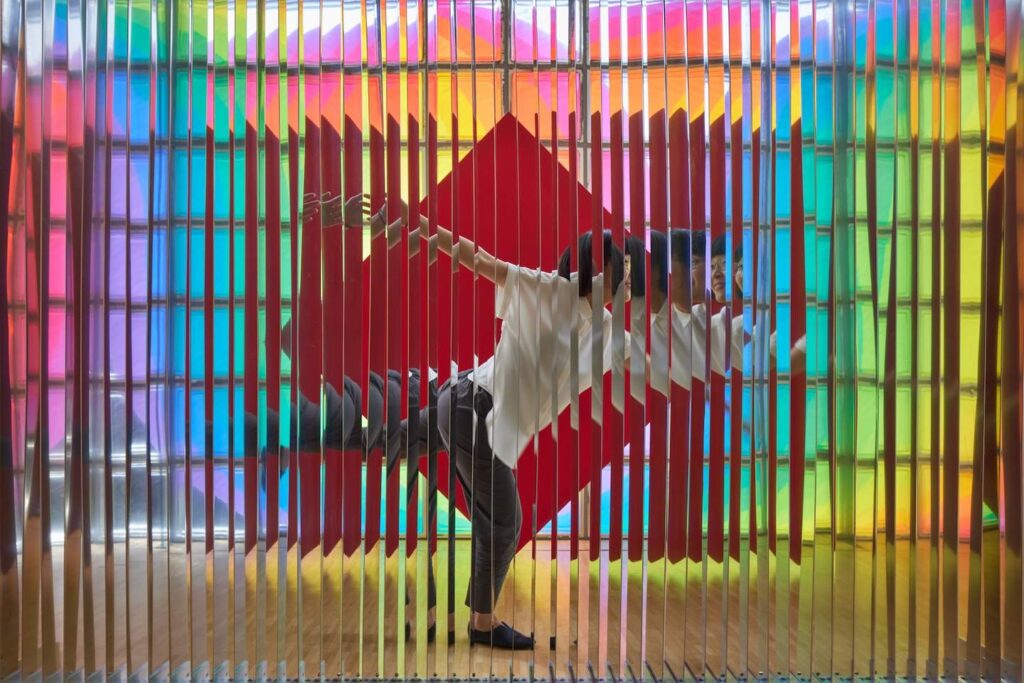
Julio Le Parc. Screen with reflective blades. Hermes Tokyo, 2021
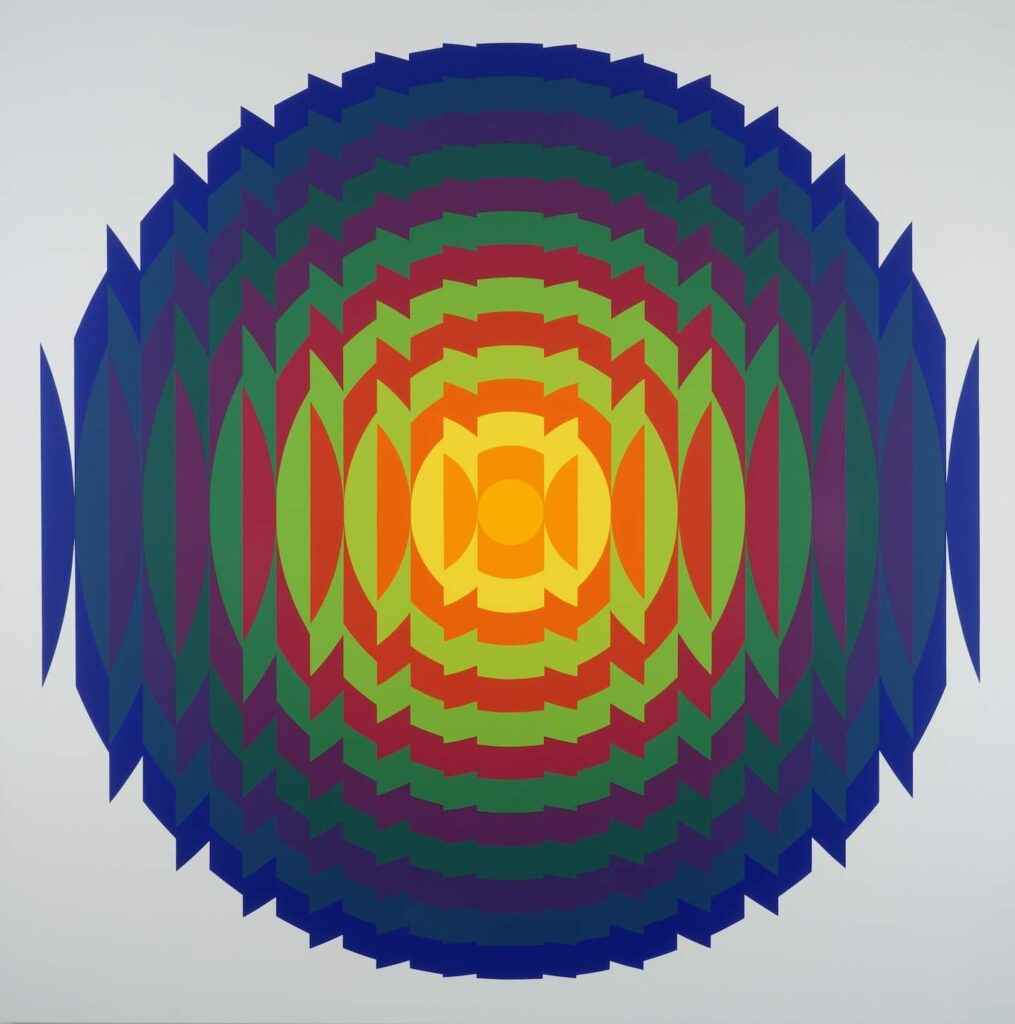
Julio Le Parc. Series 14 14 Permuted1970-2000. © ADAGP, Paris and DACS, London 2026
Julio Le Parc
TATE MODERN
Bankside SE1 9TG
London
From June 11, 2026 to May 3, 2027