Bilbao,
Night Driver It is the title that Jasper Johns gave to the first drawing that, as he explained, he created based on his personal feelings, back in 1960; also the name of the retrospective that, since May 29 and under the curator of Enrique Juncosa, the Guggenheim Museum Bilbao has offered to this American artist, who made repetition and destruction the starting point of many reflections.
About one hundred and a half of his works have arrived in Bilbao, including paintings, sculptures, drawings, engravings, an artist’s book and a set design. It has been decided to show them chronologically – although separating the paintings and sculptures from his compositions on paper – for a reason: Johns returned time and again to his motifs, gradually approaching them with greater technical and conceptual complexity.
He was born in 1930 in Augusta, a city to which a good dose of southern charm is attributed, but barely in his twenties he settled in New York, where he soon became friends with those who in those fifties were renewing American art from the conjunction of painting and sculpture, from silence or dance: we are referring to Robert Rauschenberg, John Cage or Merce Cunningham.
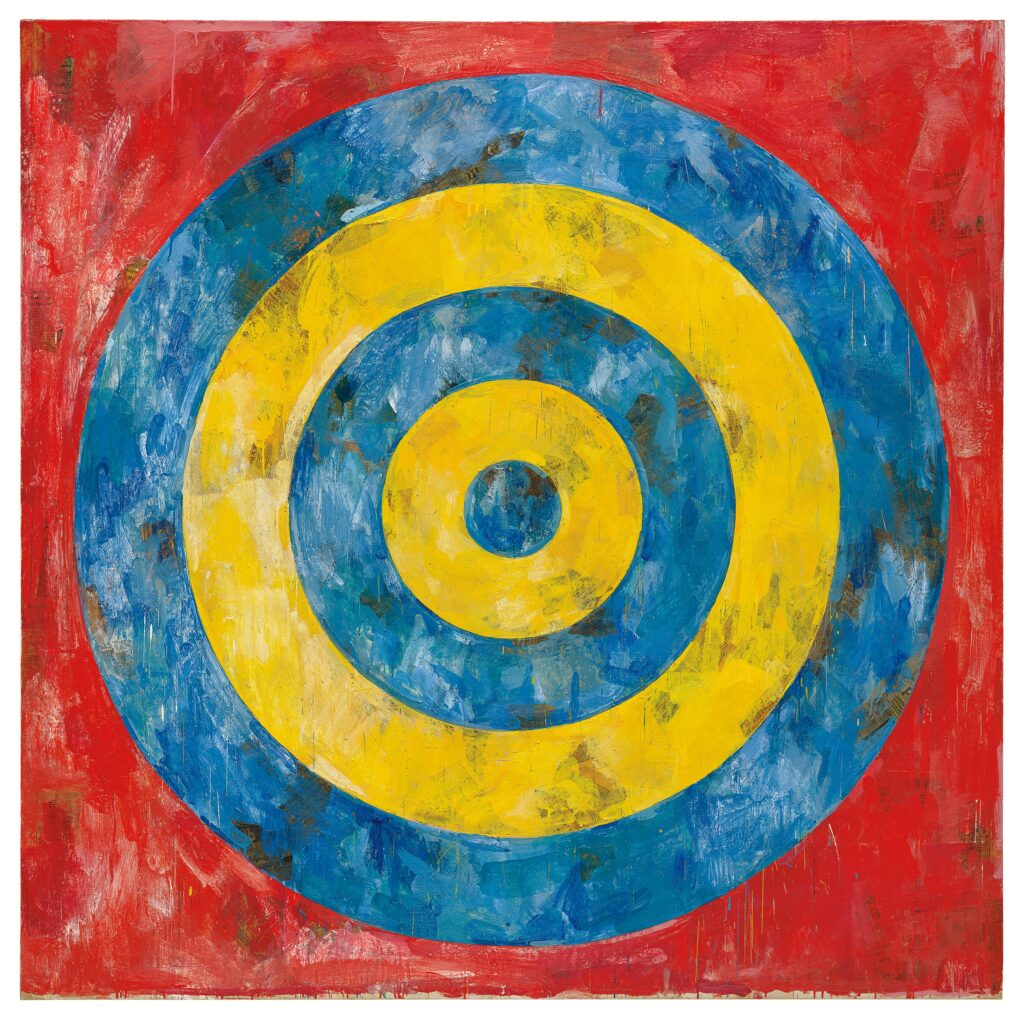
As early as 1954-1955, Johns decided to destroy his early production to draw his country’s first flag; It would be the beginning of an extensive set of works in which he continually represented flat elements and signs: letters, numbers, targets and maps that we have read over and over again as antecedents of pop art, as everyday motifs that are recognizable to all. It did not take long for him to achieve success with this material so seemingly distant from the imagination: an exhibition of these pieces in Leo Castelli’s gallery in 1958 brought him fame and MoMA acquired three.
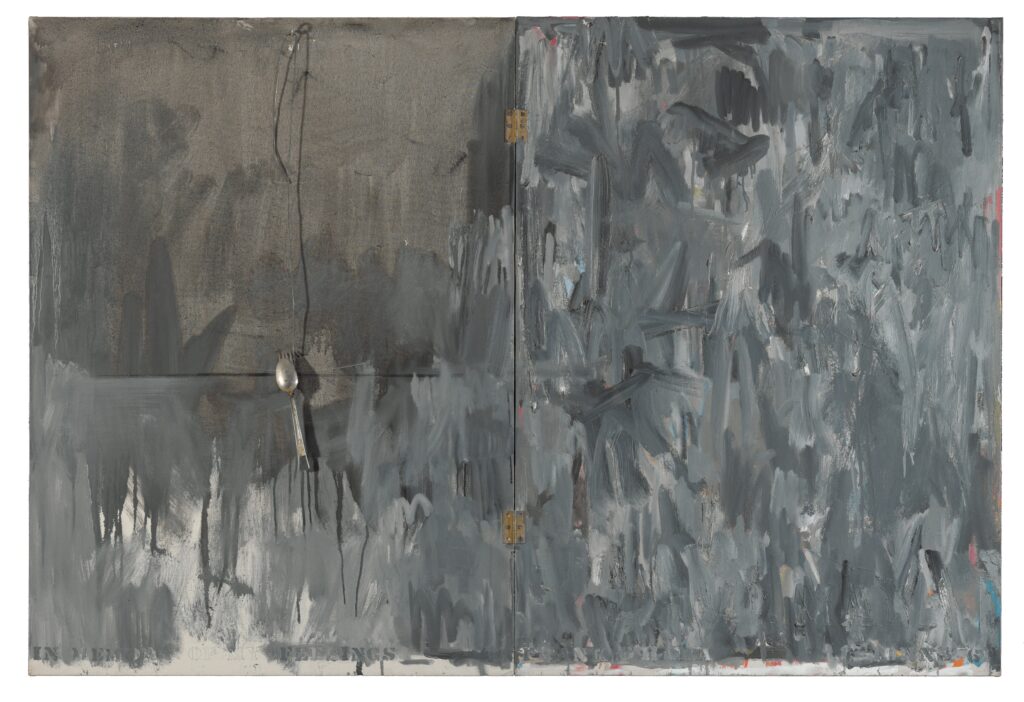
In those same years Johns had the opportunity to meet Marcel Duchamp, who would be a fundamental figure in his career, for starting from what was given to build the unpublished. We will contemplate this period at the Guggenheim Flag on orange field, Drawer, False start, Bullseye, Map either In memory of my feelings – Frank O’Hara; This last image, made in the first half of the sixties, marked the beginning of a transition from impersonal themes to greater emotionality in his career. His grays at this moment do not imply coldness, but melancholy.
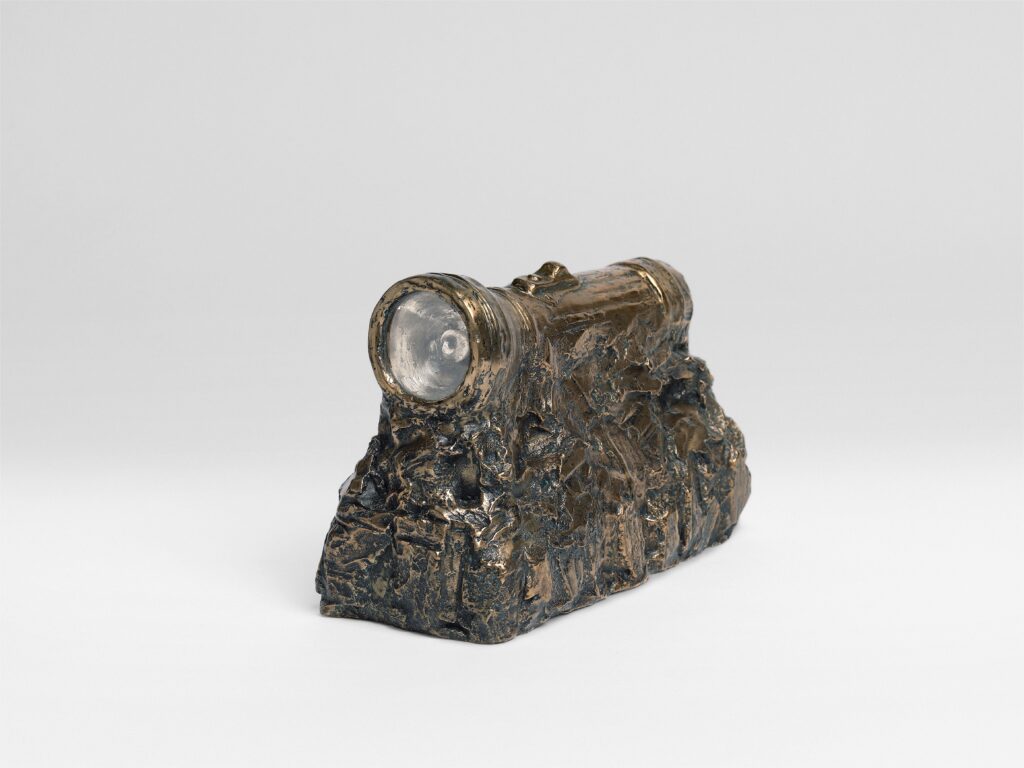
In parallel to these compositions, between 1958 and 1961, the one from Georgia made his first sculptures, made, as expected, with everyday objects, including flashlights and light bulbs that stopped providing us with light and became objects to be looked at.
Moving into the sixties, a path of abstraction began to emerge in his creations that he would later consolidate: we will appreciate it in Bilbao in Study (1964), Untitled (1964-1965) and Study II (1966), which do not completely abandon figuration – we can recognize doors or windows, brushes and mops – but above all they evoke the atmosphere of the artist’s workshop in their essence.
These were years of proliferation of new themes for Johns: he introduced the human figure, the self-portrait or slab walls into his creations. We will see in Bilbao Souvenir (1964), an example of a self-portrait that he designed after a trip to Japan with the composer Toru Takemitsu and for which he printed a photo booth portrait on a ceramic plate that he had bought, precisely, in a souvenir store.
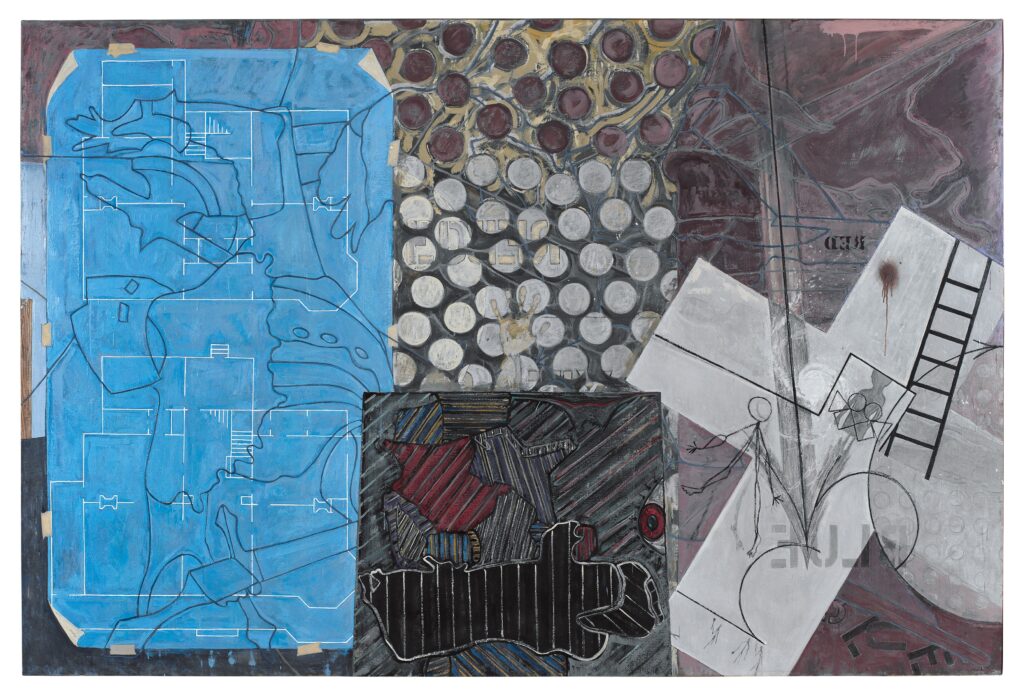
His eighties series focused on the seasons will also have an autobiographical character; By then Johns had already decided to be inspired almost constantly by popular artists such as Munch, Picasso and Frida Kahlo. Meanwhile, his compositions from the nineties will be a compendium of previous references and interests: in Catenaries He returned to gray and the games with language, he managed to recreate the plans of his grandparents’ house and transformed the numbers from 0 to 9 into bronze.
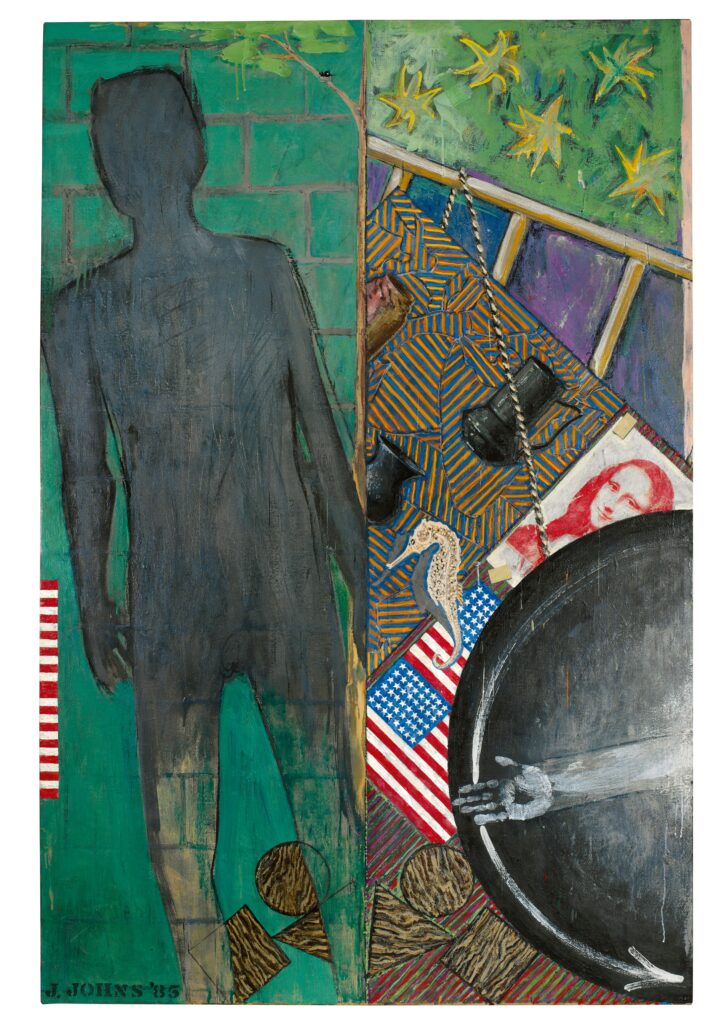
The exhibition closes with works on paper and monotypes. Johns did not propose the first ones as preparatory drawings, quite the contrary: he devised versions of his previous paintings to test himself technically and give them new meanings.
He combined pencil, charcoal, pastel, plaster, ink, pen, watercolor, collage with paper, objects or metallic pigments and even drew on plastic, exploring its transparency and degree of absorption. As for his engravings, less numerous in his production, not less, he used them to alter the colors of previous images and reproduce details of works or fragments arranged in another way.
Finish the tour Fourades/Fizzles (1976), an artist’s book that he carried out with Samuel Beckett in Paris and that includes five texts by the Irish author along with thirty engravings by Johns, as well as various testimonies of his friendship with other artists, such as very small drawings that he gave to Robert Rauschenberg, a drawing that he offered to Richard Serra in exchange for another of his, a peculiar portrait of his beloved Duchamp or, friendships on the sidelines, tracings of Cézanne and De Kooning, two of his incentives to reflect on the image and artistic tradition. Whether creating or destroying.
“Jasper Johns: Night Driver”
GUGGENHEIM MUSEUM BILBAO
Abandoibarra Avenue, 2
Bilbao
From May 29 to October 12, 2026