Ghent (Belgium). In 1986, Jan Hoet (1936-2014) asked 51 international artists, including Christian Boltanski, Joseph Kosuth, Panamarenko and Gilberto Zorio, to imagine a work integrated into the living rooms, stairwells or bedrooms of private homes in the city. For three months, the public was invited to visit them. This was part, in the mind of the man who was then director of the Museum of Contemporary Art in Ghent, of a desire to change the public’s view of the work of art by extracting it from its museum context and a framework that he considered normative and intimidating for some.
Forty years later, what remains of “Chambre d’Amis”, this event which shook up the codes and made waves in Ghent, in Belgium and beyond during the summer of 1986? For the contemporary art museum, which became the Stedelijk Museum voor Actuele Kunst (Smak) in 1999, this was the impetus that allowed the institution to leave its walls more often. But museums remained museums and houses remained private. The Smak collection was also enriched with 17 of the 51 works from “Chambres d’Amis”, 17 proposals which became “ghost works”, never shown, because they were deprived of the context in which they were created.
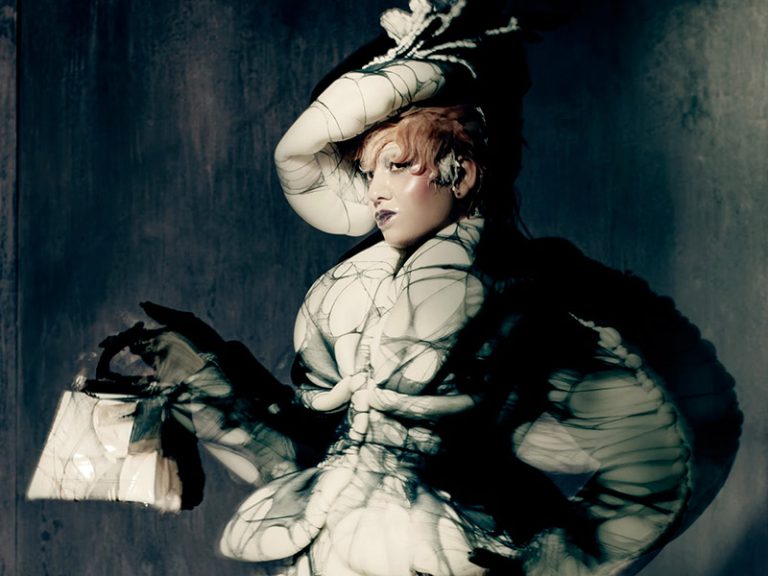
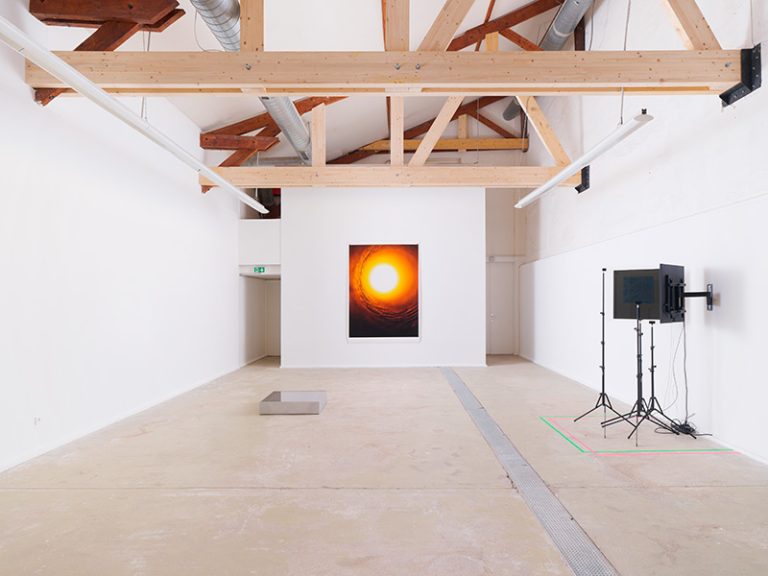
The Smak anniversary exhibition is divided into two parts. The first soberly uses the archives by resuming, for each of the works, testimonies – when they are available – of the artist’s intentions, interactions with the hosts, then the reactions that the works generated. In the other section, three artists, Heike Pallanca (who had participated in “Chambres d’Amis”), Suzanne Kriemann and Haim Steinbach created installations which integrate one or more of these ghost works. In this very referential exercise, it is the first two who do the best.
The work and its context
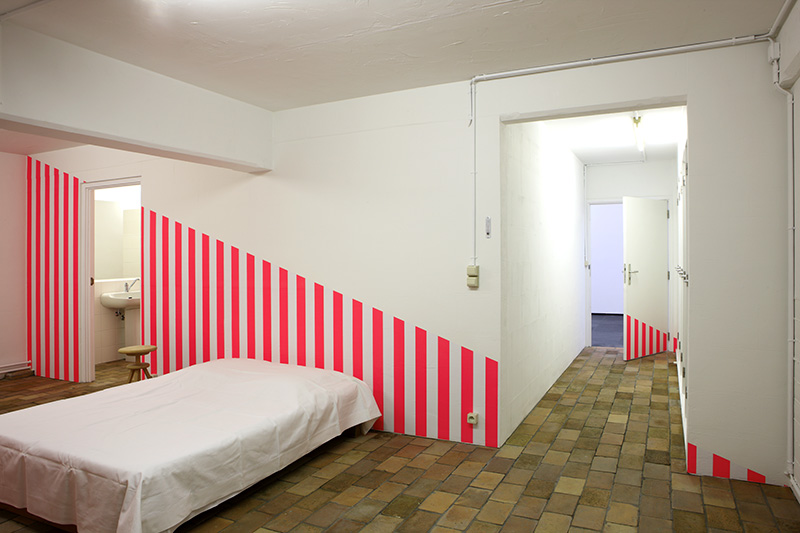
The Decor and its Double by Daniel Buren [voir ill.] occupies a special place in the exhibition. Indeed, the French artist was the only one to directly challenge the concept of the event, believing that the discovery of a work of art by the public should take place in a museum. Thus, he created for the museum a faithful facsimile of the installation created in the bedroom of the collector couple Annick and Anton Herbert. Like a cinema set, he reproduced the bed, the walls and their painted striped bands as well as the bathroom area. With the ultimate conceptual pirouette that the two works formed one and that they both had to be accessible. The double shown in the exhibition was reconstructed in 2011, while the original decor, in the couple’s house, now a foundation, is accessible during guided tours scheduled on Sundays.
“Guest Rooms” undoubtedly participated in a somewhat idealized vision. It was a sort of happening put together by a team of eight people in the space of three months. A survey established that only 60% of visitors came for the work or for the artist, the rest came out of curiosity, or even voyeurism. Would such an event be reproducible today? Although there is room for doubt, the fact remains that for any museum it is useful to reflect on and develop the context in which the works are presented within its walls.