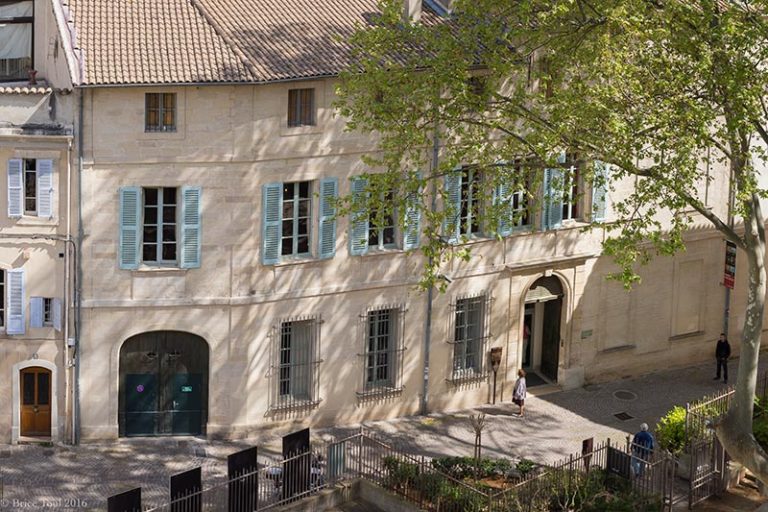
Brussels. After eight years of closure for an expansion and in-depth renovation, the Ixelles Museum is in the home stretch of its work for a reopening planned for spring 2027 (March 19). Founded in 1892 in the walls of a former slaughterhouse, the museum occupies a special place in the cultural landscape of Brussels. Despite several expansions, it has remained an institution on a human scale which allows its visitor a proximity to the works. It is also characterized by its management, supported and largely financed, since its origin, by the municipal authorities and, above all, by the importance and coherence of its collection. Enriched by successive donations and supported by a continuous purchasing policy, this fund now includes more than 15,000 works covering Belgian art from the 19th century to the most contemporary period. This is how the museum includes in its collection works by Kasper De Vos, Lena Marie Emrich and Alejandra Caicedo, all three crowned with the Discovery prize during the edition of Art Brussels which has just ended.
A request from the mediation service in advance
Before its closure, the museum could count on attendance of around 100,000 visitors annually. Beyond the transformation of the buildings, the improvement of technical performance and the comfort of the visit, the museum wants to rethink the link between the works and the public by multiplying the points of view in the hanging as well as in the programming. “Opening a museum in 2027 is not like closing a museum in 2018, estimates Claire Leblanc, director and curator since 2006. There have been successive crises, there are concerns, new expectations on the part of artists and audiences. Our role is to have a place in this changing world and to support the public’s questions without giving answers. » This requires an assumed participatory dynamic which takes into account the vision of a diverse audience and brings together distant audiences, and also integrates other forms of artistic expression. “All programming is now designed in equal collaboration between the scientific or curatorial approach and the mediation service, and no longer successively as could have been the case before. It is up to us to be both a force for proposals and a force for listening. Perhaps, in certain projects, we will lean more towards one side, but one does not exclude the other, they should not be opposed. »
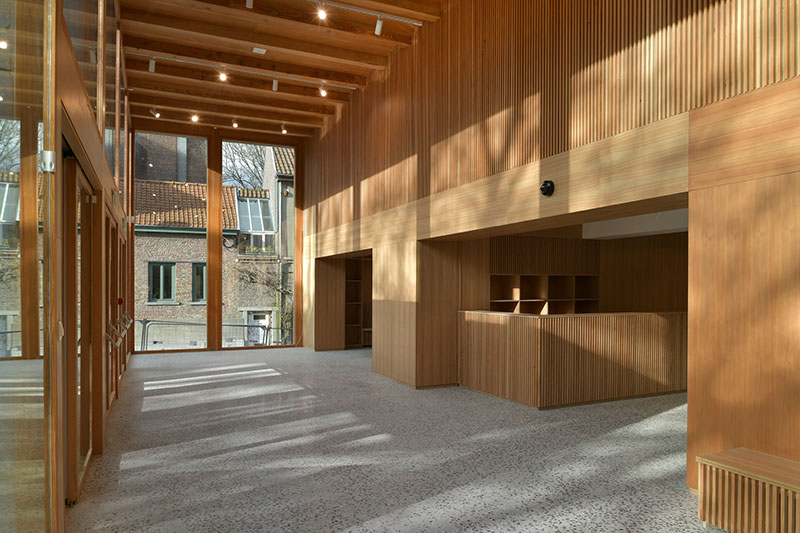
Architect’s view of the renovation project of the Ixelles Museum.
© DR
This participatory approach is a legacy of the “Museum as at home” project, carried out during the closure period. The principle of the event, scheduled for two weekends per year, was to invite individuals to welcome into their homes one of the 91 works of art chosen from the collection. On Saturday, each host showed their loved ones and neighbors the work they had selected – taking into account the specificities of conservation and security. On Sundays, he opened the doors of his home to the public. “Even though I am an art historian and have diplomas, I have received great lessons in humility. Thanks to the neighbors, I saw things in our works that I had never seen before. There were sensitive and original approaches that really shook up my vision of the works,” underlines Claire Leblanc. This project is one of the elements which led the museum team to launch invitations, via the associative sector, to different cultural profiles to come and work on the hangings of the inaugural exhibition and in thematic rooms in order to renew views on the collection.
The long period of closure also allowed in-depth work on the collection during which an inventory of the state of conservation of each piece could be drawn up. The selection made for the “Museum as at home” project also made it possible to rediscover works that had been lost sight of and to rehabilitate them by taking into account the evolution of views. These rediscoveries will integrate future clashes.
In its exhibition policy, particularly for the bouquet of inaugural exhibitions, the team has chosen not to confine the subject to chronological labeling and linear markers. “Without creating confusion, we want to spark transhistorical dialogues between works that are a priori distant. These are hook games that may surprise, or even offend, some people, but they seem to us to be virtuous and meaningful. »