Can we measure the impact of tourism on a city’s economy? Behind every cultural event, this question obsesses the tourist offices. How many visitors does the event attract and what does it bring to the region? Thanks to new tools such as those from the G2A Consulting firm which works with nearly 995 municipalities in France, these estimates are no longer a pipe dream. In a few years, tourist offices have moved from a logic of intuition to that of management by data. “Our job is to observe the tourist territory and not tourism itself,” summarizes Denis Maurer, president of G2A. The analysis is based on three streams. First that of reservations. The system is connected to almost all of the region’s commercial accommodation booking sites, hotels, campsites, tourist residences, Airbnb and other rental platforms, etc. “We know, for example, that a peak of activity is expected in ten weeks linked to a particular event,” he indicates. Then comes geolocation via SIM cards which track the origin of visitors. Finally, in certain areas such as Savoie, payment terminals at merchants measure actual spending.
These tools thus highlight the hitherto ghost population of excursionists. “Thanks to a partnership with (the operator) Orange, we obtain an interesting reading grid, the anonymized mobile telephone data of Lyonnais for example, who come for the day without sleeping there but who irrigate the territory”, explains Guillaume Rosetti, director of the Chambéry Montagnes tourist office. To manage this moving mass, the territory is relying on a resolutely “BtoC” (or “B2C”, direct commerce between companies and individuals, editor’s note) strategy where the priority remains the end consumer, the individual visitor who must be captured. A detailed knowledge which allows advertising campaigns to be adjusted in real time on networks and to modify themes according to geographical origin.
Data as a budgetary compass
This clarification has the economic virtue of avoiding budgetary decisions based on erroneous intuitions. In Poitiers (Vienna), Bénédicte Breuls, director of the Greater Poitiers community tourist office, experienced this when preparing her initial budget. She also applies this BtoC philosophy. “The forecast for the year-round occupancy rate was down at least 10% compared to the previous year, which corroborated what some hoteliers were sayingshe relates. This allowed me to adjust my projects to revenue from the tourist tax, my main subsidy, and to avoid planning actions that I would not have had the means to finance. » She continues: “Without this alert, elected officials would undoubtedly have granted me a larger subsidy and I would have spent more to balance a budget based on ultimately unrealized revenue. This is a real rationalization. »
In Chambéry (Savoie), data is used to identify off-peak periods to transform local events into drivers of tourist attractiveness. “We have identified a calm month of October when, in fact, it is the month of our comics festival which is celebrating its 50th anniversary, specifies Guillaume Rosetti. Thanks to this analysis and the difficulties encountered by the Angoulême festival, we realized that we had a card to play. » The City then invested in greater communication than in the past, particularly in the national press. “We went looking for headliners and, this year, the guests of honor will be “The Smurfs”continues the director of the tourist office. We applied this same logic for the First Novel Festival, which takes place at the end of May. »
The festival versus the tour operator
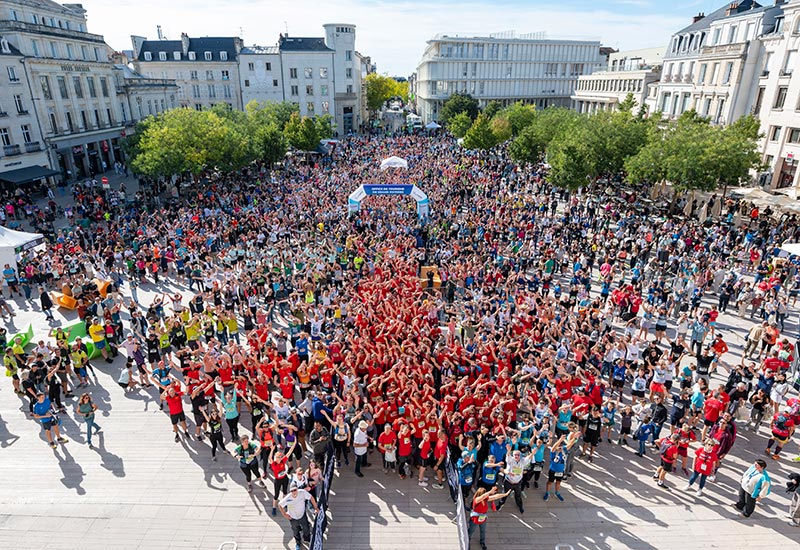
In Poitiers, it was almost by accident that Bénédicte Breuls measured the attraction effect of the Food Truck Festival in May. “Looking at my observatory, I realized that the rate of excursionists was high because of this festival. » A discovery that she transposes to the cultural field.“We can very well imagine creating a music or art festival and quantifying the peaks in attendance that this generates. » She also cites the Urban Trail which brings together 6,000 people each year, a festival which mixes sport and heritage where competitors cross heritage buildings normally closed to the public.
Conversely, Perpignan (Pyrénées-Orientales) is making a radical “BtoB” shift (business to business, editor’s note), modeled on private sector methods. Here, we put aside the volatile excursionist to concentrate on professional prescribers, tour operators, coach operators, agencies. Media too. “Hoteliers offer us free nights to accommodate journalists and influencers”explains Laurence Herlin-Lemaire, director of the tourist office, before specifying: “The more we welcome, the more we talk about Perpignan, the more it generates demand and the more money it brings us to finance the structure. » Geographic targeting of audiences completes this work. “We can know retrospectively how many Belgians, Germans or Parisians came for an event and measure the real impact of targeted promotion”observes Denis Maurer.
In Perpignan, this logic took concrete form on the German market. “We obtained ten pages of programming in the catalog of the largest tour operator in Europe, distributed in 8,000 points of sale of coach operators and travel agencies”says Laurence Herlin-Lemaire. “When customers sign up for a trip to Perpignan via this catalog, that translates into overnight stays for us,” she adds before putting things into perspective: “B2C has its limits because we cannot at all quantify the impact behind it. A media campaign in the Paris metro generates traffic, but what impact does it give? Nobody knows. »
On the other hand, these tools make it possible to consider the creation of an event at a time when the tourist calendar is slack. “For example, for us, the month of June is never very good and we could consider creating an art or history festival at that time to boost this period,” slides Bénédicte Breuls. Denis Maurer confirms this support from the conception of the event. “For a new festival, therefore without a history, we support the cities to define the target audience, and therefore which population to attract via communication campaigns. » In addition, the consultant helps define a pricing policy adapted to the public. Once launched, the festival remains under surveillance. “We measure objectively the first two or three years, then we come back to it around the fifth or sixth year. »
At the other end of the spectrum, the tool allows you to estimate what it would cost to delete an event. By cross-referencing attendance, origin and average expenditure per night, the firm can establish a balance sheet. “We are then able to quantify the loss for the local economy, and compare it to the cost that the event represents for the city,” points out Denis Maurer.
The fact remains that these benefits are also measured in hard cash overnight stays. In Perpignan, their number increased by 27% between 2020 and 2025, and by 3.5% in the hotel industry alone between 2024 and 2025. “It’s precious, because the budget for the following year is being built at the start of the school year and I can’t wait to collect it to know,” indicates Laurence Herlin-Lemaire. In Chambéry, where the partnership is more recent, caution remains in order. “We are starting to see a significant improvement in our measurement of tourist flows, tempers Guillaume Rosetti. But it is still too early to talk about immediate results. » The tool remains an instrument of detailed knowledge of the territory, more than a magic wand. It helps you decide better. Not to decide alone.