The “Protecting Resources and Ensuring Stewardship of Enduring Records of Visual Expression (PRESERVE) Act” was presented on July 14 to the House of Representatives of the United States Congress by two of its members. The bill, carried by Democratic representatives Dina Titus and Lloyd Doggett, aims to protect works commissioned with public funds kept in federal buildings intended to be transferred.
The initiative comes in a context where these works are threatened by the program to reduce the federal real estate stock carried out by the Trump administration. Since March 2025, the General Services Administration (GSA), the agency managing real estate and general services of the federal government, mandated by the government to identify buildings that are little used or have accumulated significant maintenance backlogs, has published lists of federal buildings eligible for sale. To date, 12 buildings have been sold or are in the process of being sold under this program. The bill provides specific supervision for the management of the works kept there, while certain buyers could decide to convert these buildings into residential buildings or to demolish them.
The GSA administers a collection estimated by the authors of the text to be some 26,000 works, distributed among federal buildings, museums and cultural institutions. Only those retained in the assets involved in a transfer procedure would be directly affected by the system. Some of these were produced as part of the Federal Art Project (1935, FAP), one of President Roosevelt’s New Deal programs to support the visual arts sector during the Great Depression. The objective was to promote employment in the artistic field and to equip certain public buildings with works.
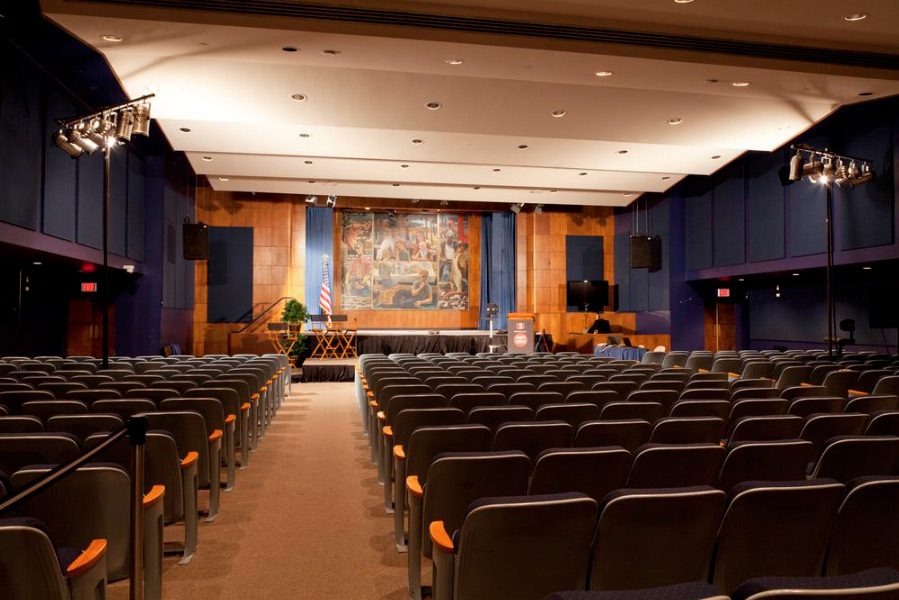
The emblematic case is that of the Wilbur J. Cohen Federal Building in Washington, listed since May 2025 on the list of assets intended for sale. Nicknamed the “Sistine Chapel of the New Deal,” it houses murals created in the 1940s by Philip Guston and Ben Shahn, two artists known for their political involvement and whose paintings “visually retrace the history of the struggle, of the resistance”according to parliamentarian Lloyd Doggett. A petition to save the site had reached nearly 10,000 signatures by early 2026, making the Wilbur J. Cohen Building the symbol of a movement opposing the government’s divestment program.
The PRESERVE Act was referred upon its introduction to the House committees responsible for transportation and infrastructure, on the one hand, and control of the federal administration, on the other hand. These must decide on its possible examination and its transmission to the plenary session. If adopted by the House, the text would still have to be voted on in identical terms by the Senate, then promulgated by the president. At this point, its only two signatories are Democrats and no review date has been announced. Suffice it to say that this law has little chance of being adopted.