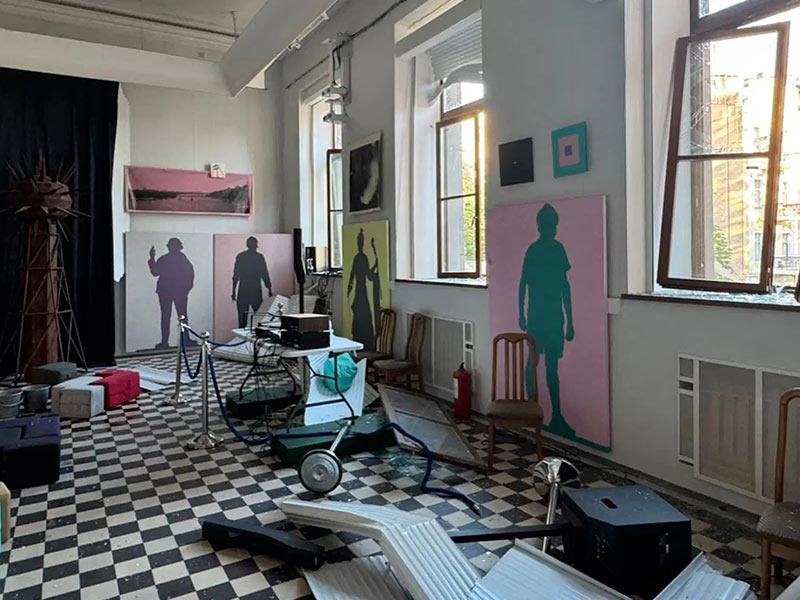
The National Art Museum of Ukraine (NAMU), the oldest museum in kyiv, was damaged during the Russian strike on the capital. The institution has announced its closure for an indefinite period. On the night of May 23-24, Russia launched one of the most massive air attacks since the start of the war, combining 90 missiles, including a nuclear-capable Orechnik, and 600 drones of various types. The windows were blown out and the window frames damaged, while sections of plaster came off the walls. The skylight of the roof, which naturally illuminates the rooms on the second floor, was also affected. In several exhibition spaces, pieces of plaster collapsed. However, neither the staff nor the collections were affected.
The building was empty of its main works at the time of the strike, these having been evacuated to confidential storage sites in the first days of the invasion in February 2022. Since then, the museum has maintained partial activity (conferences, temporary exhibitions) while keeping its permanent rooms empty, signaling at each event: “In the event of an air alert, all visitors are requested to immediately go to shelter. “.
Part of the collection has also been the subject of international loans. The museum notably loaned more than sixty works to the Royal Museum of Fine Arts of Belgium as part of the exhibition “In the Eye of the Storm”, dedicated to Ukrainian modernism between 1900 and 1930, helping to ensure the visibility and security of certain pieces outside Ukraine.
Damage caused by the Russian strike on the National Art Museum in kyiv.
© Ukrainian Ministry of Culture
In 2024, NAMU benefited from aid from the International Alliance for the Protection of Heritage in Conflict Zones (ALIPH), co-financed by the European Union, intended for the restoration and rehabilitation of the building. This collaboration with ALIPH is not new. By fall 2022, the organization had provided funds to secure collections, enable digitization of archives despite power outages, and acquire preservation equipment. NAMU is also included in the Icom Emergency Red List for Ukraine, published in November 2022, which lists the categories of cultural property most at risk of theft or illicit trafficking.
In February, the Ukrainian Council of Ministers adopted new resolutions for the compulsory evacuation of museum collections in risk areas. Territories located less than 50 km from the front line are now subject to transfer to sites at least 75 km away.
The May 24 attack is one of the most significant attacks on the capital’s cultural institutions since the start of the conflict. In addition to NAMU, other institutions were damaged in the same night: the National Chernobyl Museum, only reopened in April after eighteen months of restoration on the occasion of the 40th anniversary of the nuclear disaster; the National Philharmonic and the Kyiv Small Opera; the Yaroslav the Wise National Library; the Shevchenko Literature Institute and the Ukrainian House Cultural Center.
UNESCO estimated the damage to 526 cultural sites, worth 3.8 billion euros over four years of conflict. The most affected regions are Kharkiv (349 sites), Kherson (302 sites), Odesa (200 sites), Donetsk (195 sites) and kyiv city/region (173 sites).
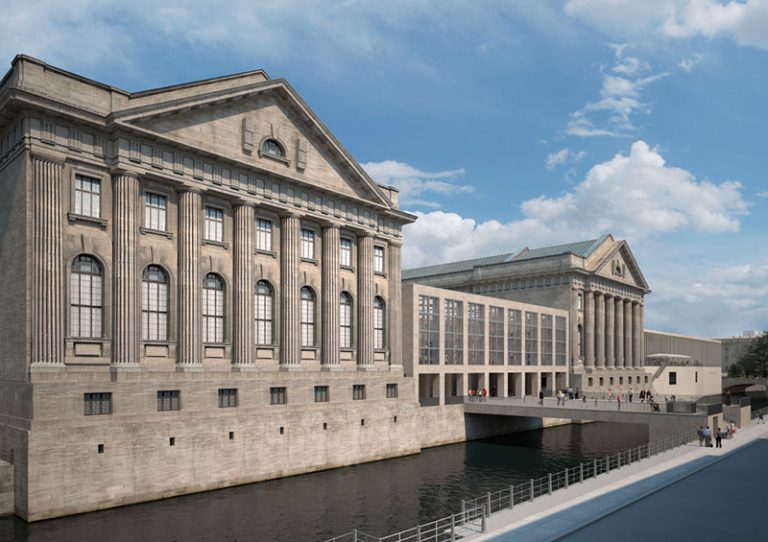
Founded in 1899 under the Russian Empire as the “Municipal Museum of Antiquities and Arts of Emperor Nicholas II”, the National Art Museum of Ukraine is the oldest museum in kyiv. Renamed after independence in 1994, it houses nearly 40,000 works, constituting the country’s most important collection of Ukrainian art, from medieval icons of the 12th century to avant-gardes of the 20th century.

The National Art Museum in kyiv.
© Fotoswetik, 2014