Madrid,
Classic and modern, almost alternating, and high possibilities of attracting diverse viewers. The Thyssen-Bornemisza Museum will start its 2026 programming by joining the celebration of the centenary of the birth of Robert Rauschenberg, recently remembered in Madrid also by the Juan March Foundation. He will offer us a special installation around his work Express (1963), belonging to the collections of this institution: the sources of its iconography and its links with disciplines such as dance, performance and science will be delved into. It will be from February 3.
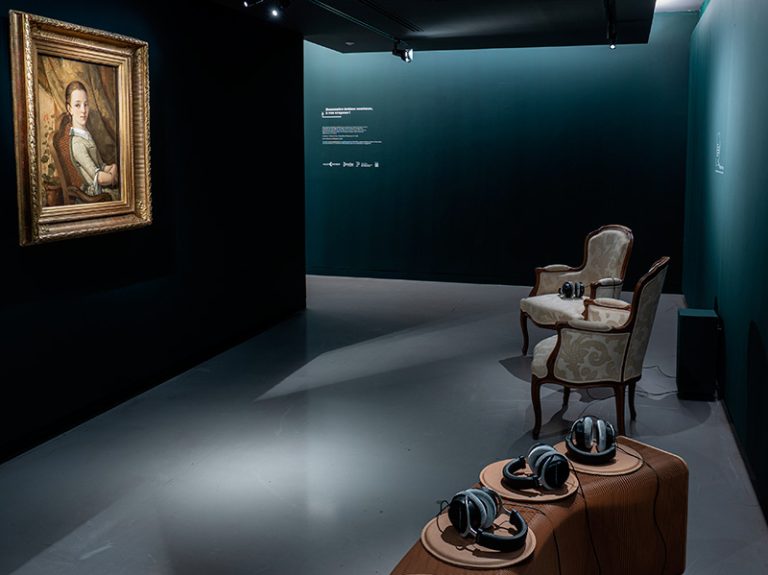
A couple of weeks later, the center will inaugurate “Hammershøi. The Listening Eye”, the first extensive retrospective in Spain of this Danish painter, very famous during his lifetime and then relatively forgotten until the 1980s.
We recognize it by its harmonious but ambiguous interiors, which at the Thyssen will be related to works by Dutch authors from the 17th century and also with creations by contemporary artists. The exhibition, which will later travel to Kunsthaus Zürich, will focus on his interest in music and silence, the purification of his architecture and landscapes, and the relevance of the figure of women and self-portraits in his production.

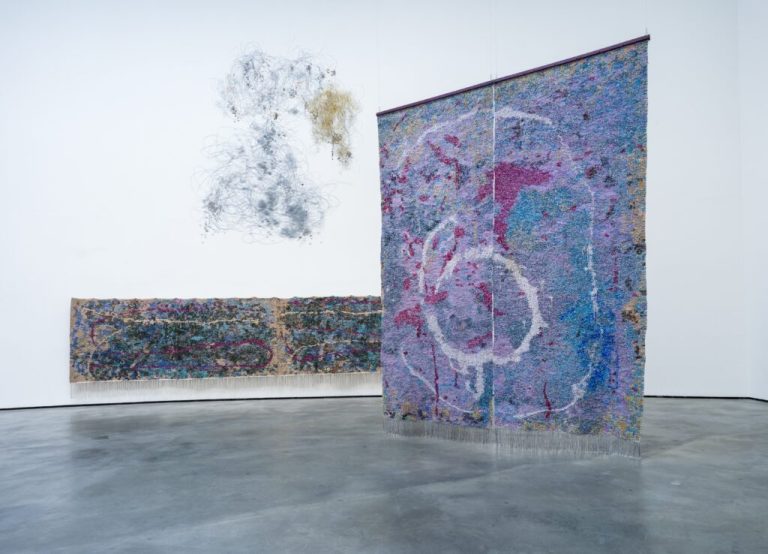
The most strictly recent proposals will arrive at the Thyssen on February 23, by the Asturian Irma Álvarez-Laviada, who joins the program kora. It will show pieces made in recent years, close to geometric abstraction and executed with industrial materials, in which it has explored the dichotomies between the pure and the ornamental, the aesthetic experience and the economic and ideological aspect in art.
Already in collaboration with TBA21 Thyssen-Bornemisza Art Contemporary, Ukrainians Roman Khimei and Yarema Malashchuk will teach us, starting on March 3, “Pedagogies of War”, a project about the transformations in the public space of their country derived from the Russian invasion. Winners of the OFFSCREEN Paris Curatorial Prize, they remember how everyday structures and rhythms are marked by violence. Starting in October, the same institution will bring Seba Calfuqueo to the museum.
And the young Polish artist Ewa Juszkiewicz will star in a monograph between May and September: she has reinterpreted the codes of classic portraiture and the representation of female beauty. His paintings combine thoroughness and subversion.

In June, in addition to undertaking the public restoration of Venus and Cupid by Rubens, the Thyssen will open “Themes and Variations”, a great exhibition by Carmen Laffón curated by Paula Luengo. It will be an anthology made up of eighty pieces organized thematically: figures, still lifes and landscapes made in Madrid and Andalusia.
A lurch The American Jenny Scharf, a pupil of Andy Warhol, will star in an exhibition starting in September: it will feature works linked to surrealism and popular culture, with an intense palette. He is the author of paintings, sculptures, installations, murals, performances and fashion.

One of the most anticipated events at the Thyssen this year will be “Thyssen-Bornemisza & Mauritshuis: a love story between two museums”, between October and January 2027. These centers will exchange twenty-five works from their permanent collections at the same time; Among those that will arrive in Madrid, one of the most sought after will be a view of Delft by Vermeer. The rest, dated to the 17th and early 18th centuries, correspond to authors such as Ambrosius Bosschaert I, Frans Hals, Hendrick Avercamp, Pieter Claesz, Rembrandt van Rijn, Gerard ter Borch, Jan Steen, Jacob Ruisdael, Pieter de Hooch or Nicolaes Maes.
This year’s Thyssen program will be capped by “The Freudian Universe of Dalí”, which will analyze the Catalan artist’s relationship with the theories of the father of psychoanalysis (both met in 1938); that is, his paranoid-critical method. It will be from October.

THYSSEN-BORNEMISZA NATIONAL MUSEUM
Paseo del Prado, 8
Madrid