Emmanuel Macron’s diplomatic visit on July 6 and 7 to Damascus was an opportunity to return 23 archaeological pieces to Syria, loaned in 2010-2011 by various museums in the country for an exhibition at the Institut du Monde Arabe (IMA). They will return to the collections of Damascus, Aleppo, Latakia and Palmyra.
The repressive policies of deposed President Bashar al-Assad had dragged the country into 14 years of civil war and ended diplomatic relations with France, suspending the repayment of the loan. Requests for the return of the works made by the General Directorate of Antiquities and Museums of Syria remained unanswered. The visit of the French president, the first European leader to have visited Syria since the fall of Bashar al-Assad, was an opportunity to renew dialogue with the cultural authorities of Syria.
Statuette of Išgi-Mari, discovered in Mari, Syria, which will be exhibited at the Aleppo Museum.
For Maamoun Abdulkarim, the former director general of Antiquities and Museums of Syria, now professor of archeology at the University of Sharjah, in the United Arab Emirates, this return “sends a positive message for the future” which could encourage dialogue with other states for the repatriation of dispersed Syrian heritage, he told the news agency AP News.
Currently, the Syrian state is waging a campaign to recover artifacts taken out of the country during the civil war. It concerns legal exits, such as the loan to the IMA, but also looting and trafficking linked to clandestine searches carried out in areas controlled by armed groups. The ancient city of Palmyra, taken by the Islamic State in 2015, was particularly affected by smuggling and destruction.
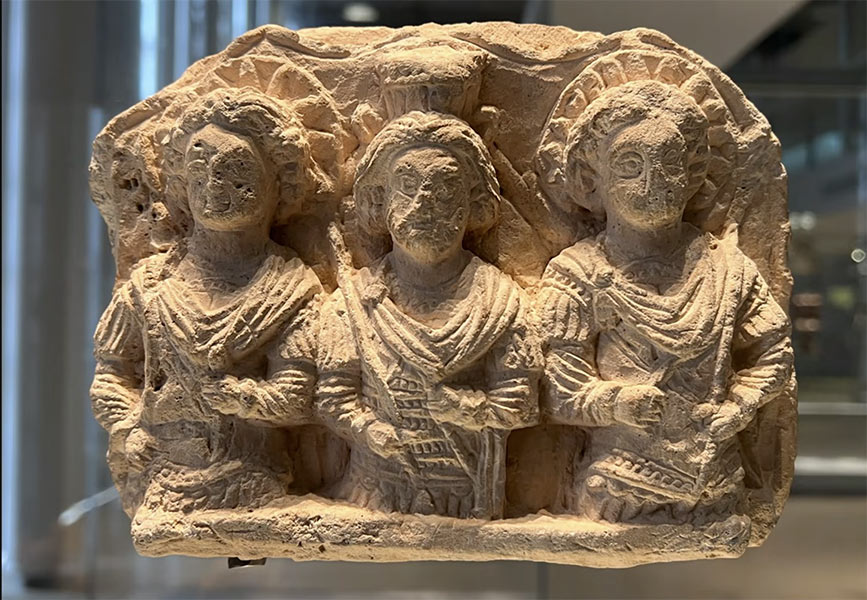
The works returned to Syria cover a vast period from prehistory to the Islamic period. “Each object represents a distinct chapter of Syria’s rich history”rejoiced Nivine Saadeddine, curator at the Damascus Museum. Roman bronzes, Byzantine and Islamic pieces, a statuette from the 8th century, make up this long-standing loan. The restitution also includes Palmyrene funerary reliefs from the 2nd and 3rd centuries and a colorful mosaic panel from the Great Umayyad Mosque of Aleppo.
The 23 pieces will be exhibited at the National Museum of Damascus before being returned to their original regional collections. A major cultural institution in Syria, the museum was founded in 1919 and its current building built in 1936 to preserve the country’s archaeological treasures. Closed in 2012 in the face of the spread of fighting, the National Museum of Damascus partially reopened in October 2018. It was closed again as a precaution during the fall of Bashar Al-Assad in December 2024, before resuming reception to the public in January 2025. During this period, some of its most precious pieces were transferred to more secure locations. The upcoming exhibition of recovered antiquities marks a new stage for the museum and, more generally, for Syrian heritage.