
Santander,
Daniel Fernández Pascual and Alon Schwabe make up Cooking Sections, a duo that was nominated four years ago for the Turner Prize for their project CLIMAVOREwhich explored how our diet can cope with the climate crisis: it consisted of a sound, light and sculpture installation around salmon farming, as well as a performance-installation on the Isle of Skye, in which an underwater oyster table became a communal dining room during a low tide.
After giving a workshop last September at the Botín Foundation and the Nansa Valley – in which they analyzed, together with artists, researchers and biologists, the traces of human activities in that landscape -, they present its continuation at the Botín Center. This exhibition will be curated by Bárbara Rodríguez Muñoz, and the Geomatic and Oceanographic Engineering Group of the Department of Water and Environmental Sciences and Techniques of the University of Cantabria has also collaborated, but they will not be the only ones: the public will be invited to get involved in the creative processes of the group according to methodologies developed together with Yale University.
The proposal is called “The Lost Waves” and links with Cooking Sections’ usual desire to highlight the deterioration of ecosystems and our own health due to some human enterprises, and to seek solutions: regenerative models of agriculture and culture in which professionals from diverse areas participate, such as scientists, chefs, biologists or farmers.
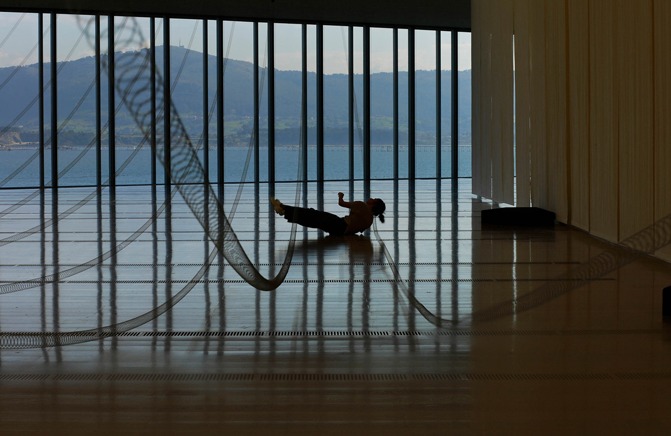
Another installation awaits us at the Botín Center, in this case performative and musical, dedicated to the waves that have stopped being generated in the sea due to industrial activity and urban growth. Dredging carried out on the high seas, port expansion, sand extraction… have modified the coastlines, altered the seabed and caused, throughout the planet, the decrease in these waves, which as is known are formed in the open sea, but it is near the shores where they take shape. The end of these breakers – the group points out – would not be innocuous, but would imply the transformation of landscapes and the cultural history linked to the oceans. In his words, Each vanished wave leaves a mark: a scar on the seabed, a story of loss.
Together with the aforementioned Geomatic and Oceanographic Engineering Group, Cooking Sections has been able to identify and interpret eleven specific and erased waves, which have been named according to their geography and have attempted to be biographed, including The Barre (in the Bay of Biscay); Kirra (Kurrungul, Coral Sea); Ala Moana (Hawaii); Flask (Guerrero, Northeast Pacific); White Cape (Piura, Southeast Pacific); Agadir (Souss Massa Drâ, in the northeastern Atlantic); and Fish Tail (in the Azores).
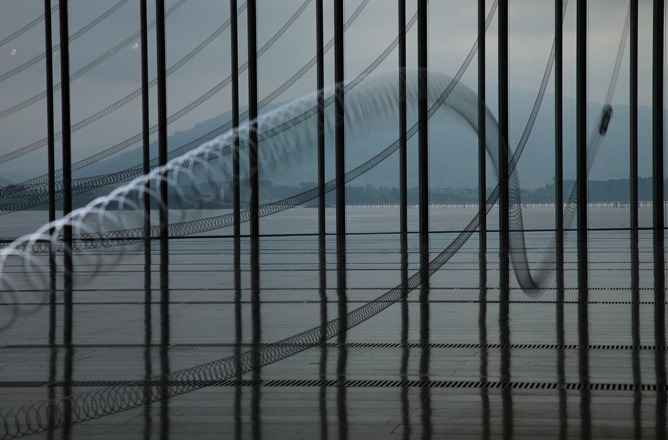

This exhibition, which follows the path of those of Shimabuku and Nuno da Luz in terms of its connection with local audiences and professionals, is a tribute to those energies weakened by the layout of canals, breakwaters or second homes, and a reminder of the migrations of species and the eroded livelihoods derived from that disappearance.
This tribute implies a purpose of redefining the notion of monument, now focused on the threatened abundance of nature, and is accompanied by sounds: the musician and artist Duval Timothy has translated the shapes and rhythms of those lost waves into musical compositions; Their scores give rise to movements generated by performers that constantly activate a choreography developed by the artists on the second floor of the Botín.
In this way, the public is invited to see and hear the movement and outcome of these waves and to reflect on those that can still be protected: they can formulate their ideas about how to regenerate and restore our natural environments in a specific space of the exhibition, in accordance with that specific methodology developed by the Botín Center and Yale. Your proposals will be sent to Cooking Sections.
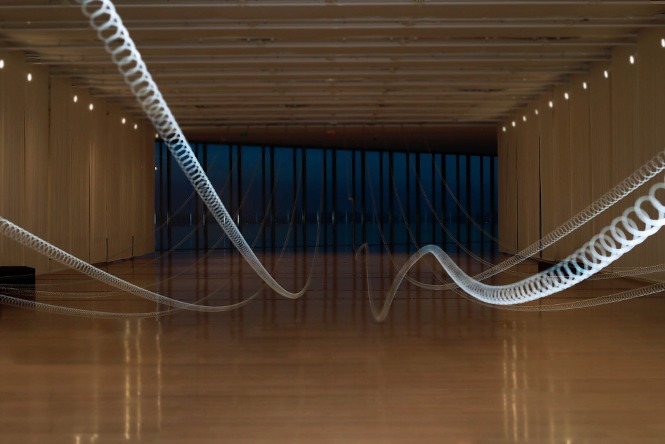
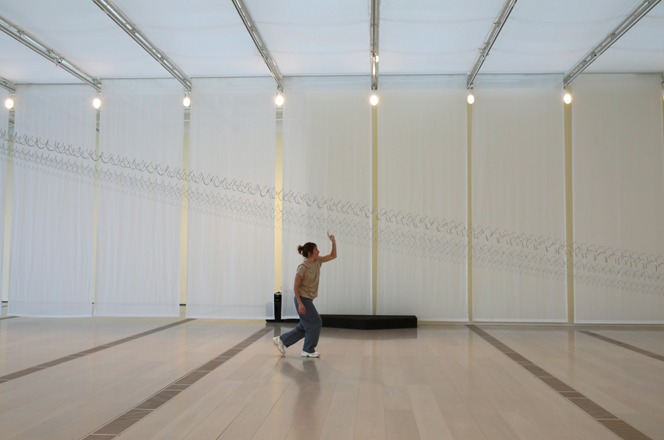
Cooking Sections. “The lost waves”
LOOT CENTER
Plaza Emilio Botín, s/n
Pereda Gardens
Santander
From October 18, 2025 to March 1, 2026


