Madrid,
Intended, since 2009, to house works from its nineteenth-century collections that usually cannot be exhibited for reasons of space, room 60 of the Prado Museum has been hosting, since this year, small-format exhibitions within its program open warehousedesigned to present the center’s photographic collection, made up of nearly 10,000 images.
After “El Prado multiplicado”, it offers the exhibition “The universe of the artist before the camera”, again curated by Beatriz Sánchez Torija. It has around thirty works, dated between 1850 and 1940, in which contemporary creators are portrayed either through their studies, through the reflection of their creative process or the handling of their pieces, or through their own portraits in those workshops, alone or accompanied.
Consolidated in the 21st century, the Prado’s photographic collections have largely been established through donations (from its Friends Foundation, from descendants of artists or photographers), hence allowing us to explore the relationship between painters and sculptors with photography, and vice versa, given that in the beginnings of this discipline it was common for photographers to have training in Fine Arts, even though they focused their work on precision and realism.
Very little in these compositions is left to chance, in that they were to transmit identities and status: poses, attributes and instruments were carefully meditated, always associated with the profession of the protagonists; This is also the case when we do not know the authorship and even in those of an amateur nature.
And it is not advisable to lose sight of the settings: photographic studios proliferated in those early days of photography; They used to be established in the upper parts of buildings and have large windows, even glass roofs, to allow work with natural light. Going to them was then very much a social event, hence the competition between them grew and, finally, their prices became cheaper.
In room 60, the group portrait stands out, in the studio of Alonso Martínez and his brother in Pasaje de Murga in Madrid (on Montera Street), of artists who at that time were training at the Royal Academy of San Fernando and of their teachers, such as Carlos de Haes, Luis de Madrazo, Juan Antonio Rivera… The location is easily distinguishable, precisely because of its gabled windows.
It dates from 1857 – 1858, somewhat before the print of the Spanish artists who were in Rome in 1861 and who wanted to have their portrait taken, in the Altobelli and Molins studio, coinciding with the visit to the Italian capital of the writer Pedro Antonio de Alarcón. They pose next to the painted figure of an allegory of photography and among them we distinguish a chaplain and a photographer: Pompeu Molins, known there as Pompeo and member of the society that ran the workshop, along with Gioacchino Altobelli.
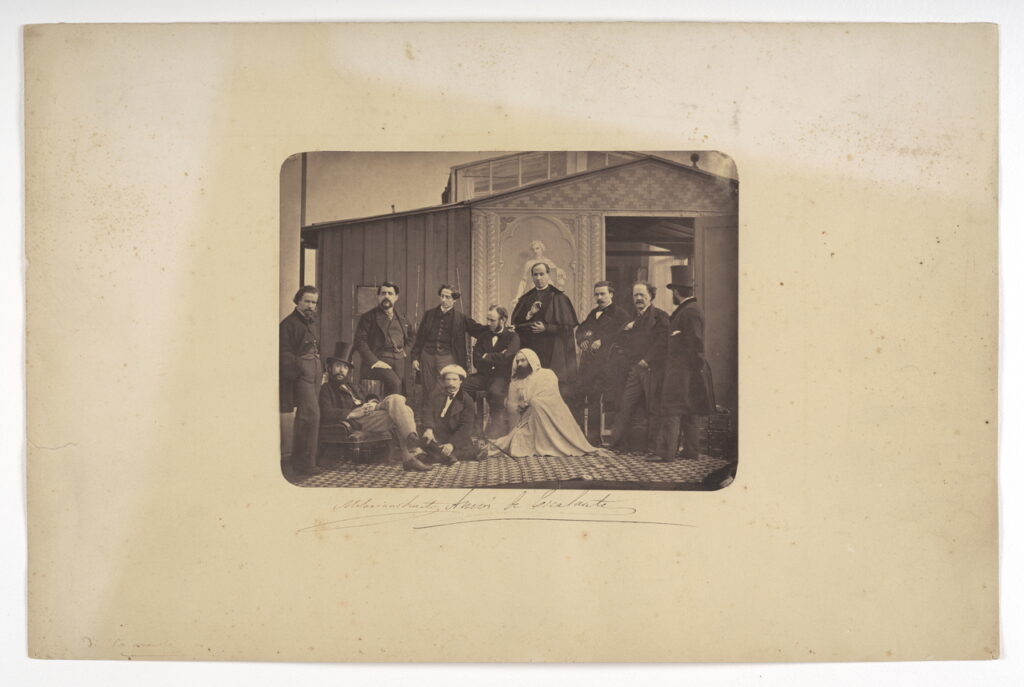
These scenes, necessarily, have a larger format than the individual portraits; Among the latter, peculiar typologies were consolidated such as business cardthe promenade card wave paris card (Later, procedures such as tintype, platinotype, autochrome or gelatin copies will arrive).
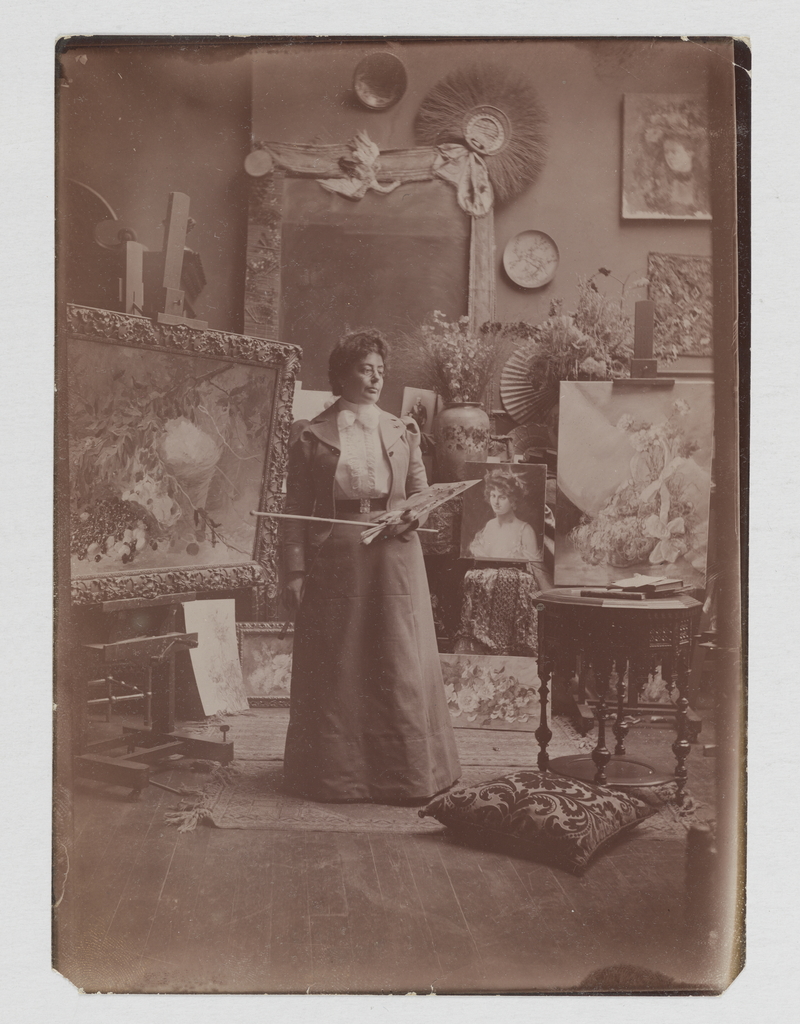
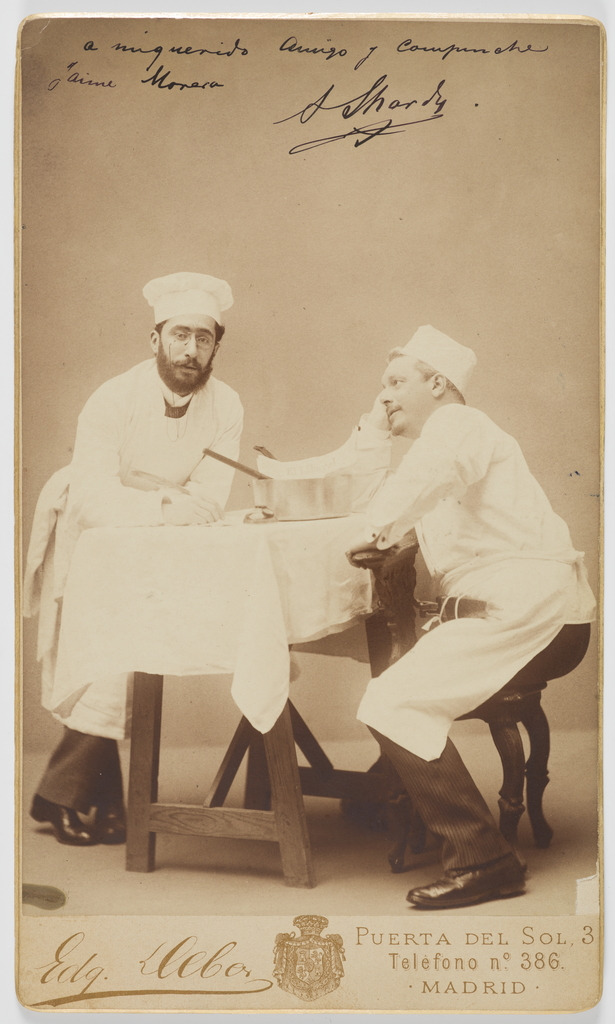
We will also see a portrait of the painter María Luisa de la Riva with her work instruments and another of Fernanda Francés as an elegant lady; a fun scene with his colleagues Jaime Morera and Agustín Lhardy as cooks -in fact, it is the owner of the restaurant-; an image by Cecilio Pla that we can consider to precede the photo booth; and original, almost pictorial framing of Miguel Blay’s sculptures, in some cases in the process of being transported.
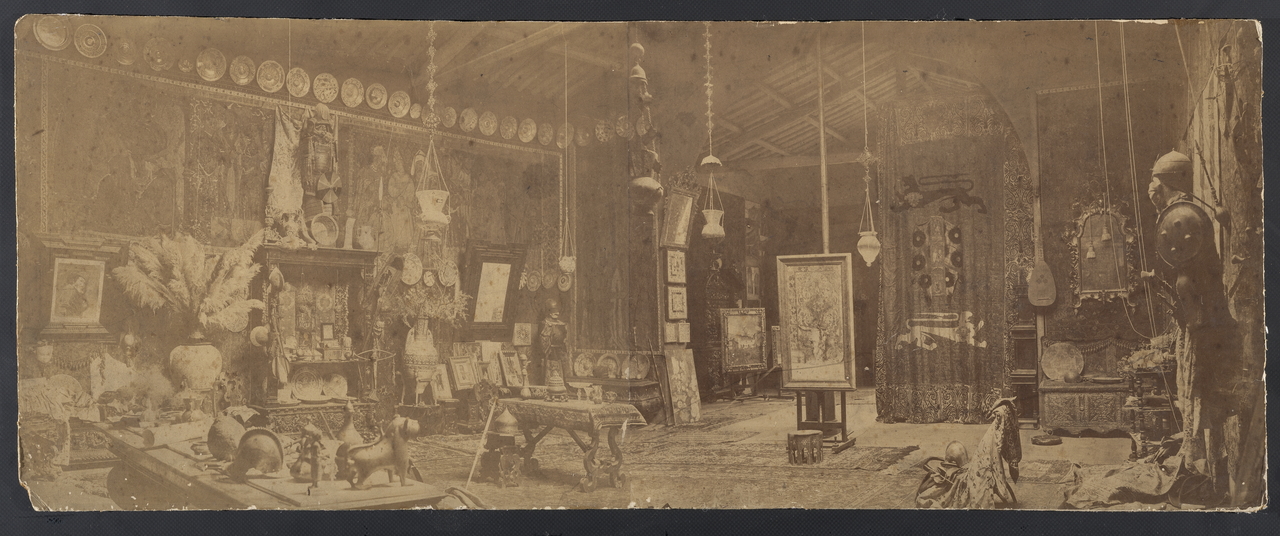
Speaking of pictorial workshops, we have to refer to that of Mariano Fortuny in Rome, by an unknown author. It is a panoramic view, composed of the union of two photographs, which leaves no room for doubt about the cosmopolitan and delicate universe with which this artist wanted to surround himself.
The studios could also be places of teaching, such as that of Cecilio Pla in Madrid, which welcomed, as we will see in the exhibition, in an image by Gonzalo del Campo, male and female students, as did that of Manuel González Santos in Seville, captured by Informaciones Fotoográficos Dubois.
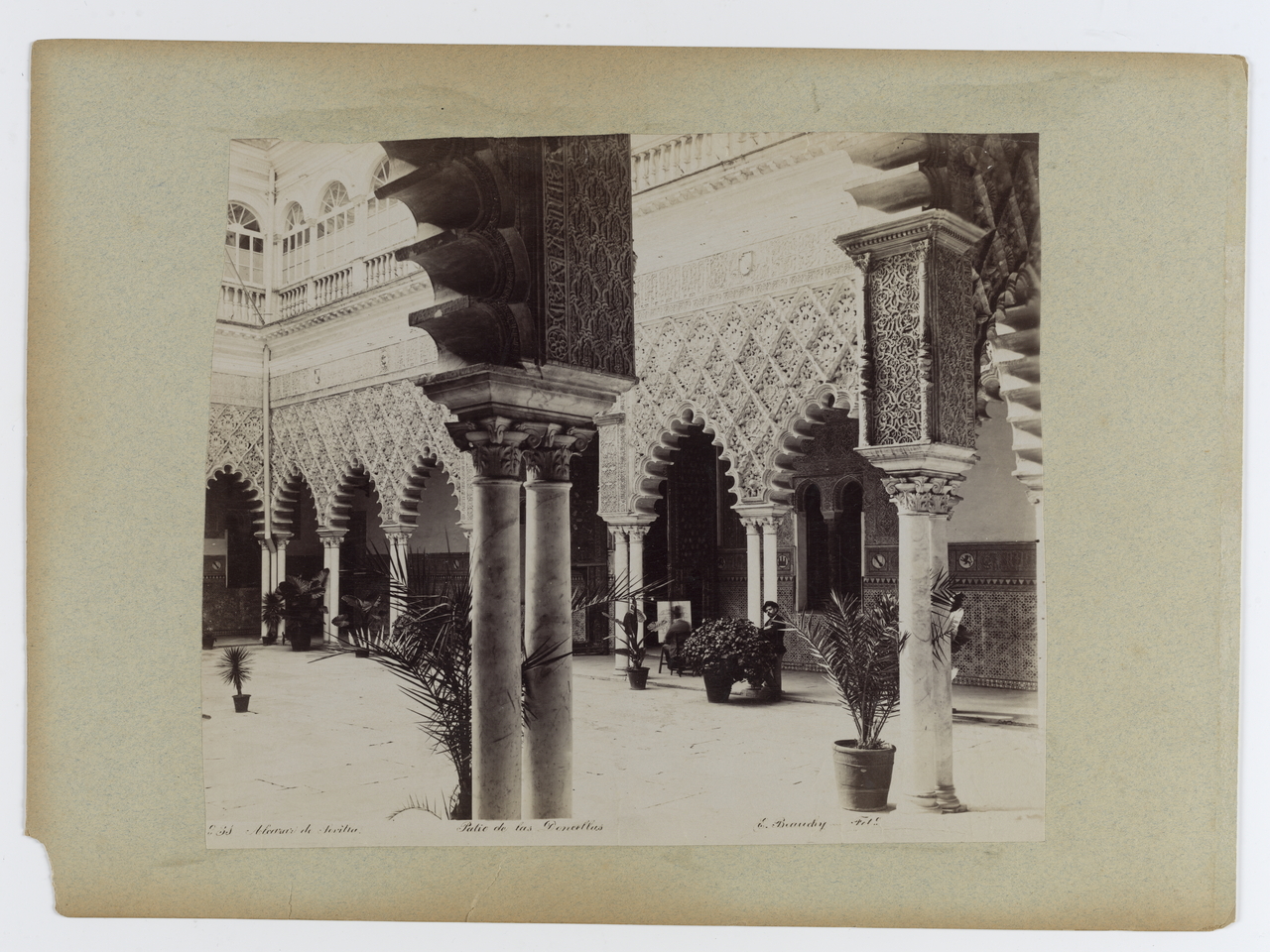
How the 19th century was the birth of painting au plein airthere will be no shortage of images taken in the Patio de las Doncellas of the Sevillian Alcázar (Emilio Beauchy) or the Golden Room of the Alhambra (Charles Mauzaisse).
This exhibition proves that, despite the classic reluctance towards any novelty, for many artists and sculptors, photography was also a companion and ally.
“The universe of the artist before the camera”
NATIONAL PRADO MUSEUM
Paseo del Prado, s/n
Madrid
From April 13 to July 5, 2026