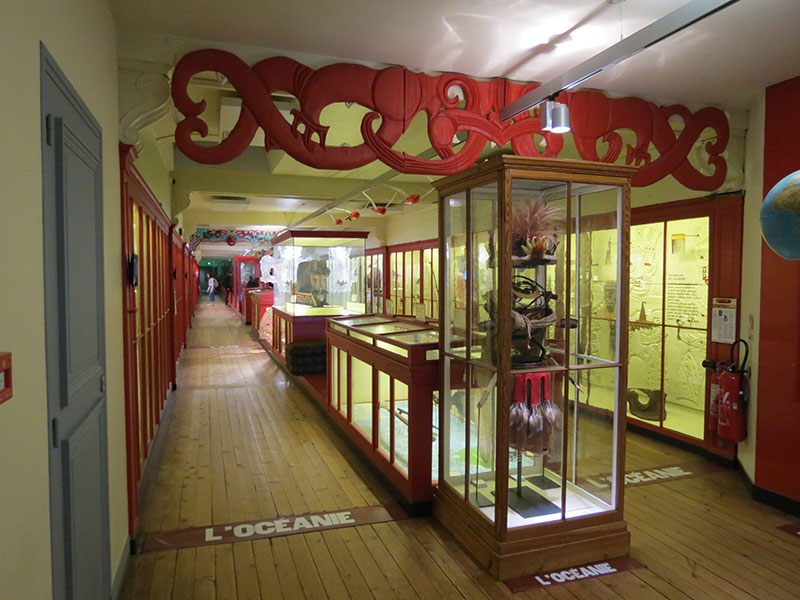
Rouen (Seine-Maritime). Decided as part of the future Beauvoisine hub, the renovation work on the Rouen Natural History Museum is supposed to begin at the beginning of 2027, with profound changes to the museography. The Beauvoisine center will in fact see the collections of the Museum and those of the Museum of Antiquities brought together in the same unit, after extensive work costing around 70 million euros, according to the latest estimate. Alexandra Sobczak, president of Urgences Patrimoine, recalls that the museography of the 19th century at the Museum presents a “patrimonial interest” important because of the numerous dioramas, specimen cases and central islands along the route. This museography was also renowned for its exceptional quality from the 19th century, and it has undergone few modifications since its creation in 1834: it is the only original museography preserved in a museum in France. The renovation project includes, among other things, the removal of the dioramas, except the most famous entitled “The Norman Farm”, and, for conservation reasons, the replacement of the historic windows. According to Alexandra Sobczak, the creation of new exhibition rooms and a cafeteria will also modify the museography, which is why, following the“no response (in 2025) of the Ministry of Culture to proceed with the historic monument classification process » exhibition furniture from the collections, the association filed a request with the administrative court. The classification body provides temporary protection for historic monuments pending the examination of the file by the ministry.
The removal of windows from the building permit
Among the arguments presented by Urgences Patrimoine and the academic Frédéric Epaud (CNRS) who joined this request, is the scientific and cultural project (PSC) of the Beauvoisine pole, approved by the Métropole de Rouen-Normandie in 2017 and 2019 (the museum is placed under the supervision of the Métropole). This PSC provides for the conservation of the historic museography and the rehabilitation of the adjacent faculty buildings, while the building permit shows that most of the display cases and dioramas will be removed from the new route. Alexandra Sobczak observed that the file concerning the Museum on the website of the Ministry of Culture specifically highlights 19th century museography.
In a decision rendered on January 30, the court ordered the ministry to proceed with “placement under the regime of the historic monument classification body” of the Museum and the furniture constituting its museography. He notes “the undeniable heritage value” dioramas presenting animals in their natural environment, and display cases of specimens. He notes that “the renovation program for the Beauvoisine center is likely to undermine their coherence and integrity.”
The Metropolis, for its part, declares that this decision “has no impact on site preparation”which will begin in 2027 as planned. She adds that the furniture was “already protected by the law on French museums”and that it was planned to keep it, a point that Alexandra Sobczak questions in view of the extent of the modifications in the Beauvoisine center project: it plans to destroy or modify nearly 30% of the museography. The association also announces that it will appeal the decision to obtain the authority to classify the buildings of the old faculties, initially supposed to be renovated before being removed from the project despite a worrying state of dilapidation.