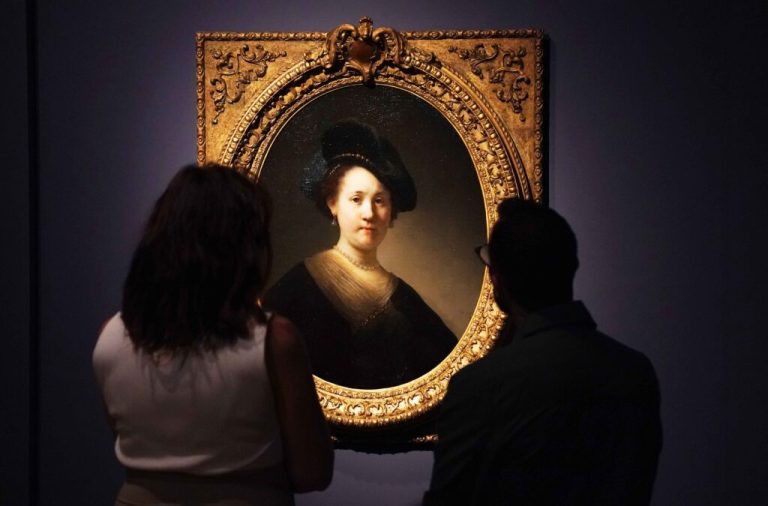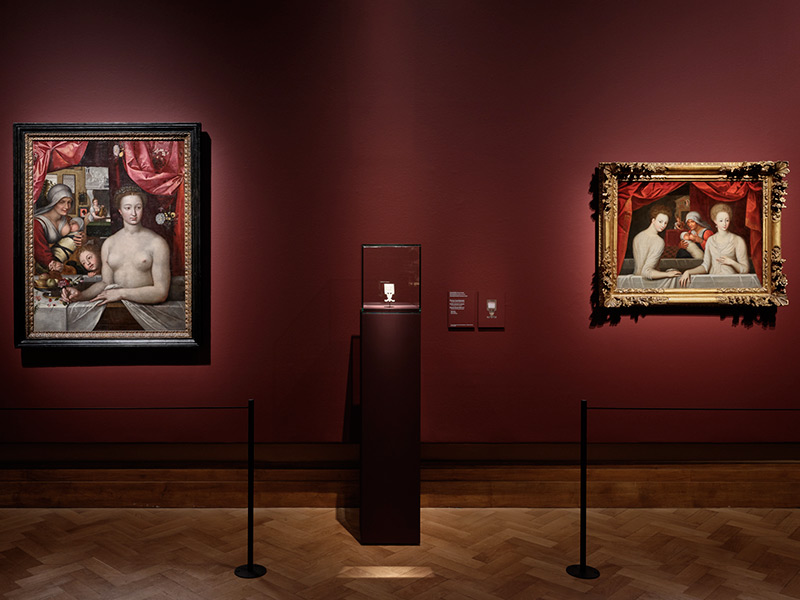
Brussels. The intention is clear in this exhibition entitled “Bellezza e Bruttezza” (“beauty and ugliness”) designed by curator Chiara Rabbi-Bernard for Bozar. The Renaissance specialist wants to show how, in Italy and Northern Europe, artists represented beauty and its foil, ugliness. Before this pivotal period between the Middle Ages and Modern Times, artists were never interested in the antagonistic sides of physical appearance. The route deploys different themes over the same period of time, from the end of the 15th to the 16th century in its entirety. The works arranged in a narrative logic were selected based on their evocative quality and their availability. A very sober scenography serving the paintings was favored. Loaned by more than 60 international institutions, works by Botticelli, Titian, Vinci, Tintoretto, Dürer, Cranach the Elder and Matsys are the stars of the exhibition. This is an extremely rare opportunity, which will not happen again soon, to see these masterpieces brought together.
View of the exhibition “Bellezza e Bruttezza. The ideal, the real and the caricature in the Renaissance” at Bozar-Palais des beaux-arts de Bruxelles.
© We document art
Hanging on a dark monochrome background which varies subtly depending on the theme, the paintings are aligned at eye level, stimulating a mirror effect with the viewer and giving the impression of wandering through a palazzo or from a collector. In accordance with this sobriety, mediation is limited to discreet cartels and a few trilingual room texts. More complete information is provided in the visitor guide.
What is beauty? Each era and each civilization has its own codes. The European and Western vision underwent an evolution during the Renaissance, when artists began to break away from the ideal aesthetic canons of Antiquity to create a beauty that was still idealized, but inspired by reality.
Painting the powerful beyond their lack of beauty
One of the originalities of the exhibition is to put Italian artists in dialogue with those of Northern Europe. There are convergences, nuances, differences and influences between them which enrich each other to create a new perception of beauty. It was influenced by Flemish artists that the Italians abandoned the profile representation inspired by the portraits appearing on coins to adopt the three-quarter view which allows a more nuanced volume.
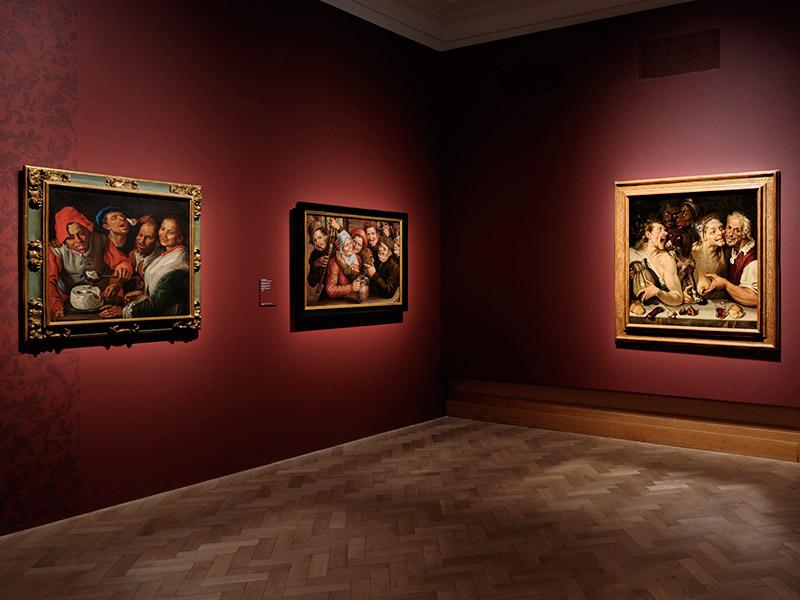
View of the exhibition “Bellezza e Bruttezza. The ideal, the real and the caricature in the Renaissance” at Bozar-Palais des beaux-arts de Bruxelles.
© We document art
Painting beauty is a form of flattery, especially when addressing the powerful. Charles V was one of the most portrayed leaders of the 16th century. However, the sovereign had what some have called a particularly prominent “Habsburg chin”. We can appreciate the difference in treatment between an anonymous portrait, where he is shown in profile, and that executed by Titian, official painter, who presents him from the front, thus attenuating the physical disgrace. There is a fine line between faithful and ideal beauty. Giulia Gonzaga was an aristocrat admired for her beauty. We can see two portraits of him, the first, made after Sebastiano del Piombo, is undoubtedly more realistic than that of Titian’s hand. In a letter which has been preserved, the lady writes that the latter painted her more beautiful than she was, but that it was thanks to his genius!
In the royal and princely courts, the beauty of power coexisted with the fascination for the extraordinary physique of dwarves or people with excessive hair, such as that of the famous Gonzales family. Even if it is never chosen, sometimes manufactured, beauty and ugliness become the attributes of a social class or a moral posture.
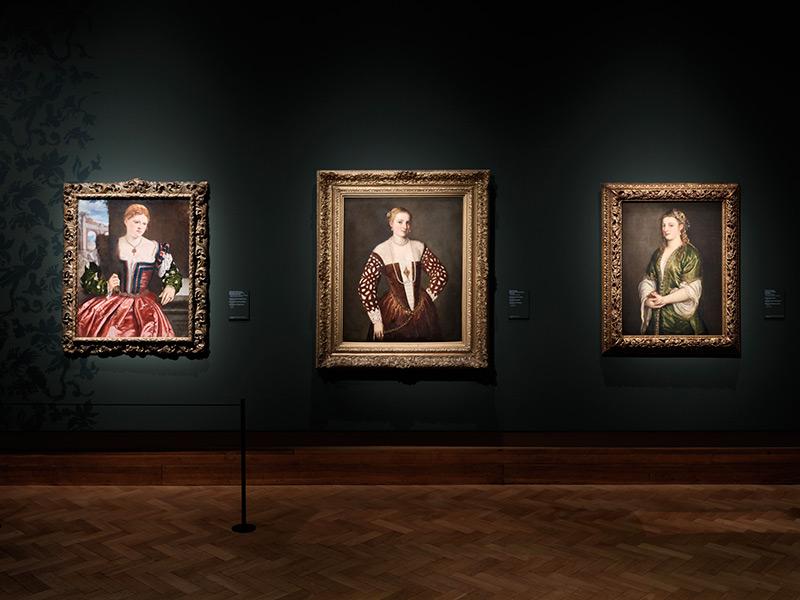
View of the exhibition “Bellezza e Bruttezza. The ideal, the real and the caricature in the Renaissance” at Bozar-Palais des beaux-arts de Bruxelles.
© We document art
For Renaissance artists, ugliness is in fact first and foremost that of others, those we keep at a distance. She embodies old age, the marginalized, the mad and the “bad”, but also Africans, these strange human beings with black skin who appear in the Caricature banquet (or “merry company” [vers 1577] by Bartolomeo Passarotti. Inspired by the grotesque frescoes of Antiquity, ugliness can be the subject of caricatures and laughter as in the drawings of Leonardo da Vinci. When they appear as a couple, beauty and ugliness are the expression of an inequality which reflects a turpitude, moral or financially interested, embodied by youth, masculine or feminine, seducing the old age of the opposite sex.
The route ends with Pomona (1565), by Frans Floris de Vriendt, an Edenic vision where a satyr and a young naked nymph look at each other against a backdrop of plant abundance as if this paradise were the only place where the beautiful and the ugly could rub shoulders without risk and on equal terms.