Would the introduction at the Louvre of differentiated pricing for non-European visitors have given some ideas across the Channel? In a press release announcing reform of Arts Council England published on March 26, the government indicates that it will explore “(…) the potential opportunities that charging international visitors to museums could bring. » The avenue remains under study, but it reveals a basic tension: how to finance a weakened sector without undermining one of the cardinal principles of the British model, free access for all, regardless of origin?
Since 2001, the major permanent collections of national museums funded by the Department for Culture, Media and Sport (DCMS) have been accessible free of charge, regardless of the visitor’s country of origin. The model has long been a success. It increased attendance, particularly in London, and strengthened the international image of the United Kingdom as a country of open museums. But it rests on an increasingly fragile balance. Own revenues (paid temporary exhibitions, shops, cafes, sponsorship) are struggling to compensate for rising operating costs and a stagnation or even a drop in public subsidies.
In 2018/19, the last year before the pandemic, DCMS-supported museums recorded 49.8 million visits, including 23.8 million foreign visitors, or 47.9% of the total. By 2022/23, total footfall had fallen further to 34.9 million visits, with around a third international visitors. Then, in 2023/24, attendance rises to 40.8 million visits, including 17.5 million foreign visitors, or 43% of the total.
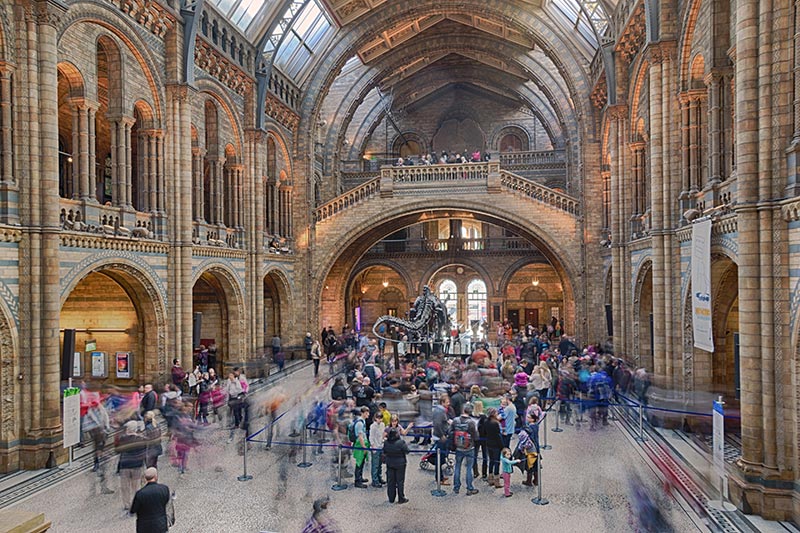
On the scale of the major London museums, the weight of international visitors is even clearer. Their presence now conditions the financial balance of the model. Before Covid, in 2018/19, the National Gallery had around 4 million foreign visitors, or 66% of its attendance, and the Natural History Museum had 3.2 million, or 58.1%. In 2022/23, the British Museum will return to around 2.5 million foreign visitors, after the collapse of 2020/21. The museum then welcomed 5.8 million visits in 2023, then 6.5 million in the 2024/25 financial year. The Natural History Museum even reached 7.1 million visitors in 2025.
The hypothesis of a price targeted at tourists appeals to part of the government. It would make it possible to capture a part of the value generated by these institutions without calling into question the free access for British residents. But the idea is not consensual. THE think tank Cultural Policy Unit the judge “very bad” and prefers a tourist tax, simpler to administer and less politically brutal. A move to paid often lowers overall attendance. Charging tourists could pay off in the short term, at the risk of weakening a model based on crowds, openness and ancillary expenses.