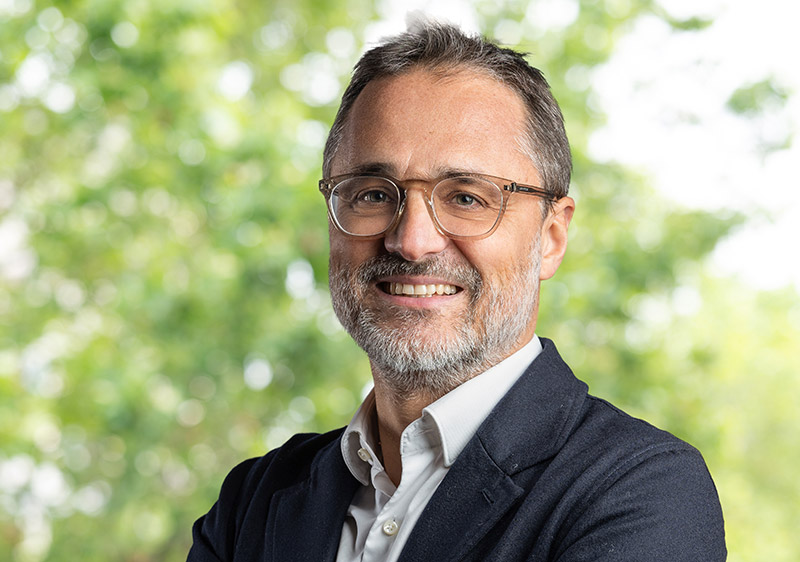
Lawyer at the Paris bar, doctor of law, Xavier Prés is one of the partners of the Valther firm. A specialist in intellectual property law and the art market, he headed the legal department of the Louvre from 2002 to 2007. Co-founder in 2020 of the firm Varetprès, he teaches in particular at Sciences Po and collaborates with Arts Journal.
In what context was this guide (1) ordered?
This guide is the result of a project led by the BNF (National Library of France) and the INA (National Audiovisual Institute) with the companies Artefact, Giskard and Mistral AI. Winner in 2024 of the “Digital Commons for Generative Artificial Intelligence” call, funded by France 2030, this project must notably contribute to a large open French-speaking language model. The Valther firm worked with the legal departments of the two institutions to clarify the framework applicable to the collections. The complete guide and its summary can be downloaded free of charge from the institutional website of the BNF or the INA.
Why is it important to better represent French content in the models?
Trained mainly on Anglo-Saxon corpora, the major models imperfectly reflect our language, its history and the diversity of its cultural productions. Quality French funds can improve written and oral comprehension, reduce certain biases and strengthen our technological sovereignty. At the BNF, artificial intelligence can correct the texts resulting from the ocerization (the transformation of an image into a usable text file, editor’s note) of millions of documents from Gallica (the digital library of the BNF); at the INA, she can refine the analysis of audiovisual transcriptions.
Under what conditions can funds from a cultural establishment be used to train AI?
Text and data mining allows, under certain conditions, the automated analysis of large quantities of content. For scientific research, the organizations concerned can benefit from a relatively broad exception, provided they have lawful access to funds. For other uses, notably commercial, rights holders may oppose this exploitation through a mechanism ofopt-out. But legal access to a work is not always enough to authorize its use to train a model. It is therefore necessary to examine each corpus with regard to copyright, related rights, database law, contracts and, where applicable, personal data. This is precisely one of the objectives of the guide: to help institutions determine what data can be used, by whom and with what guarantees.
How does Valther support companies in complying with the European regulation on artificial intelligence (AI Act)?
The first step is to audit the AI systems already in use, including tools adopted directly by employees, then to map the data processed and the associated risks. Valther then helps the company to qualify its role with regard to the European regulation – supplier, deployer, importer or distributor – and to identify the applicable obligations. Finally, we develop the necessary systems: internal charter, governance, human control procedures, confidentiality and security rules, documentation, contractual clauses and team training.
Does your experience as former legal manager of the Louvre inform your approach?
Yes. At the Louvre, it was necessary to reconcile legal requirements, a public service mission and the operational constraints of a very exposed institution every day. This experience convinced me that law (like AI) is a tool to be used to make projects succeed. Today a lawyer, I support my clients in the same spirit: as a partner, I provide legal responses to their concrete needs, from advice to litigation.
Can the ChatGPT conversational agent really compete with a law firm?
A generative AI quickly provides a well-written answer, but it can make misunderstandings, invent a source or remain general. A law firm brings context understanding, risk prioritization, reference checking, strategy and accountability to the board. AI can speed up a search or compare documents; it does not replace either dialogue with the client or legal arbitration.