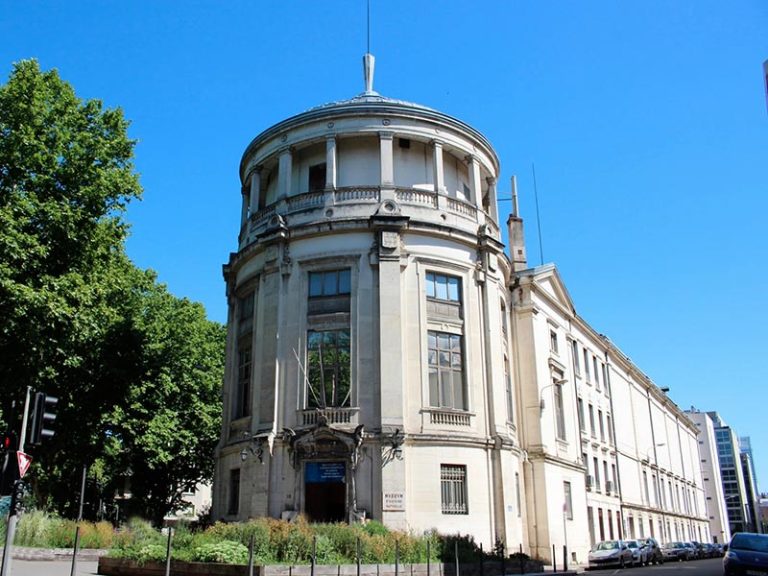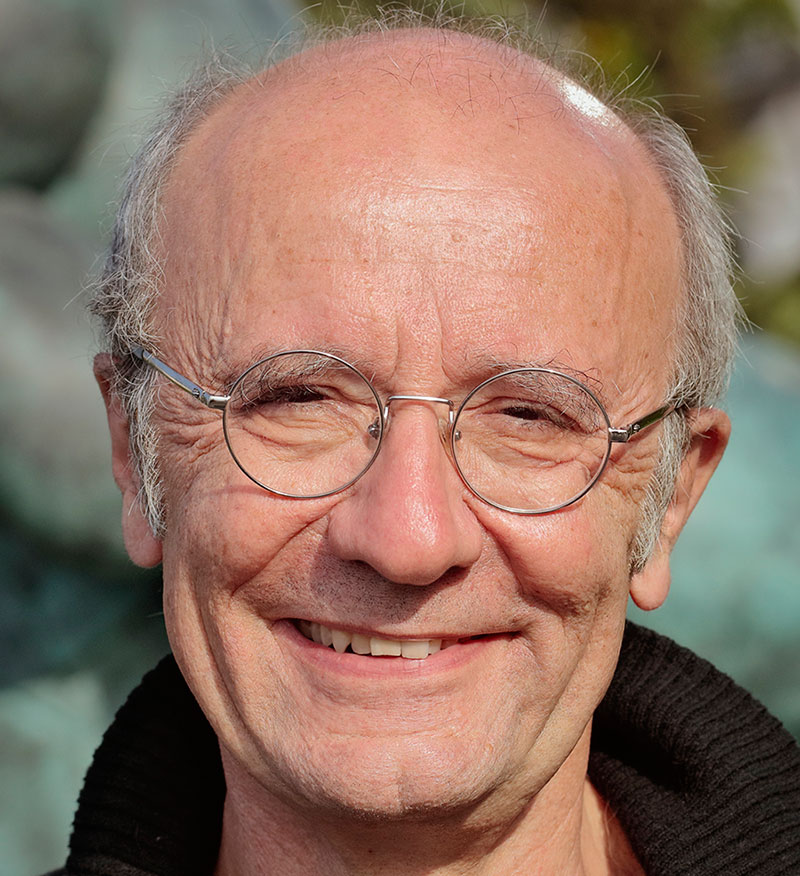
Ixelles (Belgium). A few months after announcing his withdrawal from the Cat Museum project carried out with the Brussels Region at the Mont des Arts, the designer Philippe Geluck announced on September 21 that he had acquired a building to relaunch the place dedicated to his favorite character. Located at 141-145 Chaussée de Wavre in the town of Ixelles, the former Demeuldre-Coché earthenware factory (founded in 1830) is an eclectic-style building with a facade decorated with polychrome ceramics. The building notably includes an exhibition hall built in 1874 and a store dating from 1905, for an exhibition area of 2,300 m². Partially listed in 1997, the building will be restored and fitted out by the Francis Metzger architectural office, to which we owe in particular the restoration of the Empain villa, the Tournay-Solvay castle and the Astoria hotel.
The Demeuldre-Coché factory in Ixelles.
Multiple delays
It was following the public success of the “Cat” exhibition at the École des beaux-arts in Paris, then at the Cinquantenaire in Brussels in 2003-2004, that the idea of a Cat Museum was born. The project, envisaged in 2008, came to fruition in 2015 in a museum at Mont des Arts which would house all the diversity of the artist’s production beyond press drawings and comic strips. In the agreement concluded with the Brussels Region, the designer undertook to take responsibility for the interior design, once the structural work was completed. But faced with multiple delays, as well as inflation in the cost of labor and materials, Geluck threw in the towel: “The contract provided for a suspensive condition which allowed me to withdraw if the building was not delivered by March 31, 2026.”
With determination, Philippe Geluck was able to mobilize the notoriety of his character to develop an original economic model. In 2021, he installed twenty monumental bronze sculptures free of charge on the Champs-Élysées in Paris. The open-air exhibition “The Cat Ambulates” then toured several French and European cities, notably Brussels in 2023. Published in two copies, as is the case for the monumental bronzes, certain works were acquired by private collectors, companies and communities for prices varying between 250,000 and 400,000 euros. The acquisition of a sculpture of the Cat by the Brussels Parliament in 2023, for 370,000 euros, did not fail to rekindle the controversy which has accompanied the Cat Museum project since its beginnings. Social networks echoing the arguments of pro- and anti-Geluck. Some are delighted to see Brussels host a museum dedicated to Cats and their humor, others contest the very relevance of such a museum as well as its support by public authorities.
A fun art museum
The new museum, welcomed with open arms by the municipality of Ixelles, will not benefit from any public funding. Funding will come from ticketing, boutique and merchandising, event rental as well as support from private patrons and partners.
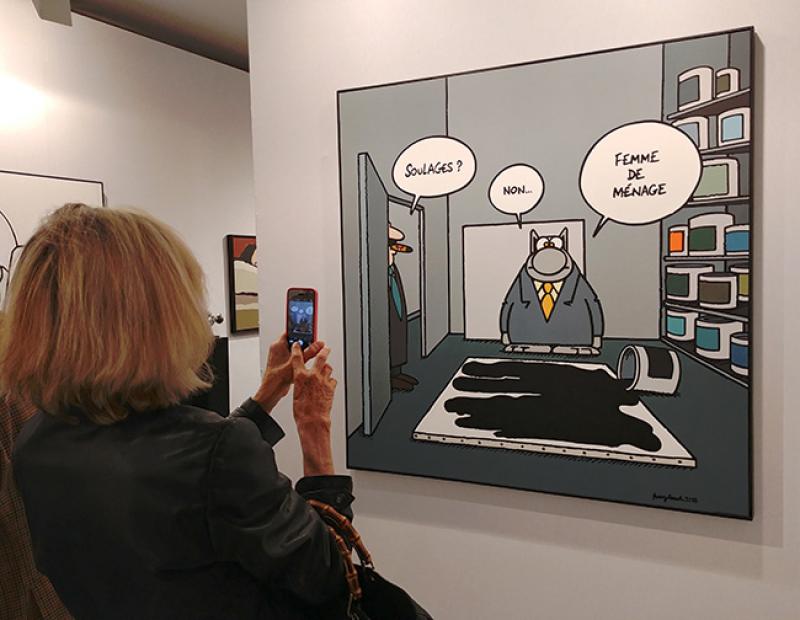
By changing location, the museum has slightly revised its title. It now presents itself as “The Museum of Cats and Funny Art”. Alongside the world of the Cat, the museum will offer thematic exhibitions on press cartoonists, historical and contemporary, but also works that show the Cat in all its forms, as well as rooms offering “funny art” where Geluck brings together Dada, Magritte, Joan Cornellà, Banksy and Maurizio Cattelan. “We will see works from the collection that I have been collecting for around ten years, as well as loans from collectors and galleries as was the case for the exhibition “L’Art et le Chat” at the Musée en Herbe in 2017. Here, as the layout of the premises lends itself to this, I would like to create a journey with rooms with different atmospheres which take visitors from surprise to surprise. »
© Photo Ludovic Sanejouand