Emmanuel Macron’s first budget, the PLF 2018, increased the credits for the Culture mission by 1.1%, to nearly 2.9 billion euros. Nine years later, his latest budget takes the opposite direction. The 2027 PLF provides for 3.649 billion euros in payment credits (CP), compared to 3.745 billion in the initial finance law for 2026, a decrease of 2.55% and 95.4 million euros.
The drop is greater than announced this summer. The ceilings transmitted to Parliament in July showed, with rounded amounts, 3.5 billion euros for the Culture mission in 2026 as in 2027. The Arts Journal then noted that this apparent stability had to be put into perspective, particularly with regard to the cancellations and freezes that occurred during the financial year. The details of the PLF ultimately reveal a nominal reduction in resources.
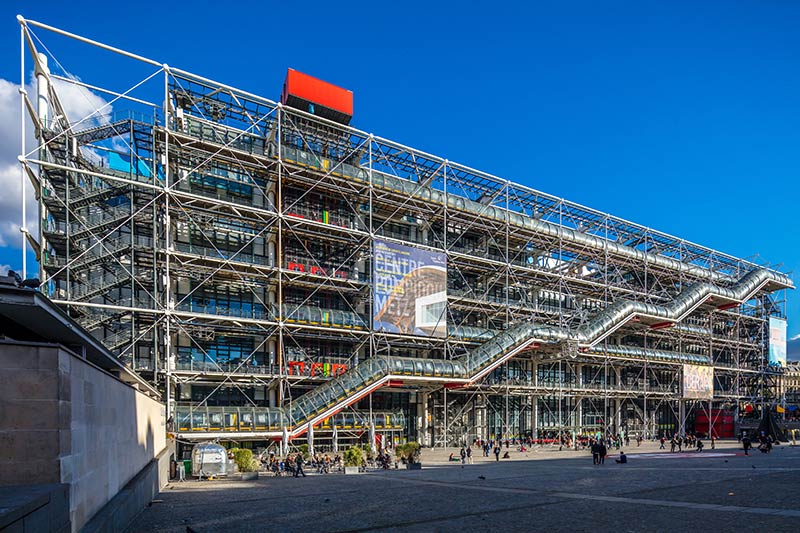
The Heritage program is holding up a little better than the entire mission, with 1.116 billion euros of CP, down 1.86%. But the arbitration between sectors is marked. Credits for historical monuments and monumental heritage decreased by 8.38%, to 396.5 million euros, while those for museums increased by 3.92%, to 454.6 million. This increase is partly absorbed by major projects: the Center Pompidou will receive 129.8 million euros, compared to 113 million in 2026.
However, not all museums are in the same boat. The Louvre’s endowment increases from 100.4 to 88.4 million euros in CP. Its operating subsidy supports a reduction of 3 million euros, which the ministry wants to compensate by an increase in the museum’s own resources directed by Christophe Leribault. The Versailles budget, which Catherine Pgard led for a long time and which is still without a director, also includes a reduction in subsidies linked to the extension of differentiated pricing.
The Creation program falls further, by 3.50%, to 963 million euros. The effort, however, is not uniform: the performing arts lost 4.92%, to 737.6 million, while the visual arts gained 2.18%, to 155.7 million. The approximately 364 million intended for national operators are almost renewed, but the ministry is also asking them to reduce their operating costs and increase their own resources.
Finally, the Transmission of knowledge and democratization program fell by 3.92%. Action devoted to democratization and artistic and cultural education fell by 8.10%, to 272.3 million euros. This development is largely explained by the Culture Pass, for which the ministry’s allocation increases from 157.5 to 137.5 million euros.
The drop in Culture comes as payment appropriations for the general budget increase overall by 3.6%, going from 593.9 billion euros in LFI 2026 to 615.1 billion in PLF 2027. The effort is, however, very unevenly distributed: Defense increases by 10%, to 73.2 billion, Justice by 3.6%, Security by 3.1% and School Education by 1.4%, while Labor (-9.5%), Agriculture (-13.1%), Health (-6.3%) and Culture (-2.55%) are trending downward.
The overall increase in the budget is largely absorbed by the cost of the debt: the credits for the “Debt burden and State cash flow” program jump from 58.6 to 72.4 billion euros, or +23.5% and almost 13.8 billion additional in one year. This increase alone represents approximately two-thirds of the net increase in general budget appropriations. The tightening of the Culture budget must therefore be placed in a PLF where the increase in debt interest and that of military credits greatly reduce the margins available for other public policies.
Unlike the 2018 budget when Emmanuel Macron enjoyed a comfortable majority in parliament, the 2027 draft budget must face less benevolent parliamentary chambers. The final copy of the culture budget may not resemble the project presented yesterday.