The ICO Museum, which this year has been celebrating its three decades as an artistic and cultural center, joins the PHotoESPAÑA programming today with an exhibition articulated from photography and video, but above all from the conception of these as visual essays. Its protagonist, Jorge Yeregui from Santander, has made the Anthropocene the focus of his work, the name given to our geological era, understanding that, in the first years of the 21st century, changes on the surface and in the natural systems of the Earth are determined by human action, especially in industrialized countries.
Their projects take different Spanish geographies as case studies, but they could be applied to other scenarios and underline that neither the architecture nor the terrain are static: they are subject to very perceptible transformations in the short period of time that an individual’s life represents for the planet.
An architect, photographer and artist with extensive experience, Yeregui examines in those disciplines that we have mentioned, and also in installations, the weight of human intervention both in the urban landscape and in nature and, likewise, how these modifications have a way back and affect those who have caused them. In the exhibition, these analyzes are deployed in works related to extractivism, the bursting of the real estate bubble and the economic crisis of almost two decades ago, the city and our way of inhabiting it and the roads, genuine or forced, in which important architectural projects have incorporated plants, by genuine convergence with them or simply by image.
In the tour, curated by Juan Guardiola, we will witness Yeregui’s transition in the last twenty years from static photography to expanded photography and the aforementioned video and we will also see how texts and drawings made on the wall accompany the presentation of proposals with many total studies.
Jorge Yeregui. The perfect mountains III2021. © JORGE YEREGUI / VEGAP, MADRID, 2026
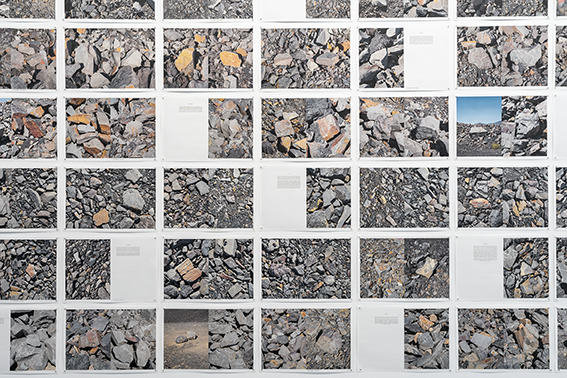
Its presentation does not respond to chronological criteria and begins with The perfect mountains (2021-2025), on the effects of the exploitation of the Fabero mines in León and also on the rehabilitation projects initiated after their closure in the nineties, restoration attempts that, in essence, have given rise to a landscape that is equally artificial as it is derived from human action.
We will see a collection of 3D printed waste dumps that replicate those that appeared in a 1989 Geomining Institute inventory, topographies generated from anthracite remains found in abandoned mines, photographs of fossils from the area and, above all, the rock fragments that had to be crossed to access the mineral, which are completed with texts associated with saints who martyred themselves with stones and similar instruments. Thus, the wounds of the landscape become connected with human physical lacerations.
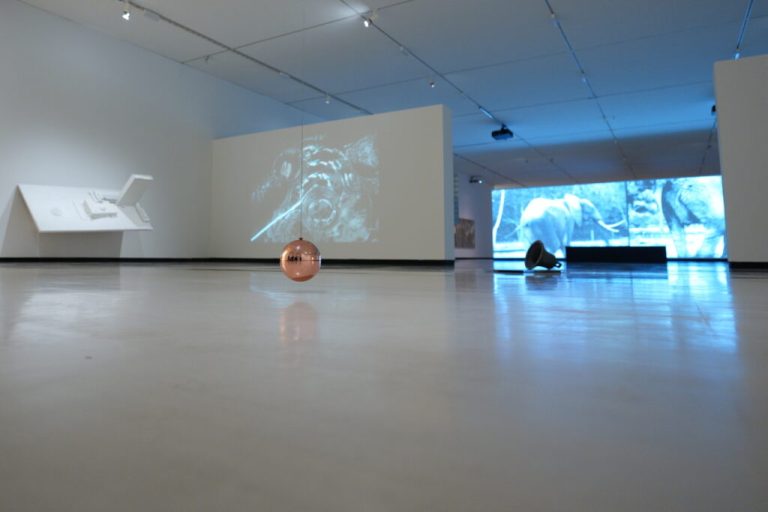
Yeregui’s second major project at the ICO Museum, Rethinking actdates from the years 2013-2017 and takes us to those barren lands destined to house apartments and finally empty ones with which in those years, and even today, we have become familiar. The artist made abandoned lots his work space, according to processes quite different from those of the Düsseldorf School: instead of attempting to record what was known, he sought to find what could be seen in the passage of hours (as long as it was necessary). His repetitive task ended up attesting to the idiosyncrasy of places that seem to have none.
We will contemplate half a thousand images of curbs that were to delimit streets and plots, and that Yeregui reorganizes in each exhibition as if its plane was continually reorganized and fractured; another visual inventory of eight hundred concrete separators; and three audiovisuals in which time stops in the middle of that nothingness that was going to be a neighborhood. In one of them, the ironic The heroines of the sitesthe voice of Google Maps will lead us to one of those places without roots.
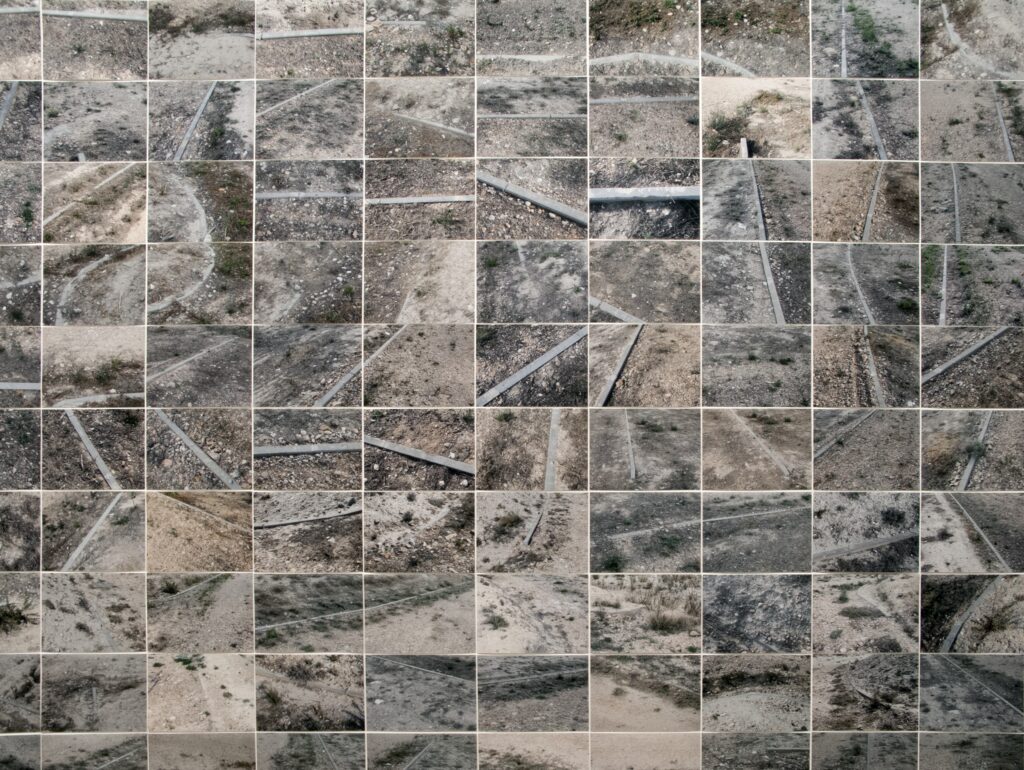
Jorge Yeregui. Shortcuts2015
Already on the upper floor, in whose museographic design an attempt has been made to generate this notion of vital displacement in the methods of this author, we will contemplate the project that the MACBA commissioned Yeregui coinciding with his initiative An unknown city under the fogintended to delve into the less known faces of Barcelona. This is the photographic installation Trace the waterwhich follows the course of the Rec Comtal emphasizing the value of infrastructure that provides water to neighbors, an unexportable resource. This network has its origin in a medieval irrigation ditch that, over the centuries, has served to supply industries and orchards and channel wastewater; Its channel, however, has been hidden under urban growth. The artist wanted to provoke multiple reflections on the problematic management of this property.
Without leaving this urban scenario, a virtual garden composed of 3D trees, a catalog of urban dwellers and promotions of new standardized urbanizations will refer to the tensions that arise in the urban environment between the desire of individuals to adapt it to their needs and the logic of the market.
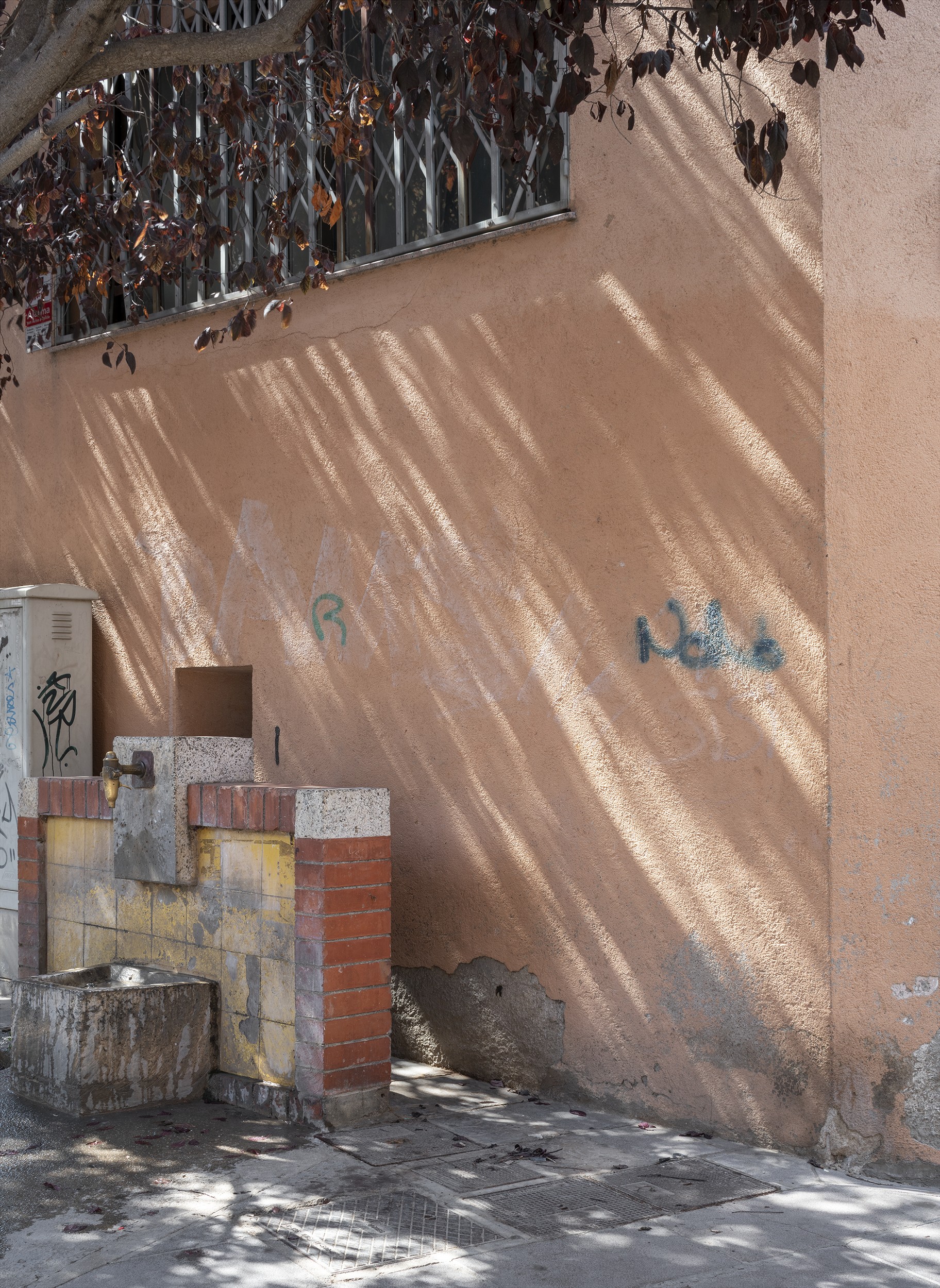
Jorge Yeregui. Series Trace the water2024
And Yeregui’s latest proposals on Zorrilla Street take us to Cádiz and Cape Creus. In Cotacero He once again combined text and photography to highlight the various attempts to domesticate the bay of the Andalusian city, with its peculiar topography (canalization, desalination, desiccation). Completed or not, they have generated a landscape in which the natural and the intervened merge almost in superposition. A similar process occurred in the Catalan cape, which experienced a tourist boom since the sixties, before being declared a natural park in the nineties: the old constructions that exploited it have been removed, but their mark remains.
The last photographs of the exhibition constitute minimal landscapes: reminders of the symbolic value of nature in the contemporary city and sometimes, also, of its mere incorporation as greenwashing. Yeregui has documented tiny gardens that have much more consumer objects than slightly green spaces. The wild is the new diamond.
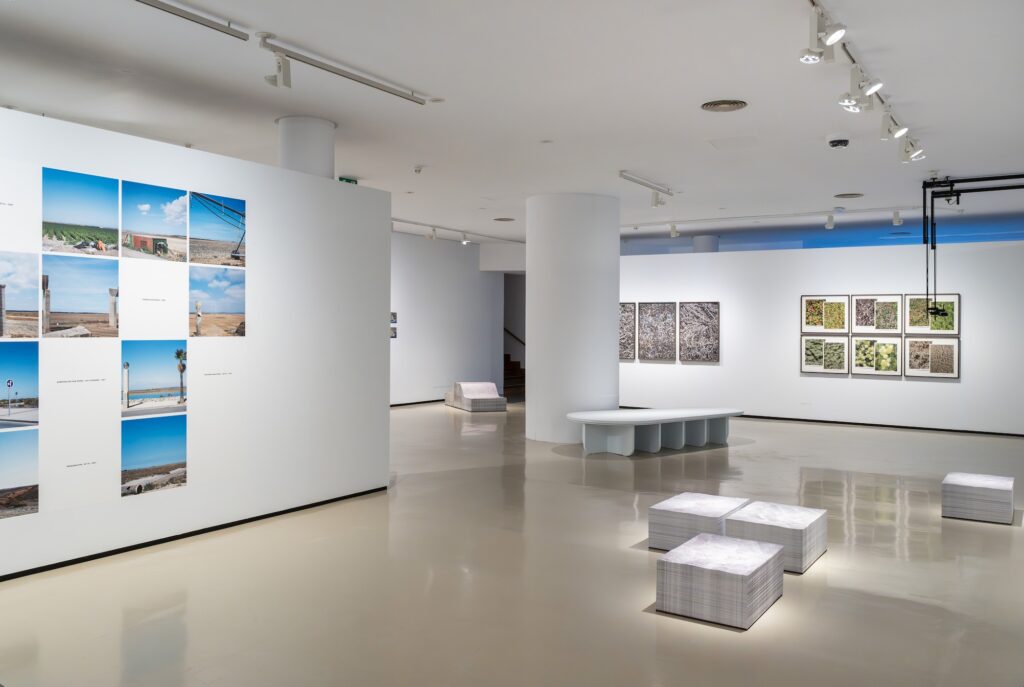
Jorge Yeregui. The same places. ICO Museum
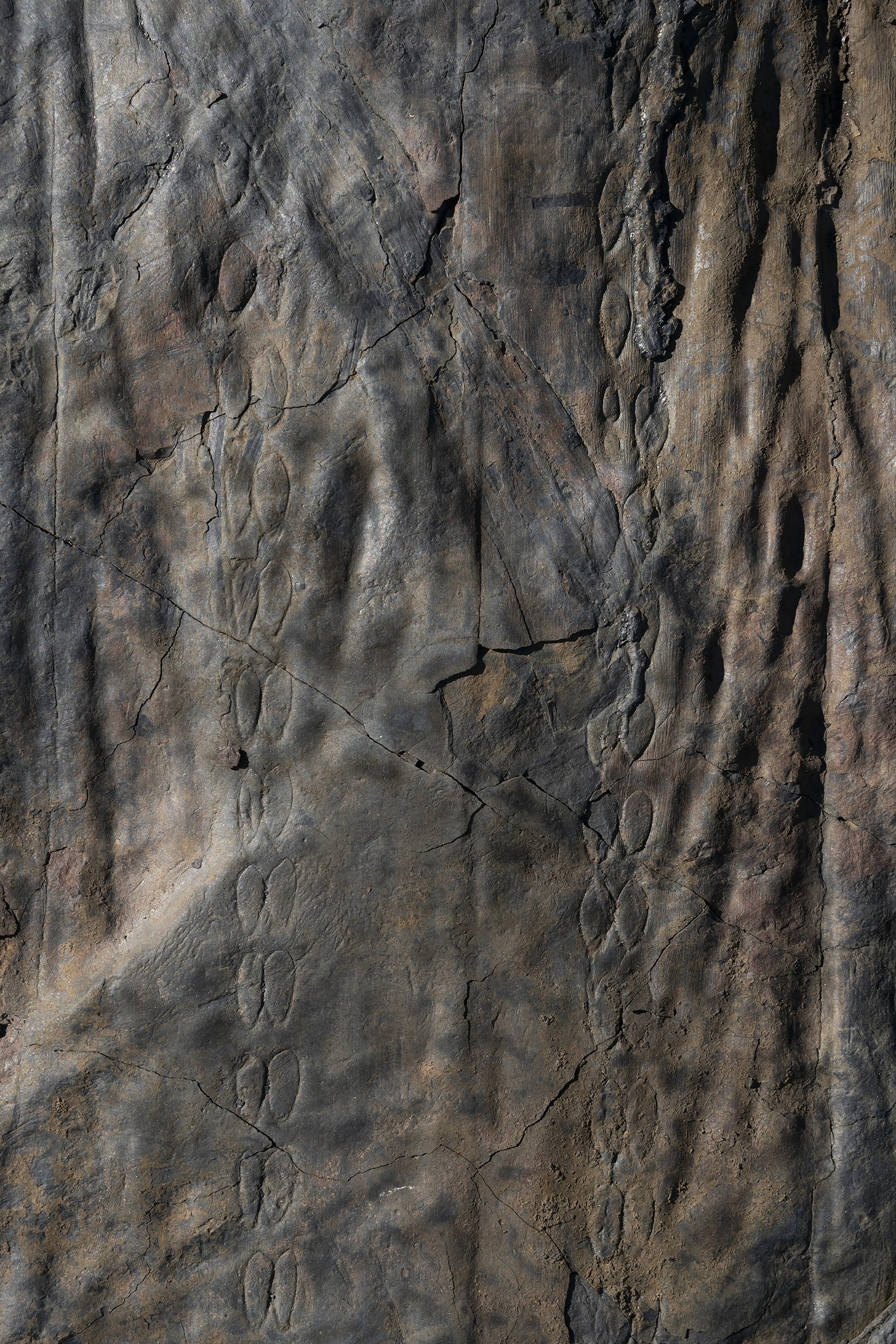
Jorge Yeregui. Soils of La Inglesa I2023. Series Peal floors
Jorge Yeregui. “The same places”
ICO MUSEUM
C/ Zorrilla, 3
Madrid
From June 4 to September 6, 2026