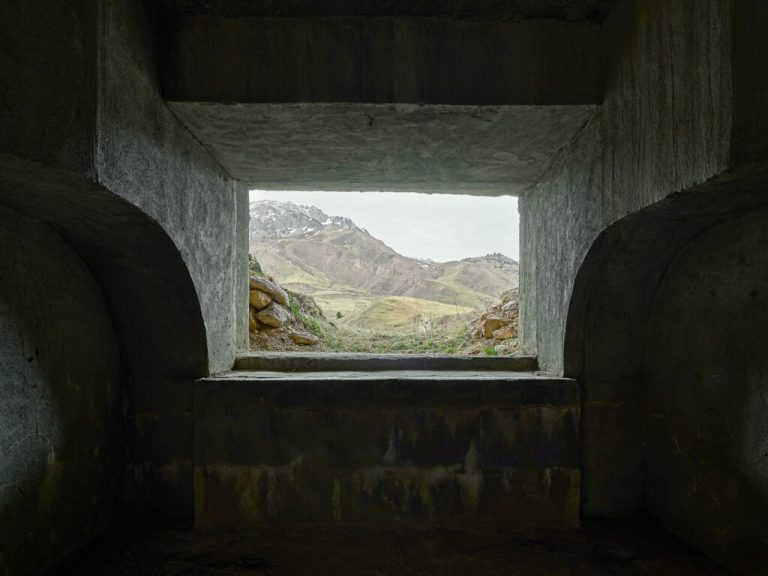
Perhaps, if we had to associate summer with a photographer, it would be Martin Parr. Not because the British man did not work, obviously, the rest of the year, but because the social tics that this author portrayed are especially evident in the season in which we spend the most time outdoors: mass tourism, unbridled consumerism, technological dependencies and an ambivalent relationship, to say the least, with nature.
He did not do it thinking that his work would contribute to changing attitudes, nor with any moralizing purpose, but rather from a satirical perspective and playful criticism: there are those who have appreciated in his humor when addressing these issues the heritage of his country’s caustic tradition; a modern-day version of Britain’s past visual wars against conventions of representation, substance and form. His vision of our globalized world, fun and disturbing in equal measure, was born from collecting snapshots in shopping centers, crowded beaches, zoos, at car shows or in the Swiss mountains; The settings did not matter too much, but rather the behaviors that in those places individuals give themselves the right to maintain: unseemly, absurd and, above all, revealing.
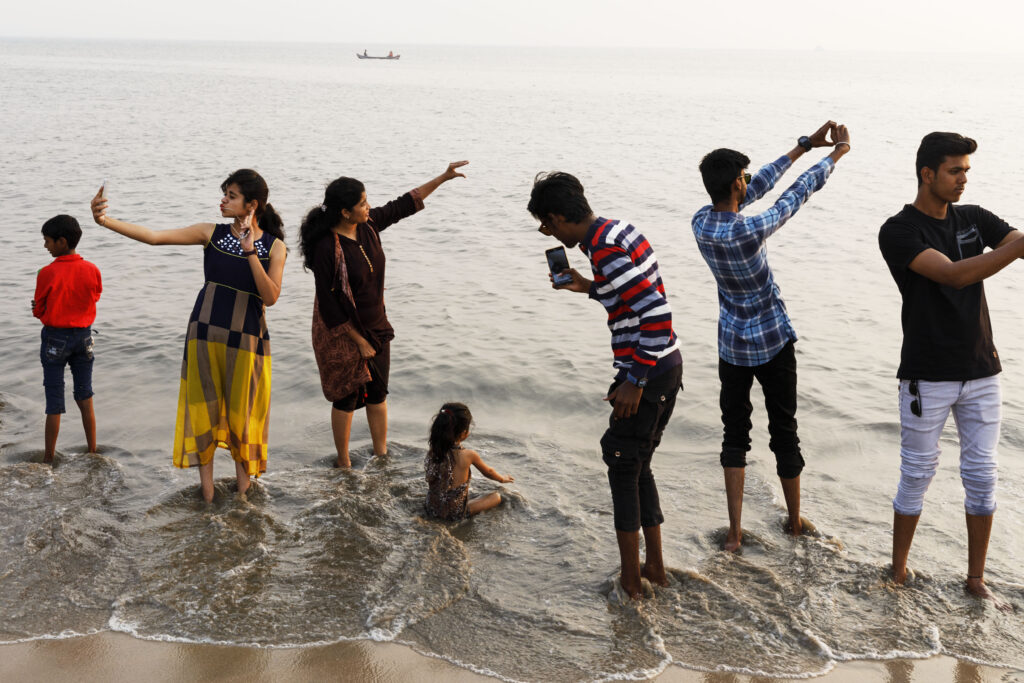
Martin Parr. Chowpatty Beach, Mumbai, India, 2018. ⓒ Martin Parr / Magnum Photos
“We Are Martin Parr”, a retrospective of the artist that is being held at the Seoul Museum of Art until October, offers us an extensive display of his production, more than representative of contemporary visual culture due to its background and formal features – close-ups, saturated tones. It contains fourteen series, ranging from his first works to his last years: approximately half a thousand images, some from the almost ninety photobooks he published. Photographs of North and South Korea could not be missing, taken during their visits to this peninsula between the late nineties and early 2000s.
Fundamentally, South Korea, for obvious reasons, experienced at that time that boom in consumer culture and mass tourism that Martin Parr never wanted to observe from a distance, but rather by sharing it with his models. Through these exaggerated colors, densely overlapping compositions and prolonged observation of the crowd in order to extract moments that would otherwise go unnoticed, he invites viewers to glimpse in strangers the familiarity of their own daily life along unusual paths.
The figures that appear in these scenes almost never take part in extraordinary events; Rather, they are tourists with sunglasses, shoppers in supermarkets, and ordinary people eating, posing, and taking photographs themselves. Risking his work to be considered insignificant by an uninitiated viewer, Parr accurately captures the desires, tastes, consumption patterns, and modes of behavior that shape life today; the way we adorn ourselves, bear faith and remember.
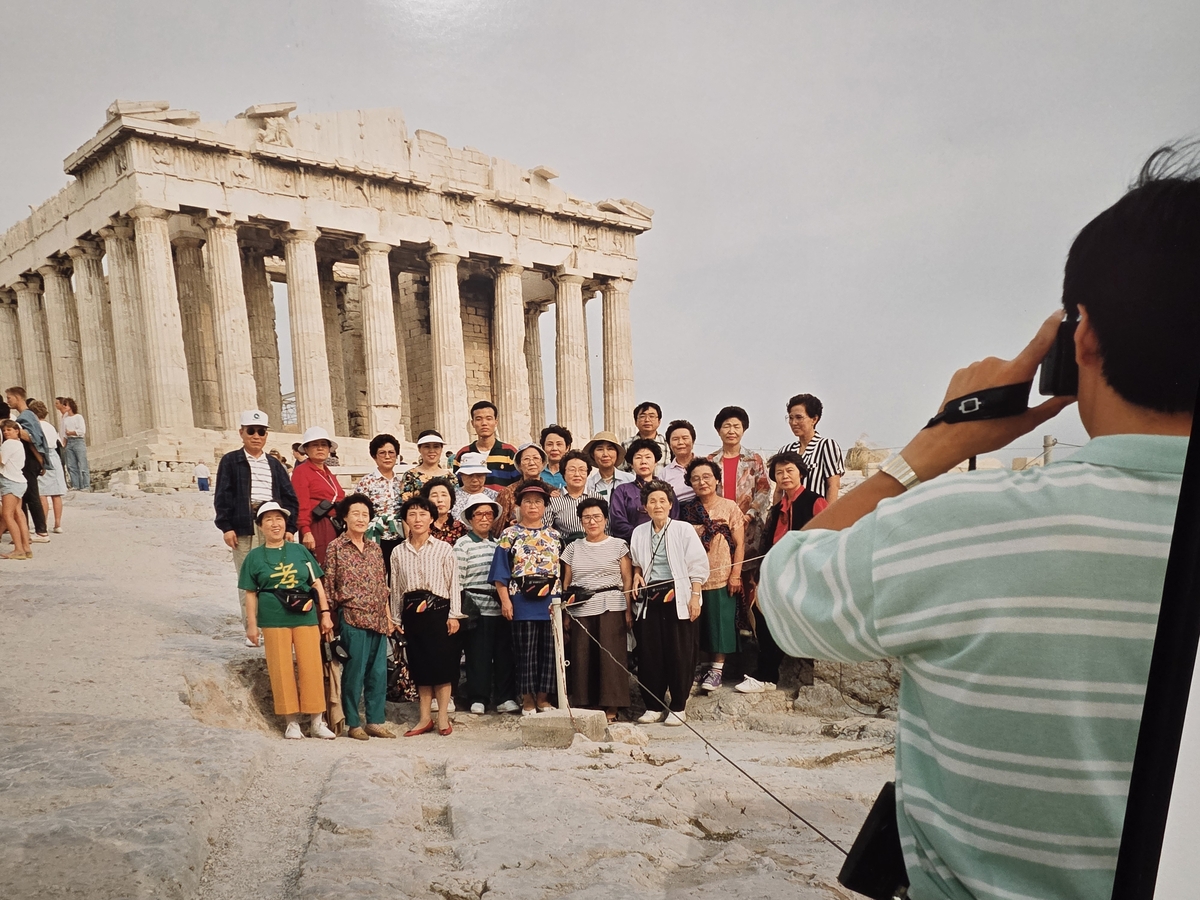
Martin Parr. The Acropolis, Athens, Greece1991. ⓒ Martin Parr / Magnum Photos
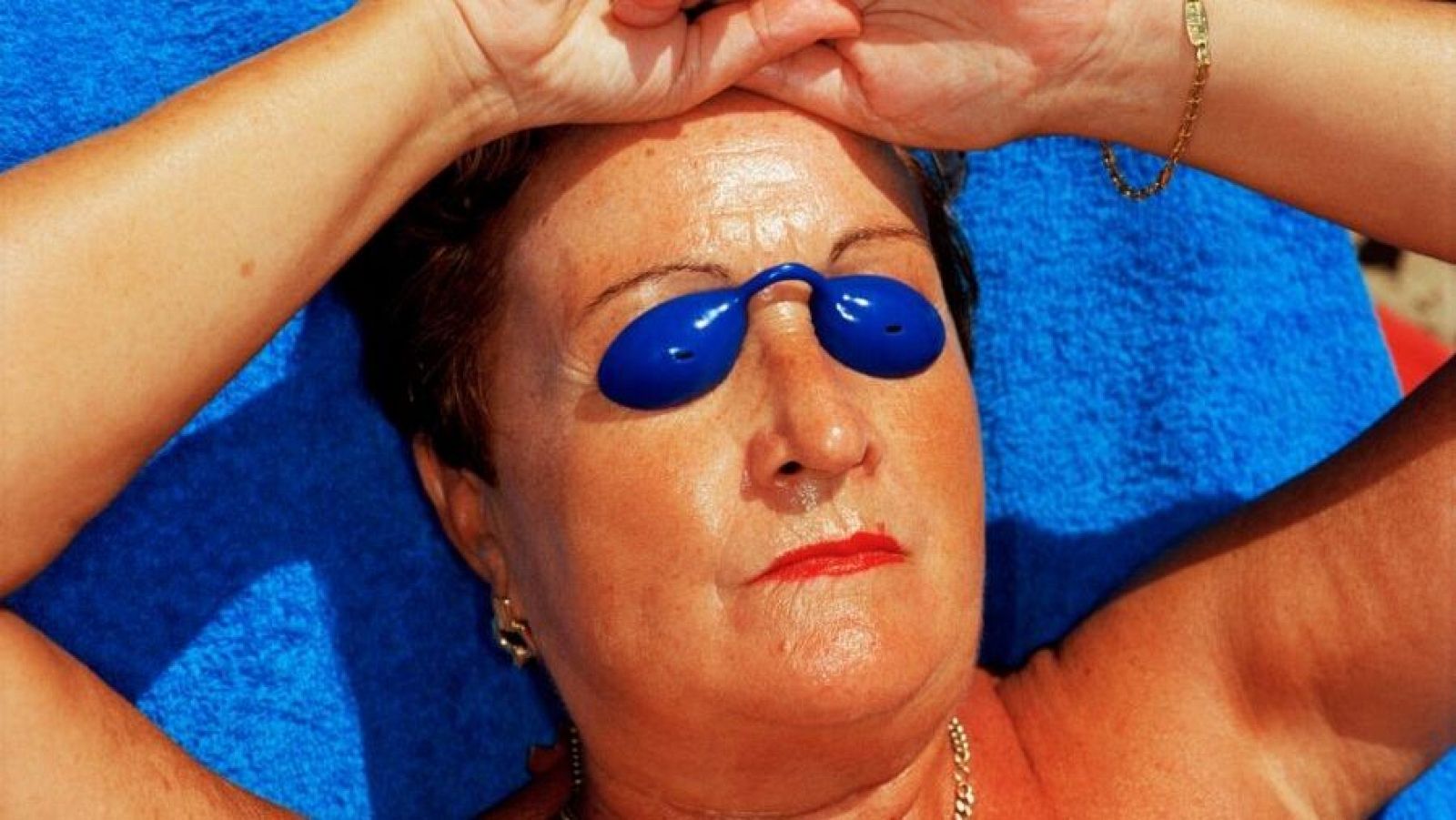
Martin Parr. Benidorm, Spain1997. ⓒ Martin Parr / Magnum Photos
In an era where artificial intelligence is rapidly producing seamless, seamless images, Parr’s photographs nevertheless draw our attention to the materiality and immediacy of the photographic medium itself. He is not interested in refined beauty, but in accidents, the excessive details of street life and scenes that seem uncomfortable or incomplete. Far from becoming mere documents of a specific era, his compositions continue to raise questions about what we see and how we see ourselves.
This exhibition emphasizes the sincere and direct, rather than mocking, perspective that characterized the Englishman throughout his life. Figures captured from a distance inconveniently close, objects and bodies with a vivid palette and a gaze that stops at the supposedly trivial invite the viewer to reconsider that which, because it frequently goes unnoticed. The protagonists of his snapshots are not strangers, but reflections of ourselves today, as individuals who consume, enjoy and represent ourselves through images that are no longer intimate. They seem to discreetly ask us if we are simply observing those contemporaries that we strive to consider bizarre or if we are already part of the scene with them.
I just show what people think they know.he declared in 2021. Indeed, that’s how you often are, even if you don’t see yourselfhe seemed to say.
«Martin Parr: We Are Martin Parr»
SEOUL MUSEUM OF ART
61, Deoksugung-gil, Jung-gu
Seoul
From July 16 to October 18, 2026