Bilbao,
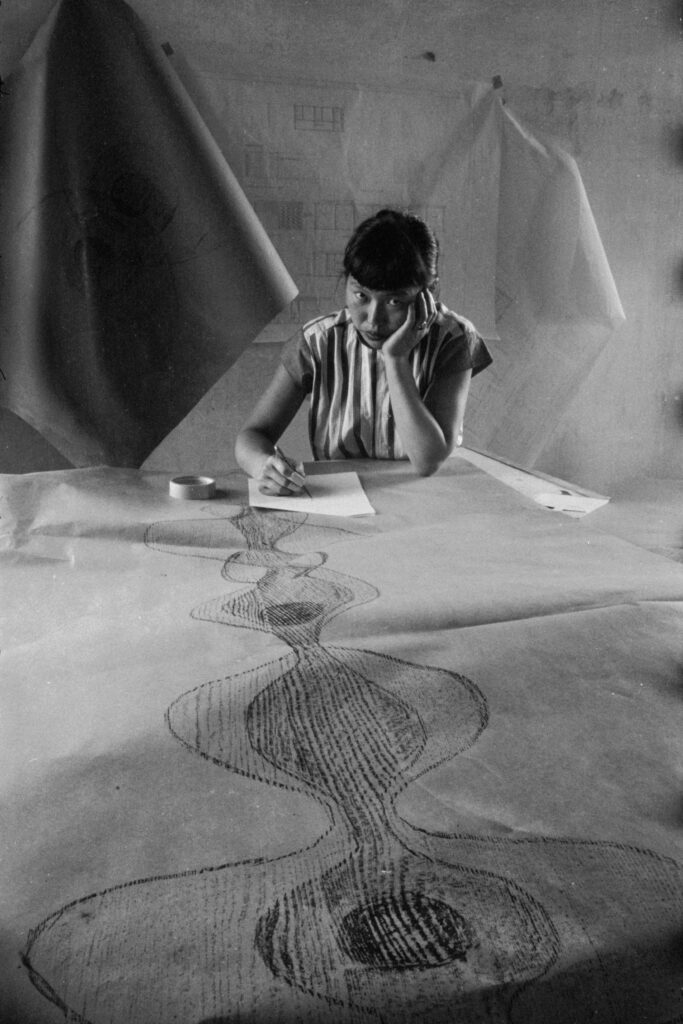
This 2026 marks one hundred years since the birth in California of Ruth Asawa, a sculptor who worked with simple lines and materials in pieces deeply connected to her life and those close to her.
She belonged to an extensive family of Japanese immigrants and those origins determined her life and part of her production: in World War II (1942), she was forced to move to one of the internment camps for Japanese in the United States and she remained held there, along with her family, for two years. The circumstances were inevitably harsh, but in this place Asawa’s creative concerns began to awaken, and he spent his time keenly observing the surrounding nature and the lines that trapped them, which would be the germ of what he would later lead to his suspended sculptures. In addition, she was instructed in that field by those who had been cartoonists for Walt Disney studios.
Once the war was over and he was free, in 1946, he entered Black Mountain College, the very original artistic school that did not provide its students with degrees, but with a particular sense of sensory perception and commitment and community. There Asawa was able, in a natural and open environment, to delve into his interests and the paths through which he could channel them, which almost always involved austere procedures. They were essential years; I would confess that by Josef Albers learned to see.
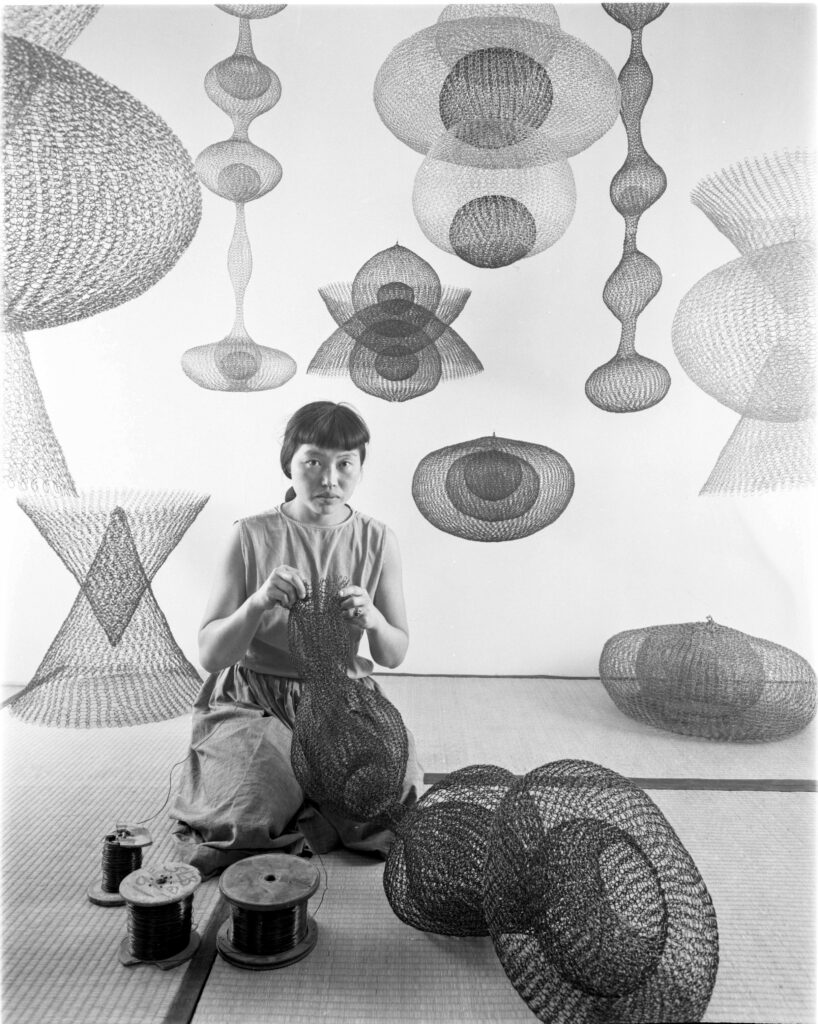
Not long after, this author would discover the Mexican crafts of Tolupa, and, above all, the wire baskets caught her attention: that would be the essential raw material of her creations from then on; He wove it, twisted it and knotted it, letting himself be inspired by the shapes he found in the landscape and by his personal desire for lightness.
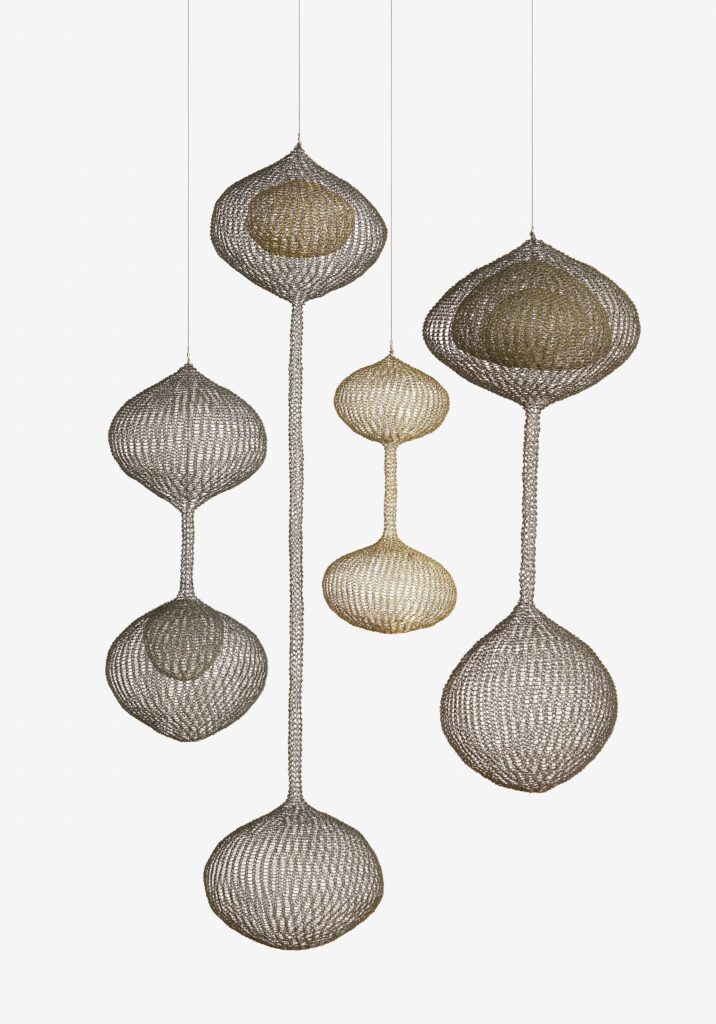
Those works, which because they are based on a succession of curved lines, have been called loop sculpturescould cast shadows on the wall when light was applied to them; They then look like lanterns suspended in the air, but they often also refer to wombs. The artist was the mother of six children and her life experience was always part of her creative processes; He never intended to dissociate them.
In part, that wire, those domestic references and that relationship with her own motherhood were the reasons why, at first, her production did not achieve recognition from critics, who considered it intimately feminine. But she did not back down and decided to combine creation with teaching: she devised art education programs for disadvantaged children and launched the center that preceded, in 1982, the San Francisco public art school, which currently bears her name.
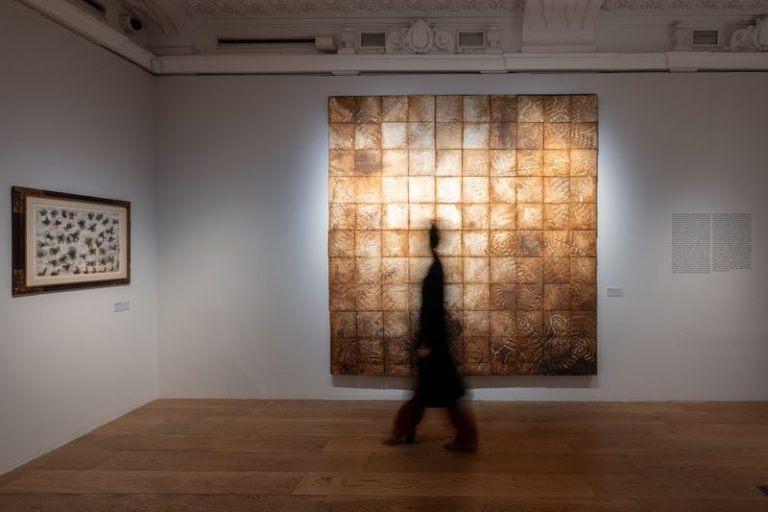
Asawa’s first extensive retrospective in a museum has just opened its doors at the Guggenheim Museum Bilbao after passing through the MoMA in New York a few months ago. It precisely commemorates the centenary of his birth: in Gehry’s building, wire sculptures, bronze castings, paintings and a vast set of works on paper dated throughout his sixty years of existence have been displayed. They are accompanied by abundant archival material focused, above all, on his public commissions -among them a monument to the Japanese interned in the war, in San José-, on the community ties of his legacy (from the beginning to the end of his career) and his defense of creativity.
The exhibition, organized together with the San Francisco Museum of Modern Art – which initially hosted it; later by the Fondation Beyeler in Basel -, it has been curated by Cara Manes, Janet Bishop and Geaninne Gutiérrez-Guimarães and follows a (flexible) chronological order, in which thematic sections are interspersed that dissect the artist’s sources and methods.
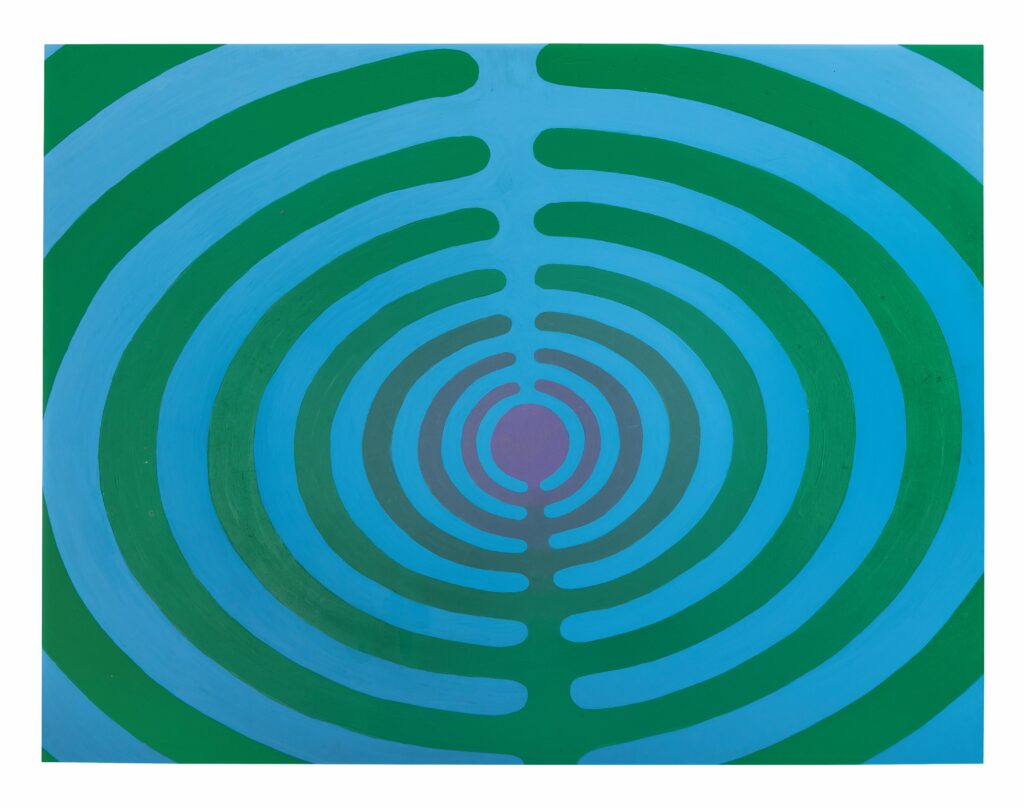
The tour, structured in a dozen sections, begins with a selection of works from his phase at Black Mountain College, including explorations of materials, colors and shapes in drawings, collages and engravings – he collaborated with Merce Cunningham and Elizabeth Smith Jennerjahn -, and then advances in his activity with wire and paper in San Francisco, where he worked to consolidate a united social community.
There he articulated the key motifs and shapes of his loop structures, which he crafted by hand using superpositions, undulations, cascades or intertwining, making it compatible with closing volumes and not closing oneself to the environment. And he expanded his repertoire of drawing, engraving and paper folding techniques, while accepting various commercial design commissions, collaborating with Vogue and exhibited regularly at the Peridot Gallery in New York.
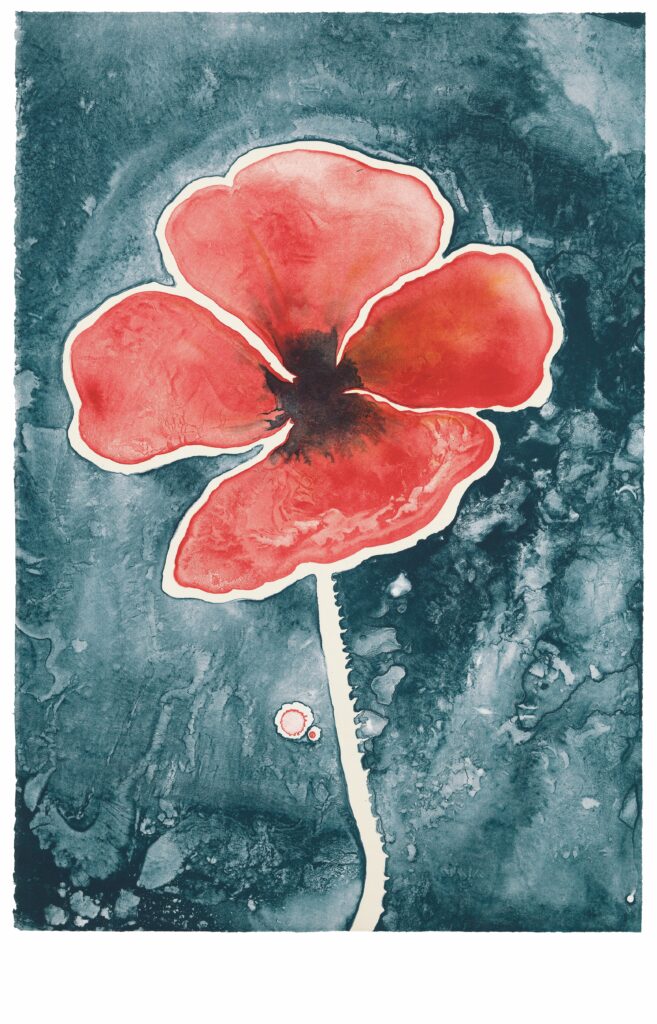
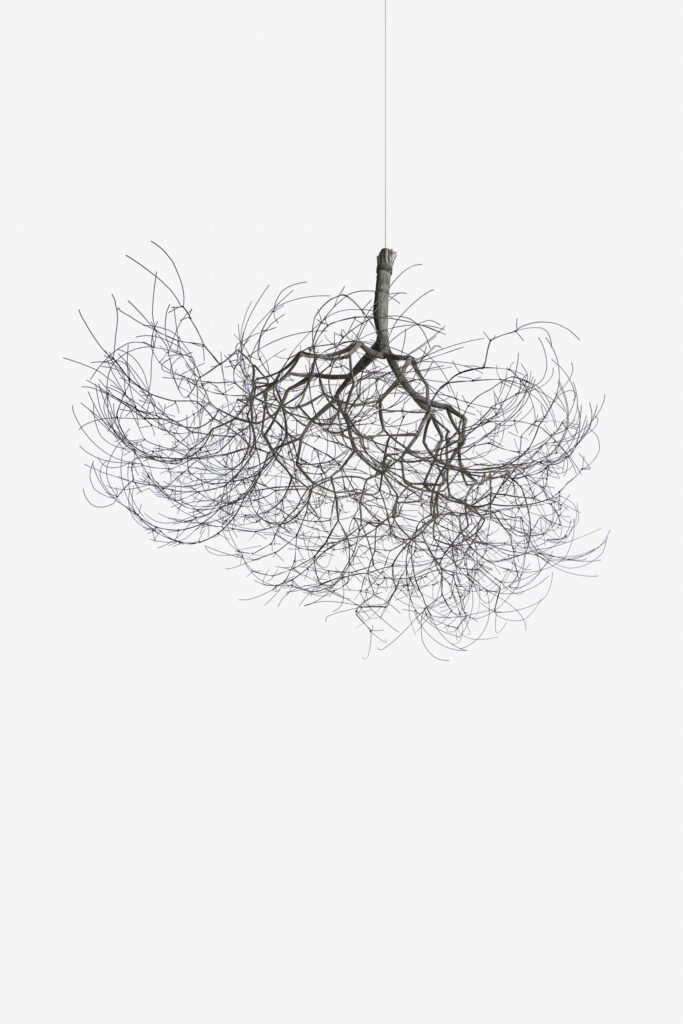
In the early 1960s, Asawa discovered an unprecedented method of working with wire, tying and extending it in a way that evoked organic arrangements, delicately botanical in inspiration. Likewise, he continued experimenting with these natural forms during a residency at the Tamarind lithography workshop in Los Angeles in 1965, where he produced a portfolio of diverse prints, as rigorous as they were innovative.
A selection of compositions from this portfolio, from MoMA’s collection, have been included in the exhibition, and many of them are being shown to the public for the first time. Among them, the delicate representation of a poppy, a characteristic flower of the State of California, stands out. It must be remembered that, at this time, engraving and crafts had a very secondary consideration with respect to painting or sculpture; she always avoided those categorizations.
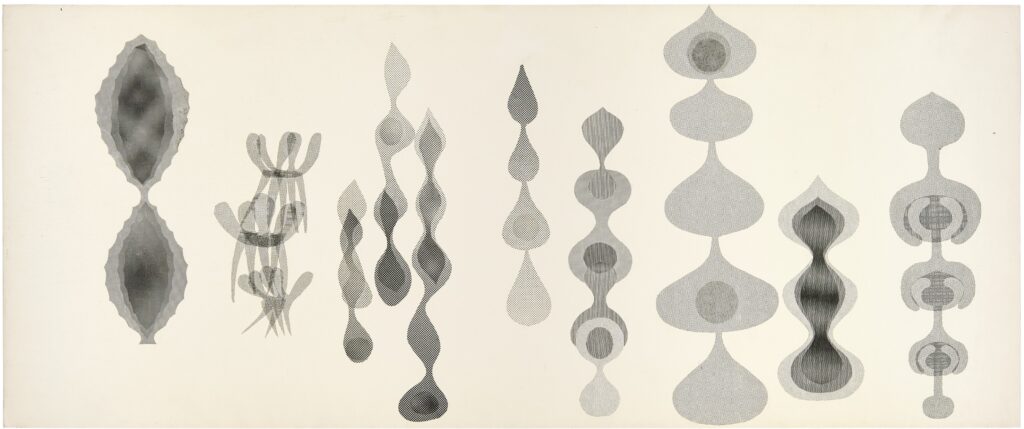
It was in 1962, the year in which someone gave the artist a dried plant from the Death Valley desert, when that vision marked the beginning of a new stage. Being too difficult to draw, Asawa turned to wire, beginning to design complex branches and other plant shapes that turned the impersonal and hard material into soft and warm, a transition he adored.
Without abandoning its use, looped and tied, suspended or hung, he also used resin and colored glass. And he expanded the places to show his work: he received those public art commissions in which he tried the option of “making a sculpture that everyone could enjoy,” often collaborative.
His first outdoor commission was the bronze fountain Andrea meeting(1968), in San Francisco’s Ghirardelli Square and facing the sea. It is a sculpture of two mermaids, one of them holding a baby, surrounded by frogs and turtles. He cast in bronze a looped wire form, the preparatory study of which is shown at the Guggenheim.
Other large-format works were his Origami Fonts (1975-1976), for the pedestrian promenade of San Francisco’s Japantown, or that enormous monument commemorating the internment of Japanese Americans (1994).
When his health was impaired, he concentrated a good part of his production on botanical drawings, some very realistic and others abstract. They showed bouquets they had given her or the natural world around her. Also facial molds of family, friends and colleagues, a record of those who entered and left his house in Noe Valley – we already said that he never separated life and work. His San Francisco home breathed art; On its walls his own works coexisted with works by friends such as Josef Albers or ceramics by Marguerite Wildenhain.
She never stopped working: she sketched and drew the surroundings of her house, rolled or tied wire in preparation for future sculptures, folded paper to make origami, and welcomed artists, educators, and cultural advocates to continue collaborating on new projects.
The Guggenheim audience will discover in Asawa an author who did not care about the boundaries between the figure and its background, the exterior and the interior, or where the figurative ends and the abstract begins. Only the relationships that can be articulated between elements of diverse origin and appearance and between these and space were relevant to her: as she herself pointed out, forms continue within other forms, which are inside and outside at the same time.
It is possible that some of her wire compositions were born from stars, flowers or geometric motifs, but as they grew in the artist’s hands they acquired the designs that she understood the material demanded of her, and that corresponded to the growth patterns of many species in nature. The one who watched from the internment camp, from Black Mountain, from her home.
“Ruth Asawa: Retrospective”
GUGGENHEIM MUSEUM BILBAO
Abandoibarra Avenue, 2
Bilbao
From March 19 to September 13, 2026