Santander,
Two years ago, Yuko Mohri represented Japan at the Venice Biennale with a show in which the protagonists were not the specific works she exhibited, but the light, sound, aroma and movement that they brought to her country’s pavilion and transformed our perception of its architecture.
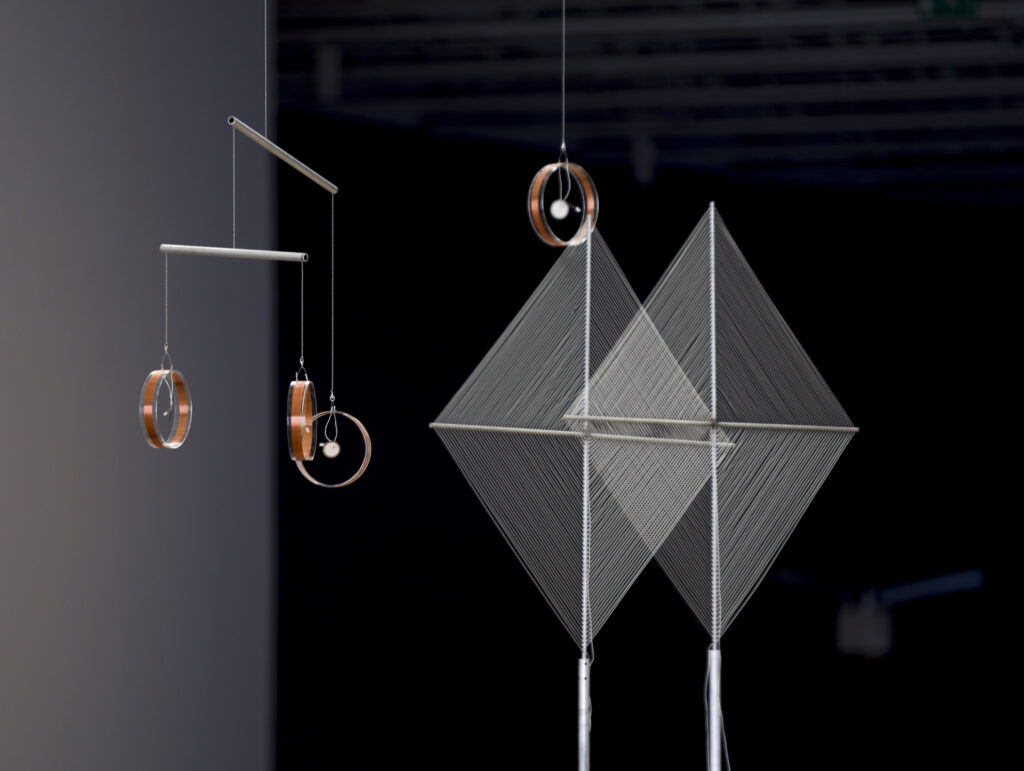
Only two works were necessary to raise the event: More More (Leaky) and Decompositionboth present in “Entrelazamientos”, the exhibition that the Centro Botín de Santander dedicates to him from today and which is also his first in Spain and the most extensive of those he has offered so far in Europe.
Born in 1980 in Kanagawa and living in Tokyo, Mohri works with elements taken from nature and everyday objects to articulate installations that involve the viewer and modify their sensations in the space in which they are displayed, both visually and also those that affect the rest of the senses. It generates, from these pieces, interconnected systems and assemblies of an ephemeral nature that, beyond appealing to our physical perception, connect with contemporary social and environmental issues, especially with the need to reflect on the relationships of dependency between the beings that make up an ecosystem and the possibility of repairing what is damaged and reusing what is withered.
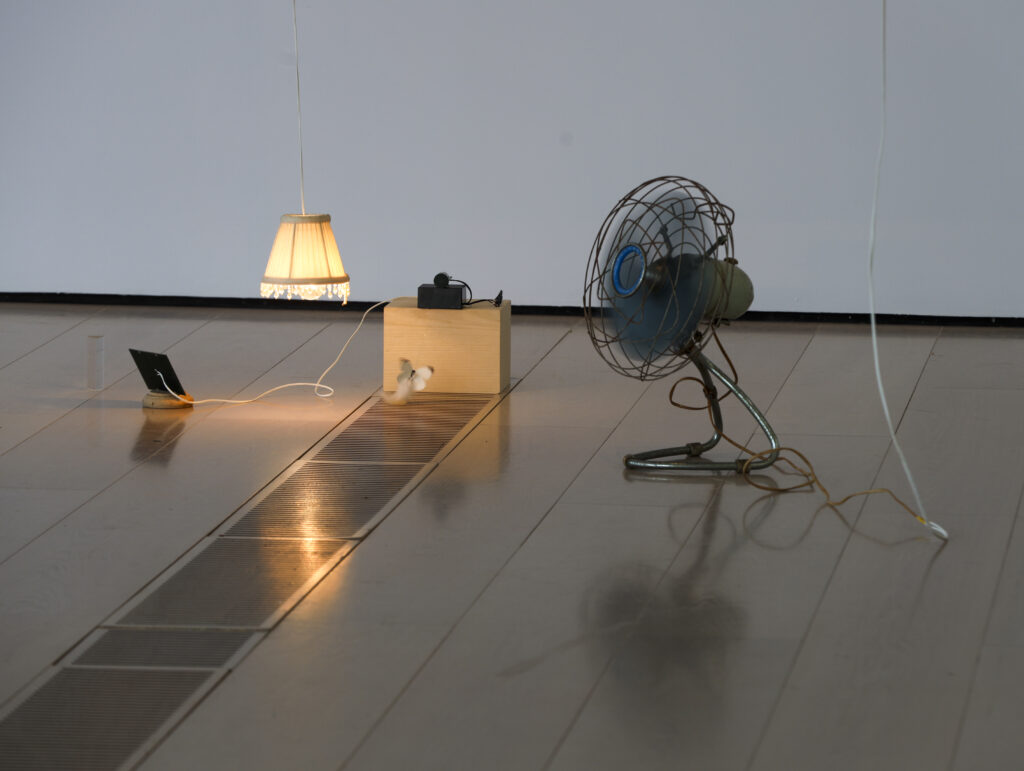
Duchamp and Calder are their references when it comes to devising kinetic sculptures, conceived specifically for each place where they can be visited, which are made up of found belongings and reworked musical instruments and connected to electronic circuits. They respond to conditions – imperceptible but inevitable, and also transitory – of gravity, heat, humidity and magnetism, in the same way that their assemblages would be different if the air, dust, debris and temperature that determine them were modified, turning them into small-scale organic ecosystems.
The proposals that have been brought together in Santander, some more than those that could be seen until a few weeks ago in the exhibition that the Pirelli HangarBicocca space in Milan gave Mohri, date back to 2000: we will thus be able to see how the artist constantly intervenes over time to adapt them to the places where she shows them to us; in his words, twisting and braiding them without avoiding three options that others fear. Error, improvisation and feedback.
“Entanglements” wants to highlight the interactions, not always easy to unravel, between objects, sounds and people and between the natural and the artificial; relationships that are not static, but evolve, and in which the influence of philosophy on this author and the iconography of pop art also play a role.
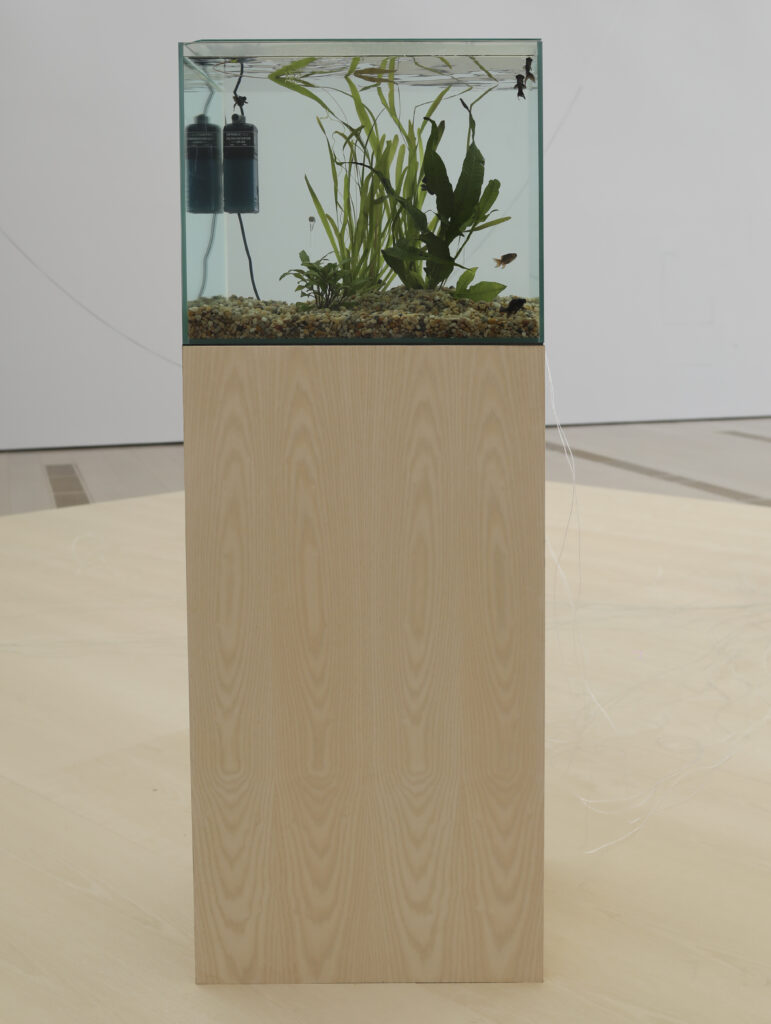
Each of Mohri’s creations is based on an element that acts as a driving force, creating a dynamic circuit around itself, as is very evident in flutter (2018), whose focal point is an aquarium with sensors that capture light and shadows, generated naturally through the movement of fish and aquatic plants. These movements also favor others that are interdependent and compose a piece closely linked to the sound experiments of John Cage and the videographic experiments of Nam June Paik.
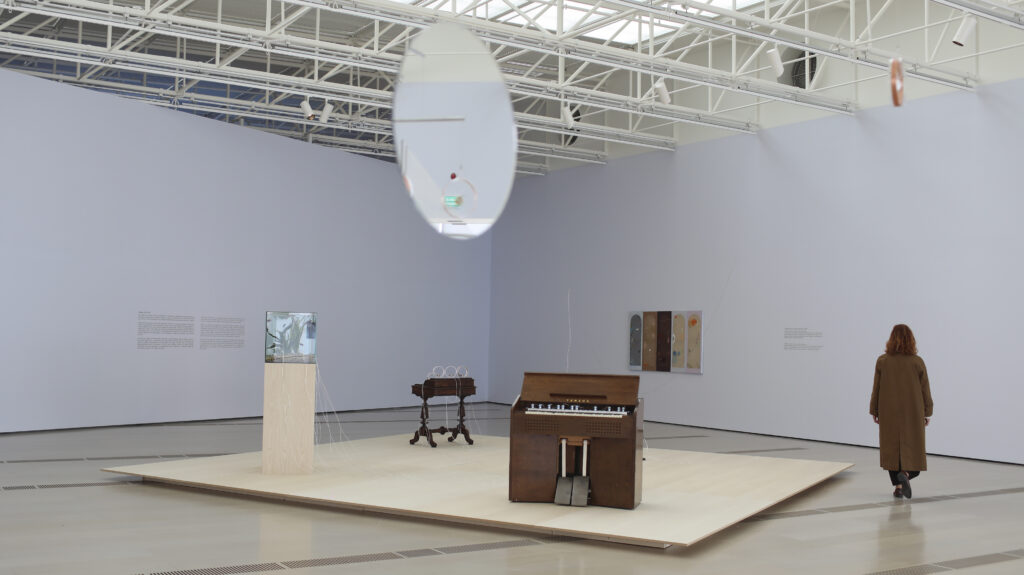
It also arrives in Santander Piano Solo: Belle-Îlewhich has as its center a piano modified and programmed to play “alone.” This proposal was raised during the pandemic, when the artist, who usually collaborates with musicians, was unable to do so; He chose to retreat to a forest and record his environmental sounds: birds, a stream, the wind. He got the piano, autonomously, to translate them into a musical composition.
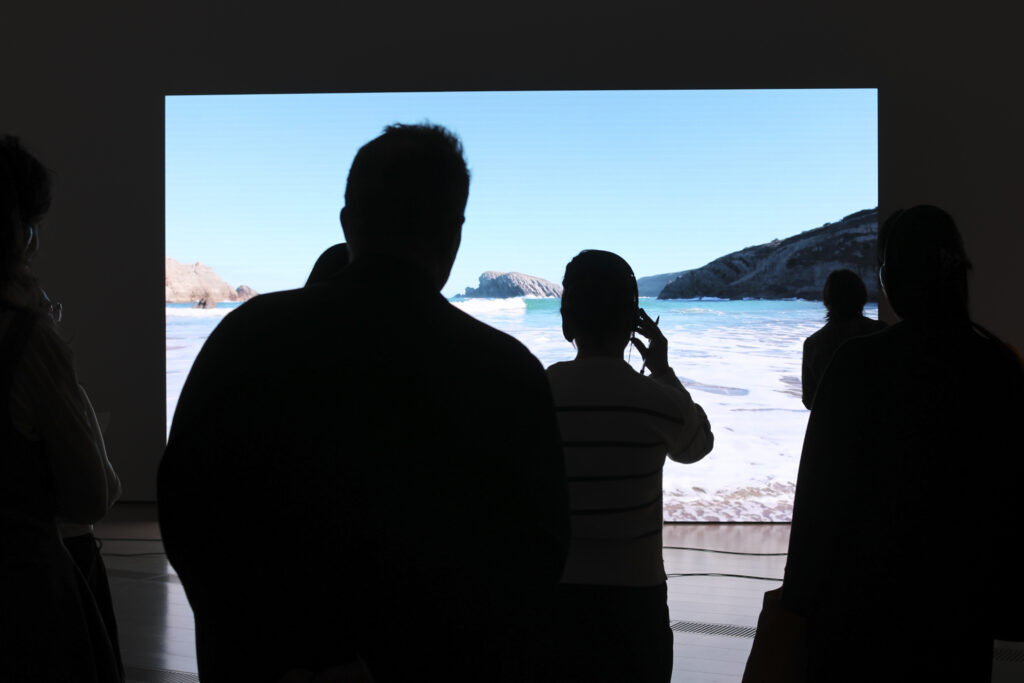
The title alludes to the place where Monet created her first series of paintings, in which she filmed a video on the edge of a cliff; For this occasion, the artist has recorded different locations on the Santander coast and their ambient sounds, remembering the furniture music which Satie spoke about, in which sounds function as part of the environment, without demanding active listening. The Frenchman questioned the conventions of concert music.
We will also contemplate You Locked Me Up in a Grave, You Owe Me at Least the Peace of a Grave (2018), a creation that wants to be immersive and combines sound, light and movement to generate choreography. A suspended and rotating spiral staircase, sculptural and dynamic at the same time, refers to a planet that rotates on its axis surrounded by four speakers that distort and amplify the sound, causing it to reverberate in the Botín.
The title of this project corresponds to the words spoken by the French revolutionary Louis-Auguste Blanqui, in an interview in prison with the art critic Gustave Geffroy. Blanqui was writing then Eternity through the stars (1872), a philosophical work that would move Walter Benjamin and that focused on the notion of circularity, an idea, as we see, very present in Mohri’s processes.
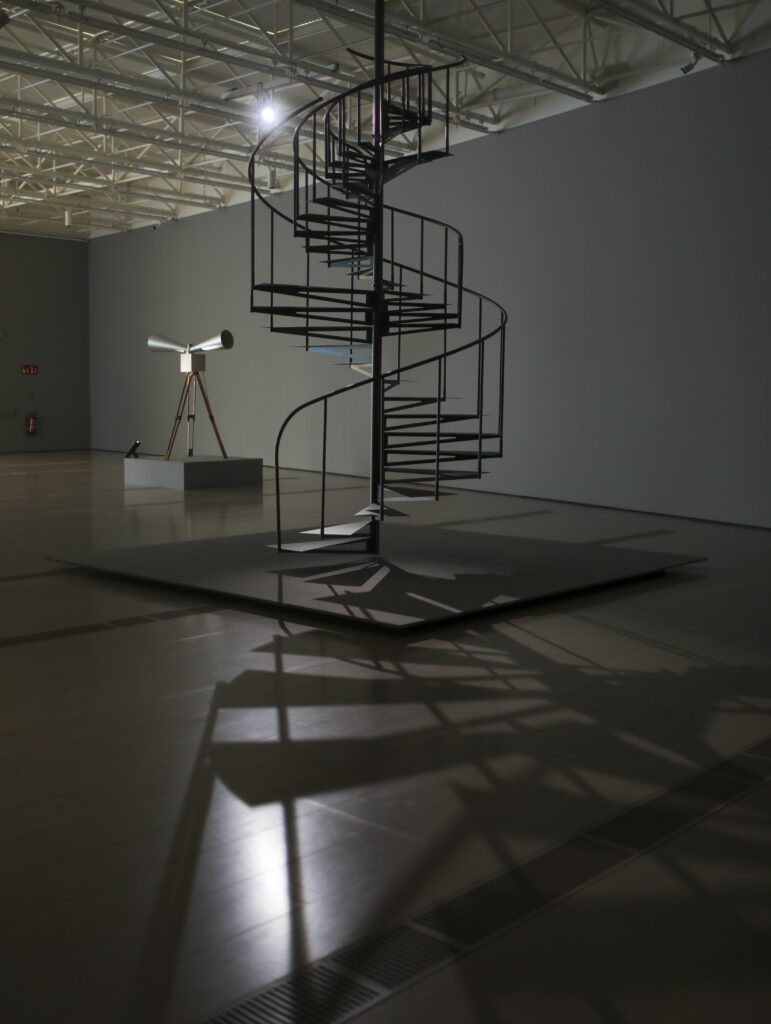
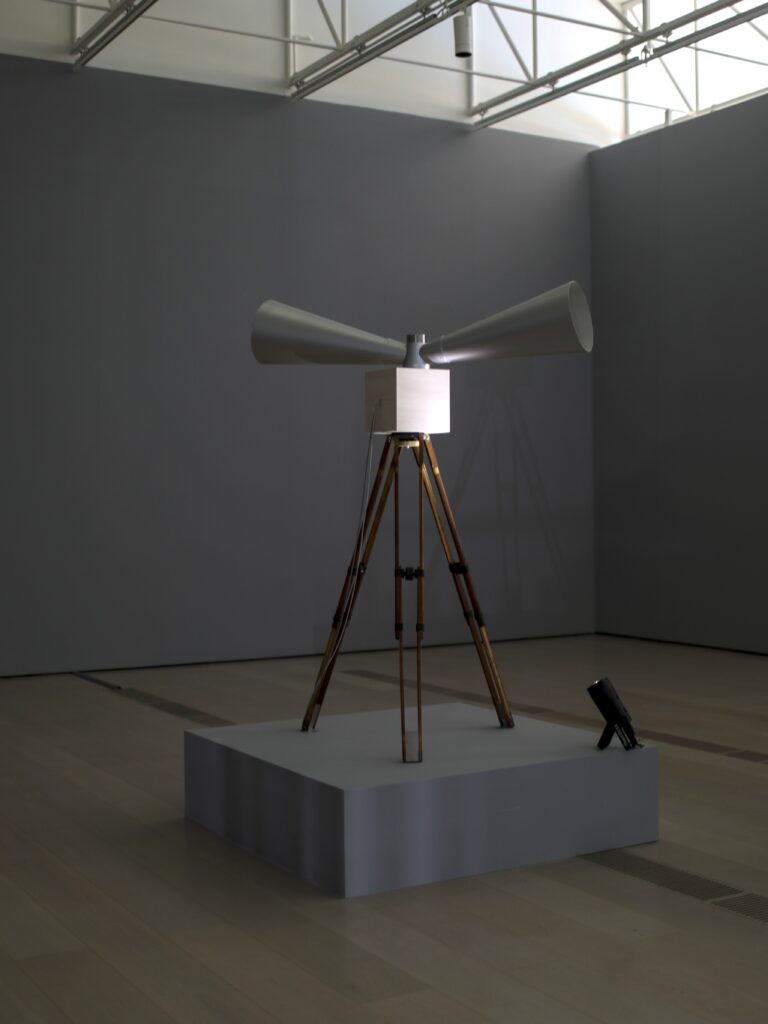
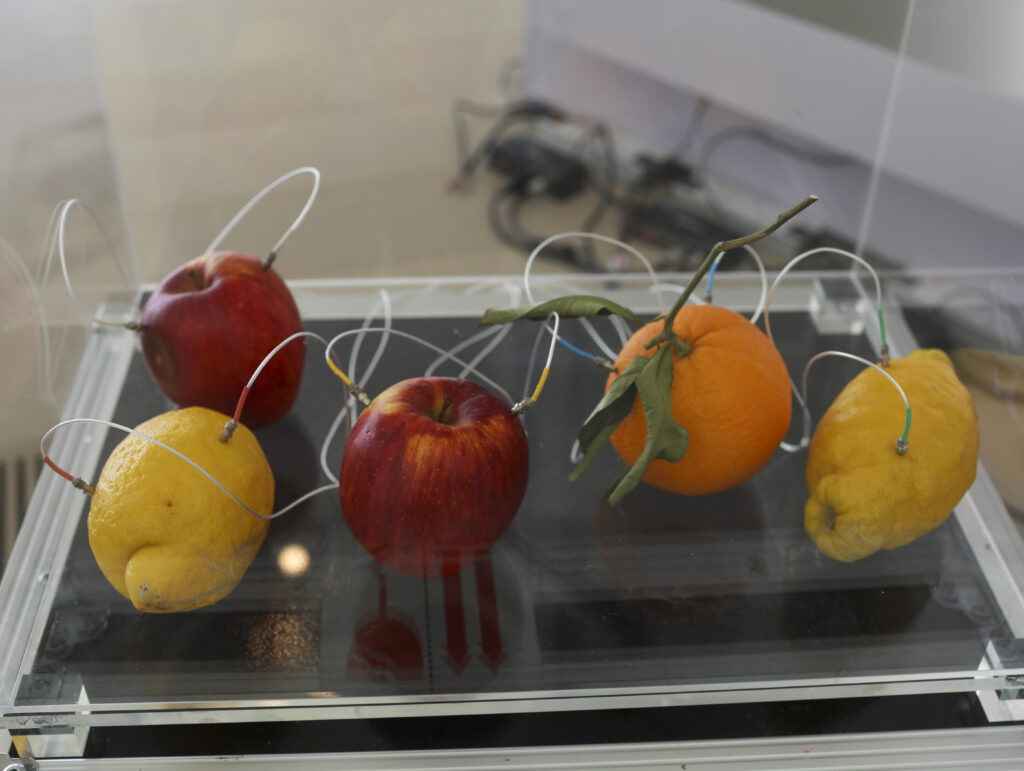
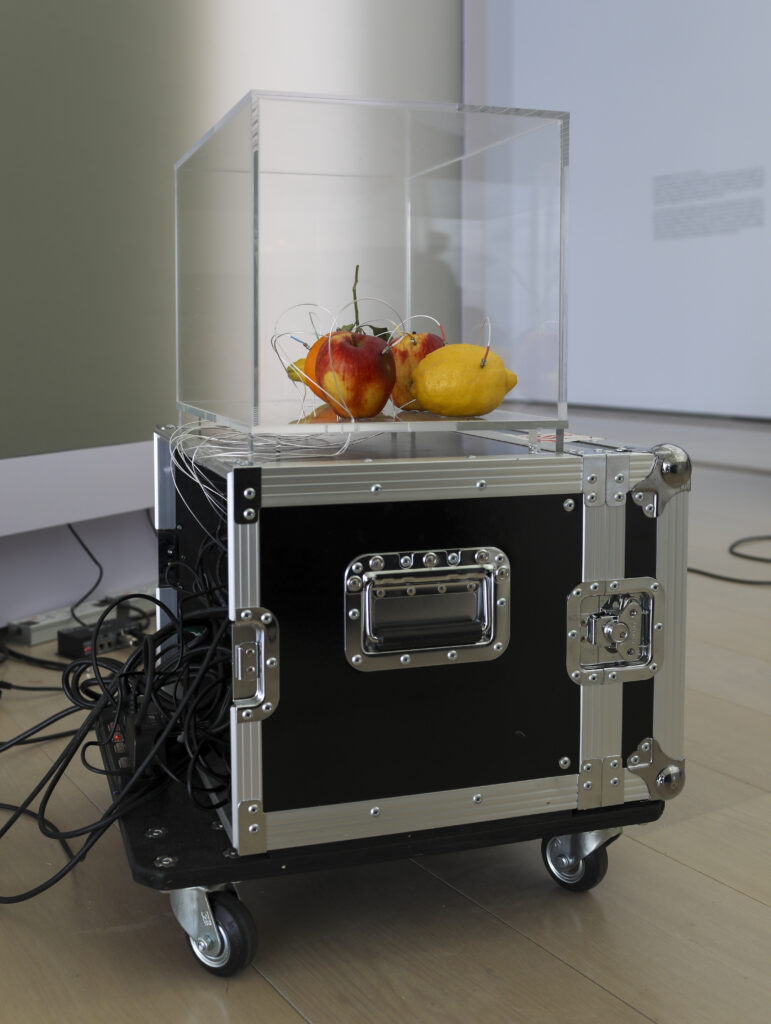
They have also arrived at this exhibition, Decomposition and More More (Leaky)his elections for the Venice Biennale and still ongoing. The first series addresses organic decomposition, turning it into a living system of sound and light: it connects spoiling fruit to electronic devices using electrodes and, as it rots and loses water, this food generates electricity that activates sound compositions and controls light.
These compositions are not always the same, because they vary according to the level of rot and hydration, giving rise to audible and visible signs of the mutable essence of the work. The amplifiers, speakers and period furniture that complete the installation suggest an air of Renaissance still lifes.
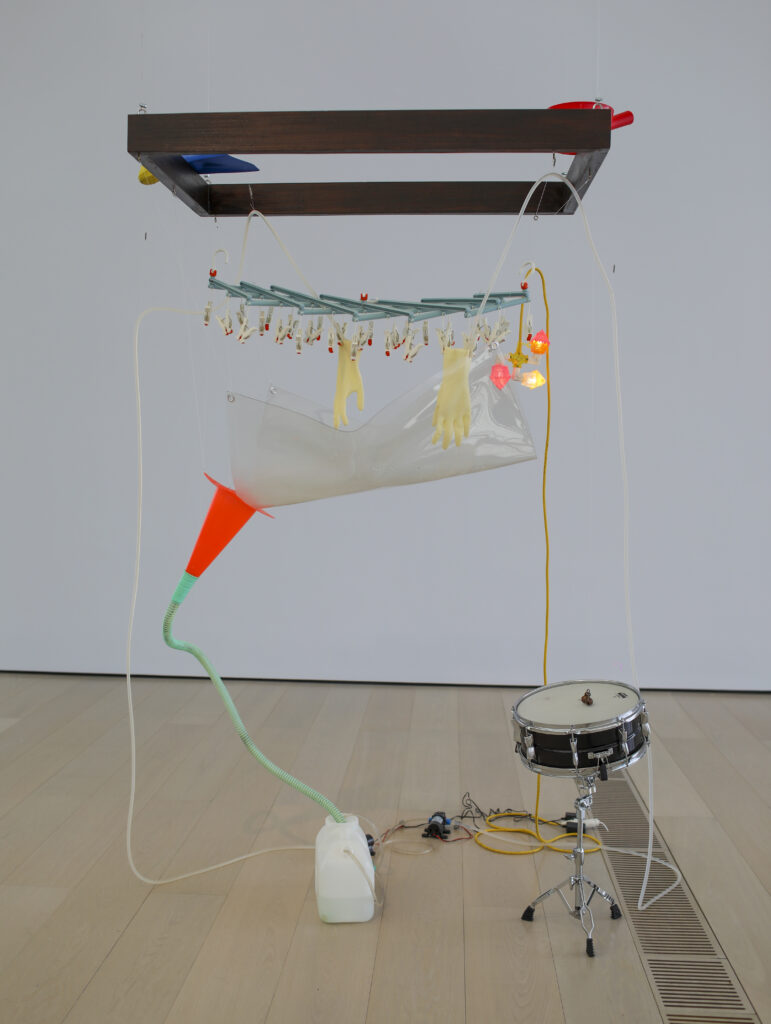
As to Moré Moré (Leaky): Variations, began as a photographic series capturing temporary solutions taken by Tokyo Metro workers to cover water leaks at a station. They led to kinetic works made with household objects, such as umbrellas, pots and pans, which he has reworked, letting himself be carried away by his taste for DIY.

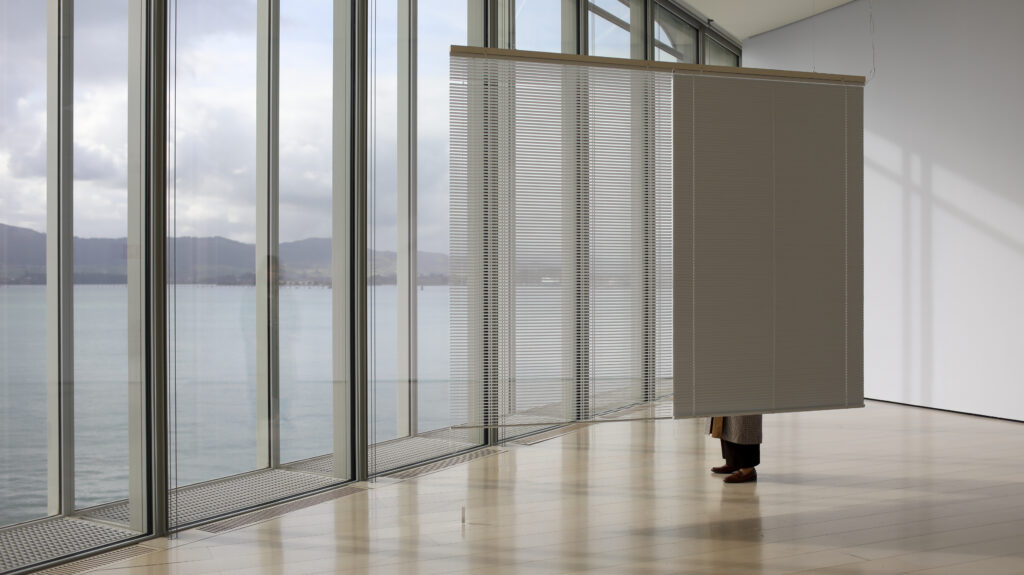
End the tour with I/Oone of his early works, whose title refers to the terms input and output. It proposes an organic ecosystem whose movement and whose shapes are a consequence of the characteristics, in this case, of the exhibition space of the Botín Center, with what is random for it. Rolls of paper suspended from the ceiling rub against the floor, collecting dust that is read by a scanner, a device that, in turn, translates it into electrical signals that activate light bulbs, tools and instruments.
Mohri makes our waste melody and light, in a very creative exercise in circular economy.
“Yuko Mohri: Entanglements”
LOOT CENTER
Plaza Emilio Botín, s/n
Santander
From March 28 to September 6, 2026