Valencia,
Born in the final stages of World War II, in March 1945, Anselm Kiefer has been, along with Georg Baselitz, Gerhard Richter, Sigmar Polke and Jörg Immendorff, one of the essential names of the renaissance of German painting in the seventies, in a panorama dominated by Neo-Expressionism.
From the very beginning, Kiefer made the history and myths of his country his creative source, diving into the ancient past when reflection on the most immediate yesterday was unbearable and Adorno’s statement that poetry was not possible after Auschwitz still weighed.
For this author, history is rooted in legend and has its basis in a diffuse ideology that is derived from worlds very distant in space and time: he did not trust records or witnesses, but he did allow himself to be fascinated by the irrational. The capacity for empathy (despite the current manipulation of the term) has been essential when examining the past, which continues to be very present in his production.
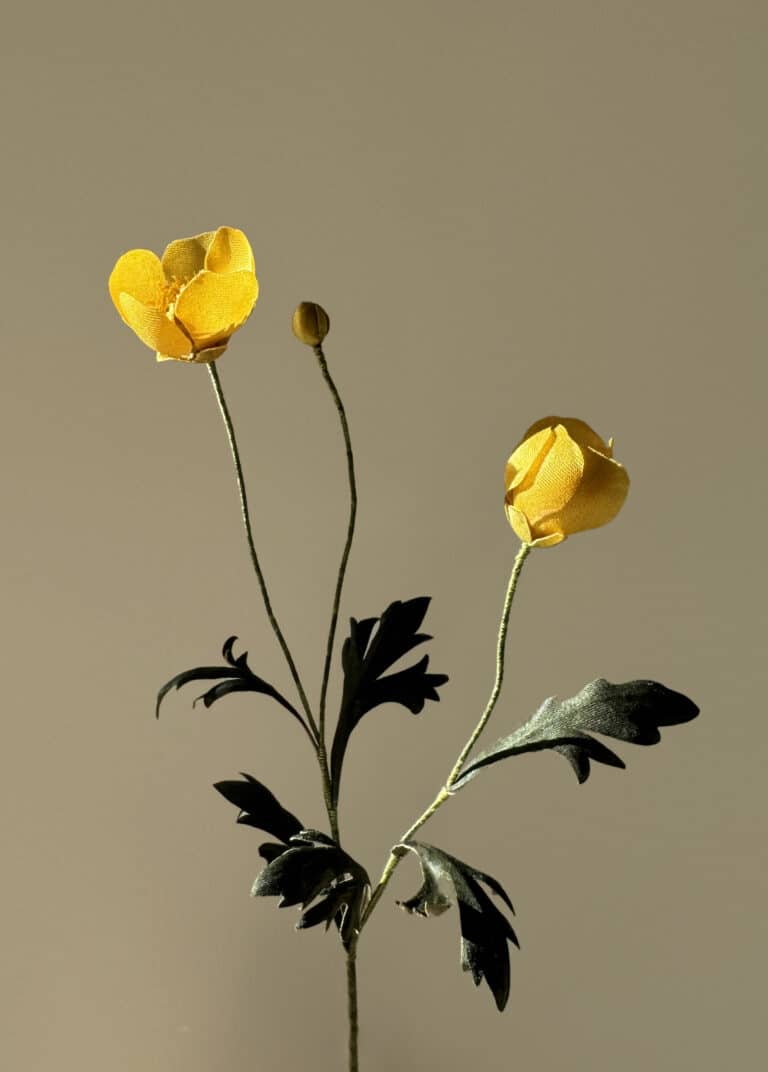
Another of the starting points of its creation has been nature. In his latest proposals he has often started from the observation of dry vegetation with yellow stems and withered thistles whose ocher tones delighted him. Due to their beauty on the verge of decomposition, they reminded him of old representations about love, death and the transience of life, but especially the poems and love songs of Walther von der Vogelweide, closely linked to their author’s own life.
to that one minnesinger (poet of lyrical love), who lived between the 12th and 13th centuries and whose seminal works Kiefer has been exploring since the seventies, dedicated the project to him Für Walther von der Vogelweidefocusing on what is surely his most famous poem, Under the lindenabout the romantic union in a natural environment of two lovers from different social classes.
Literature has always been essential for the German creator… and also language: I live in language (…). It is the language that dominates me. I hear it. Much of it remains obscure to me, but I carry the words with me and suddenly form relationships from what it tells me.
Both the experience of nature that shines through in the medieval poem and the broken blades of grass and flowers described in it appear recurrently in his recent paintings; In fact, the vegetal has only gained presence in his work since the initial series Für Paul Celan, Die Ungeborenen and Morgenthau Plan.
Kiefer’s four decades of career are, therefore, the result of a continuous process of accumulation, mixing and reworking of themes and motifs that are constantly repeated and overlapped in diverse media and that tend to be related, as we said, to cultural memory, identity and history, particularly the one closest to him (post-war Germany), with mythological and literary sources and with his own biography. Both disciplines claim to treat them as matter, as if they were clay.
Furthermore, representations of landscapes have helped him explore basic questions of human existence, based on a dialectic that links beauty and destruction. Bent and tangled stems, emerging from the gestural application of thick brush strokes, can break the pictorial space and seem to approach the viewer moved by invisible forces, while their flowers contain per se a memento mori, simultaneously alive and already withered.
It is also common for him to incorporate specific objects into his canvases. They normally stand out for their symbolism, such as the scythe of Eros – Thanatosa counterbalance to the spiritual or mystical nature of the image and its connection with multiple philosophical and historical interpretations. We must remember that the sickle and the scythe illustrate, with their curvature, that all time turns on itself and the artist allows us to immerse ourselves, from their apparently pure natures, in those complex connections.
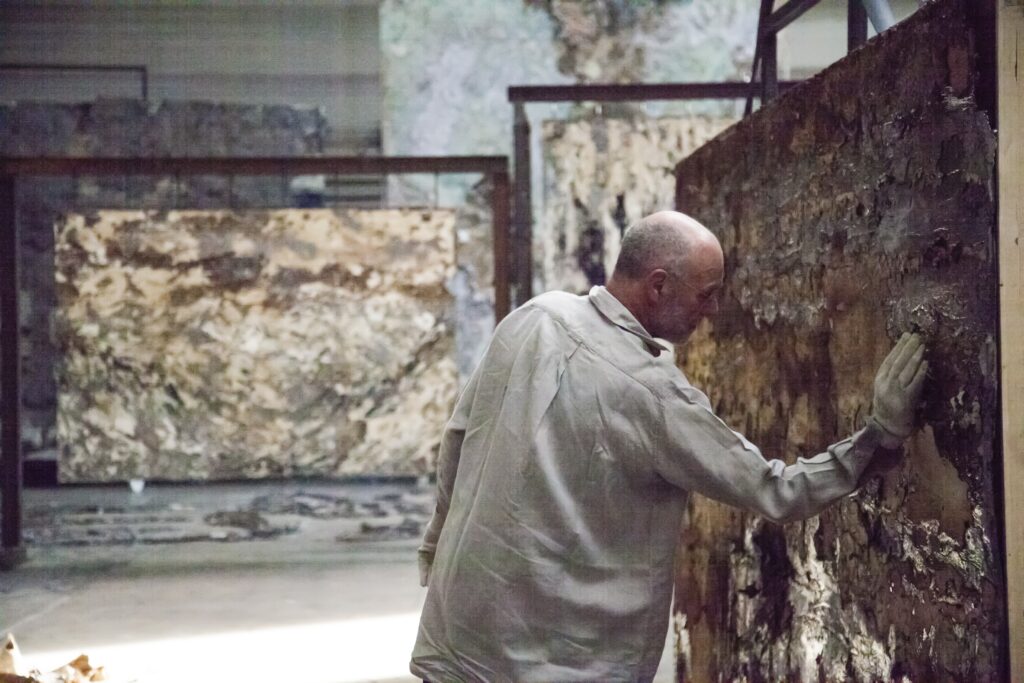
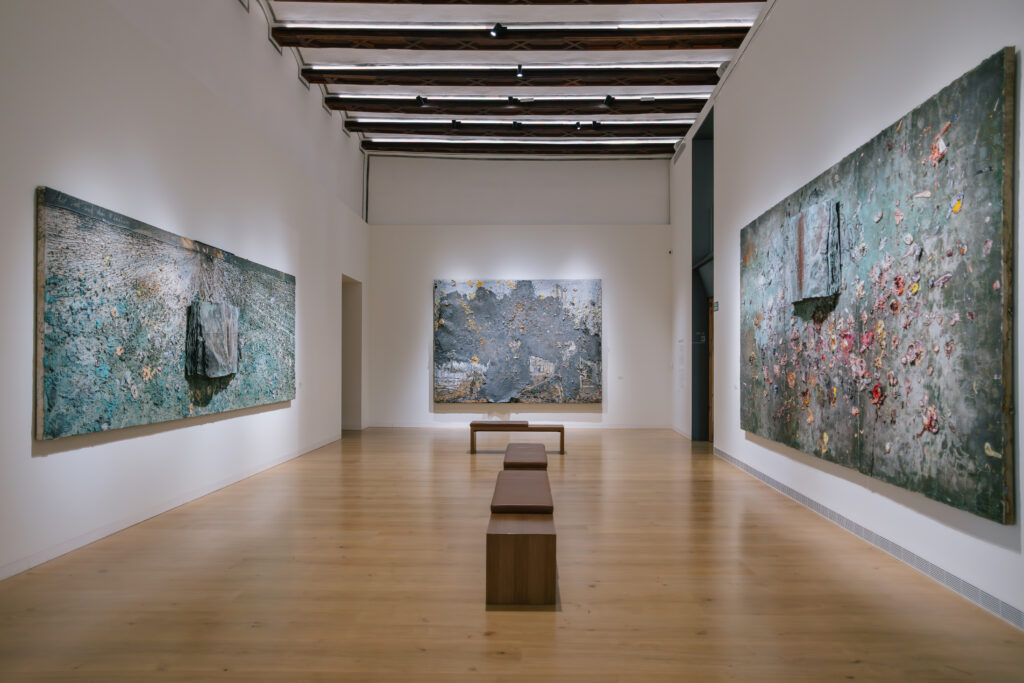
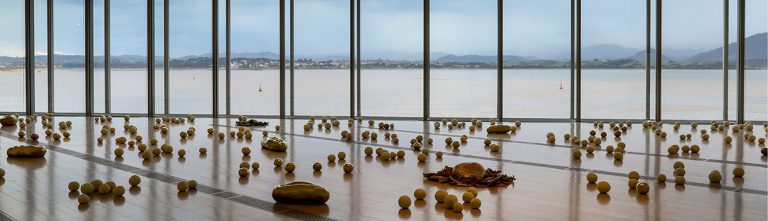
Today, the Hortensia Herrero Art Center opens Kiefer’s first exhibition in Valencia to the public, curated by Javier Molins and organized in close collaboration with the artist, who, knowing the spaces and scales of this creation center, planned the ideal pieces for each of the six galleries that the exhibition occupies. It is very immersive, due to the monumental dimensions of the works, and again contains history, landscape and mythology.
The starting point of this proposal was the acquisition, by Hortensia Herrero, a decade ago, of Böse Blumen (inspired by Baudelaire), and the ties between the two during those years have made it possible for this project to land in our country: an invitation to concentration, to let oneself be absorbed by creations in which textures and colors are superimposed in layers that seem to refer to temporal ones.
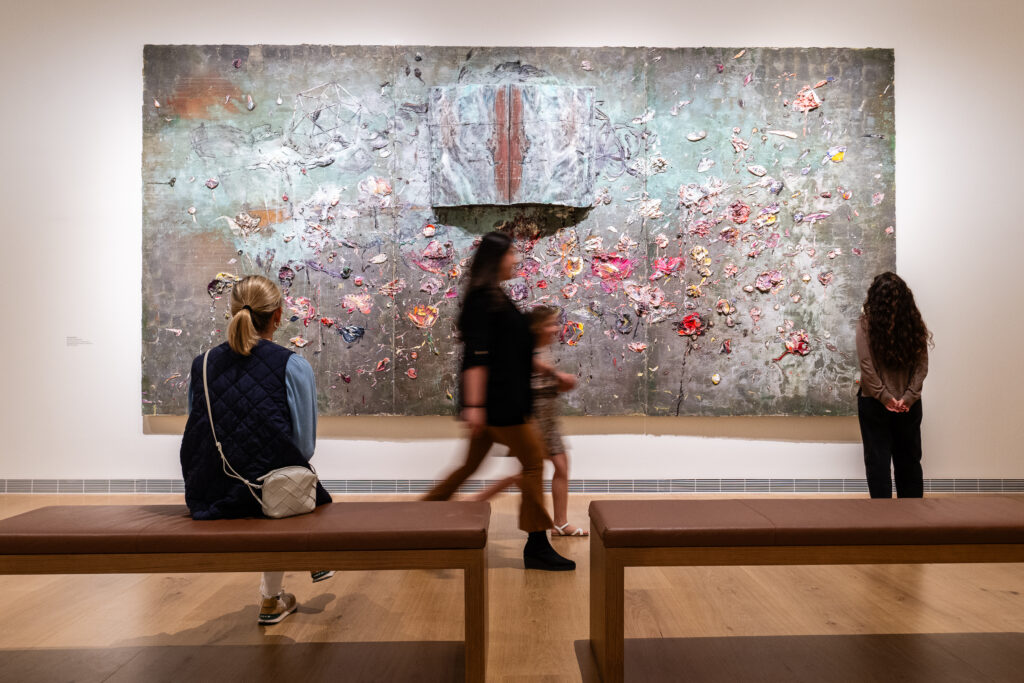
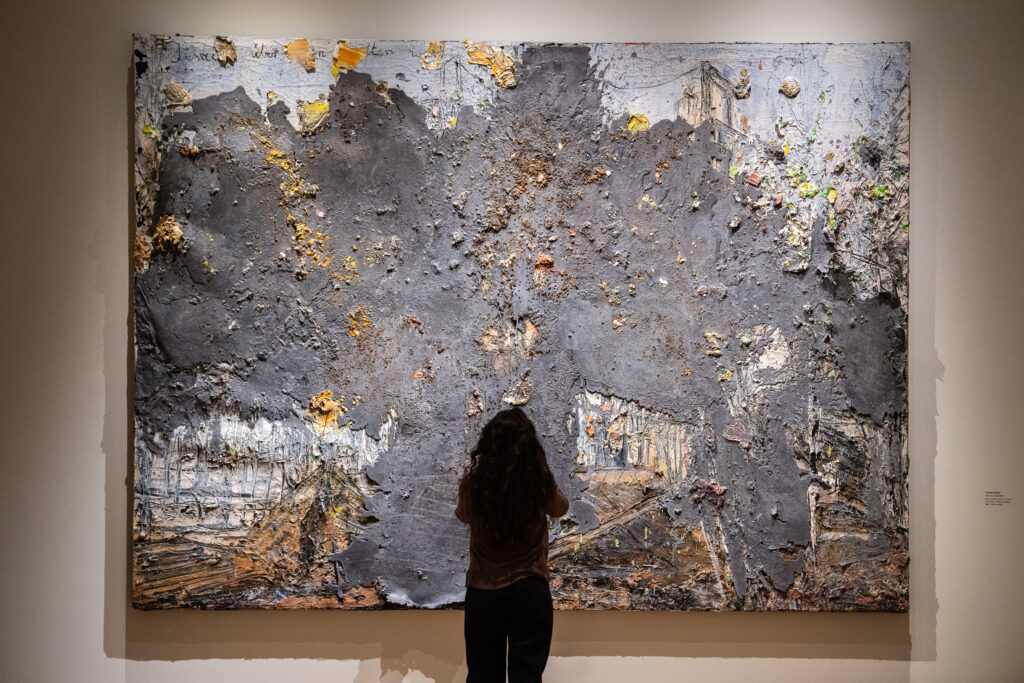
Also part of Herrero’s collection are Walhalla and Der Tod und das Mädchenwhich can be seen in the main room of this space along with other pieces that come out of Kiefer’s studio for the first time, such as Elektra and Dryadlinked to Greek myths and the nymphs of the forests, where during the war the artist’s family protected him from bombings; or the aforementioned Für Walther von d. Vogelweide and Wer jetzt no Haus hat, baut sich keines mehrinspired by the poetry of Von der Wogelweide and Rilke, respectively. In the case of Der Tod und das Mädchen It was music, specifically Schubert and Death and the maidenthe starting point; in the of Walhalla, The same thing happened with the instrumentalized Wagner and The Ring of the Nibelung. In this last composition, a large lead stain seems to point to the weight of history.
The showcase has also arrived in Valencia Johannis Nachtwhich keeps ferns inside, the first plants on Earth; the very early Himmel–Erde (1974), in which heaven and earth converge on the palette of a painter-shaman; and the immense Danaënever exhibited in Europe, which reproduces the interior of Berlin’s Tempelhof airport while alluding to the myth of Danae in the form of a golden rain that falls on the painting. The image is filled with the past of this installation, designed by Ernst Sagebiel within the urban planning project that Albert Speer, loved by Nazism, devised for the German capital.
The irrational, and not the document, continues to be Kiefer’s path to approach yesterday, myth and symbolic landscapes. While reliving romantic greatness, he remembers, even using fire, the attacks of time.
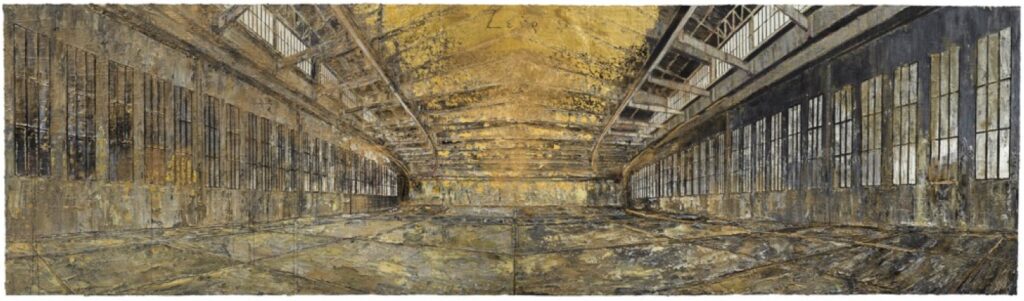
Anselm Kiefer
HORTENSIA HERRERO ART CENTER
Sea Street, 31
Valencia
From April 29 to October 25, 2026