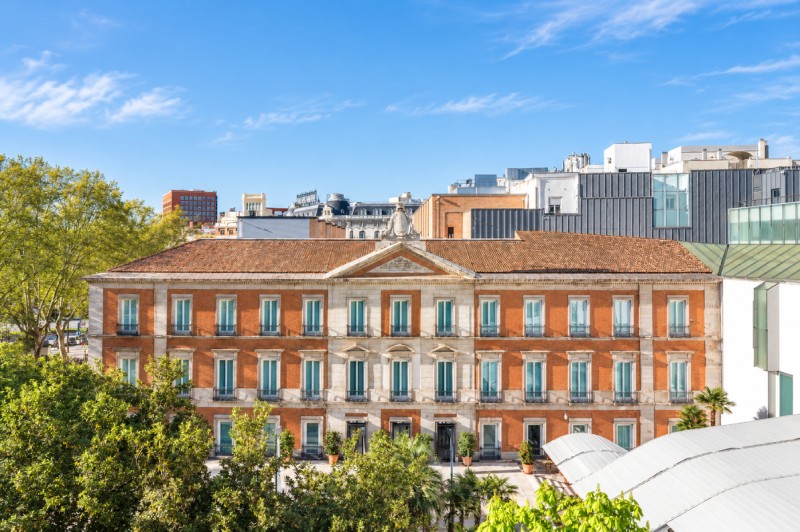
Madrid. At the Museo nacional Thyssen-Bornemisza, the permanent collection stops at the threshold of the 1980s. The Madrid museum of ancient, modern and contemporary art opened in October 1992 with a collection loaned by Baron Hans Heinrich Thyssen-Bornemisza (1921-2002), which the State purchased in June 1993. Since then, no acquisition budget has been planned, the Spanish Ministry of Culture not seeing the usefulness of it. The statutes do not formally prohibit purchasing, specifies the artistic director, Guillermo Solana, but any purchase, donation or deposit must go before the board of directors, where representatives of the Thyssen family sit. The latter have always exercised their right of veto to exclude works which did not reflect their activity as collectors. The museum can therefore neither buy nor accept on deposit anything that does not come from the family. How to build a contemporary collection in these conditions? Thyssen ended up finding an answer, which went through the heirs. It is based on three levers, deposits, orders and donations.
The private collections of the Thyssen children on deposit
Arriving in 2005, Guillermo Solana focused on family. The baron’s children, long kept at a distance due to a dispute with his widow, Carmen Thyssen, ended up depositing their private collections. Francesca Thyssen-Bornemisza, daughter of the baron, collector of contemporary art since 2000 and creator of the TBA21 foundation in 2002, has deposited her works by German expressionists. Since 2018, two exhibitions per year have been mounted at the museum with the foundation, based on proposals that the museum validates.
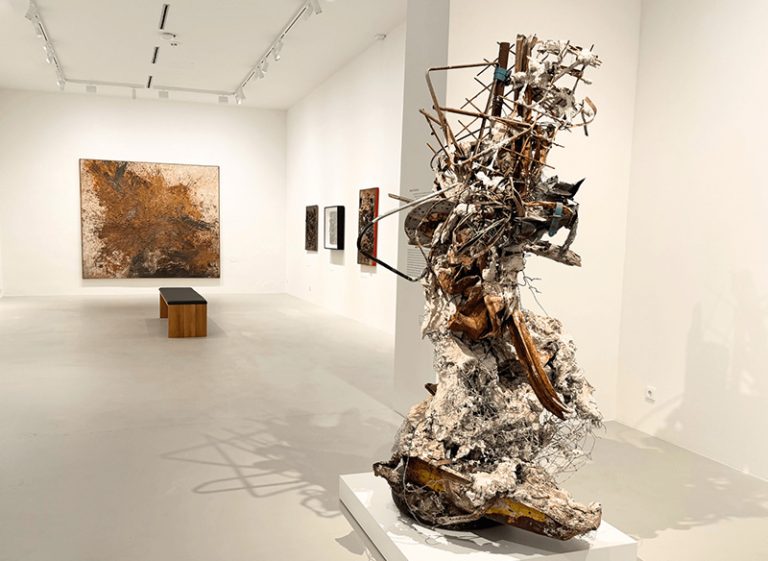
Two years after its creation, TBA21 moved from purchasing works to producing works with artists, whom it sometimes supports for two or three years. “Works designed for the public, for museums”explains Rosa Ferré, co-director of TBA21. Giving them to the State is therefore “almost a natural extension” for these orders. A first experience, at the beginning of the 2020s, brought Ai Weiwei into dialogue with the pop art of the 1960s, or Kandinsky with Olafur Eliasson. The founder then offered to donate part of her collection. Guillermo Solana refuses due to lack of space. The museum does not have reserves worthy of the name. It was designed to expose 90% of its funds, “an absurd bias”, he judges, imagined by politicians and jurists rather than by museographers.
Room 32 of the museum, dedicated to the evolution of landscape and art at the end of the 19th century and the beginning of the 20th century.
© Museo Thyssen-Bornemisza
The state removed the obstacle in September. He announced that he was selling a building with a surface area of more than 10,000 m2, the Palacio de Hielo y del Automóvil, located five minutes from the museum and promised to be renovated. The donation from TBA21, definitive and without compensation, includes 186 works estimated at nearly 16 million euros. Added to this are 179 items on long-term deposit, worth a total of 10 million euros. With the historical works that Francesca Thyssen-Bornemisza is already lending to the museum, estimated at 70 million, the total amount made available reaches almost 100 million euros. “This ensemble could form an independent museum,” believes Rosa Ferré, who evokes a body of work built around ecology, social justice and decolonization. The museum chose the works itself, she emphasizes. The deposit is revisable. The museum can lend the pieces to third parties, and the foundation can enrich the lot through revisions with its recent acquisitions. The collection can thus evolve, but thanks to the foundation’s purchases, not those of the museum.
Does this windfall constitute an acquisition policy? For the director, the donation does not come into ” replacement “ acquisitions, but ” complement “, ensuring that the museum would have had difficulty growing towards the contemporary without the foundation. It does not compete with the Museo nacional centro de arte Reina-Sofía nor the Macba (Barcelona Museum of Contemporary Art), she specifies. The very targeted TBA21 collection leaves aside some well-known names and shares others, such as Joan Jonas or Marina Abramovic, with existing collections. The Reina-Sofía buys with state money, which the Thyssen cannot do. But the TBA21 collection remains the fruit of the view of a single collector. “When we leave a private foundation for a national public museum, we must aim for a broader horizon”says Guillermo Solana. He wants a feminist accent, and tends towards sculpture and painting, where the basement exhibitions, confined to a cramped room, have until then mainly shown video. Borja Thyssen, also a collector, is already lending works from his collection, focused on painting since the 1980s (the museum has exhibited the American Kenny Scharf). Guillermo Solana would like to install it in the new space, where it would complement Francesca’s, more focused on video and installations.
Ordering work and need for a budget
The fact remains that to bring an artist into its collections, the museum must still rely on the family. “The solution is to convince a member of the Thyssen family to acquire this or that work”summarizes Guillermo Solana. He plans to create a joint acquisition committee with TBA21, then a contemporary art department. This would coordinate the collections and programming, alternating today between the foundation’s exhibitions, the “Kora” cycle dedicated to living artists and presentations linked to Borja Thyssen.
Another avenue: ordering. Rather than purchasing an existing work, the museum would finance the production of a new work with the artist, as TBA21 has done for more than twenty years, often with other partners. This would require a budget. Guillermo Solana hopes for a dedicated budget, managed by a committee on which Francesca Thyssen-Bornemisza would sit. The board of directors has evolved, he wants to believe. Around 2008, some still refused photography exhibitions. Upon arrival, having invited an artist to intervene in the permanent collection, then “untouchable”, almost cost him his job. Only purchasing remains out of reach today.