Vienna (Austria). There are these subjects which, due to their hermetic nature and their multiple ramifications, are difficult to approach other than through writing. The Leopold Museum is taking the risk of devoting an exhibition to the main occult and esoteric doctrines that emerged in the Austrian capital at the dawn of the 20th century. A bold statement, especially since co-curators Matthias Dusini and Ivan Ristic lift the veil on a dark and little-known part of the history of ideas, little addressed until now in Viennese institutions: the penetration of racialist and anti-Semitic theories within a few circles of intellectuals keen on theosophy.
Prevalence of the theory
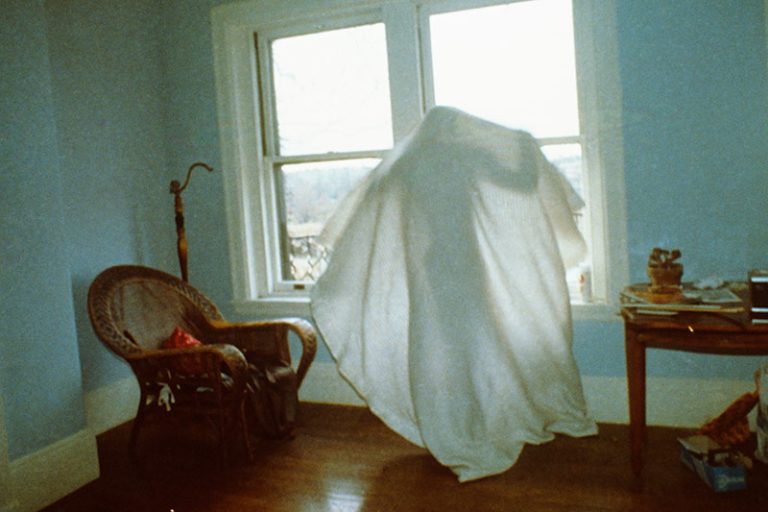
Spiritism and Theosophy are undoubtedly the most emblematic spiritualist doctrines of the turn of the century in Vienna. The exhibition “Hidden modernity. The fascination with the occult in the 1900s” revolves around these two currents and focuses on their influence on the art of the first half of the 20th century. The section devoted to spiritualism presents its main actors – Hippolyte Léon Denizard Rivail, one of the pioneers of spiritualism in the 1850s, and Carl du Prel, German theorist of modern spiritualism, to name but a few –, spiritualist photographs by Adolf Ost and Friedrich Strnischtie, recordings of performances under hypnosis by the famous dancer Magdeleine Guipet as well as a fine selection of artists’ paintings more or less known to the general public.
However, writing remains predominant, despite the diversity of mediums and supports exhibited. A remark that can be generalized to the entire exhibition. If writing is obviously not to be banned in an exhibition devoted to complex thought processes, it would have been wise to vary its presentation methods and to include sound devices and explanatory videos in order to lighten the visit and make the subject more accessible. Certain documentary sections of “Hidden Modernity” sometimes take the form of a pile of biographies of theoreticians.
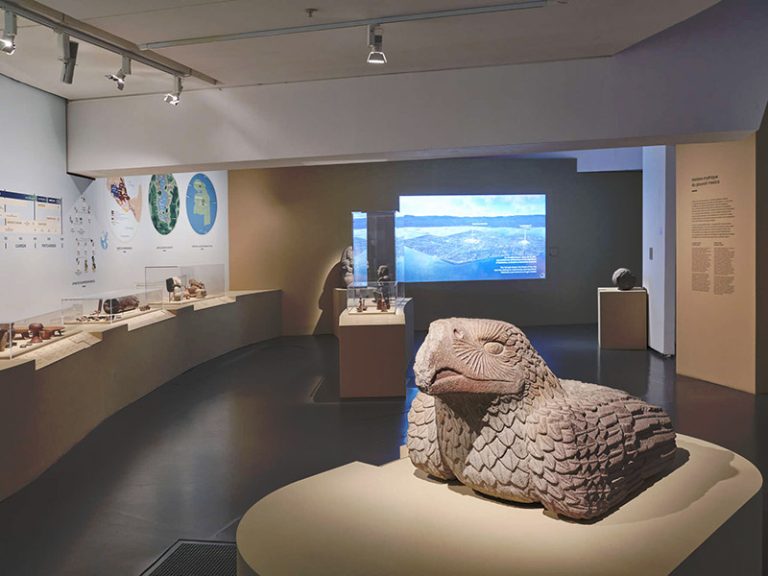
View of the “Hidden Modernism” exhibition at the Leopold Museum.
© Oliver Ottenschläger
Despite the quantity of texts present in the exhibition, certain rooms do not provide sufficient explanations to decipher the iconographies summoned in the works. This is the case of the section devoted to two disciples of theosophical doctrine, the German symbolist painter Karl Wilhelm Diefenbach (1851-1913), figure of the artist-prophet, and his student Hugo Höppener (1868-1948). Some theosophical notions such as the theory of the higher spheres and the astral body are explained, as is Diefenbach’s personal trajectory, from his ethical vegetarianism to the founding of the Humanitas community in the suburbs of Vienna in 1898. However, it remains almost impossible, for visitors not initiated into theosophy, to decipher certain of his paintings such as the Sphinx (1897-1907) or Ecce Homo (1890). For the first, should the visitor see a reference to the initiation of Helena Blavatsky, founder of the Theosophical Society in 1875, or to the “mysteries of Isis” at the foot of the Sphinx in Egypt? And, Christ being a cosmic spiritual being in Theosophical thought, Ecce Homo should it be read as an allegory of Wisdom? Hard to say.
Occultism, secret societies… and the Nazi party
The part on the emergence and development of “Ariosophy”, an ethno-nationalist branch of Theosophy, is the great success of the exhibition. Matthias Dusini and Ivan Ristic return to the beginnings of this doctrine under the aegis of Jörg Lanz von Liebenfels (1874-1954), a Viennese occultist. This from the founding of the New Templar Order, a eugenicist and racialist religious organization, until the publication of the manifesto Theozoology; or the science relating to the ape-men of Sodom and the divine electrona work in which Lanz von Liebenfels develops the idea of a filiation between a race of god-men and an Aryan race. The commissioners recall that its anti-Semitic periodical Ostara was read by Hitler in his youth.
Another representative of Ariosophy: Guido List (1848-1919), Viennese writer at the origin of “Armanism”, a “theory of the 5 races of world history”, who influenced a whole generation of Austrian and German occultists. The latter founded secret societies such as the Reichshammerbund, the Teutonic Order and the Thule Society, all three of which contributed to the emergence of the Nazi Party.
Despite the aridity of certain sections of the exhibition and the predominance of the text to the detriment of the image or other mediation devices, “Hidden Modernity” remains an important and very rich exhibition, and the courage of the two curators can only be saluted.

View of the “Hidden Modernism” exhibition at the Leopold Museum.
© Oliver Ottenschläger