Madrid,
The week that we began celebrating International Museum Day has been culminated by the Prado by remembering that the role of those with collections of the size and relevance of its own transcends preservation, dissemination and education to also reach that of research and study of periods, works and artists that have until now received insufficient attention.
That is why Miguel Falomir has described today as not only excellent, but also necessary, the exhibition that can be visited in its rooms starting next Monday and curated by Joan Molina: “In the manner of Italy. Spain and the Mediterranean Gothic (1320-1420).” This is a complex exhibition and a thesis; A good part of the hundred works of which it consists come from religious institutions and not from museums, and on occasions they had almost never been exhibited, hence twenty-one of them have been restored for the occasion and two have, literally, been revived with this work: we are referring to the panels dedicated to the apostles Simon and Matthew by Gherardo Starnina and from the Cathedral of Toledo.
Speaking of restorations, the museum director pointed out today that the Prado has restored one hundred and sixty-seven non-own pieces of all kinds in the last five years, either by carrying out the intervention in its facilities or by facilitating their financing. Three quarters correspond to funds from public institutions and the remaining quarter to religious organizations; The same percentages apply to the proportion of paintings and the rest of the disciplines: sculptures and decorative arts.
Returning to the exhibition, with a montage carefully conceived to invite the viewer to cross gazes between compositions that are related for iconographic and formal reasons, it delves into the relevance of cultural and artistic exchanges in the European Mediterranean in the 14th and early 15th centuries, emphasizing the relevance of the travels of artists in this area and of Avignon, Genoa or Valencia as essential cosmopolitan centers for the consolidation of these mutual influences.
Works of enormous chromatic vividness and incipient forms of narrativity await us in the Prado in which the almost continuous and virtuous use of gold, with symbolic implications, generates very particular aesthetic effects, which would not be repeated. This exhibition claims, in the words of its curator, that the forceful impact of Italian culture in the rest of Europe, and fundamentally in Spain, did not begin in the Renaissance and that, in fact, the echoes of the Trecento were felt in our country before anywhere elsefor our strong political and commercial relations and also for open receptivity.
Fundamentally in the Mediterranean regions, but also in the interior, Tuscan masters arrived – not only painters, but also goldsmiths, illuminators, and sculptors – largely “across the bridge of Avignon”, then the papal seat and residence of a notable number of Italian artists, among them Simone Martini and Matteo Giovanetti, who participated in the decoration of the Palace of the Popes. Therefore, many of the Italian novelties crossed the Pyrenees nuanced by features of French Gothic; others, those of the Giotte and Byzantine tradition, would arrive via Genoa and would not take long to seduce the patriotic clients, whom it is easy to imagine fascinated by the hair suggested from gold threads or by the Virgin’s clothing traced with embroidered micro-stitches.
In our country, these models would be translated and adapted by figures such as the Bassas or the Serras, Joan Loert, Miquel Alcañiz or Pedro de Córdoba until, in a case of not so peculiar return tripthe Spanish art of those dates would have its impact on Italian authors, turning the Trecentista codes into a kind of lingua franca in which there was room for adaptations and versions, constant exercises in hybridization and synthesis that affected both themes and techniques. The Black Death, which caused the death of several craftsmen, did not undermine these ties.
In the case of the Hispanic contributions to the Italian schemes, these have to do with the formats of panel painting, especially with the large altarpieces that presided over our temples and that are claimed in “In the Way of Italy” as scenographic machines. In them, gold emulated luxurious textures and provoked spiritual and optical experiences at the same time.
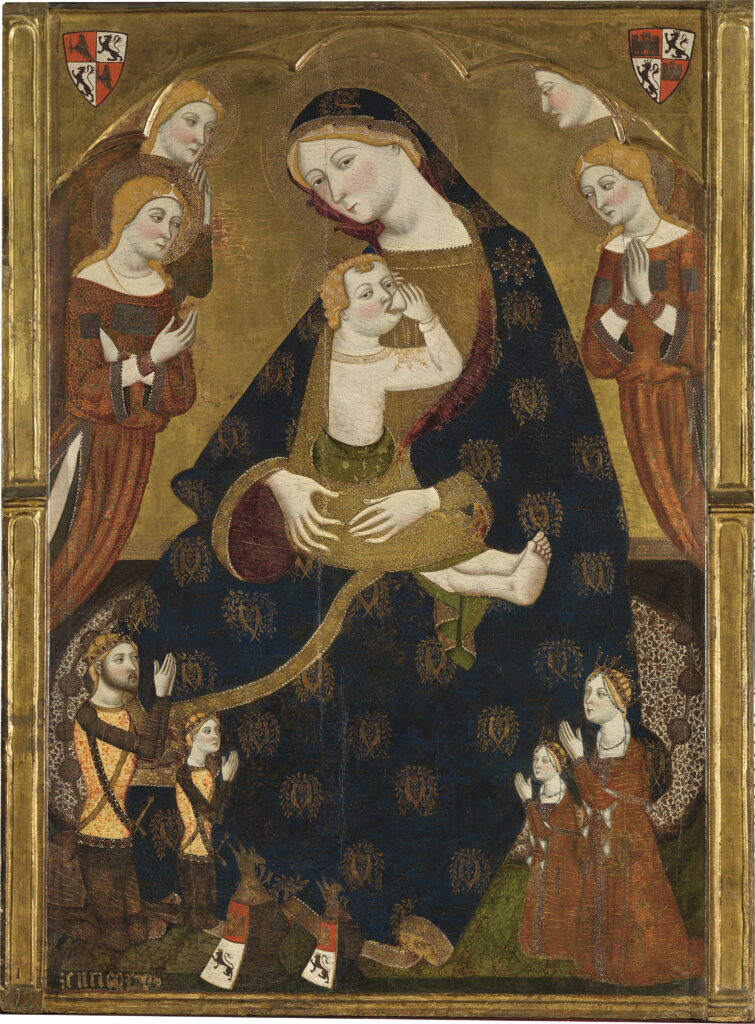
And in the brief kingdom of Mallorca some of those first attempts at fusion of artistic formulas took place; among others, and as early as the 1330s and 1340s, by Joan Loert, the Master of Privilegeswho worked in Perpignan before working on the island for the court of James III, Bishop Berenguer Batle and various oligarchs. Painter and illuminator of manuscripts, he had an activity so important as to require several collaborators.
Other essential figures are those of Jaume Ferrer Bassa and his son Arnau, who would both be victims of the aforementioned epidemic. The first probably traveled to Siena and combined the imprint of his painting with those of linear Gothic and Byzantinism. His language, more sophisticated than that of Loert, received the support of the crown of Aragon: Pedro IV and the members of the most powerful guilds hired him on several occasions.
Arnau inherited his father’s concerns, knew well the work of Martini and his followers and openly sought innovation and three-dimensionality; He was one of the first masters of the technical manipulation of gold. We owe Ferrer the very delicate Morgan Polyptych; to its successor, the great altarpiece of Saint Mark and Saint Anianus from Manresa, which anticipates the monumentality and unity of these pieces from the Renaissance.
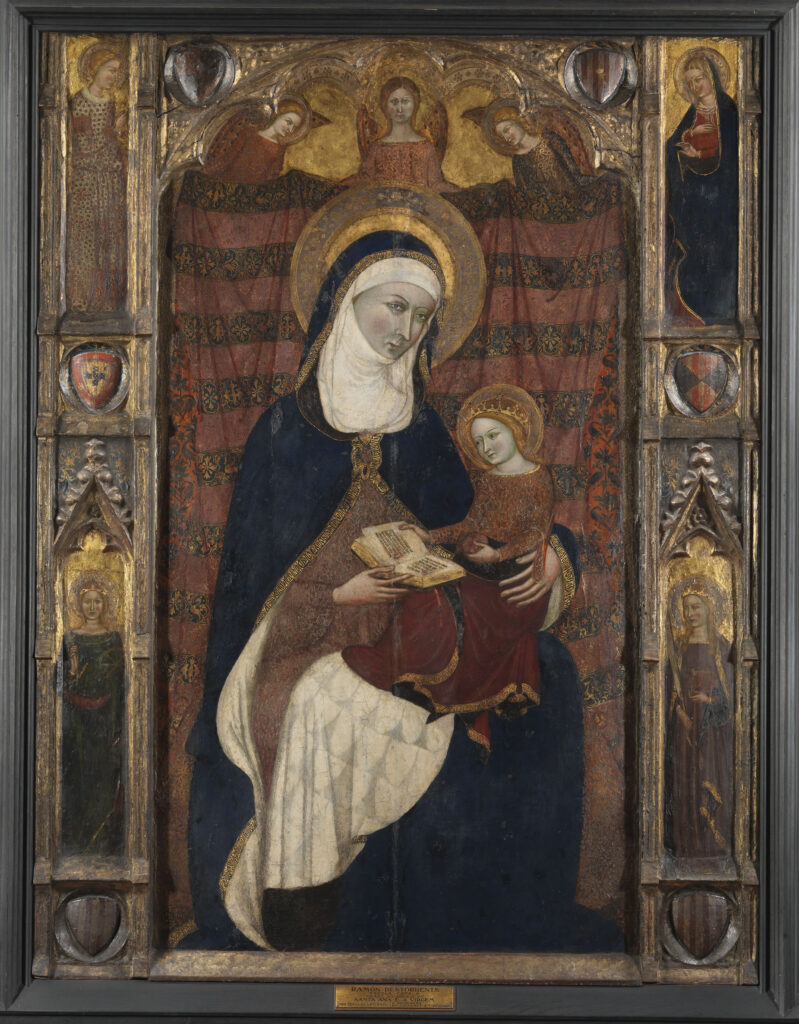
Upon the death of both, their legacy would be kept alive by Ramón Destorrents, creator along with the previous ones of an original temple of Saint Anne teaching the Virgin to read which is preserved in the Museu Nacional de Arte Antiga in Lisbon and was originally located in the Almudaina Palace.
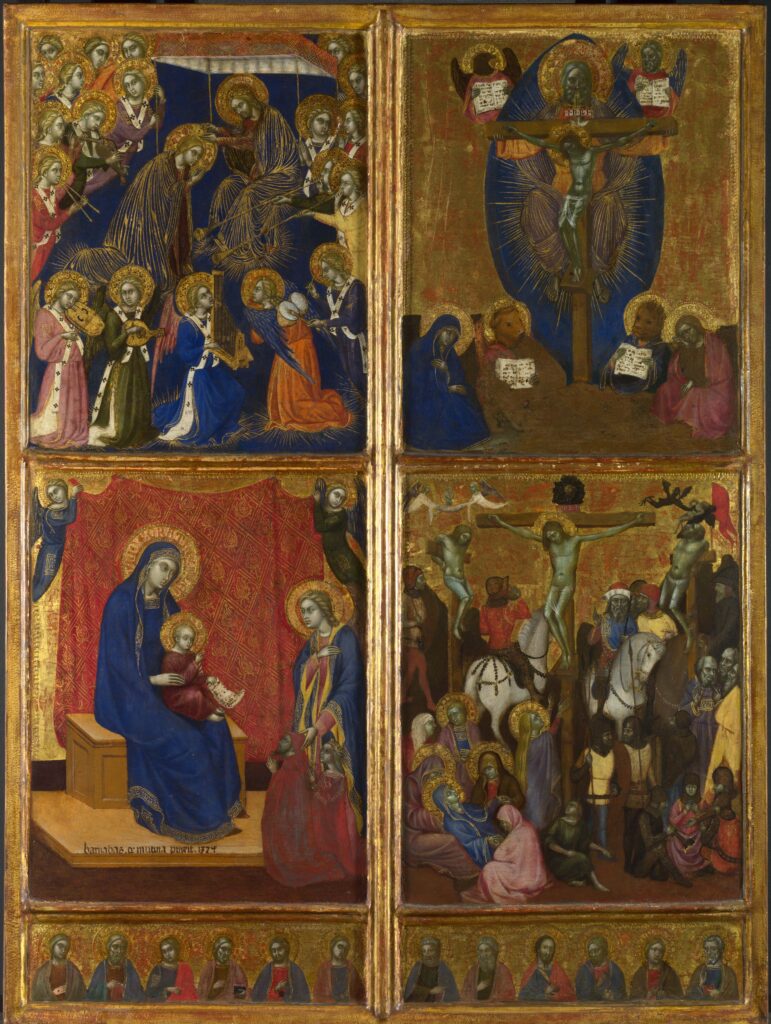
A separate room in the exhibition is given to Barnaba da Modena, who in the mid-14th century headed a Genoese workshop in which Bolognese and Sienese and other Byzantine Trecentista formulas converged; From that city of Genoa, and by sea, his work crossed the Mediterranean. The three that we will see in the Prado arrived in Murcia, two of them demanded by Juana Manuel, wife of Enrique II of Castile (the dossale of the Virgin of Milk and the side doors of a triptych) and the last perhaps by Fernando Oller (the polyptych of Santa Lucía). Its exoticism responded well to the desire for novelties of the Trastámara supporters.
The transalpine themes would be nuanced to respond to Hispanic taste, as we will appreciate in the reworking of a Veronica of the Virgin of Roman influence and which belonged to Martin I of Aragon – attributed to Bartomeu Coscolla, widely copied and considered acheiropoietanot coming from human hands but from divine inspiration – or that of Virgin of Humilityaccording to the prototypes devised by Martini in Avignon.
After contemplating very suggestive pieces, and rarely seen, originating in the convent of Santa Clara in Palma, we will admire the elegant handling of gold in its conjunction with the pigment of Jaume and Pere Serra, both influential figures in terms of the consolidation of the typology of large altarpieces as a support for the telling of stories and the devotional itinerary. The one of Saint Julián and Saint Lucía stands out, for the Zaragoza monastery of the Resurrection.
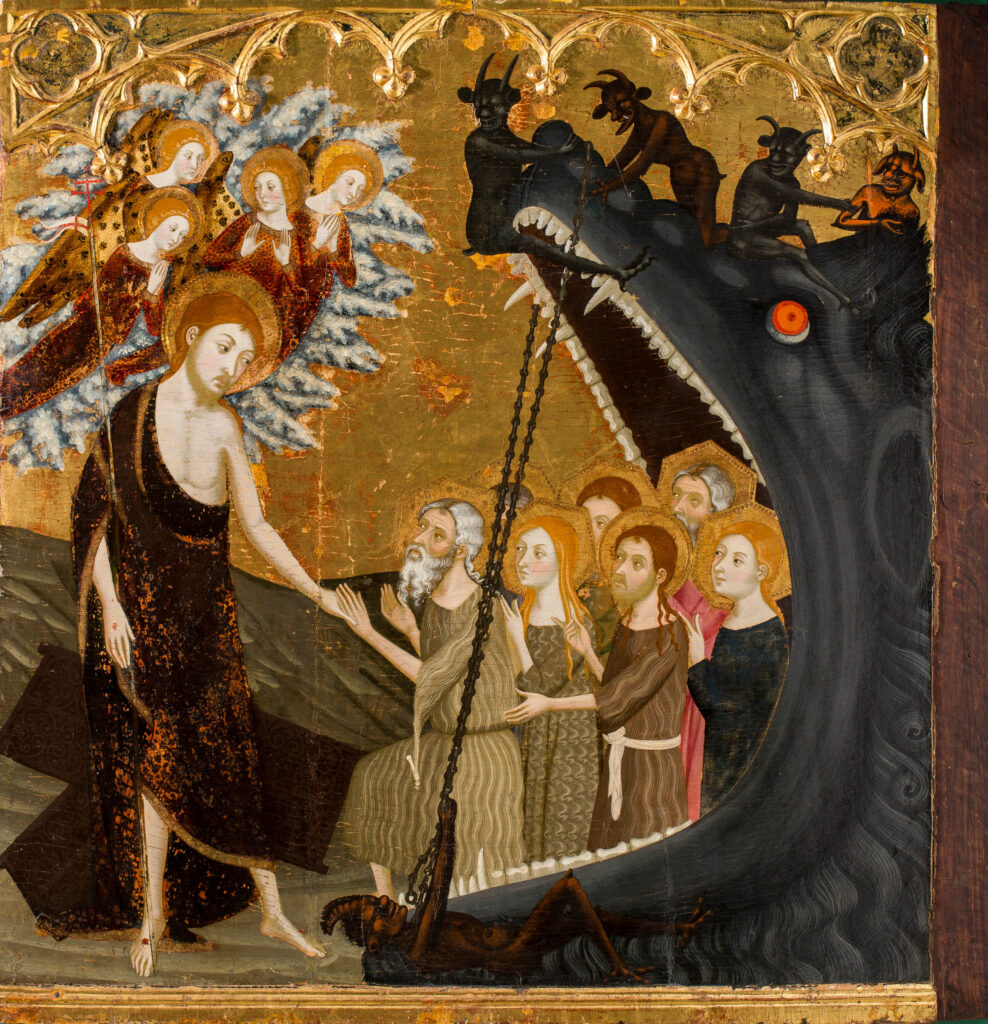
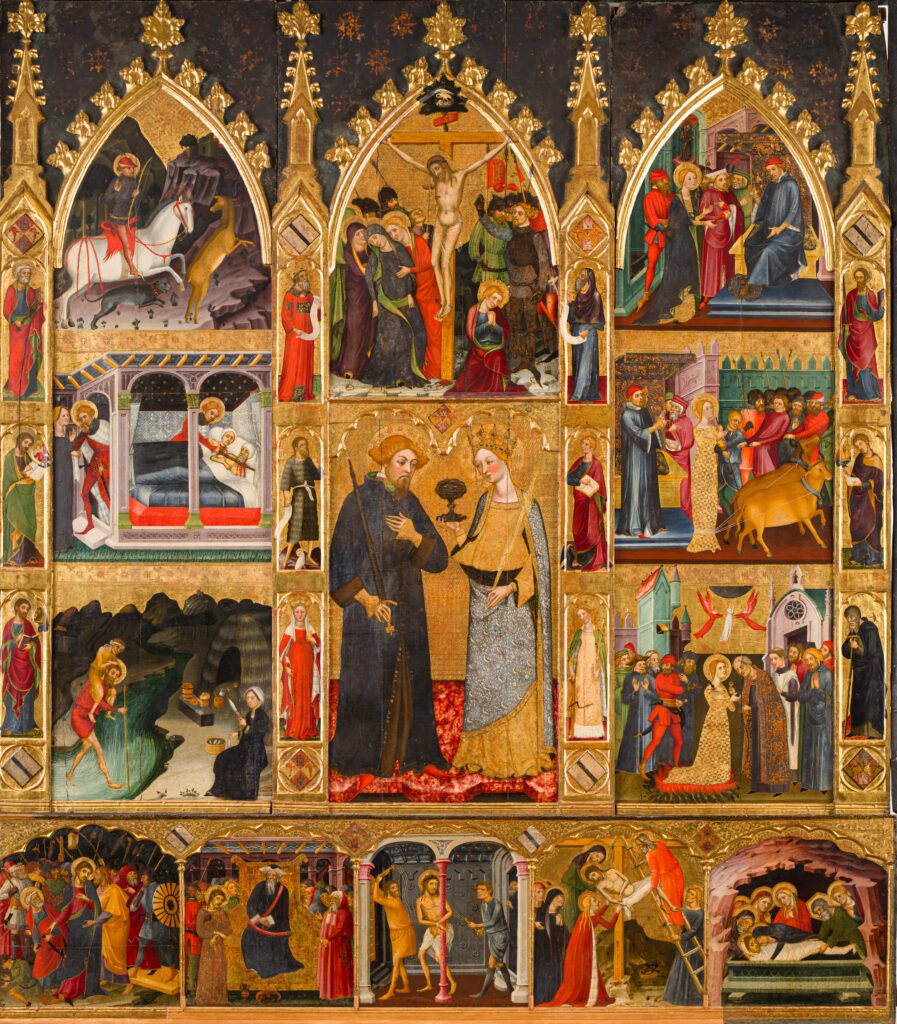
The techniques are an important line of argument in the exhibition (almost antiPradoMolina has said, because the empire is moving away from the dominant oil on canvas) and they have their own section where silver and gold thread embroidery, polychrome and gold sculptures, translucent enamels, carved bone objects and inlay are displayed.
And the last chapter of the exhibition is starred by a peculiar artist who embodies the bidirectionality of the artistic influences in which this project is immersed: the Tuscan Gherardo Starnina, still rough in his first Italian period, extraordinarily refined while he worked, later and from Valencia, for the crowns of Castile and Aragon (as Vasari was able to observe) and, finally, a renovator of the late Florentine Gothic admired by Lorenzo Monaco and Fra Angelico; An exceptional front with Virgins of the Three culminates the route. With them another story began and a huge and revealing exhibition ends.
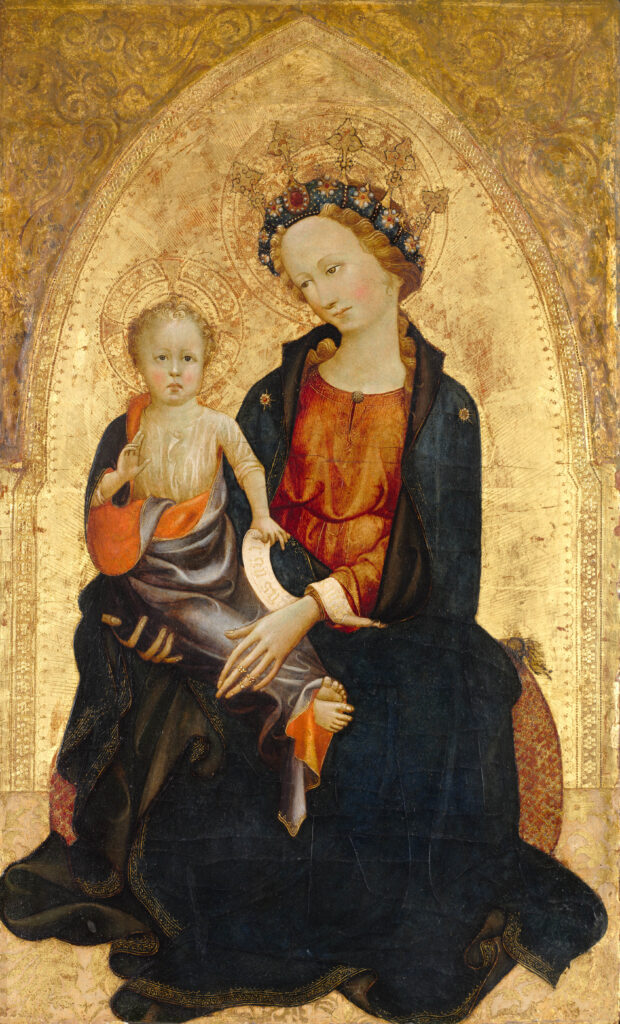
“In the manner of Italy. Spain and Mediterranean Gothic (1320-1420)”
NATIONAL PRADO MUSEUM
Paseo del Prado, s/n
Madrid
From May 26 to September 20, 2026