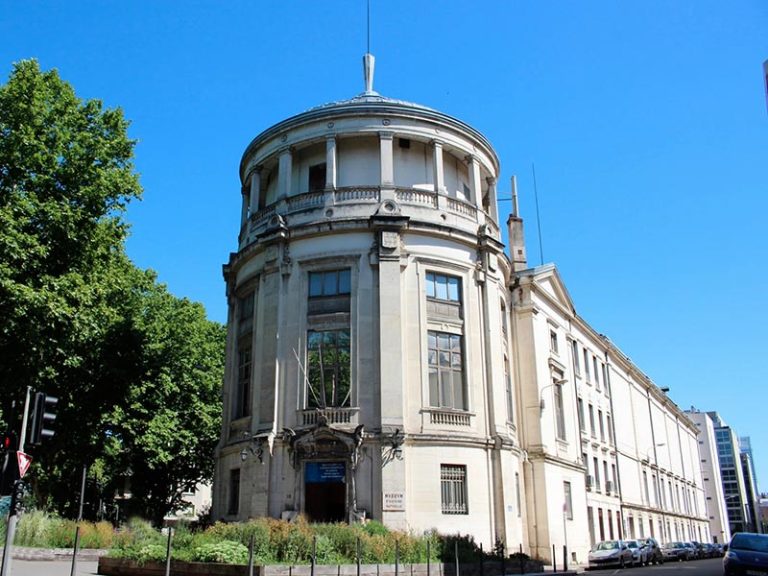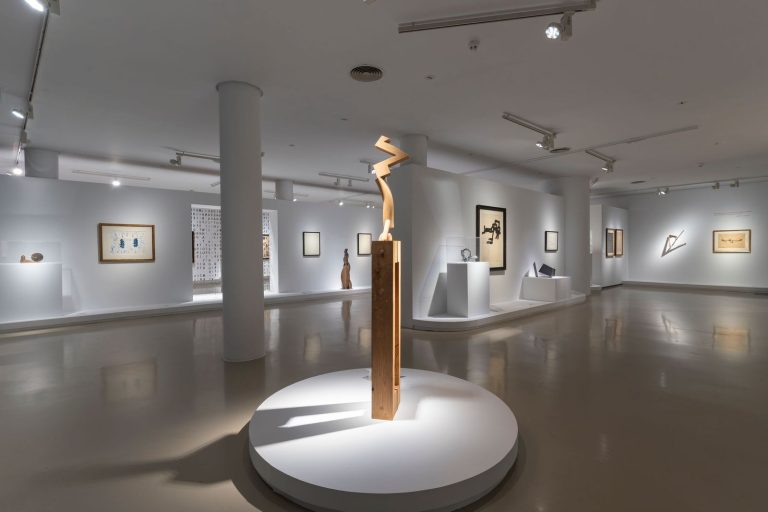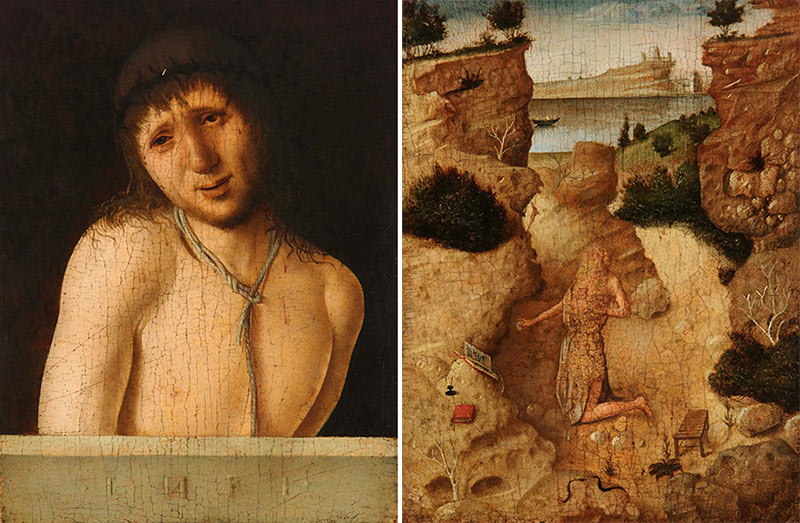
The L’Aquila Museum celebrated Monday June 8 the arrival of theEcce Homoan exceptional painting by Antonello da Messina created around 1470. The Italian government acquired it in February 2026 for $14.9 million (approximately 12.6 million euros), just before it went on sale at Sotheby’s New York. A ceremony took place in the presence of the Minister of Culture Alessandro Giuli and the Mayor of L’Aquila Pierluigi Biondi to mark the reception of the painting, which until now was exhibited at the Madama Palace (the Italian Senate, in Rome).
The painting joins the collections of the National Museum of Abruzzo (MuNDA) a little more than two months after the official announcement of its storage in the capital of Abruzzo. The museum was not a favorite of speculation, which tended towards major national museums, such as the Capodimonte in Naples, the Pinacoteca di Brera in Milan or the Accademia Galleries in Venice.
Sicily had also made its voice heard. For many critics and art historians, it was natural that the work should return to the painter’s island of origin. Regional Democratic Party deputy Fabio Venezia had urged the autonomous Sicilian government to press for the return of the painting from the Ministry of Culture. His main argument: Sicily is the “natural location of Antonello’s works”, several of which are part of the island’s regional collections, reported the Italian daily Fine art.
More than a century after the almost total destruction of the city of Messina by an earthquake in the strait in 1908, possession of the painting would have represented a strong memorial gesture towards Sicily. As expert Lelio Bonaccorso reminds the Guardian, a large part of Antonello’s works were lost or stolen following the earthquake.
MuNDA – National Museum of Abruzzo
© National Museum of Abruzzo
If the preference of Alessandro Giuli’s ministry for L’Aquila may have disappointed some, it is part of the continuity of the policy of promoting the city, named Italian Capital of Culture 2026. Also affected by a violent earthquake from which it was partially destroyed in 2009, the city had submitted an application for the national label around a reconstruction project through cultural development. The entry of Antonello’s painting into the collections of the National Museum of Abruzzo is an eminently political choice on the part of the Italian government, making it possible to give weight to this national and territorial cultural project.
The Italian Capital of Culture label was created in 2014 as part of the “Franceschini reform”, named after the former Minister of Culture, who reorganized the Italian museum system. Symbolically, the five preselected cities had obtained the national label for the year 2015. Since then, one municipality per year has won the title and received the sum of one million euros from the Ministry of Culture.
Purchasing theEcce Homo is part of the cultural policy adopted by the Meloni government, which wants to affirm national identity through art. Less than two months after acquiring the painting by Antonello of Messina, Italy spent more than double on a large oil painting by Caravaggio, purchased for 30 million euros. THE Portrait of Monsignor Maffeo Barberini has now joined the ancient art collections of the eponymous Palace in Rome. If Italy has long been concerned with repatriating its stolen archaeological treasures, the current President of the Council is focusing on masterpieces with strong symbolic power.
An emblematic artist of the Quattrocento, Antonello de Messina (1430-1479) is one of the most important painters in history. He trained in Naples in the workshop of the painter Colantonio, where he discovered the Flemish masters. Specialists consider the fusion of Northern and Southern traditions as its main contribution to the history of art: with the spatial construction characteristic of Italian painting, it combines psychological depth and Flemish meticulousness. The biographer Vasari even recognized an important role in the introduction of oil painting in Italy, information that has since been nuanced by historians.
Her Ecce Homo is a tempera on wooden panel, painted on both sides. The front shows a Christ crowned with thorns, which gives the work its title. The expressiveness of Jesus’ face is the signature of the master of Messina. The reverse side shows Saint Jerome in the desert of Chalcisanother recurring theme in the history of art, painted in particular by Andrea Mantegna. The very small format of the work (20.3 x 14.9 cm), as well as the wear noted on the face of Saint Jerome, made it possible to identify it as a painting of private devotion. The owner’s kisses on the image of the Saint would have left traces on the painting.