The Portland Art Museum (PAM), in Oregon, United States, will inaugurate its new, redeveloped campus in the heart of downtown Portland on November 20, 2025. The project, announced in 2016, includes the construction of the Mark Rothko Pavilion, connecting the museum’s two historic buildings. The complex creates nearly 9,000 m² of additional public spaces and exhibitions, designed to improve circulation and accessibility. The museum remained open throughout the work.
The expansion meets the objective of unifying the buildings erected in 1932 and acquired in 1994, until then separated by the street. A gallery will be dedicated to African-American art, and several spaces have been redesigned to accommodate visitors with reduced mobility.
The project, officially launched in 2023, has experienced some delays linked to administrative procedures. In 2017, the project aroused opposition concerning the use of the public plot connecting the two buildings, used as a pedestrian path. Local associations had filed appeals, believing that the construction risked hindering the movement of cyclists and disabled people. After several revisions of plans, the museum obtained agreement from the municipality on the condition of maintaining a covered passage open to the public.
Designed by Hennebery Eddy Architects in Portland and Vinci Hamp Architects in Chicago, the new pavilion is presented as a large glass cube that connects the interior and exterior. 98% of the total cost was covered by private financing.
The extension reorganizes the visitor route by unifying the four floors of the two buildings and creating a common entrance. The museum is also reopening an expanded café, boutique and modernized auditorium. The collections are reinstalled according to a new thematic display, favoring dialogues between cultures and eras.
Founded in 1892, the Portland Art Museum is the oldest art museum on the Northwest Coast. It now houses more than 52,000 works, covering European and American art, Asian, Native American, modern and contemporary art.
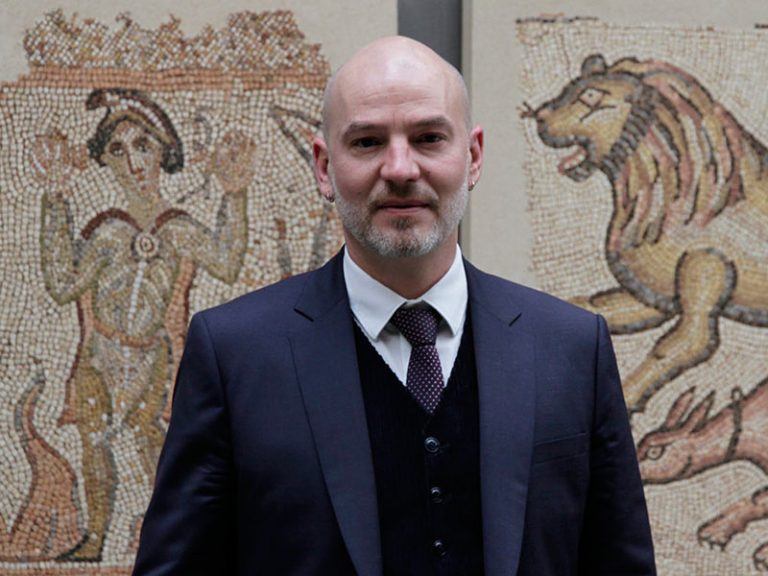
The project marks the end of the mandate of Brian Ferriso, director of the museum since 2006. His departure at the end of 2025 will coincide with the closure of the project which he carried out for almost ten years.