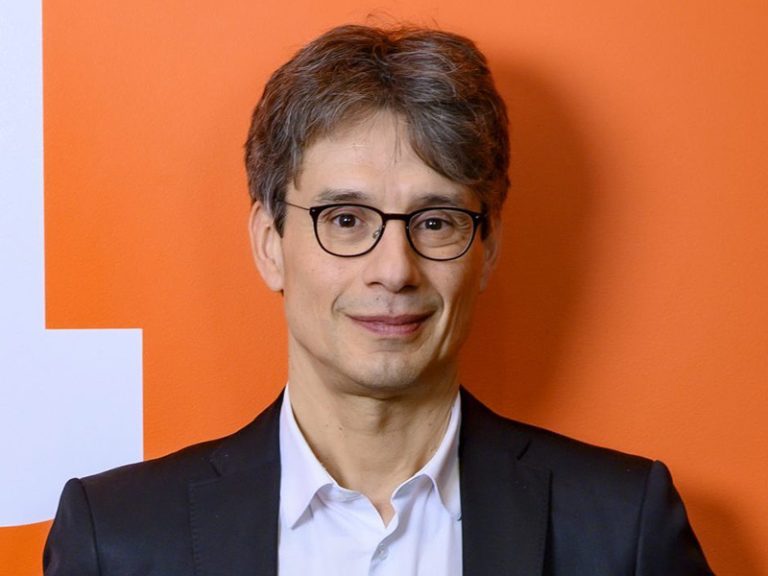
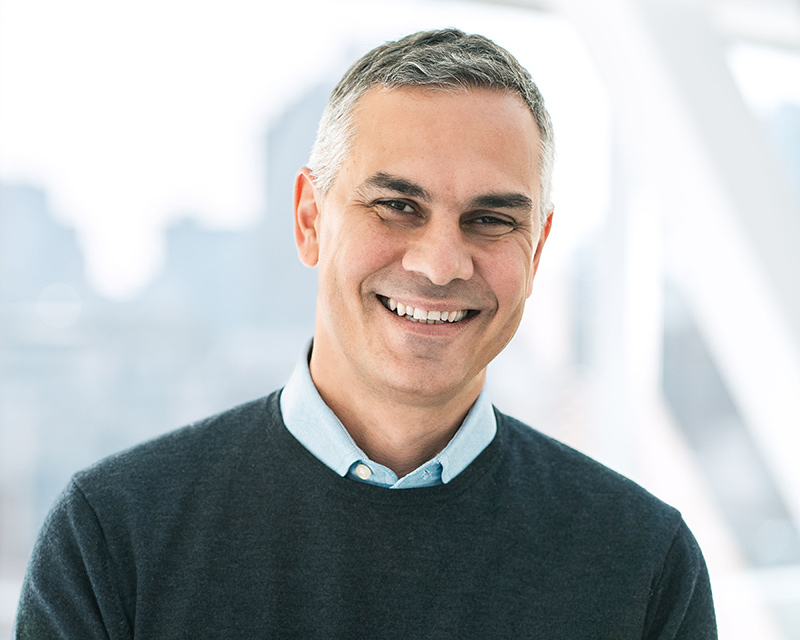
A central figure at the New Museum, the Italian critic and curator Massimiliano Gioni (53), who notably directed the 55th Venice Biennale (2013), succeeds Lisa Phillips at the head of the New York museum. The institution doubled its exhibition spaces in the spring, at a time when American museums are questioning their model, their civic role and their capacity to take risks.
You were already artistic director of the New Museum. What changes when you become a director?
It’s a natural progression: I know the building and the team inside out. But (by becoming a director) everything becomes your job. I like this motto from (the exhibition curator) Harald Szeemann: “from vision to nail”. Money becomes a much bigger concern. Before, in my mind, he paid for the exhibitions; now it pays people, jobs, and many other things.
How to grow without losing agility and appetite for risk?
Our expanded exhibition space remains smaller than the sixth floor of MoMA. What matters is impact: how many ideas can we concentrate while keeping them clear and strong? We are not yet a liner or a limousine, but a Smart, a small car that goes where big ones cannot go. Our budget is increasing by about $8 million, but we’re staying at a scale that allows for risk.
It is inscribed in the DNA of the institution: a museum guided by ideas. Marcia Tucker left the Whitney (Museum of American Art) because she didn’t see it as a place where crazy ideas could take root, and she created the New Museum, where a certain radicalism could exist. (editor’s note: her departure from the Whitney in 1977 also followed her dismissal.) Lisa Phillips has preserved this idea. People come to the New Museum not only to see art, but because art speaks about the world, helps us understand it, and artists confront the most pressing questions of the moment.
The Academy of Natural Sciences in Philadelphia, founded in 1828, is closing its natural history museum to the public. What does this closure say about the fragility of American museums?
Well, it’s difficult…We are still a young institution that does a lot with relatively little. We have to juggle because, yes, the threat of disappearance is not that far away. But – and here, let’s move on to the optimism section – what is striking in America is the strength of the community to create museums. We see this less in Europe: in Italy, a museum generally belongs to the State, a wealthy family or a fashion brand. Here, the roof over our heads was paid for by people brought together because they share an idea, convictions, a mission. It’s a fragile but extraordinary balance.
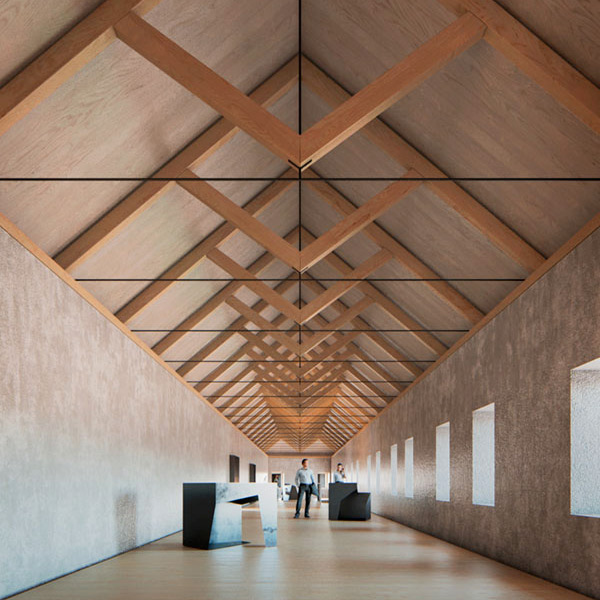
The New Museum and its new building by OMA.
© Jason O’Rear
Is this fragility only financial, or does it say something deeper about the relationship between museums, their public and what they represent?
Museums are subject to high demands, to standards that we no longer even expect from institutions like the White House. We must be responsible, clear and careful about our financing, honest about our mistakes and our blind spots. Sometimes we have the feeling of being the last institution people expect to be impeccable, truly democratic. I take it as a compliment and a declaration of confidence in our role. The fact that Donald Trump attacks the Smithsonian is further proof: why does he spend so much time on the Smithsonian or the Kennedy Center? Because he knows they embody values that many of us believe should be universal and not determined by party. The fact that we are scrutinized so much means that we matter.
On the other hand, I witnessed, in a certain way, the end of the recording industry, almost the end of the book industry, and, for the media, an evolution, perhaps a disappearance. I hope I don’t live to see the end of museums or their transformation. Perhaps the museum is a cultural form specific to an era, from the 18th century to today, and that will not last forever. And yet, I believe in the museum as a place of discovery and “controlled disagreements”. Even if fewer people come, we have a function. I think back to futurist, Dadaist magazines or The Surrealist Revolution : how many copies were they printed? However, we are talking about revolutionary artistic movements. The number of visitors matters, financially, but perhaps we need to free ourselves from the idea that we necessarily have to talk to a lot of people.
What would successful leadership look like in five years?
If what you saw today is exhibited in five years at the Met, at the MoMA (two New York museums) or at the Tate (London), it will mean that we are doing our job. This is where we should come to see the art of tomorrow, or the ideas that are still a little different today which, I hope, will become “mainstream”. I think of the museum as a place of research and development for ideas. Our work would be validated if these entered museums where history is preserved more than fabricated.
I always hear the curator when I listen to you. Do you want to stay that way?
We have learned to imagine the museum director as a diplomat who weighs his words so as not to offend anyone and does not express an opinion so as not to alienate anyone. But because we are not a gigantic museum, I also remain very directly responsible for the artistic vision. I don’t want to become that kind of strategic thinker. I wouldn’t consider it a success if, five years from now, everything I say is diplomatic museum jargon.
You are Italian and the artistic director since 2002 of the Fondazione Nicola Trussardi (in Milan). With your experience of international institutions, how do you explain that Italy does not have the equivalent of the Tate Modern or the Center Pompidou?
Italy entered the age of the museum as an experiment very late: with an immense heritage, the State has long focused on the conservation of antiquities. The museum was less about service than conservation. We also have a long history of corruption, nepotism and gerontocracy. Paradoxically, the fact that contemporary art was not considered strategic left it to its own devices, which was perhaps not entirely bad: private foundations prospered, with Prada, Trussardi, Sandretto and Pirelli. But there remains a big institutional void: we have never had the equivalent of the Frac (Regional Contemporary Art Funds, in France) or the Kunsthallen (art centers in Germany, Switzerland, etc.) and, apart from the Maxxi (in Rome) and the Castello di Rivoli, very few places of this scale. On the other hand, I could have imagined a Tate Modern suffering from the worst of Italian bureaucracy, or even a system controlled by parties. It’s perhaps a compromise: we don’t have the Tate, but around fifteen foundations. And we have the Venice Biennale, which is not to be underestimated.