Le Havre (Seine-Maritime). Known for its city center rebuilt by Perret and listed as a World Heritage Site, Le Havre also has a large heritage linked to the sea. Initially announced for the end of 2025, the maritime and port heritage development hub should open in October 2027, according to the municipality. This project follows a long reflection on how to highlight the maritime history of the City and port activities in the same place, but not necessarily a “museum”. “The municipality prefers to speak of a heritage development center, because the status of the future establishment has not yet been decided,” explains Zhana Bellec, manager of the site where this new space will be built on the docks.
This center takes over from a place managed by the Maritime and Port Museum association since the 1990s and installed on the cruise terminal at the entrance to the port. Work to extend the cruise terminal – a booming activity in Le Havre – forced the municipality to move this museum which it has supported since its creation. Made up of volunteers, the association has brought together a set of objects and works of art which constitute the majority of the funds of the valorization center: models of liners and container ships, archives of liner companies, letters from sailors, dockers’ utensils, ships anchored in the adjoining basin (star, tugboat). The project should make it possible to modernize the presentation of these pieces, because the old museum was not equipped with the means necessary for a modern scenography, nor for a collection site according to Zhana Bellec.
A new showcase for maritime heritage
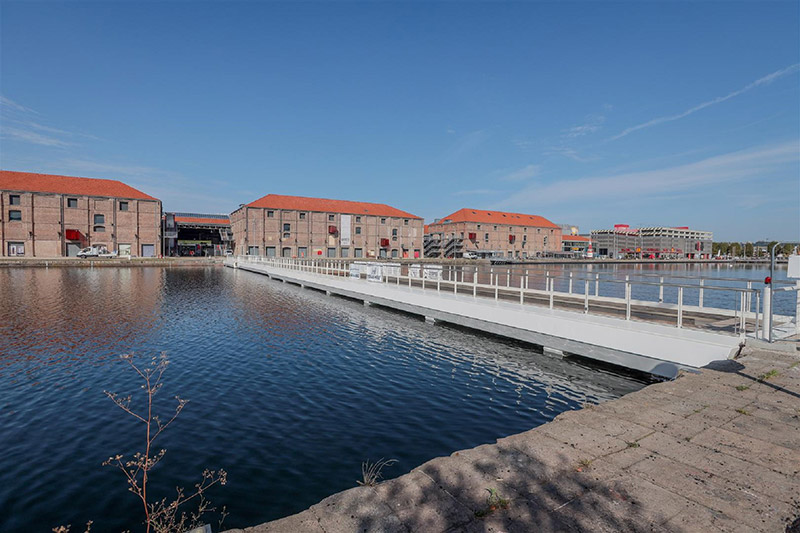
The recovery center is housed in a 2,000 square meter hangar located on the docks, at the edge of the Paul Vatine basin (see ill.). Currently under development for an amount of 1.7 million euros excluding tax (financed by the City of Le Havre and the Metropolis), the site will have a permanent exhibition of approximately 850 square meters, a temporary exhibition room and a multi-purpose space. “Only the temporary exhibition hall and the multipurpose room are air-conditioned”notes Zhana Bellec, who adds that despite its brick structure and its glass roof, the building “is well thermally insulated due to its northern facade”. Thermal comfort conditions are all the more important as the pole’s reserves will be installed at the rear of the hangar, and as several dozen pieces from the collections are in critical condition. During our visit in September, we noticed that the ship models were covered in dust with traces of wear, as were several printed documents and elements of ocean liner furniture (fireplace in a Savoie lounge with built-in clock, armchairs). These collections include exceptional pieces: the Fireboat (floating lighthouse classified as a Historic Monument) moored 300 meters from the site, the ship’s engine L’Ondée (classified as a Historic Monument), the footbridge Normandythe 1 scale model of the propeller of the Normandythe letters from the liner France.
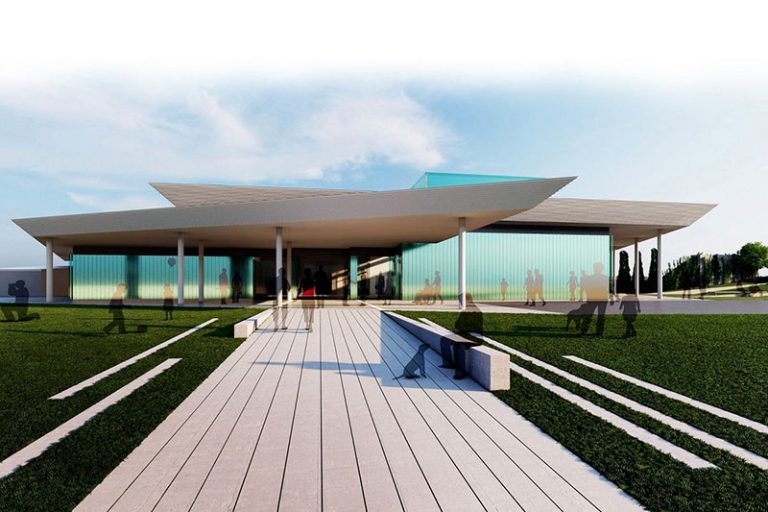
3D projection of the future maritime and port hub of Le Havre.
© Bertrand Francqueville, The pencil-crane
A maritime history to write
Faced with collections of such a diverse nature, the center must have a structuring scientific and cultural project. This is currently being drafted according to the municipality, which indicates the themes selected: “Heritage and the City, shipbuilding, sea routes and transport of goods, liners, travel and migration”specifies Dominique Rouet, director of heritage development for the City of Le Havre. The chronological boundaries of the permanent route go from the beginning of the industrial era (19th century) to the 2000s, because the other periods are already covered by the cultural institutions of Le Havre: the Museum of Art and History devotes a section to transatlantic trade and colonization in the 17th-18th centuries, while the Port Center association traces the evolution of the port since 2000. This exhibition venue also benefits from the support of the commercial port manager, Haropa, who also collaborated in the relocation of the collections from the former maritime and port museum. The development center therefore takes place in a well-established network of institutions around the port history of Le Havre, including dockers’ associations and the public establishment for cultural cooperation French Lines et Compagnies. This establishment has collections linked to French liner companies but does not wish to communicate for the moment on its role in the project. Same caution on the municipal side, where Dominique Rouet is content to say that the associations participate in it, in particular the one which created the old museum, and that “some will have premises on the site”. The City maintains control over this issue, which is part of the urban development carried out by the municipality for more than ten years, since“the site is close to the future tram line C and less than ten minutes from the station on foot” according to Zhana Bellec. Among the neighboring buildings are a conference center, the world-famous Les Bains swimming pool built by Jean Nouvel (2008), the National Merchant Marine School, Sciences Po Le Havre: all were built during the reconversion of the old docks. The heritage development center is therefore not an isolated project, and its opening should bring the people of Le Havre closer to their past, even though for security reasons all activities linked to the commercial port are now “ almost invisible to the residents who regret it”points out Zhana Bellec.