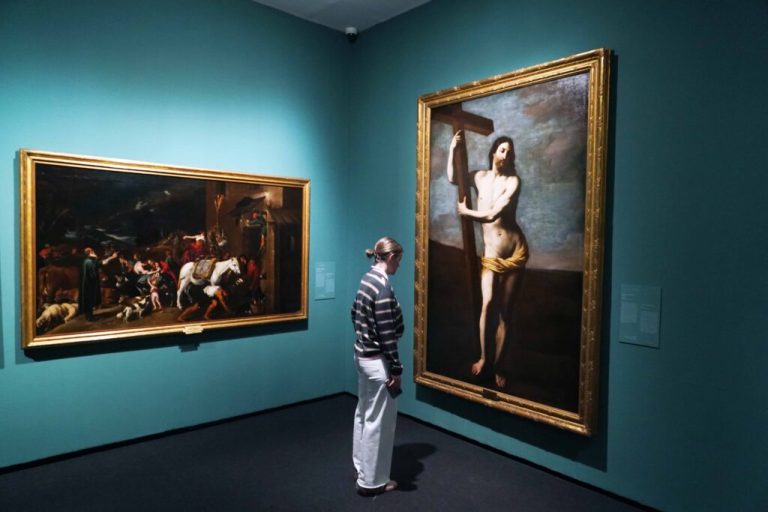
To date, exhibitions dedicated to specific decades or specific aspects of Spanish art had been organized after the establishment of democracy; Now the Juan March Foundation has wanted to offer one of its most ambitious and complex exhibitions to review the whole of that period, and addressing it in a broad sense: from when it was possible to look at it, because the social transformations seemed to anticipate the policies – the sixties -, until our time, because that stage is still the subject of questioning.
José María Parreño and Germán Labrador would curate an exhibition that, in addition, practically covers in its chronology the development of the cultural activity of that institution, which began precisely in the sixties, time before its headquarters in Castelló was built – between 1973 and 1985 – and before, in 1975, it offered its first exhibition around an international artist, who was Oskar Kokoschka.
This proposal, which in Parreño’s words does not pose a visual history of transitionbut in any case a visual story transitionis structured precisely in decades and based on case studies linked to key exhibitions and the cultural fabric (the first corresponds to Picasso and the construction of his museum in developmental Barcelona) and has works by nearly two hundred Spanish authors and seventy foreign authors – some, like Duchamp, practically unpublished for the majority until those dates. The public becomes important, present as a motif in some of these compositions (Elliott Erwitt, Equipo Crónica, Miguel Trillo) or in the references to the reception of the samples studied; This seeks to highlight the relationships between the gradual political and artistic opening in the late, post and anti-Franco era; Labrador has stressed that, although aesthetics and culture tend to unfold autonomously with respect to social processes, we cannot speak of dehistoricity, of a forced disconnection.
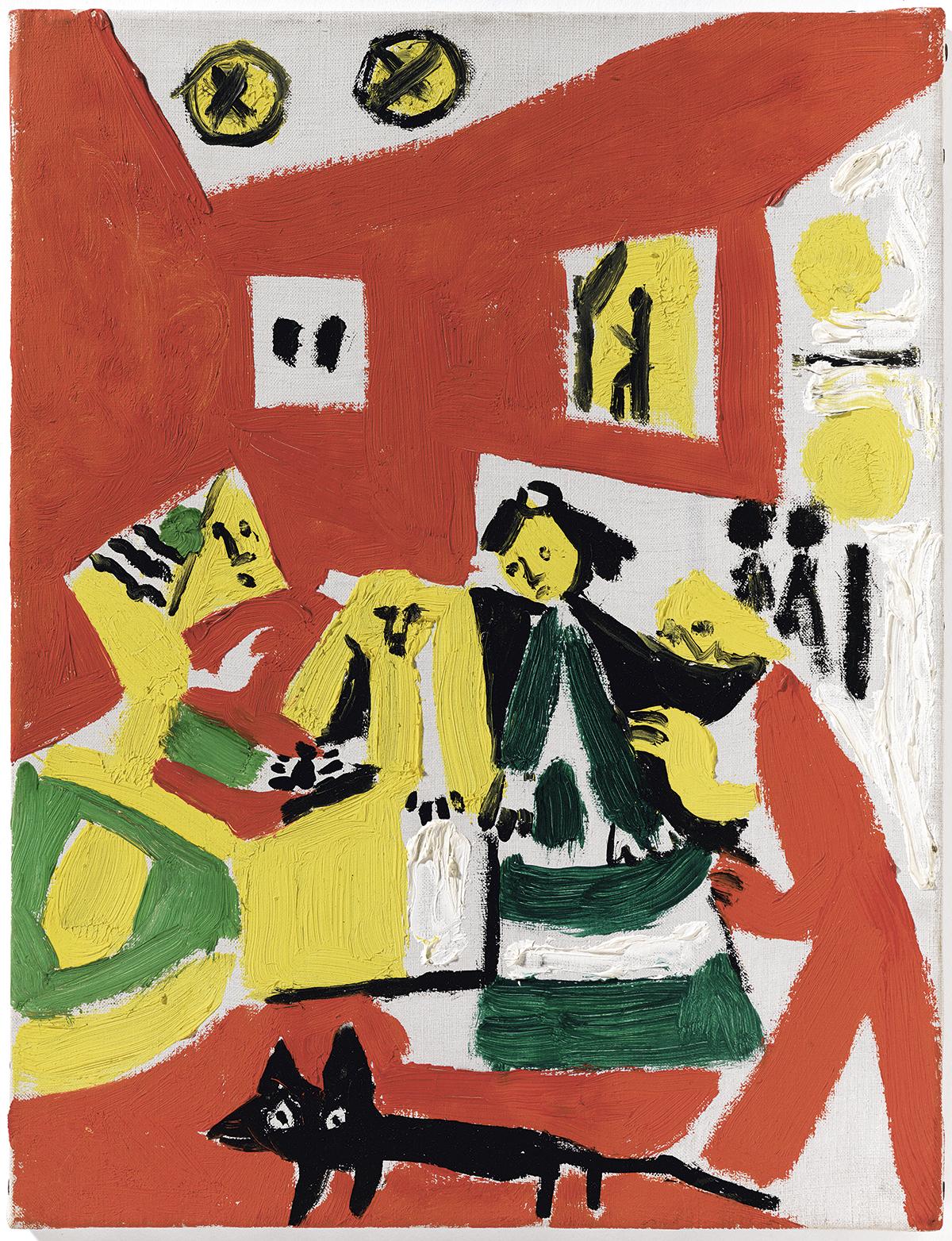
Pablo Picasso. Las Meninas1968. Picasso Museum Barcelona. Pablo Picasso Donation
The route opens with a publications kiosk, which reminds us that in the last sixty years we have gone from the scarcity of specialized press to the relative proliferation of it and the arrival of international magazines in our country. Once immersed in the rooms, with an interlocking assembly, we will detect how in the years before and immediately after Franco’s death an art with political resonances was cultivated, then those concerns were diluted during a long period to be revived since 2000, when social issues once again became the thematic axis.
Art, like literature (especially in the sixties), music (in the eighties) and cinema (in the nineties), reflect society, in the theses of this exhibition, but they also prescribe: what was read and listened to in the sixties and seventies – the curators have pointed out – was far ahead of the political structures of that time and to a certain extent outlined a transition that, in the words of Parreño, did not fully occur.
From Picasso to Lluis Hortalà, creators respectively of the earliest and most recent piece, this exhibition also reflects the progressive prominence of pieces of collective authorship and those that seek to create situations or ways of thinking, the “discontented art” to which Parreño referred in the book of the same title.
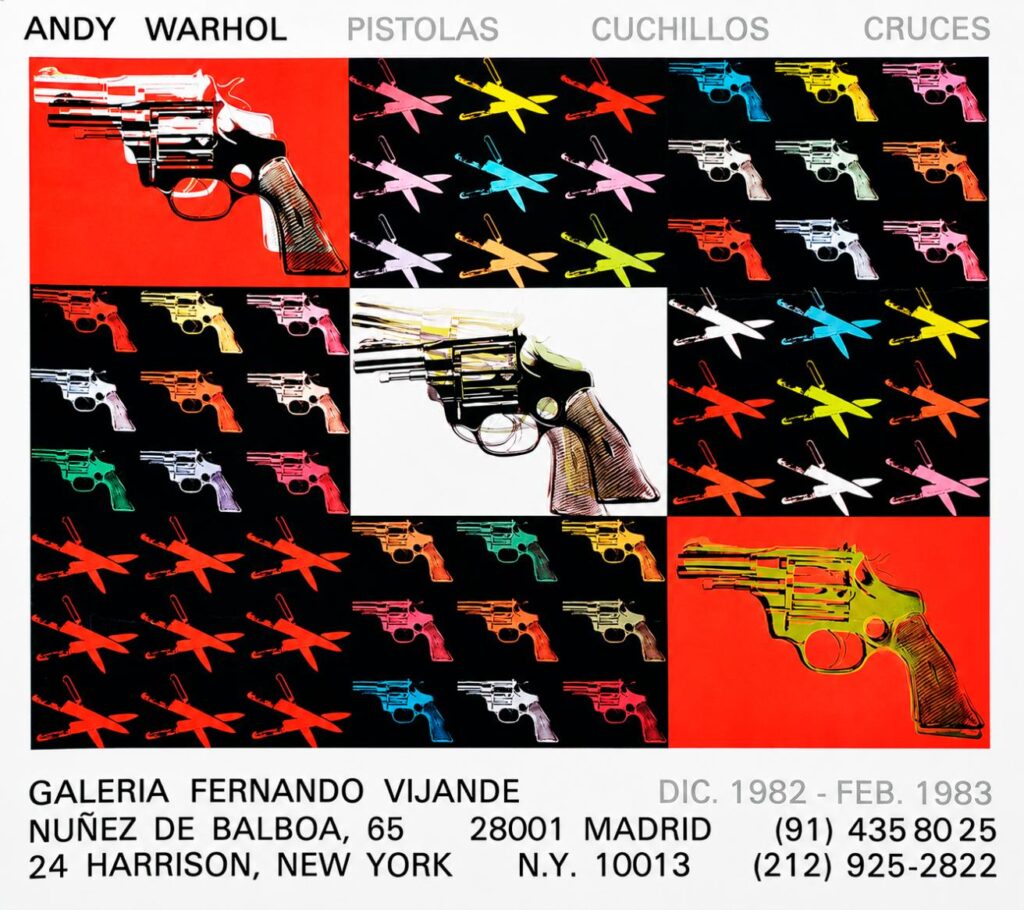
Andy Warhol exhibition poster. Guns, knives, crosses, held at the Fernando Vijande Gallery, Madrid, December 1982
“The aesthetic transition”, which is the name of this exhibition, open until January 2027, recalls that this was the moment when, decades late, international authors, and in some cases natives in exile, became known in Spain, such as Kandinsky, Meret Oppenheim, Maruja Mallo, Remedios Varo, Anni Albers, Matisse, Klee, Giacometti, Motherwell, Kosuth, Cage or Ana Mendieta; In the case of Picasso, who chose not to return to Spain, he was able to learn that, in 1960, a presentation of only thirty of his pieces in the Sala Gaspar in Barcelona was so successful with visitors that access controls had to be implemented and, also, that in 1971 his Vollard Suite aroused religious anger in Theo. Juan Gris, in 1977, did not suffer the same fate at the Theo gallery, where he did not sell a single work. And not long after, in 1983, pop art took over Madrid: Andy Warhol inaugurated in Fernando Vijande -portraying the gallery owner- and Roy Lichtenstein in the March Foundation itself. Between one space and the other there was barely a street.
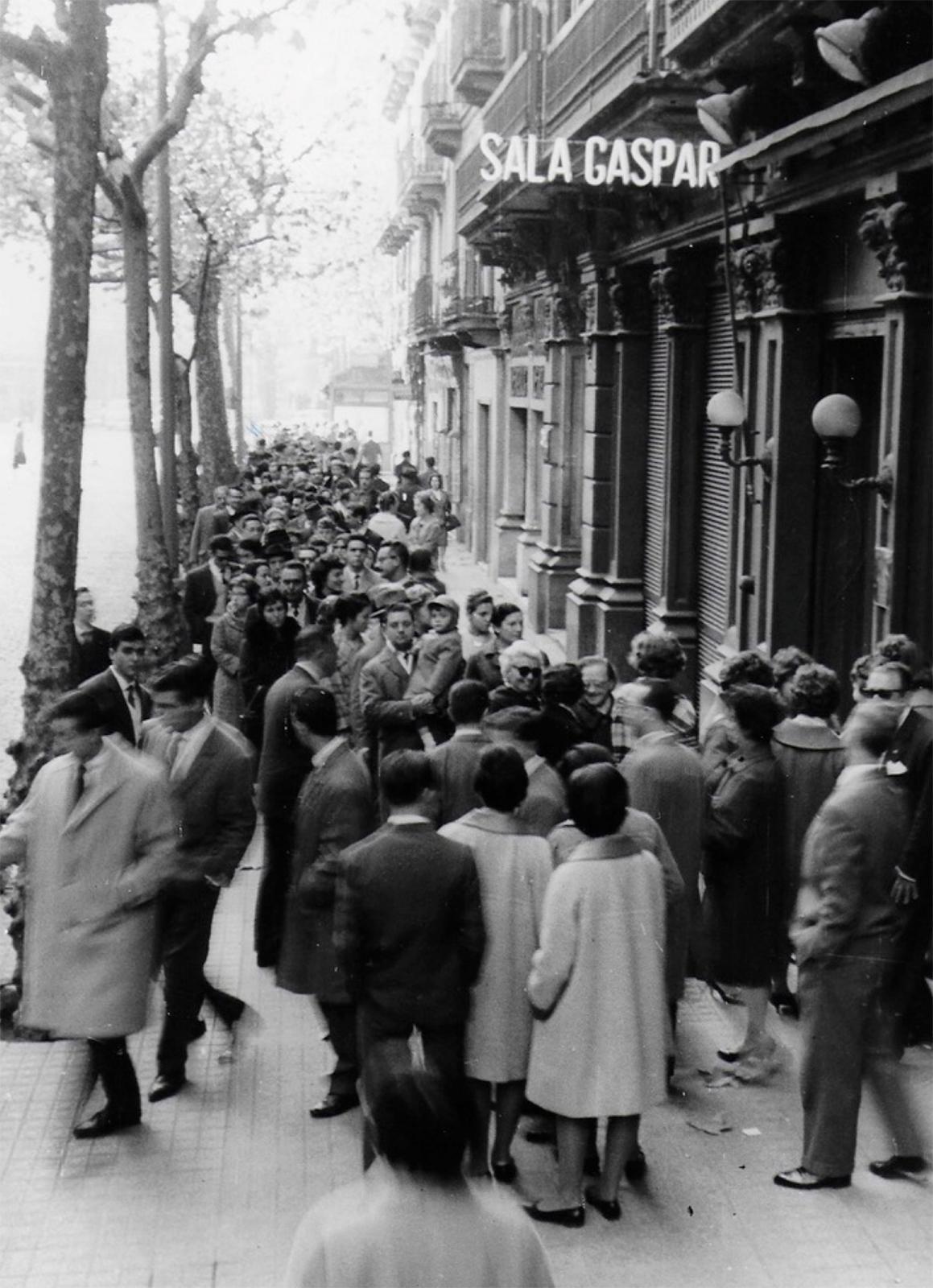
Public waiting to enter the Picasso exhibition, Sala Gaspar, Barcelona, 1960. © Elvira Farreras Valentí Archive. Courtesy Pedro Marín Boza
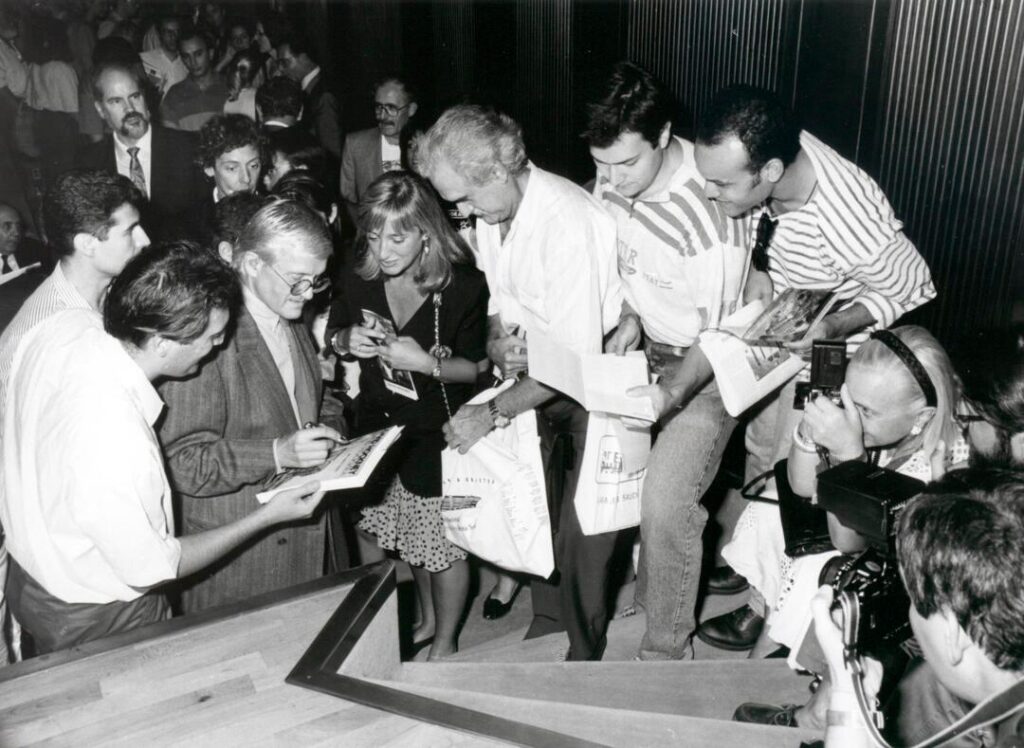
David Hockney at the opening of his exhibition at the Juan March Foundation Auditorium, Madrid, 1992
Juan March Foundation Photographic Archive
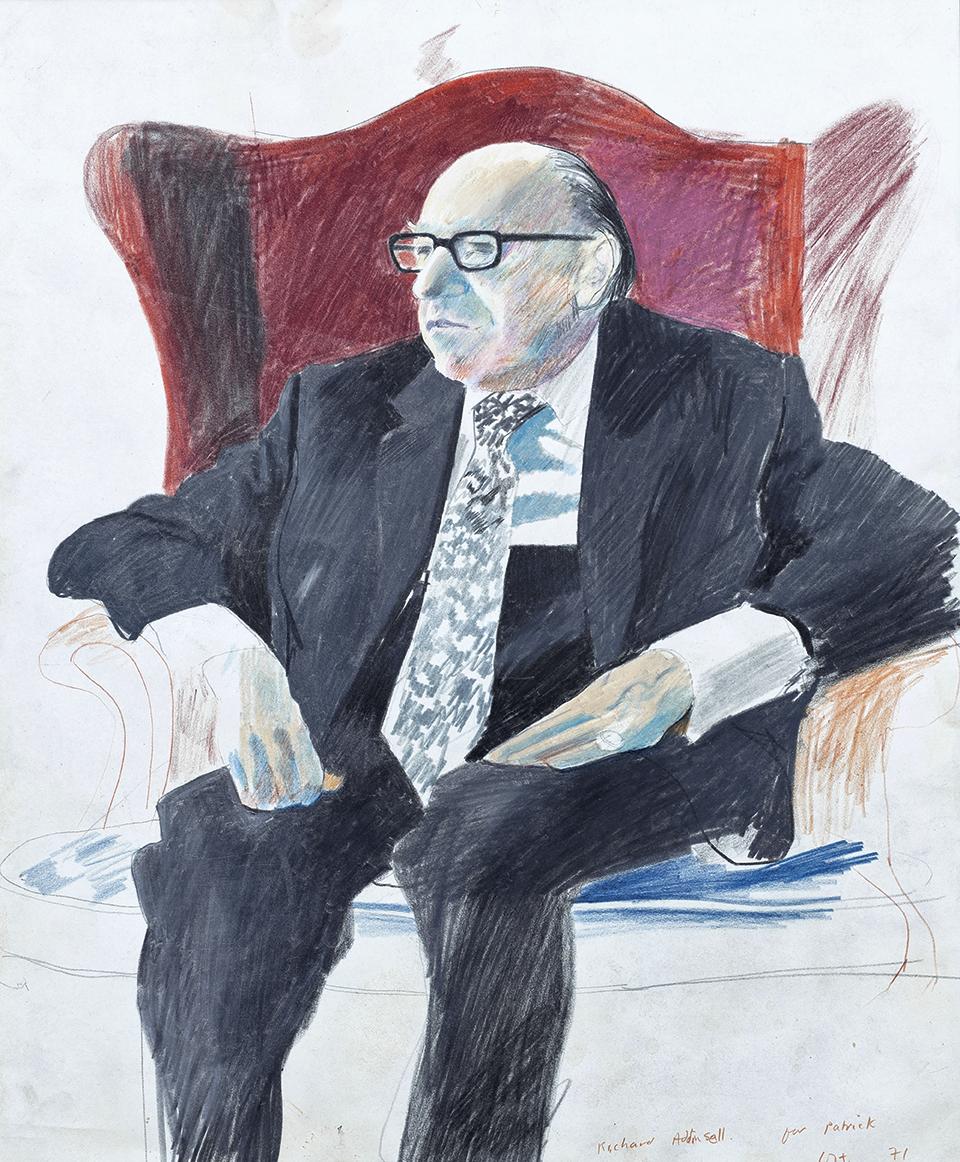
David Hockney. Portrait of Richard Addinsell1971. José María Castañé Ortega Collection
The documentation that will accompany his pieces – not only in the exhibition, but also online – will help us understand how this art that was introduced in Spain in criticism on radio, television or the press was received and interpreted until, as we will see in the last section, the mobility of artists and the organization of collaborative initiatives, we see that the cultural context, at least in Western Europe, is to a certain extent common.
Completing this project, the Juan March Foundation has interviewed around twenty important figures in the artistic scene in the transition; His interventions can be seen on Canal March, under the heading of Tell us. An oral history about cultural transitions in Spain. In addition, on November 30th it will be released Authorized for all audiences. A film about the transitions of culture in Spaina film that will collect unpublished material, recordings of the exhibition and comments from specialists.
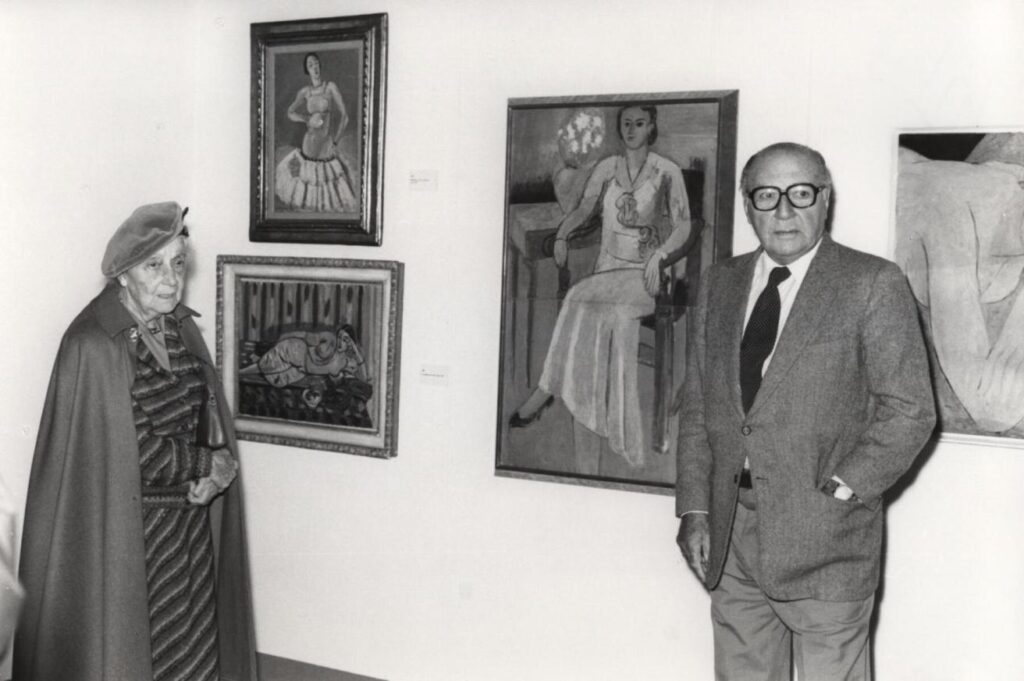
Marguerite Duthuit and Pierre Matisse at the opening of the exhibition «Henri Matisse. Oil paintings, drawings, découpé gouaches, sculptures and books.
Juan March Foundation, Madrid, 1980. Photographic Archive of the Juan March Foundation
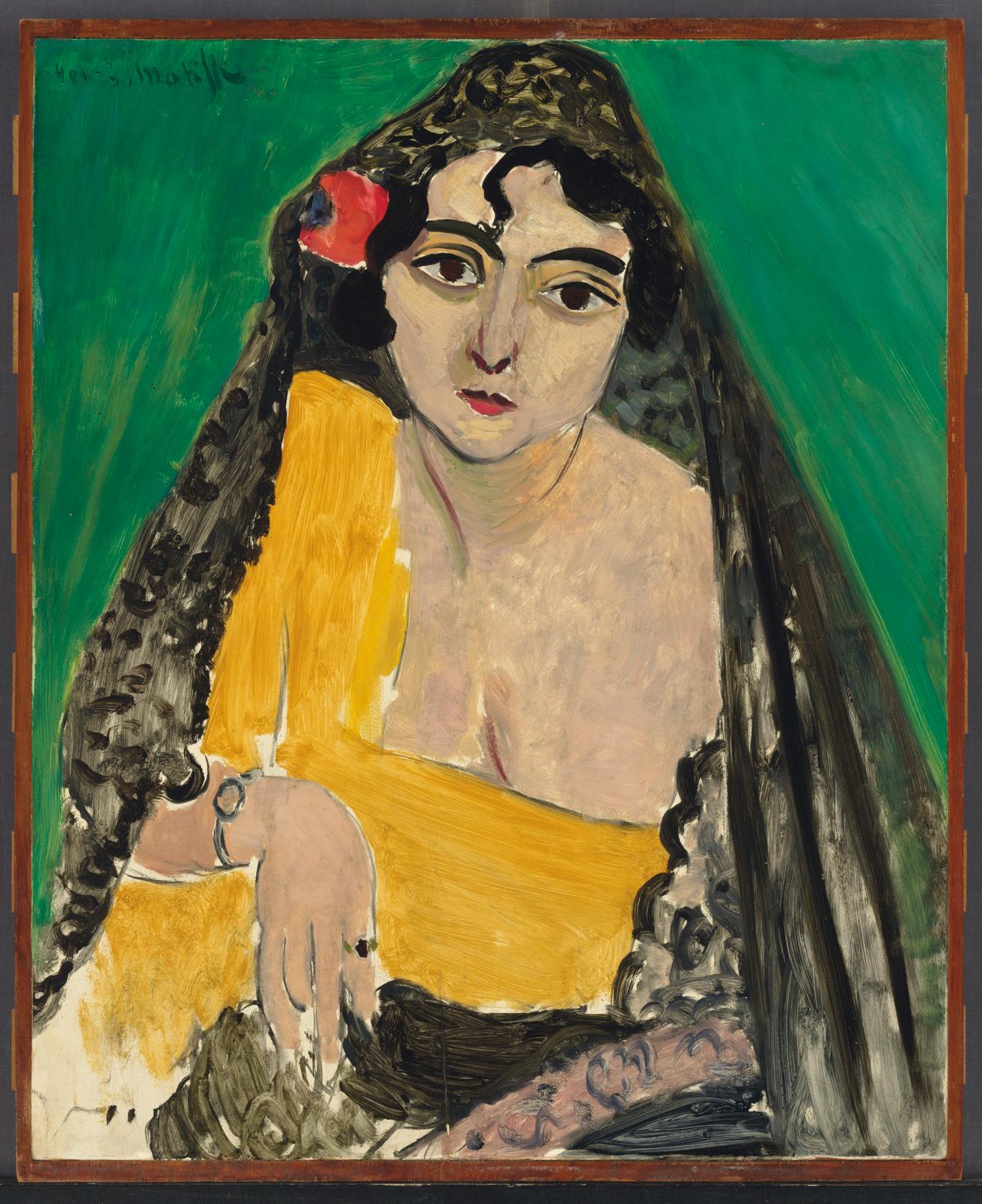
Henri Matisse. Spanish woman1917. Private collection