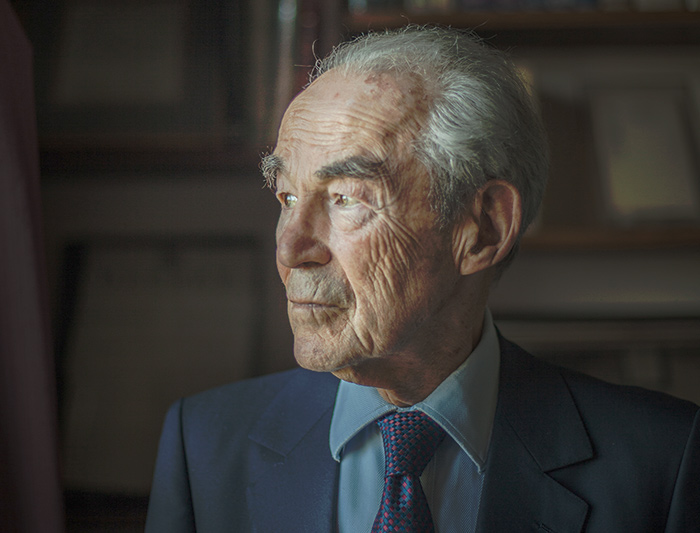
Philippe Guillet has run the Nantes Museum (Loire-Atlantique) since 2013, after being at the head of the Museum of Orleans (Loiret) for six years. In 1986, he joined and then managed the Museum Cooperation and Information Office (OCIM), working for more than twenty years in the development of museums. He returns to the progressive evolution of establishments in the past forty years.
When did our museums started to transform?
When I joined the OCIM forty years ago, the service had just been created to develop the interactivity of museums of natural history. It was the moment when many fine art museums were renovated (the ministry of) Jack Lang. And in parallel, several centers of scientific, technical and industrial culture emerged in the 1980s. The City of Sciences and Industry had just opened its doors … All of this married our old museums, which for the most part were in poor condition. They were in their juice of the post -war years. I remember, for example, having visited the reserves of the La Rochelle Museum, which has extraordinary ethnographic collections. Well at the time, they were under the attic, covered with pigeon droppings!
What museums have driven this modernization movement?
The first major museums began to renovate in the early 1990s, in Grenoble, Orleans, Bourges then Tours and Aurillac … These were pivotal years, we felt that there was movement. The directors of these establishments were no longer necessarily old-fashioned naturalists, “butterfly hunters”. Professional training developed, especially in mediation. Research conferences in museology were multiplied. And above all, in 1994, the large gallery of the National Museum of Natural History reopened (under the title “Grande gallery of evolution”). It was a very strong moment because we were able to show that we could do remarkable things, appreciated by everyone, from our “old” collections. In regions, elected officials became aware of what a museum could be; It was not just a museum intended for schoolchildren for which we did not have to put too much funding.
The African caravan of the large gallery of the evolution of the National Museum of Natural History, renovated in 1994.
© MNHN / Bruno Jay
Did the discourse of museums of natural history then evolve?
Yes, especially from the 2000-2010s with the renovation of the Museums of La Rochelle and Toulouse then the creation of the Museum of Confluences in Lyon (in 2014). We realized that museums were fantastic media to tackle biodiversity issues, since they were already biodiversity conservatories and that they had a lot to tell. And this is what triggered the reopening of the Bordeaux museum in 2019, then that of Orleans in 2021 with a very strong environmental discourse. Following them, those of Nantes, Lille, Strasbourg, Grenoble, Rouen, etc. Renovate and train, I think, smaller institutions in their dynamics. For me, this decade 2020 is really that of museums. They are now carrying very strong environmental issues, and the means allocated to them are quite respectable. I would even say that they have a small advantage on the Museums of Fine Arts, which still have difficulty clinging to this environmental theme.
This environmental involvement is now essential. Wasn’t that the case before?
In the 1980s, nature was presented in a somewhat idyllic way, it was time for exhibitions on small flowers, small birds. We were just starting to talk about the disappearance of species, also extraction techniques, but without asking the question of fossil fuels. We were not talking about a climate at the time, it was not at all on the agenda. While now, we can no longer make an exhibition without any question of everything related to the planet. Of past and current biodiversity, of past and current climate, of the racial question, that of animal, vegetable but also human migrations …
And as such, can we say that museums tend to become social museums?
For me, a museum is a museum of society. He responds well to the definition in the sense that he carries the questions of the company, especially in matters of biodiversity. A science museum is credible, and it must maintain this credibility to fight against conspiracy and fake news. Today, universities and research organizations take us seriously on these environmental issues. They know that a museum is also a place of expression for their research, which was not the case twenty, thirty years ago. And there is a whole generation of conservatives, directors, who really want to get involved in the Museum because it is an act of commitment to science vis-à-vis society. There are also “competition animals” who become directors without being scientists, in their training as in their minds. This is a real concern, because you have to be able to exchange with researchers, be aware of research methods to be at the head of a museum.

Nantes museum zoology gallery.
What about collections? How are they presented today?
The collections in themselves have not really changed, but we have become much more selective and vigilant. Our predecessors were in an accumulation logic, while we refuse a lot of donations now. There is no point in having 10,000 naturalized foxes in the collections. We are looking for somewhat exceptional pieces. And in the way of presenting them, it is now a concept museology that is privileged. We always hang on to a narration, there is a start and an end. We first define what we mean and what we are going to say, then, in a second step, we determine the objects and specimens that we need to illustrate this speech. This is not always the case in other types of museums, which start from their collections first. Quebec museology has brought us a lot on this point, as well as the importance of placing the public at the heart of our concerns.
What are the expectations of the public?
Visitors are already looking for the direct relationship with the specimen, with the real object. This is also why we want to use digital in a reasoned manner, only when it brings added value compared to the exposure itself. Then human mediation is also something much sought after. The public asks to spend a pleasant moment, hence the development of cafes, rest areas, calm and friendly spaces where visitors can land. It is often a moment of family sharing. There has always been this easy relationship between the public and the collections of a museum. A parent who comes with his child always finds things to tell him. While in an art museum, it is more complicated to exchange if you have no knowledge in art history.
Mentalities have also evolved. Does this feed ethical reflections?
Museums are completely immersed in these questions. Because a museum is a colonial museum by definition, with a function “Universalis”. The 19th century collections were formed in this spirit. We must now “decolonize” our minds, have a new eye on these collections, take a different look at it but without vehement. That is to say by recalling under what conditions an object has been collected, specifying the local names of the specimens … This also is due to the way of processing the subjects. If we talk about migration, for example, we have material to provide scientific information to these questions. All this work is starting to be carried out in museums, but there is still a lot to do.