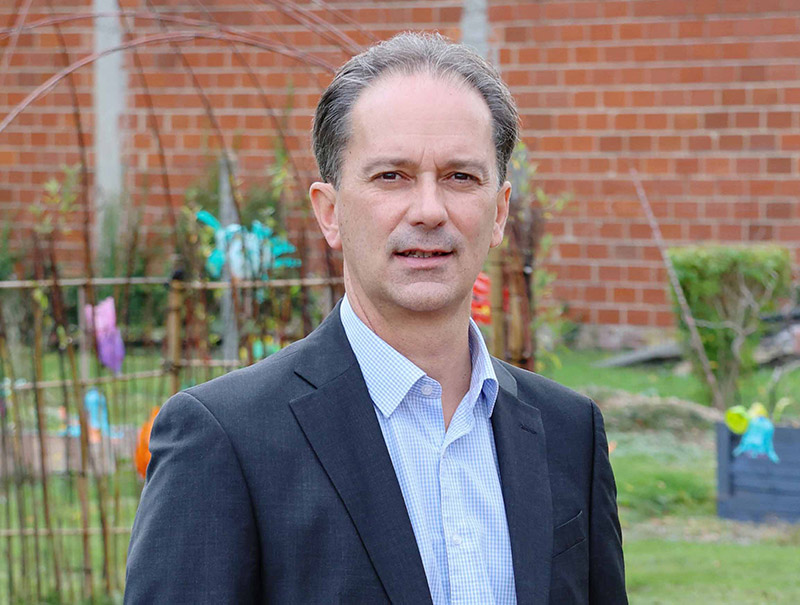
Former executive of the territorial civil service, the socialist mayor Sylvain Robert, 54, has led the City of Lens since 2013 where he defends a post-mining strategy based on culture, mining heritage and the influence of the Louvre-Lens which has become the symbol of Lens’ renewal.
In a city where the National Rally (RN) made strong progress with 46.49% of the votes in the municipal elections in March, is culture perceived as a luxury?
I don’t think so. The risk is perceived elitism, the idea that “culture is not for me”. This is why we have set up a course which allows all Lens schoolchildren to discover art in all its forms thanks to a partnership with the Louvre-Lens and National Education.
Do you plan to adapt your projects, make them more “popular” so as not to lose further ground?
We don’t change our logic! Festive and inter-district moments, and culture as a tourist and economic engine with the Louvre-Lens. Even the New York Times advise Americans to take a detour via Lens from Paris!
What is the City’s cultural budget, for operations and investment?
Around 2 million euros per year all inclusive, or 4% of the total budget. But we have little investment because we already own the buildings, and therefore no detailed analytical accounting by equipment.
2 million euros per year without precise details or quantified investment, for a city that calls itself culturally ambitious, is that a bit short?
This is our current level, yes. The only major project identified is that of the Le Colisée theater where we need to redo the performance hall. The amount is still being calculated but it is municipal equipment, so it is the City that bears it.
Exactly, what are the major projects of this mandate?
A “museum of mining and the history of Lens”. As the city was razed after the First World War, we have an Art Deco heritage born from mining reconstruction. The idea is to tell this common story to a Lens population who are unaware of it.
Do you already know where this museum will be located?
In a church that has just been deconsecrated. It is a round church with unique architecture which was built by the miners and financed by subscription from them. We thus connect the meaning of the building to that of the project. We have just proposed to the diocese to buy the church and we do not yet know the price of the building. For operations, we rely on sharing with existing services, with the archives, and we have a heritage curator already in place, so it is not a cost that starts from zero.
A museum without a budget or a timetable is a bit light to say…
It is a project open to sponsorship, based on the model of the Sainte-Barbe Festival (arts and fire theme) on which we have mobilized more than 100,000 euros in sponsorship, which is quite extraordinary for our territory! This on a total budget of around 800,000 euros financed mainly by the urban community and a little less by the Region (Hauts-de-France) and the Department.
Let’s stay within budgets, will the 27 million euros from the sale of the Bollaert stadium benefit culture?
Part finances the 5% tax cut decided for the duration of this mandate, which represents around 10 million euros out of the 27 million. The rest goes to the restructuring of the city center square, around 10 million, to lowering canteen prices and to the thermal renovation of schools.
The Louvre-Lens museum costs communities 15 million euros per year. However, the Court of Auditors points to a museum which only generates 16% of its own resources. Does this model seem sustainable to you?
The agglomeration’s contribution is around one million euros, or 10% of the operating budget; the original distribution is 80% for the Region, 10% for the Department, 10% for the agglomeration. This is perhaps the price to pay for having cultural excellence here…
The new Galerie du Temps at the Louvre-Lens.
© Manuel Cohen / Louvre-Lens
You are evading… Is this model sustainable?
We are working to support it. The challenge is to know whether the Region will continue to put in its 80%, in a context of dwindling local finances. Xavier Bertrand maintained that, as long as he was regional president, the Galerie du temps (a space inside the museum) would remain free. This commitment is followed by the Department and the agglomeration.
Tourists come, visit and leave without spending in the city center: does this museum really enrich Lensois traders?
It depends on the traders… The food industry is doing better. This is less true for traditional commerce. Originally, the museum was not physically connected to the city center but was separated by the railway tracks. A breakthrough underneath was undertaken in 2016, supplemented by work on the surroundings of the stadium since 2020.
Do you therefore have more real flow in the city center?
It’s more complicated… Between the 2014 decision and the 2020 confinement, the flows have completely changed. Before Covid, a leather goods store in the city center sold to tourists at the Louvre-Lens, but it has since closed due to lack of sufficient flow in the face of competition from the Internet.
So the announced objective was not achieved, the city center not having benefited from the museum as planned?
The mix between the activity of restaurants near the Louvre and the cafés linked to the stadium will perhaps allow us to find a new balance, but it is not enough to keep the activity going all year round.
In 2020, your application for the title of “European Capital of Culture 2028” was rejected. Will you go back?
This is not on the agenda. The financial means to be mobilized were disproportionate, disconnected from our real cultural policy. We continue with our logic of popular culture, which is not that of the RN, but education through culture for the greatest number.