Almost seventy years ago, in 1957, Anna Magnani, Anthony Queen and Anthony Franciosa formed a love triangle full of frustrations to the sound of a composition devised by Dimitri Tiomkin and Ned Washington for a film that had the same title as their work: Wild is the Wind; in Spain, wild wind. In the film he was voiced by Johnny Mathis, but after this melody a good number of versions have been made, the best known by Nina Simone in the sixties and David Bowie in the seventies.
Now Steve MᶜQueen, who already integrated that music into his film in 2018 Widowshas united both, detaching them from instrumentation and choosing an intimate a cappella in a dark room, for a specific project that we can visit starting tomorrow at the Guggenheim Museum Bilbao and that has been curated by Lekha Hileman. has by name 66–76–26and although it reflects what the original piece had as a loving and melancholic elegy, it is above all a new and personal work that aims to link the voices of Simone and Bowie with the spaces of Gehry’s building and create unprecedented sensations for the spectators, whether or not they know the backstage of what they hear.
Apart from that feature film, Widowsin which he incorporated the bars of Tiomkin and Washington into the soundtrack, Wild is the Wind It has been a regular presence in the career of the Briton, who first discovered Bowie’s version, in the nineties, then Simone’s, and became increasingly involved and attracted by the layers of meaning that he could appreciate in this song with the passage of time and by its emotional density. Hardly classifiable into any genre, it is difficult to know if we are dealing with a predominantly romantic or nostalgic creation.
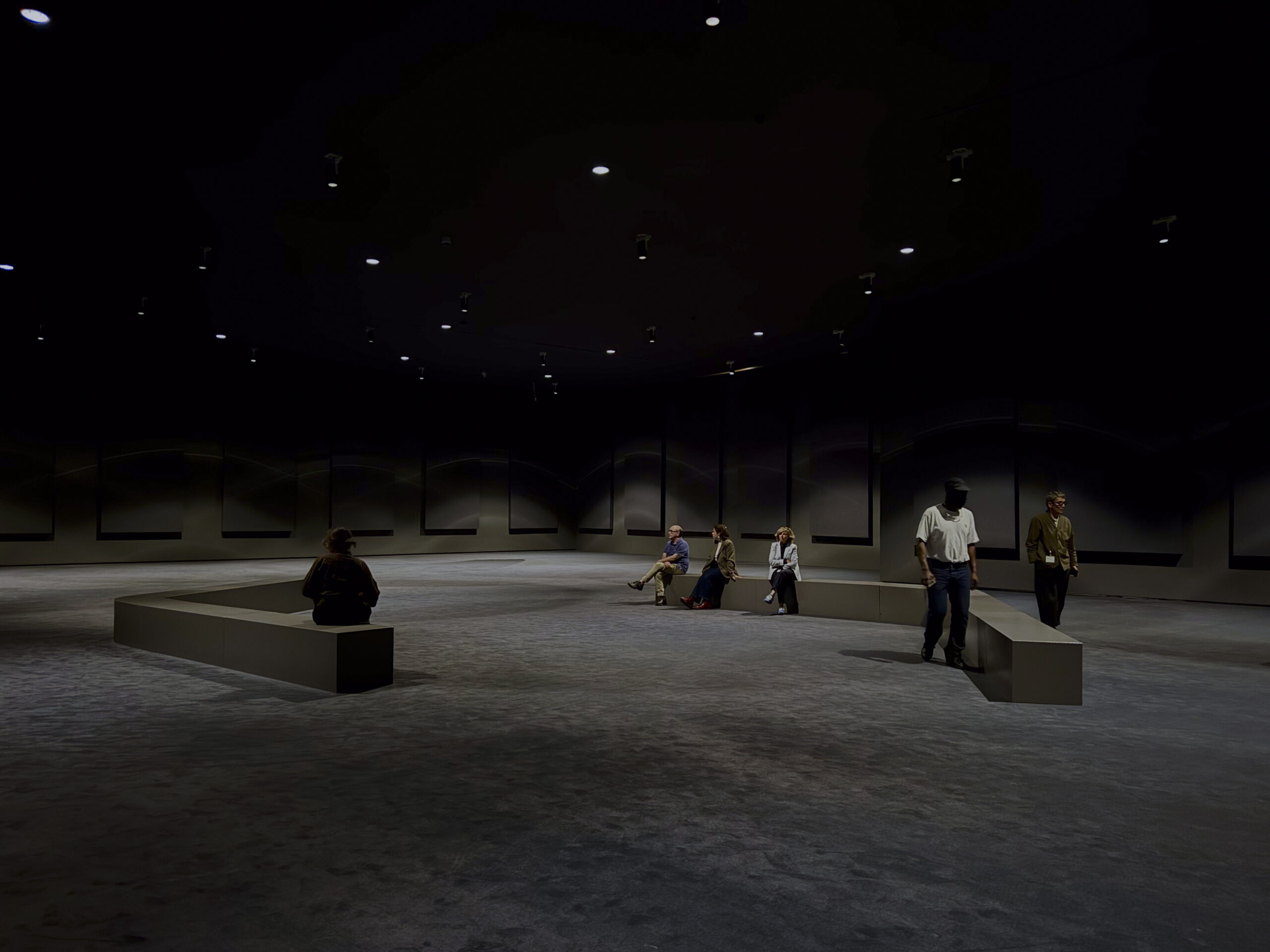
View of “Steve McQueen: 66-76-26”. Guggenheim Museum Bilbao. © Steve McQueen, Bilbao 2026. Photography: Guggenheim Museum Bilbao Foundation
Trying to get to its essence, 66–76–26 reduces the original to its skeleton, the human voice: in this case, that of the jazz singer emerges from one side of the room and that of the author of Space Oddity answers it from the opposite side. It will be better that we do not always remain still, because if we move we will be more aware of how between the tunes of both, separated at the time by a decade, a dialogue is established that defies clocks and is also strung together in an environment that gives the resulting composition new nuances.
Its title alludes to the years of each return to the subject and invokes both the enduring nature of Wild is the Wind like the propensity of great artists to return to it in times of upheaval: in the case of Simone and Bowie, the fight for civil rights, Vietnam and Watergate; in that of MᶜQueen, the unstable context in almost all the cardinal points that we all know.
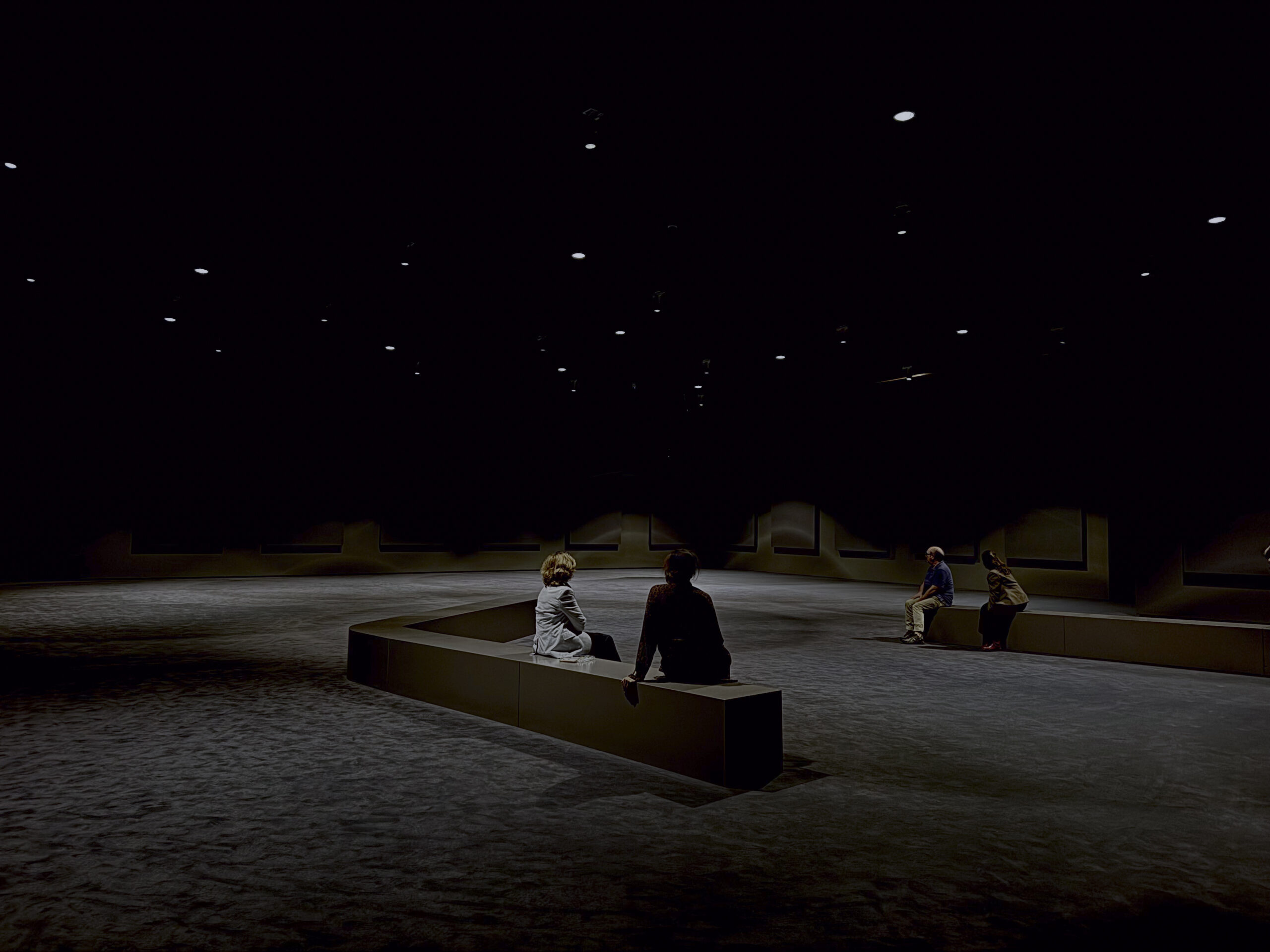
View of “Steve McQueen: 66-76-26”. Guggenheim Museum Bilbao. © Steve McQueen, Bilbao 2026. Photography: Guggenheim Museum Bilbao Foundation
Gradually, this English author is making sound, light and perception more and more his own as materials first and primary of his work: in the recent Bass (Bass, 2024), Atlas (2026) and Untitled (2025) was already investigating how these immaterial phenomena could transform our experiences, both physical and related to our attention, and how their power in that field could be much more evident than if they were engines of conventional narratives. Along the same lines we must understand this proposal from the Guggenheim, in which the soft lighting encourages our ears to concentrate on the environment, and not only on the voices; also, and very especially, in the silences, the breaths and the passage of time itself.
The absence of sound activates a universe in 66–76–26an idea that this English artist took from Miles Davis and his care for the subtle gaps between the notes, for the importance of what is omitted, equivalent to that of what is expressed. In his work in Bilbao, these pauses enjoy the same relevance as the very marked timbres of Nina and Bowie and are part of the desire-strategy to achieve a purification in which nothing accessory makes sense. Nor did the lyrics of Riomkin and Washington leave room for the superfluous (If you touch me, I hear the sound of mandolins; With your kiss my life begins), and its validity today would show, for MᶜQueen, that, regardless of difficulties and situations, everything comes down to that basic loving feeling.
The Guggenheim will accompany this exhibition with a film series dedicated to his film production that will help us delve into the links between that film creation – we must not forget that he was the architect of 12 years a slave, Shame either blitz– and plastic. In both, he addresses the possibility of memory and the capacity of art to illuminate spaces of reflection and encounter.
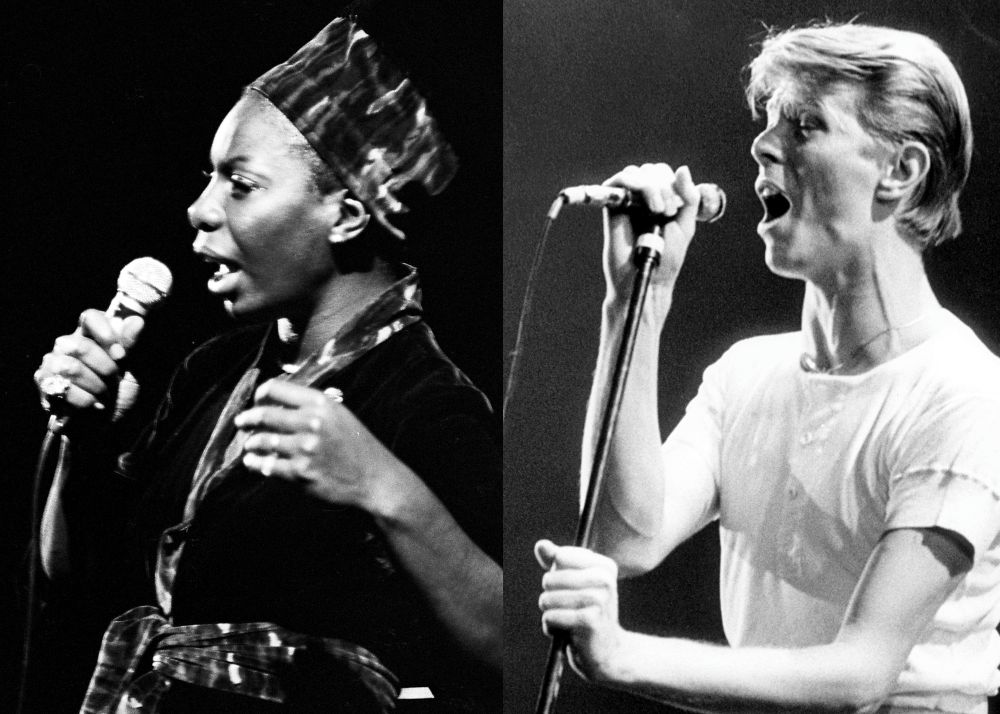
Left: Nina Simone performing at Fillmore East, circa 1970. New York Album / TopFoto / Jason Laure. Right: David Bowie in concert on May 14, 1978 at the Frankfurt Festhalle. Germany Album / Hans H. Kirmer/Deutsche Presse-Agentur/Newscom
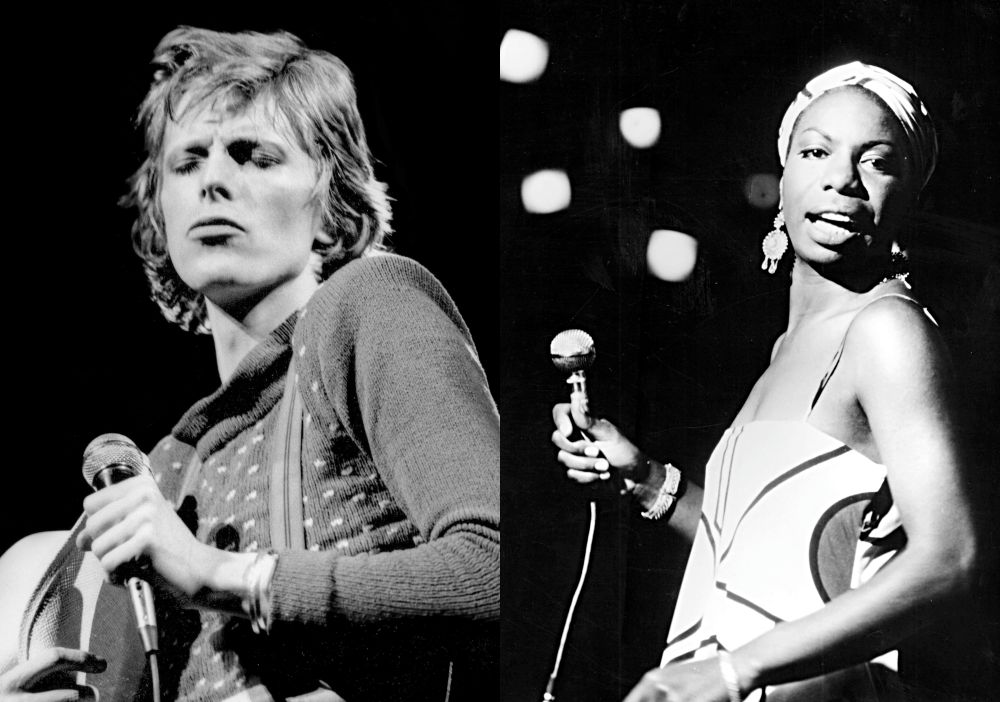
Left: David Bowie. Photograph: May 5, 1975; Los Angeles, CA, USA Album / KPA-ZUMA. Right:. Nina Simone. Album
«Steve MᶜQueen: 66–76–26»
GUGGENHEIM MUSEUM BILBAO
Abandoibarra Avenue, 2
Bilbao
From October 9, 2026 to February 21, 2027