Santander and Cuenca,
After passing through the Álvaro Alcázar gallery in Madrid last summer, José Luis Serzo presents it, now at the Museum of Modern and Contemporary Art of Santander and Cantabria. MORE, “After-dinner masquerade. Tribute to an uncomfortable silence between Ensor & Solana.” During a trip to Belgium, the artist decided to visit the house-museum of James Ensor in Ostend, one of the painters who with most evident crudeness allowed his work to materialize the spiritual crises of the late 19th century. He began by taking some of the most humble characters of his city to his canvases to progressively adopt a path of individual rebellion in response to the hypocrisies that he found easy to find in the bourgeoisie of his time, and he displayed a very incisive and pathetic humor that he captured in grotesque fantasies of masks and skulls.
His allegories and symbols were intertwined with comedy, the absurd and the disastrous and it is difficult to know if the solitude that he cultivated, almost carefully, during his life was the cause, the result (or both options, or neither) of these compositions.
Touring that museum dedicated to the creator of The entry of Christ into BrusselsSerzo imagined what would have happened if Ensor had been able to meet Gutiérrez Solana, what conversation they would have had or how uncomfortable their silence would have been. The man from Madrid, who also began to be interested in the humble neighborhoods with the most powerful flavor of the capital, chose to devise with those popular types lineups of sinister beings with a dark background and gloomy air. Thus, he shared with the Belgian painter, who was his contemporary, his taste for the macabre and masks, a surreal and hallucinated air, although the Spaniard’s palette was more austere, with brownish tones with eschatological resonances.
Since it was very difficult for him to put words to their talk, Serzo chose to recreate it in his sketchbook, in an exercise of creative daring: in response to those common concerns that we have mentioned, many historians have linked the images of both, but we really do not know what they might have thought about each other.
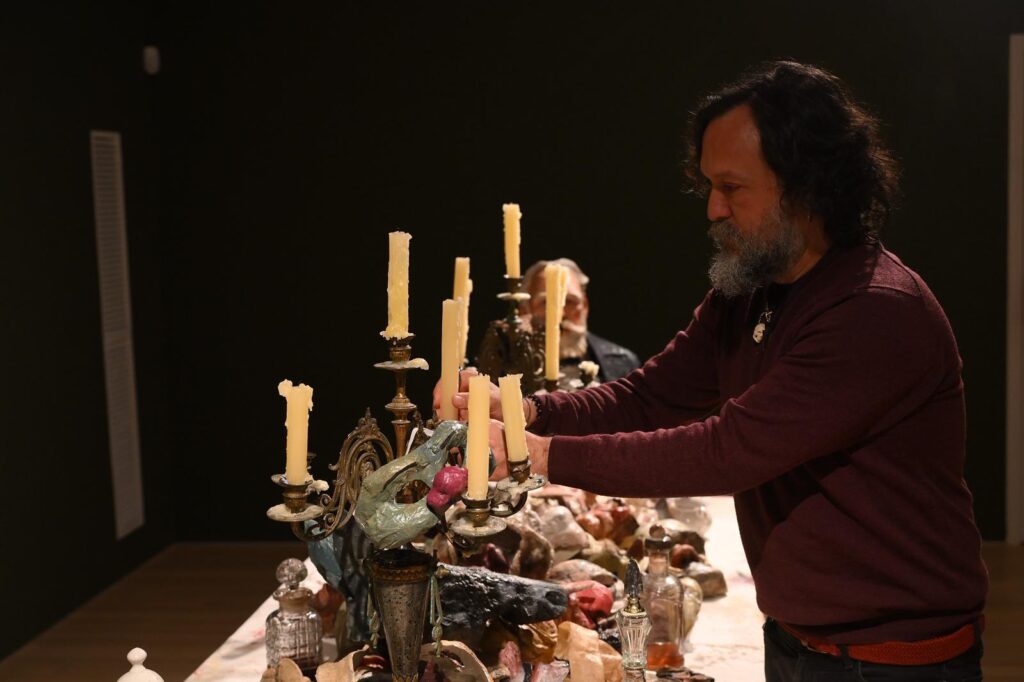
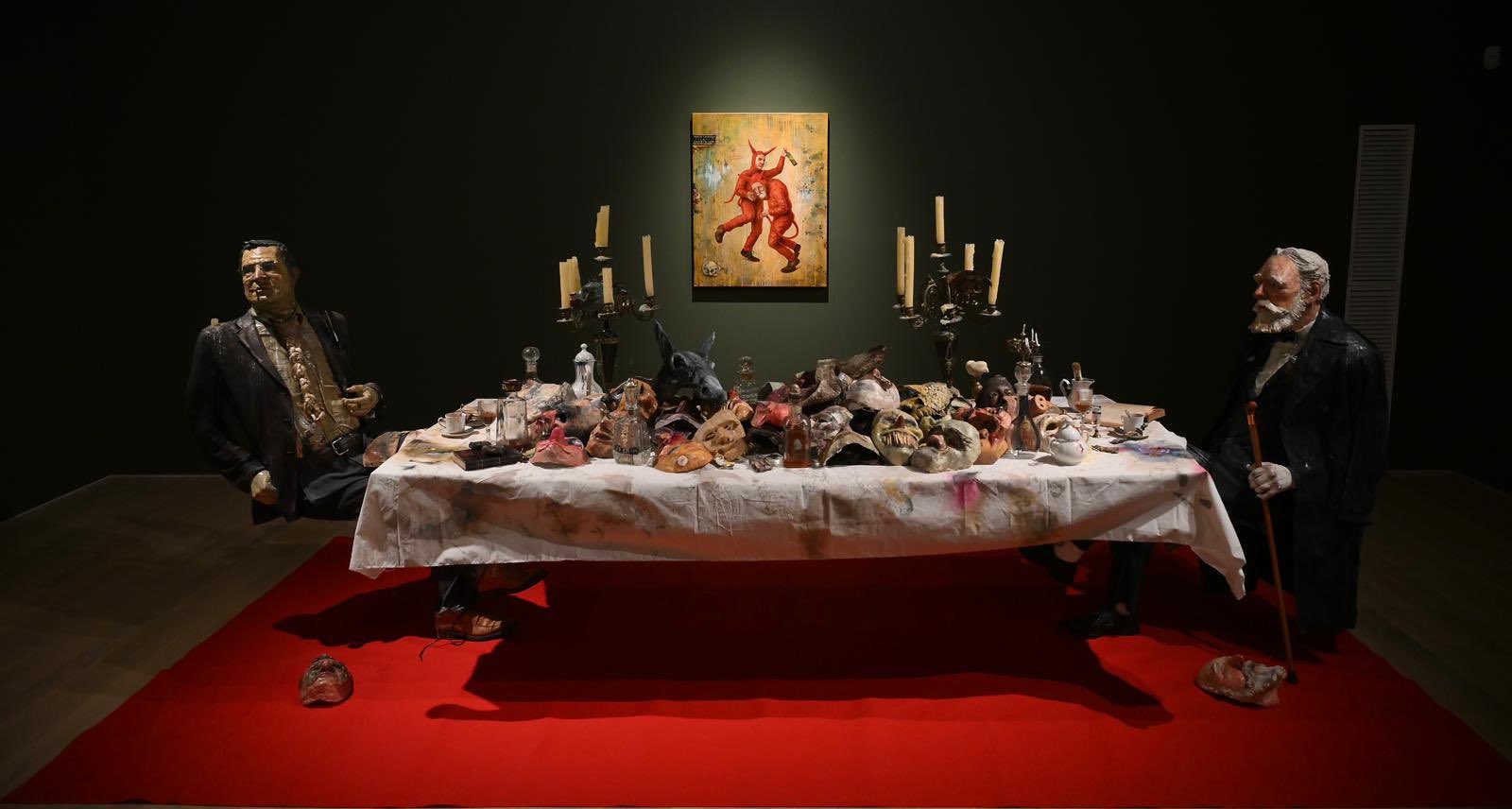
From paper, this imaginary encounter has jumped to sculpture in this exhibition now in Santander: its center is a life-size installation in which what brought them together mediates between the figures of the painters, at their common table; In Serzo’s words: A delicacy of masks, a huge pile of juicy, or even rotten, masks, full of devils, skulls, deformed jesters, peripatetic grotesqueries, perhaps a witch, bird woman or lizard. Empty faces spread all over the table as a main course, or to accompany the silence of the desserts between these two disturbing painters.
To also underline this possible tension of silence, the table and chairs have been left without legs, so that the protagonists remain sitting in the air in a precarious balance, and holding the board themselves.
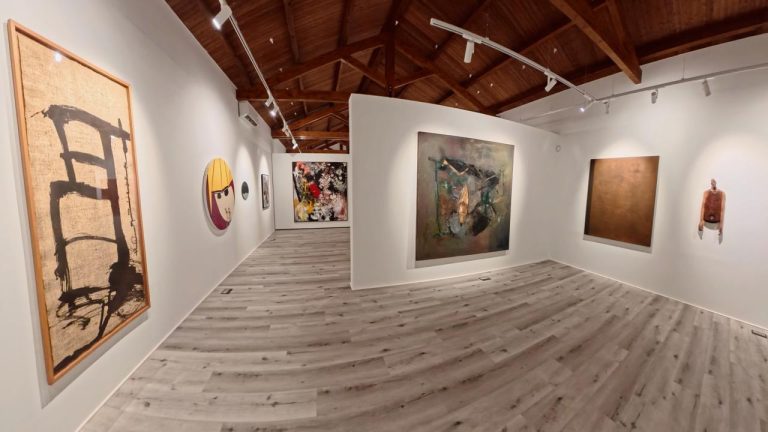
This work is accompanied in the exhibition, precisely, by painted and drawn representations of other possible encounters and by some more of those masks that Serzo conceived that they could have invented. Evidently, the artist from La Mancha is also part of this mysterious and mortuary after-meal; The carnivalesque is an inseparable substrate of his work, linked from its beginnings to the imagery of popular art (giants and big heads), to the desire to capture another reality (normally hidden fears and desires) and to distorted symmetries.
Enrique André Ruiz points out, in the exhibition catalogue, that, for Serzo, it was now a matter of putting skin on that elusive scene, of to give life to painting, to awaken the figures to an at least imaginary life: the permanent longing of all living stage props, sets and mechanical devices. The baroque stylization of the project arises from that purpose of making the painting or sculpture leave its frames and occupy the space of life, enveloping the viewer. The ultimate horizon is an integral dramaturgy, set up with the aim of exceeding contemplative limits.
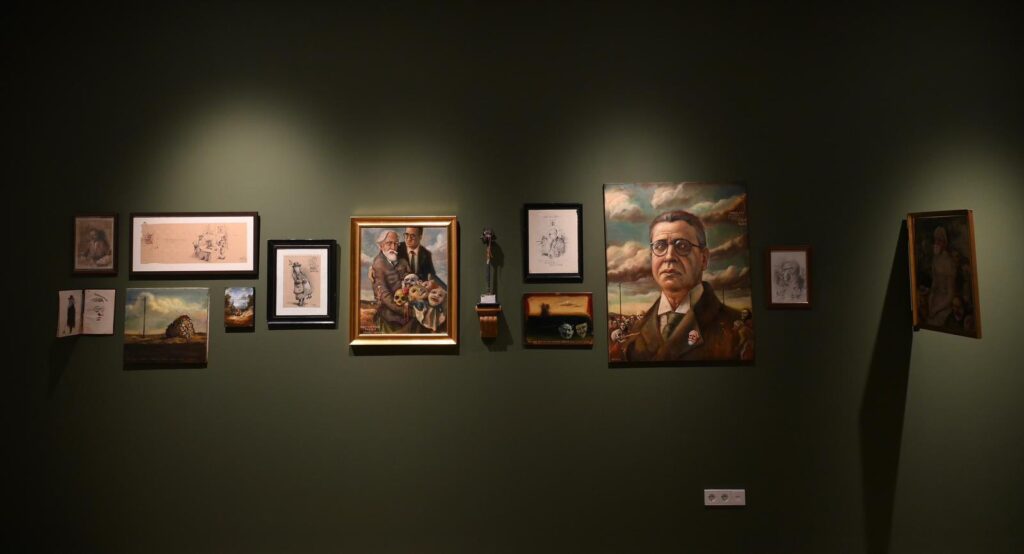
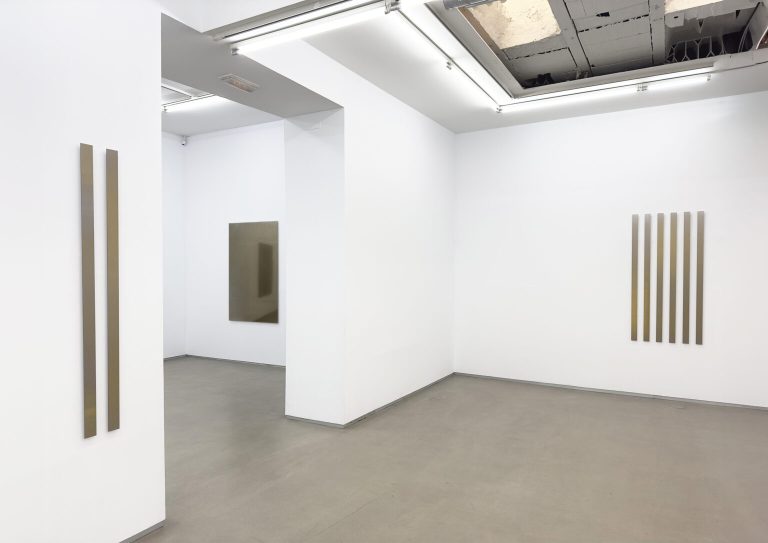
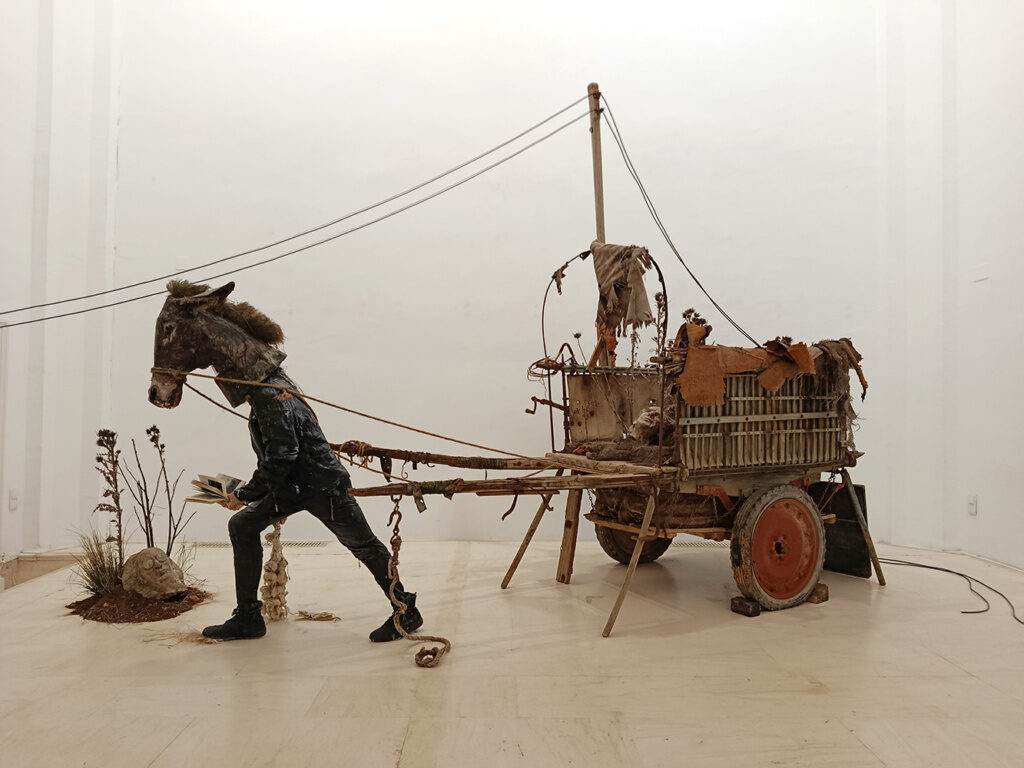
In parallel, Serzo teaches us, until next April 26 at the Antonio Pérez Foundation in Cuenca, and under the curator of Jesús Mateo, his “Actions for a III School of Vallecas.” This project arises from the review of the La Mancha cultural heritage of this author (born in Albacete, in 1977) and its relationship with the legacy of the Vallecas School: the artist remembers the weight of the territory in the affirmation of individual and collective memories and identities; the very material and specific, rooted bases of beliefs and values, by definition, more ethereal.
After his dialogue with Benjamín Palencia in his Vallecano phase, in a recent exhibition at the Marc Domènech gallery, Serzo establishes the city of Cuenca as the first stage of a path in which he intends to delve into the spirit of the previous phases of this current to open, perhaps, a third. Another chapter that will not consist of the melancholic recovery of past aesthetics, but of its attitude – the attraction to the rural and the material, the revision of the Castilian landscape, the vindication of walking and the physical experience of the landscape – from contemporary and non-costumbrista parameters. A commitment that does not antagonize the origin and the future.
José Luis Serzo. “After-dinner masquerade. Tribute to an uncomfortable silence between Ensor & Solana”
MUSEUM OF MODERN AND CONTEMPORARY ART OF SANTANDER AND CANTABRIA. FURTHER
C/ Rubio, 6
Santander
From March 11 to May 31, 2026
José Luis Serzo. “Actions for a III Vallecas School”
ANTONIO PÉREZ FOUNDATION. CUENCA DEPUTATION
C/ Julián Romero, 20
Basin
From February 26 to April 26, 2026