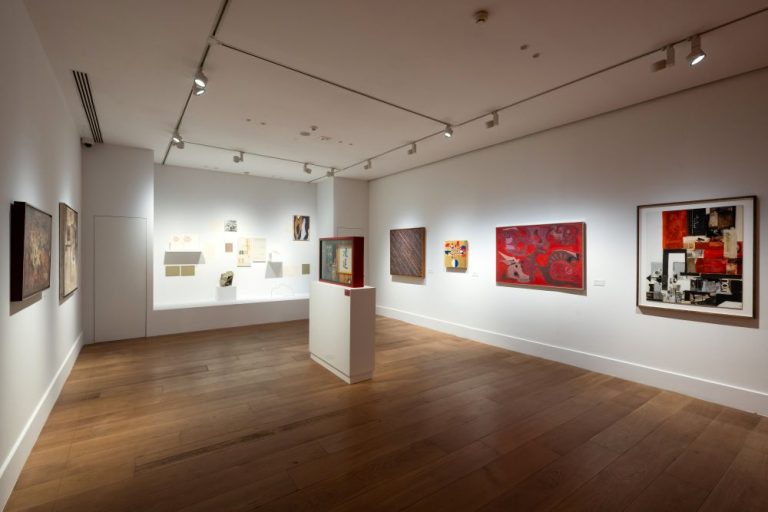
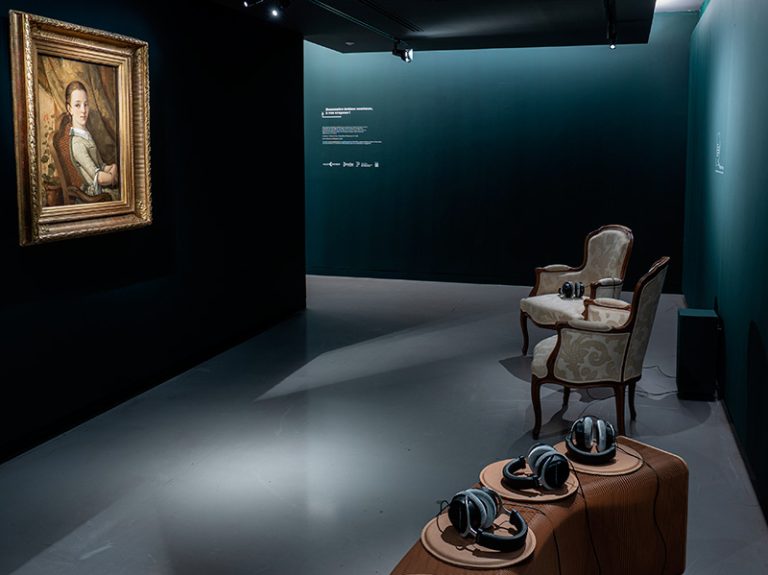
Whether in permanent or temporary exhibitions, written mediation has never been so abundant in museums. In particular with regard to cartels, which are limited less and less to classic notices (title, author, date of execution, technique, inventory number) and diversify. In July, the Louvre Museum introduced two new types of cartels into the Donatello gallery: “Les Treasures du Louvre” and “Work route”, to which a cartel intended for children will be added to the fall. A first step before the collections of Spanish paintings benefit from it.
In Mucem, the overhaul of the permanent “Mediterranean” journey led to a work of reflection on the cartels and the texts presenting the objects.
© Julie Cohen / Mucem
In Mucem, in Marseille, the overhaul of permanent journeys “Mediterranean, inventions and representations” and “popular? The treasures of the Mucem collections “has led to the creation of new forms of cartels and various texts, diversifying approaches. The principle of the developed cartels has extended within institutions and they have changed profoundly. Pioneer in the matter, the Pompidou Center has strengthened their presence. The Carnavalet – Histoire de Paris museum introduced them during its reopening in 2021, and the Museum of Fine Arts in Valenciennes (North), which did not own, works on their implementation, by wondering about their proportion. The Musée d’Orsay has been targeting an annual increase of 5 % of their number since 2023, which currently amounts to around 500, or 20 % of the works on display. Cartels have never been so numerous or as rich in content. And this, due to the one of the appropriation of works by visitors through reading, on the other hand of the evolution of their expectations, in particular societal.
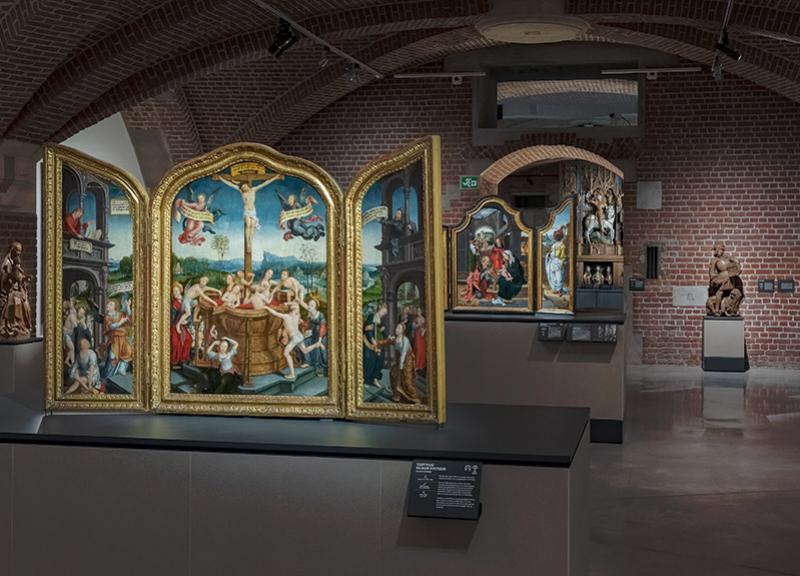
At the Palais des Beaux-Arts in Lille, each cartel in the Middle Ages and Renaissance department was reread by at least ten different people, half of which are outside the museum.
© J.-M. Dautel
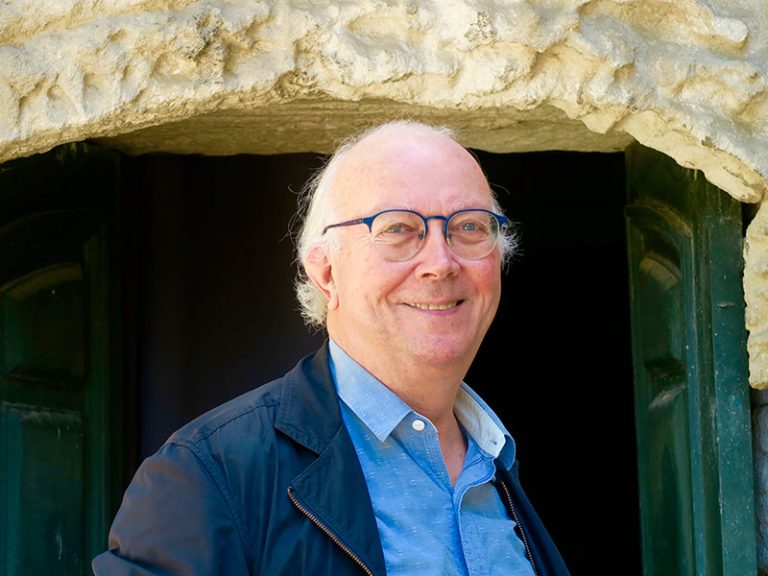
“Unlike a widespread idea, museum visitors read cartels. They do not read them all obviously, nor in the same way: it depends on several factors (readability, quality of writing, lighting, etc.), but they generally read as much as it is necessary to manage to build a meaning to what is perceived ”, underlines Daniel Schmitt, professor of information and communication sciences at the Mediation Research Center at the University of Lorraine, author of several studies on the visual perception of cartels, in particular at the Palais des Beaux-Arts in Lille during the overhaul of written mediation of the Middle Ages and Renaissance department, before its extension to other sections. “Visitors have great confidence in the museum’s word. The cartel reassures “he notes. If none of his research has yet focused on rooms or exhibitions without cartels, his work on works temporarily devoid of cartels indicate that this absence generates stress for the majority of visitors.
The cartel as the main support tool
In addition, the idea that visitors would spend more time reading the texts than looking at the work is unfounded. Out of the twenty seconds devoted on average to the work-Cartel set, time is distributed almost equivalent, varying very slightly according to the contexts. In almost a century, this average has hardly evolved, if we refer to the study entitled “Exit the type visitor” and dated 1931 by Edward S. Robinson, who estimated the time of observation at ten seconds.
“Public studies show that visitors looking for information during their visit first cite cartels as the main support tool”, Do we fall under the Musée du Quai Branly. “Writing is the most immediate support, especially for the visitor who comes independently”notes Selma Toprak, deputy director of audiences at the Center Pompidou, where written mediation (leaflets, room texts, developed cartels) has always occupied a central place. Its strengthening is not solely a desire to expand audiences, but responds to an explicit demand from visitors who wish to be accompanied in their eyes. These new expectations have notably led to the development of the cartel intended for children, acclaimed by families as well as by the general public. Easy to spot, their short texts, in light tone and often written in the form of questions and answers, seduce both children and adults. “Visitors are requesting meaning, they want to understand why these works are there, what their presence tells. It is the increasingly strong attention by the museum to the questions posed by visitors who made and radically evolved the cartel approach ”, Note Gautier Verbecke, director of mediation and public development in the Louvre.
Public interest in the context and the history of the work
To the needs to understand the meaning of the work or the object, its subject, its style, its place in the artist’s journey or in the history of art, is added an increasing interest in the context of its creation. The Musée d’Orsay thus wishes to better explain orientalism and the period of colonization, a major issue of the current overhaul. New developed cartels have recently been installed in the gallery dedicated to these works, and the museum is working on the complete revision of mediation systems in the room dedicated to Gauguin in Polynesia. The exhibition “The black model, from Géricault to Matisse”, in 2019, served as a trigger. The interest in the courses and conditions of entry of works or objects in the collections also contributes to the regeneration of cartels. If museums now have the obligation to point out the works called “MNR” (stolen during the war and whose owner has not been identified), more and more of them introduce a specific cartel retracing their route. The Quai Branly museum has thus set up, since last year, a course entitled “History of the collections” highlighting the way in which these works have integrated its collections. The Louvre is also preparing for it.
“Nothing is trivial in a cartel. Everything is a matter of choice and bias ”, Recalls Anne Dressen, commissioner at the Museum of Modern Art in Paris (MAM) and doctoral student at the École Normale Supérieure de Paris, co-organizer with the sociologist Yaël Kreplak, scientific manager of the Delphine-Lévy chair at Paris-I Panthéon-Sorbonne University, of a series of sessions on the cartel, born of the interest aroused by their colloquium. Stories, challenges and experiments around cartels ”, organized in September 2024 at MAM. “Mediation has taken up more and more space, which the attention paid to the cartel reveals, Records Anne Dressen. But the novelty is a questioning of the look and tone often descending from the museum seeking to make art “accessible”, which would be in essence complex and would require a culture that many would not have. Now people of museums and historians are not the only holders of knowledge and the understanding of the works. They have a lot to learn from audiences. It is in both directions that things have to go. The works are polysemous. »» An increasingly shared positioning in museums, despite reluctance and opposition.
User committees requested to judge understanding
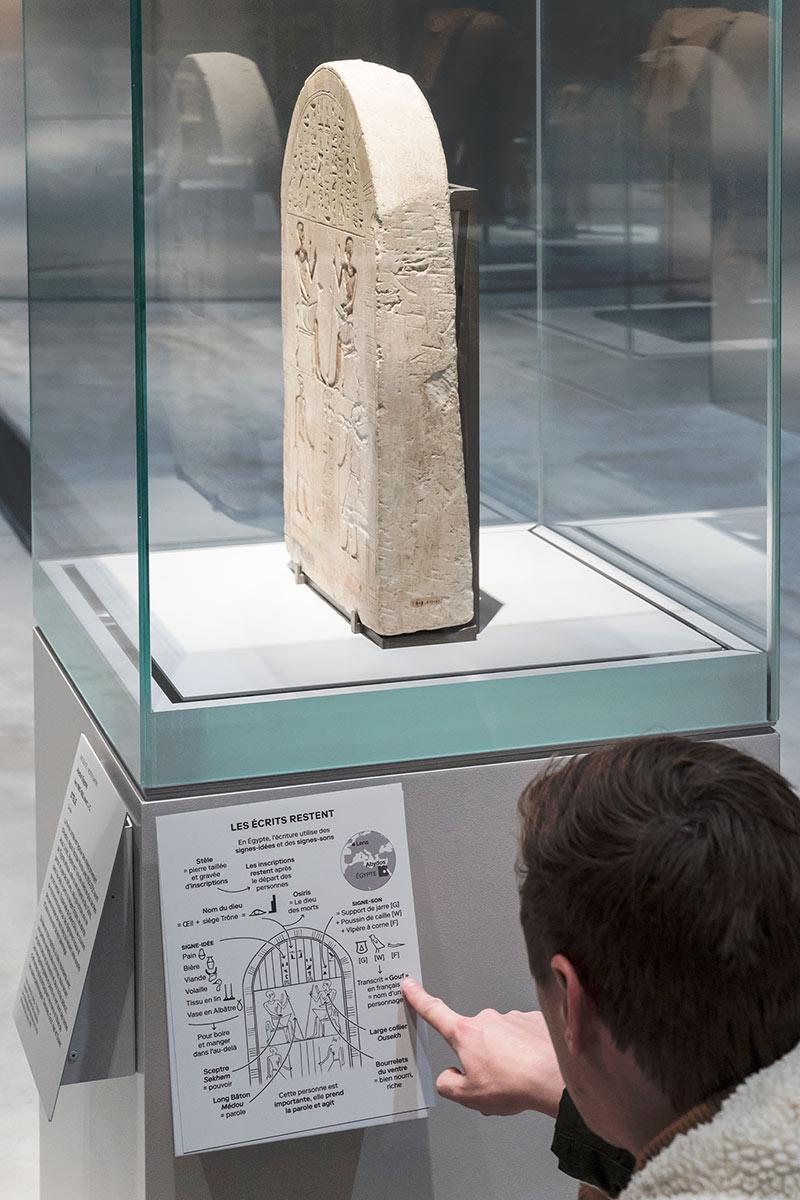
A cartel in image of the new course of the Time Gallery at the Louvre Lens.
© Frédéric Iovino
The draft of the cartel is no longer solely of the curator or the exhibition commissioner in connection with the public service. User committees are now asked, even particularly formed, and their feedback on the understanding taken into account. At the Palais des Beaux-Arts in Lille, “Each cartel of the Middle Ages and Renaissance department has been reread by at least ten different people, for half of them outside the museum, and including non-visitor”, explains Sophie Dutheillet de Lamothe, head of this department until her departure last May for the Musée de Cluny. Or 300 cards concerned! In the new course of the Time Gallery at the Louvre-Lens, inaugurated last January, to the 250 developed cartels accompanying each work is now added, for 70 % of them, a “Cartel in image” Taking up the exhibited play in drawing, accompanied by a series of short texts answering the questions formulated by a panel of 200 people from twenty structures in the territory (schools, health institutions, social centers, universities, associations, etc.). “Because it is a question, whether in the developed or illustrated cartel, of encouraging the visitor to go back and forth between the cartel and the work”, underlines Juliette Barthélémy, director of mediation of the museum. In Mucem, the word of the curator or the scientist was put in dialogue with that of writers, historians and conservatives of the country of origin of the exposed object. “This complementarity between cartels reflects the crossing of disciplines, unimaginable before”, Observe Marie-Charlotte Calafat, director of the museum collections. This multiplication of approaches is however not without sometimes generating congestion, clutter of visitors in the routes, especially when readability is hampered by too small typography, insufficient lighting or poor positioning of the cartel.
Chatgpt is struggling to convince museums
Writing cartels. The museums interviewed today exclude the use of artificial intelligence (AI) for the writing of their cartels. The substantive and shape constraints (content, formulation, calibration of 500 to 800 signs) are deemed incompatible. “Tests have been carried out, but AI has proven to be unsatisfactory: it produces a standardized and superficial discourse, punctuated by errors and misinterpretations”, Indicates the Musée d’Orsay. “The plurality of the authors and the diversity of their eyes on the collections, which are embodied in all these texts, seems one of the great riches of the museum, which the AI would annihilate. In addition, the Environmental, Ethical and Social Negative impacts of AI today are an important component to take into account in the use of this tool. »» The hypothesis of the use of AI for the translation of cartels in English is also dismissed. However, the translation is increasingly essential in the redesign of the routes, including in other languages, such as Dutch at the Museum of Fine Arts in Valenciennes.