It is possible that María Moreno’s is the least known painting among the productions of those who made up the group that we have always called Realists of Madrideven though each of its members had their own concerns that extended beyond, and further into, this city.
Moreno, unlike many of them, was born in the capital in 1933 and also studied Fine Arts here at the Royal Academy of San Fernando, specializing in that discipline of painting. It would be this institution that brought together the majority of the members of that group around their teaching – Antonio López, later her husband, and Isabel Quintanilla, Amalia Avia, Julio and Francisco López Hernández and Lucio Muñoz. All of them shared an attachment to the closest reality, but approaching it from particular styles and emphasizing one genre or another.
Outside of Spain, Moreno’s creations have been seen in rooms such as Ernst Wuthenow’s gallery in Frankfurt (1973) or Claude Bernard’s in Paris (1990); Inside it has been part, fundamentally, of group exhibitions, both at the San Fernando Academy itself, in the nineties, and more recently at the Thyssen Museum, a decade ago.
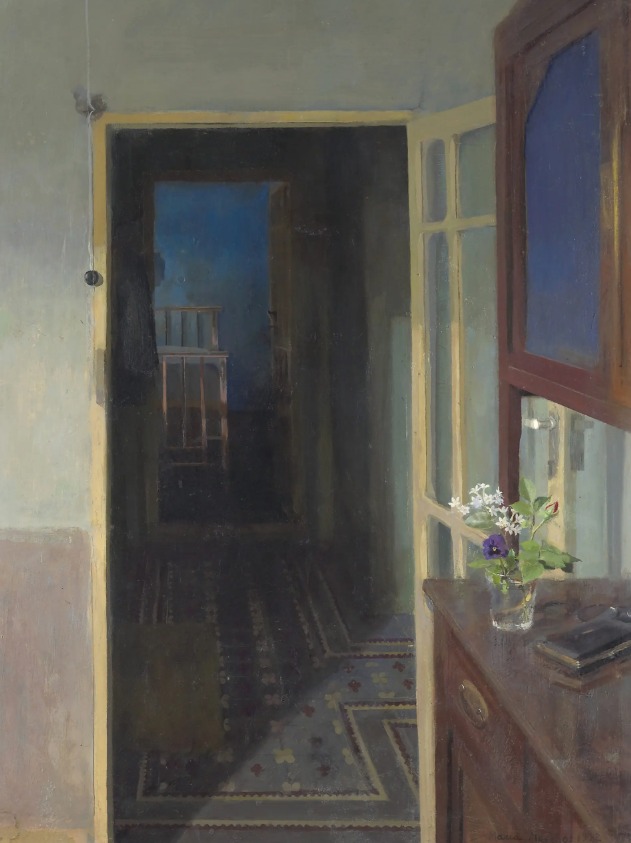
Antonio López and María Moreno. Tomelloso’s kitchen1972. VEGAP
Six years after his death, the Museum of Contemporary Spanish Realism. MUREC of Almería dedicates its first anthology to her in an institution: “María Moreno. Towards the essence of light”, curated by Juan Manuel Martín Robles, compiles from her works from the fifties to her latest works in the 2000s and has been organized with the collaboration of Antonio López and María López Moreno, daughter of both and an artist.
More than eighty pieces have been gathered from around thirty institutions, many of them unpublished in Spain, in order to vindicate the figure of an author who has not remained exactly relegated until now, but who has been obtaining discreet recognition and almost limited to connoisseurs. Some of them correspond to Antonio López, to evoke the creative dialogue between the two; but that number is small so as not to take away, this time, his wife’s prominence. There are around twenty drawings missing.
Almost all the fundamental genres of painting were the center of his attention: interiors, landscapes, gardens, still lifes and flowers and, whatever his motives, Moreno tried to approach them from compositional balance and from a use of light oriented towards mystery and, in turn, the transformation of the surfaces where it fell. The result approaches stillness and temporality: intimate places and furnishings acquire emotional intensity and still lifes and plants display their essential beauty.
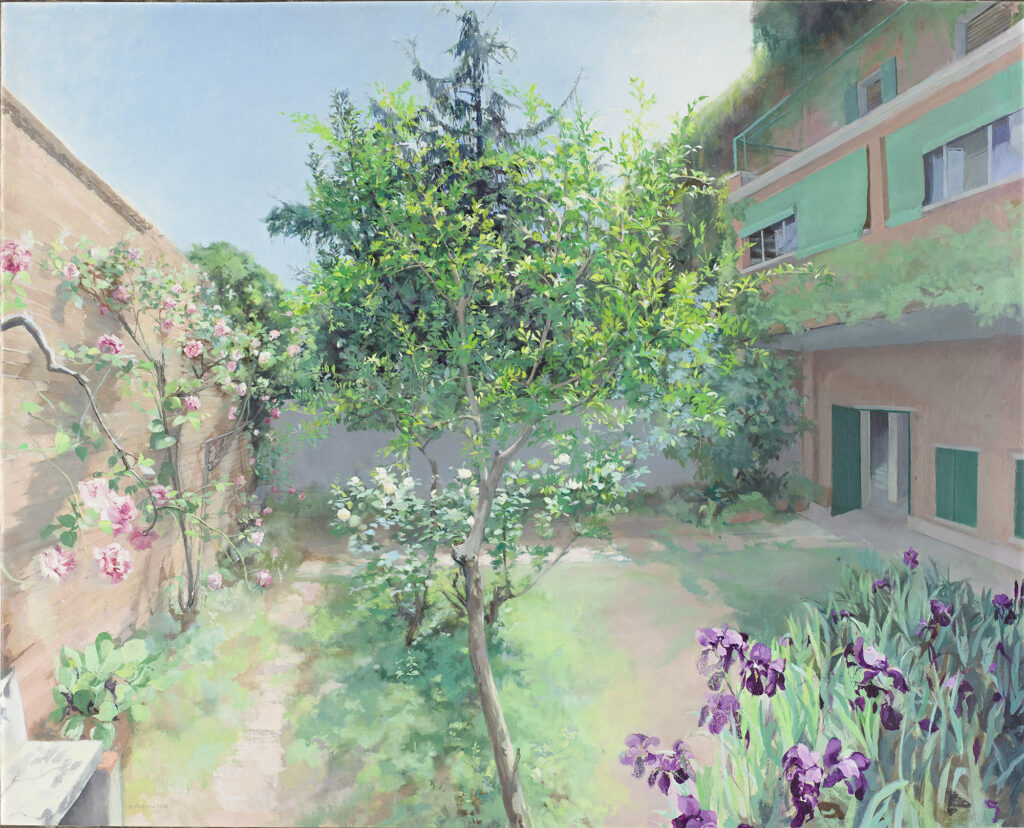
Antonio López and María Moreno. Garden of the Plaza de la Infancia1995. VEGAP
Four sections articulate the route, starting with The intimate affections. Maria and Antoniowhich briefly delves into his training practices in San Fernando and gives way to The lived spacesa compendium of those interiors in which the artist knew how to find complete worlds. Around simple objects he configured subtle atmospheres from a very nuanced use of light and backlight and knew how to hint at the memory sheltered in those rooms he painted, even though in these scenes it seems that only the present fits.
Next, The mystery of light It precisely affects the increasing attention and care that Moreno paid to lighting, both indoors and outdoors. That inclination came at a stage in which he shared it with the Madrid realists and in which all of them were related to Antonio López Torres, Antonio López’s uncle, whose greatest sources of inspiration were the population and landscapes of La Mancha. Under her guidance, this author turned more and more outward: towards landscapes, streets and gardens.
Finally, From light to object focuses on his works on flowers and everyday items, which he looked at and captured with an attitude similar to fervor: When I paint flowers, I do so conscious of the respect I have for them. They have a life just as mysterious, just as intense as a person.. Part of that mystery, again, has to do with light.
In order to contextualize Moreno’s career, the MUREC has designed three annex spaces where we will contemplate compositions by Antonio López, Isabel Quintanilla, Paco López, Julio López, Esperanza Parada and Amalia Avia, so that we can appreciate their parallelisms and particularities; We will see some milestones in Moreno’s biography, documents, photographs and personal objects; and spaces that recreate his home and his studio, which introduce us to his and López’s intimacy, which is reflected in a good part of their respective productions. None needed distance from their motives.
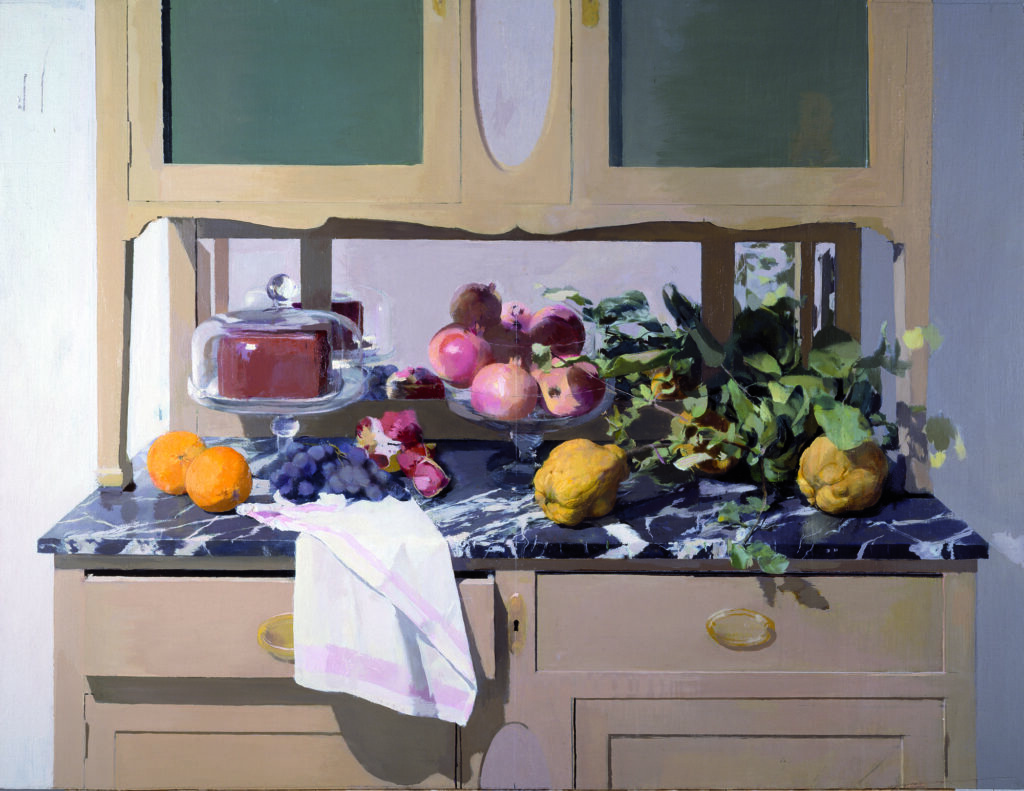
Antonio López and María Moreno. Still life1996. VEGAP
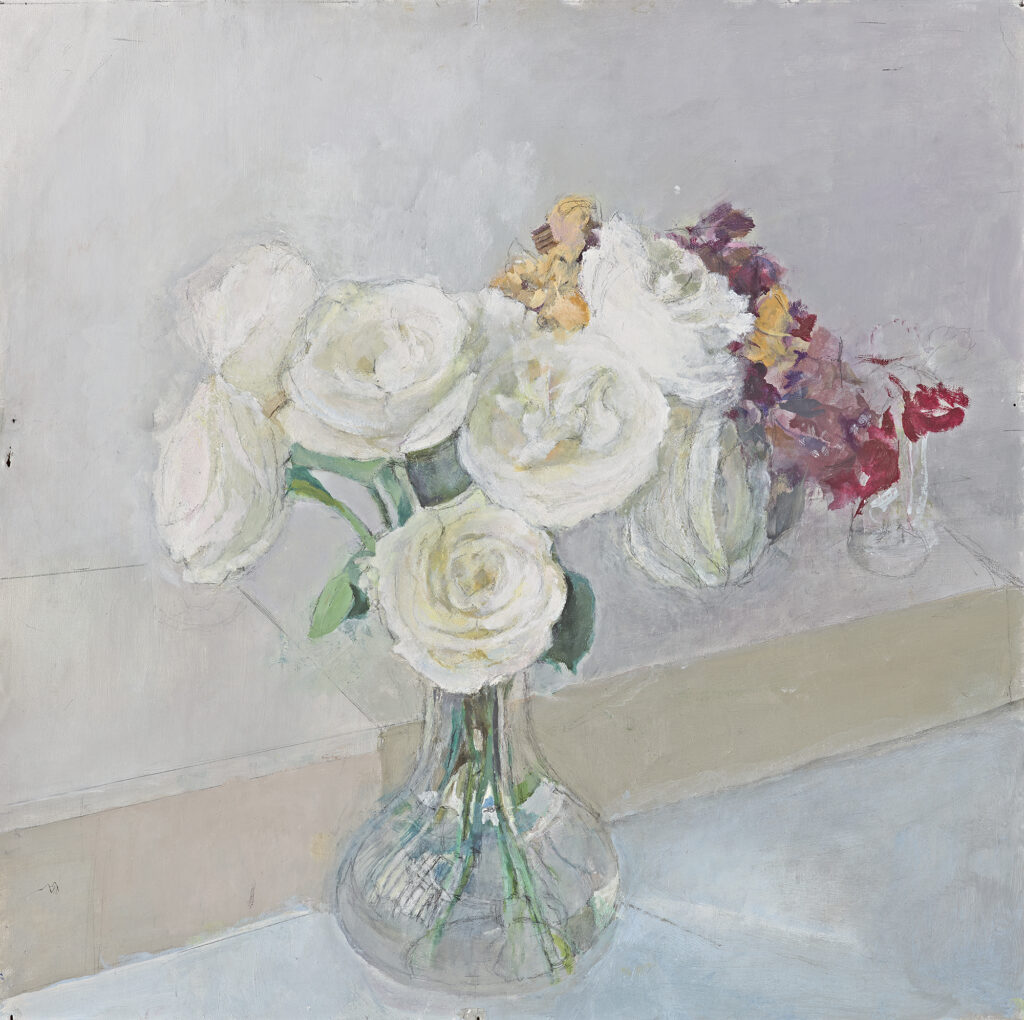
Antonio López and María Moreno. Roses2005. VEGAP
«Maria Moreno. Towards the essence of light
MUSEUM OF SPANISH REALISM. MUREC
Paseo de San Luis, s/n
Almeria
From June 12 to October 4, 2026