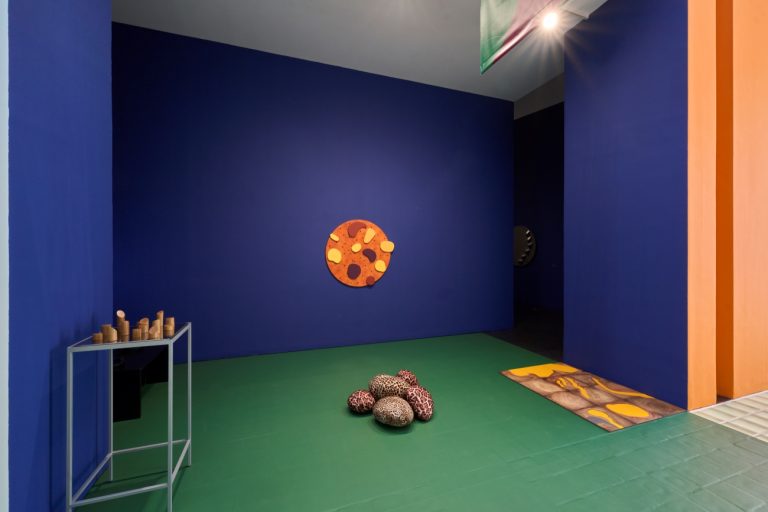
Ibos (Hautes-Pyrénées). The satin hanging that borders the Zoe Williams Salon des Plaisirs (born in 1983) seems straight out of theOdalisque blonde (1751) by François Boucher. Like the painter Rococo, the English artist arouses the stir by his art of suggestion. It gives its objects an apparent liquid consistency, similar to body fluids with erotic accent; In addition, its plastic vocabulary is based on synesthesia: the sight of its intimate as luxurious materials active in tactile and olfactory reminiscences. The exhibition “In Liquid”, presented to the forecourt, is a triple success: the selection of pre -existing works, very relevant, coupled with the production of new successful parts, allows the art center to develop an environment as sensory as referenced, which accounts for the artist’s ability to play with the history of art through various mediums.
From Rococo gallant paintings to luxury advertisements, Zoe Williams treats her allusions to better transgress them. It is in line with feminist performers who diverted the archetypes of the consumer society in the 1970s, like Hannah Wilke or Sanja Ivekovic. On one of the walls, monumental photography In liquid series (Second Skin Silver Emissions) (2025) represents the artist urinating gold coins – overthrow of Danaé’s iconography receiving the golden rain (the seed of Zeus) and a nod to the practice of Golden Shower– in a golden boot, molded in bronze, presented a little further in the exhibition (Second skin liquid Currency Armor2025). Ultimate symbol of fetishism, the boot moves here in decomposition. The roughness of the bronze recall the anfracuities of the mannerist artificial caves: the work on the hollows and the full is striking. The posters of In liquid series are also of high plastic quality: to the subtle reference to the advertising images of the perfume I adore Dior – dominant golden tone, persistence of the golden bath motif, licked image – is added the contrast between the skin, the drapes and the bronze.
The works of Zoe Williams also establish a tension between desire and repulsion, the artist taking pleasure in emphasizing that from enjoyment to consumerism, there is only one step. Bacchantes’ hedonism in filmed performance Ceremony of the Void (2017) confine to voracity: the priestesses allow themselves all excesses in an orgy which is reminiscent of the famous Meat Joy (1964) by Carolee Schneemann and The big food de Marco Ferreri (1973). Ceramic jugs enamelled by the artist, taking up the pastel colors and the curved lines of the Rococo decorative arts, decorate the banquet tables on which the most exquisite dishes abound. Reverse of this ultra-silted aesthetic, young women indulge in unbridled consumption of food and bodies.
Faced with this captivating staging, only one regret: the White Cube of the forecourt remains a little too apparent. It would have been desirable to consider a decorative profusion in the exhibition space, which would have made it possible to appear even more “in cash” to a sumptuous Rococo boudoir.