London,
A decade after the Viennese Albertina provided Lee Miller with an anthology that paid special attention to her work during World War II, it is the Tate Britain that is hosting, until next February, the largest retrospective organized so far of this artist, emphasizing that her intrepid character and her desire for experimentation would provide us with some of the most representative images of the first half of the 20th century, and also on the multifaceted nature of her work since her first forays into surrealism. In London we can see more than two hundred photographs, some unpublished, along with archival material and documentation.
Born in 1907 in Poughkeepsie, New York State, Miller studied set design and painting, but becoming a professional model (Beaton and Steichen portrayed her) eventually led her to take up the camera. In those first posing steps the London exhibition begins precisely, which recalls that in 1929 he settled in Paris and began to work hand in hand with Man Ray, combining the surrealist imprint with technical experimentation in a period that was for them of intense creative exchange. Together they illuminated solarization, a procedure that allows generating inverted halo effects through exposure to light during development; We will find one of its fruits in the newly discovered Sirène (Nimet Eloui Bey) (around 1930-1932). Parallel to his research with Ray, Miller also worked as an apprentice in the French edition of Vogueopened his own commercial photography studio and starred in Jean Cocteau’s fundamental surrealist film, Le Sang d’un poète (1930), extracts of which can be seen at the Tate.
By the early 1930s, Miller was therefore already fully immersed in the avant-garde circles of Paris. He aimed his lens at the city streets and took photographs that captured the surreal in the everyday: an early example shows a web of semi-agulated tar oozing across the pavement towards a pair of anonymous feet. Using cuts, disorienting angles and reflections, the American reimagined the familiar Parisian landscapes, from the Notre Dame Cathedral to a shop window. Guerlain.
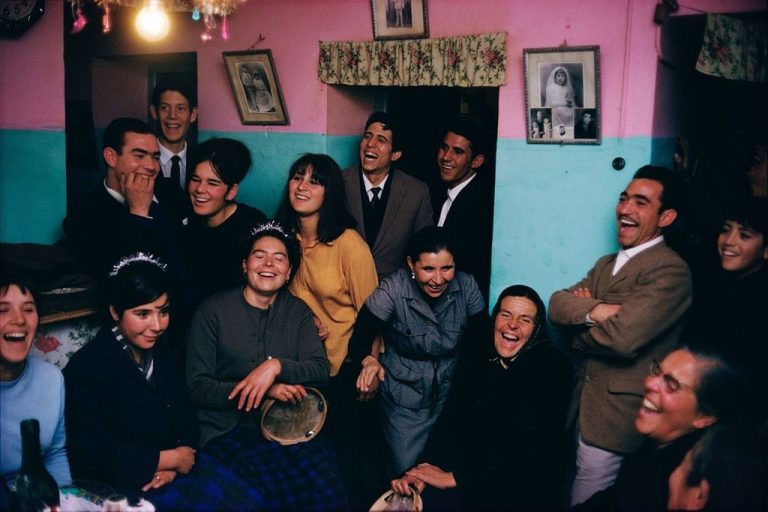
Upon his return to New York in 1932 and his creative steps established, he founded Lee Miller Studios Inc. and inaugurated his first individual exhibition. In both the United States and Europe, he would henceforth exhibit regularly alongside other pioneers of modern photography, and his work would be published in a good number of artistic magazines and newspapers. After moving to Cairo in 1934, he continued using his camera as a tool of exploration: his famous dream image awaits us at the Tate Britain Siwa Oasis, Portrait of Space (1937), along with his looks at contemporary Cairo, the Egyptian desert, rural Syria and Romania – some of these works had never before been exhibited.

By then, Miller already had a wide transnational network of friends; In London we will see his playful portraits of artists, writers, actors and filmmakers, such as Charlie Chaplin and Leonora Carrington. The outbreak of World War II led her to move to London, where she quickly became a prominent fashion photographer, now for the magazine Vogue British, but it did not stop paying attention to a current situation from which it was impossible to escape. In the English capital devastated by bombings, You won’t have lunch in Charlotte Street today (1940) and Fire Masks (1941), which convey the pathos and absurdity of the city in times of war.

Miller became one of the few accredited correspondents and documented not only the contributions of women in the rear, but also harrowing scenes from the front, as well as the devastation and deprivation that, after liberation, was suffered in France, Germany, Luxembourg, Belgium, Denmark, Austria, Hungary and Romania. Presented in dialogue with excerpts from his vivid first-person essays, published in the British and American versions of Voguethese photographs explore the brutal realities of the conflict and its consequences. The exhibition also includes the portraits of Miller and David E. Scherman in Hitler’s private bathroom in April 1945; They constituted a radical performative gesture, carried out just after the couple returned from photographing the Dachau and Buchenwald concentration camps.
Due to the horror they show us, their images of the fields seem to border on a certain aesthetic of the unreal: our sight can only defend itself against the piles of emaciated corpses by contemplating them as surreal images. At no time did she think about not hurting sensitivities: she wanted the viewer not to take their eyes away, to believe what they saw because it existed in front of her camera. believe ithe said.

In the years after 1945, Miller maintained a close relationship with an international circle of artist friends: from Isamu Noguchi in New York and Dorothea Tanning in Arizona, to Henry Moore and Jean Dubuffet, who visited Farley Farm, her home in Sussex; His portraits are among his most striking post-war creations. Before leaving the exhibition, visitors will be able to see a rare self-portrait from 1950 showing Miller posing precariously on a ladder between two mirrors in Oskar Kokoschka’s London studio. Looking directly into her camera lens, surrounded by works of art, she captures herself as an artist among artists.
The Tate galleries, by the way, will have new management in 2026. Maria Balshaw, its director since 2017, has announced her retirement from the position next spring.


Lee Miller
TATE BRITAIN
Millbank, SW1P 4RG
London
Until February 15, 2026