A decade after the Ministry of Culture awarded the Velázquez Prize to Marta Minujín, for being pioneer in new artistic behaviors and in the overflowing of the institutional frameworks of art and mediathe Reina Sofía Museum offers the Argentine author an exhibition that reviews her career, since the sixties, as a fundamental figure of happenings, installations and participatory arts, in the Latin American sphere and beyond it.
This exhibition, in fact, emerges as a co-production of the Madrid center together with Tate Liverpool; The project will travel to England later, and before that it stopped at Copenhagen Contemporary. Given the nature of his creations, this examination of Minujín’s career is necessarily documentary (photographic) and precedes the presentation of what is the star piece of this exhibition: the reconstruction of the immersive installation -almost any name does not fit, in this case- The Menesundawhich the artist created in 1965 together with the late Rubén Santantonín and which has since been recreated on different occasions, the last one in 2015.
At first, the work was located at the Torcuato Di Tella Institute in Buenos Aires, the predecessor of the current university of that name, and garnered extensive queues; also fierce criticism. Due to its very nature and the wear and tear caused by the public, it was only open for two weeks, but its echoes were broad: it is considered that Minujín, who in that year 65 was only twenty-two, contributed to generating vital transformations in the relationship between creation and the viewer – between creation and life, therefore -, from surprise, the rupture of well-being, the introduction of unstable ground under his feet or a forced voyeurism. Once we enter this work up some steep stairs, it is impossible for our role to be that of mere contemplators or for us to go through it, preferably alone, without knowing sensations.
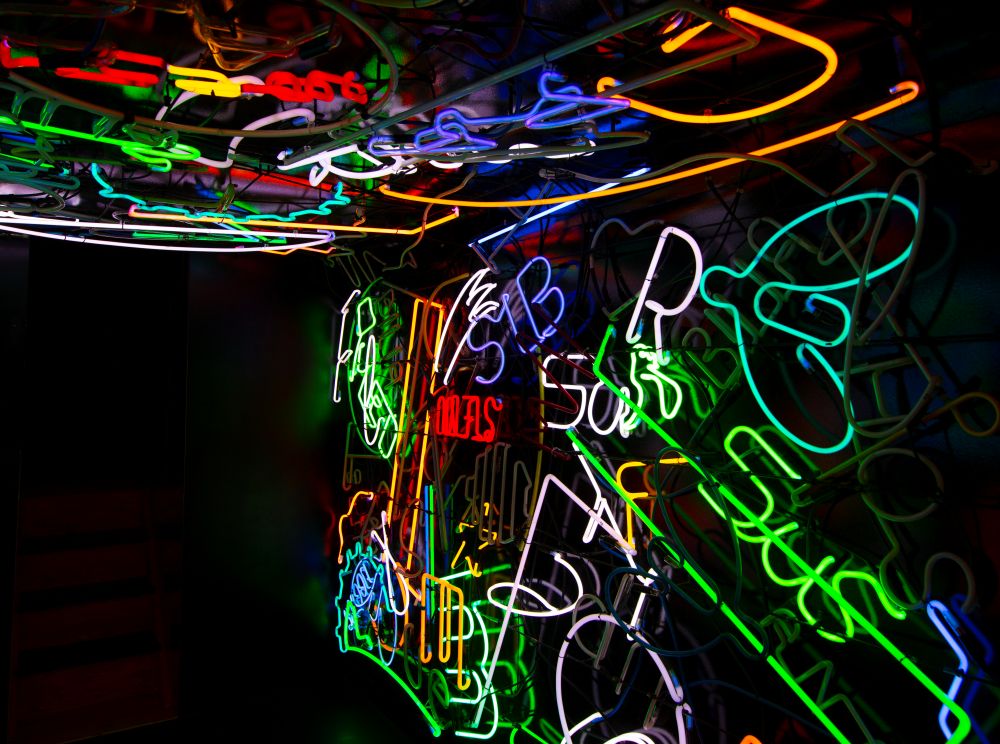
La Menesunda according to Marta Minujín. Reina Sofía Museum, 2026
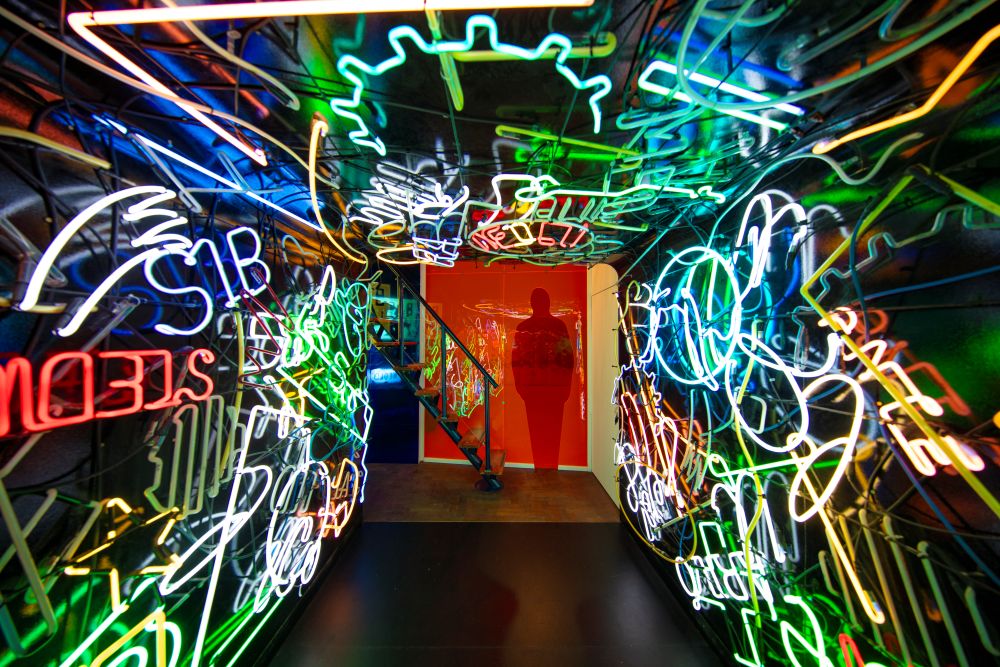
La Menesunda according to Marta Minujín. Reina Sofía Museum, 2026
In the slang of La Plata, menesunda It means confusion, mixture, but it is also used to refer to some embarrassing situation. Both meanings are suitable for this labyrinth in which, after walking through a tunnel with flashing neon lights, we will walk on soft ground, we will discover a couple in bed, we will enter some sonorous intestines, we will be able to investigate an enigma in the style of an escape room or, also, put our sense of smell to the test. Minujín proposes, therefore, a celebration of freedom and a condensation of experience, a notion that he has always placed at the center of his practice and that, in recent years, has come to challenge the omnipotent screen effect.
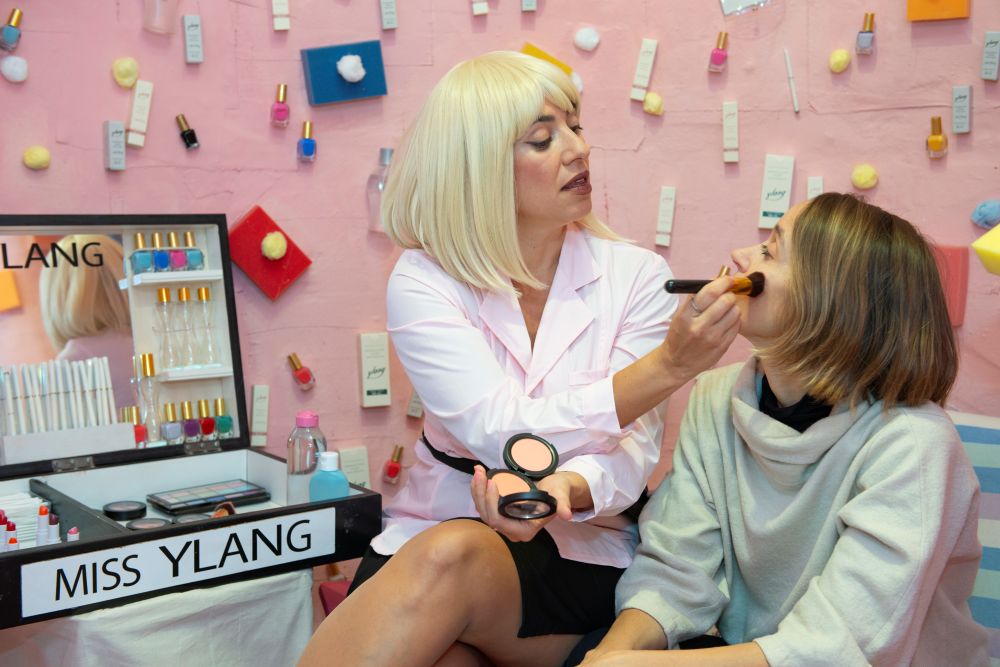
La Menesunda according to Marta Minujín. Reina Sofía Museum, 2026
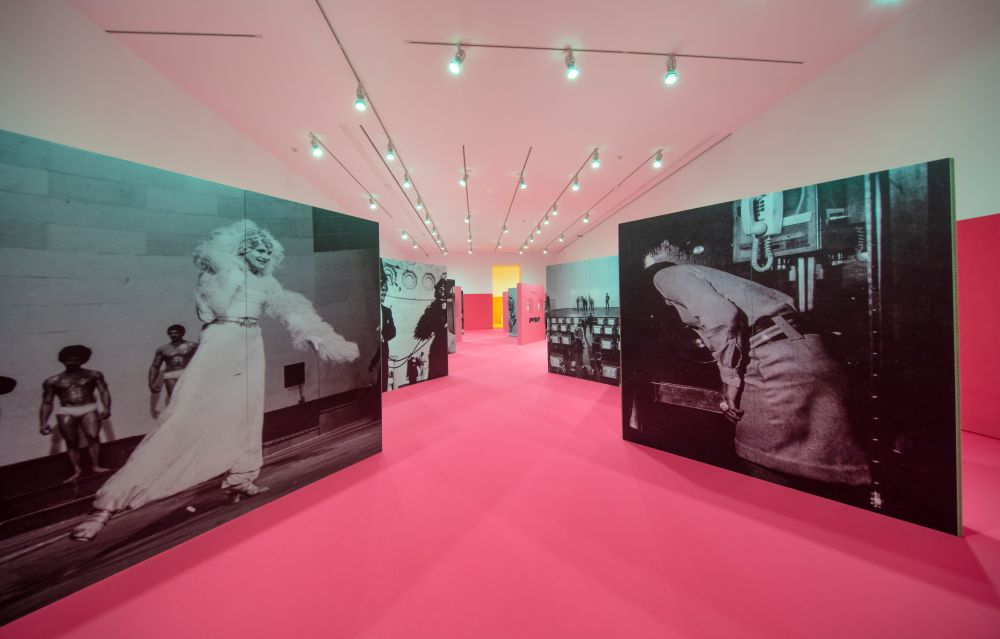
The rest of the exhibition, as we said, has been conceived as a retrospective of the performances and action art that he carried out between 1963 and 1986; the stage in which he developed his most emblematic ideas, although Minujín continues to be active today, based on humor and the desire to confront his new paths with past concerns.
Trained in Paris, Buenos Aires and New York (with scholarships), she was initially influenced by the new realism and by Arman, builder of misplaced accumulations. When he was only twenty years old, in an action with Christo and other artists that was documented, he decided to burn his production up to that moment – that is, the one that had material objects as fruit – and finish the maneuver laughing.
After obtaining, in 1964, the National Prize from the aforementioned Torcuato Di Tella Institute – its jury included none other than Clement Greenberg, Pierre Restany and Romero Brest – he presented on the television program The bell jar the challenger The cavalcade: the making of a live painting, accompanied by performers and animals. The broadcast was aborted, but she had not stopped laughing while “working” and would continue that way.
In a context of intense debate about the power that the media exercised or should exercise, Minujín read press news next to the River Plate. Then he covered himself with them and jumped into the water: the news vanished, soaked; It was one of the many occasions in which he took a position on current issues, without avoiding criticism but fleeing from pamphleteering.
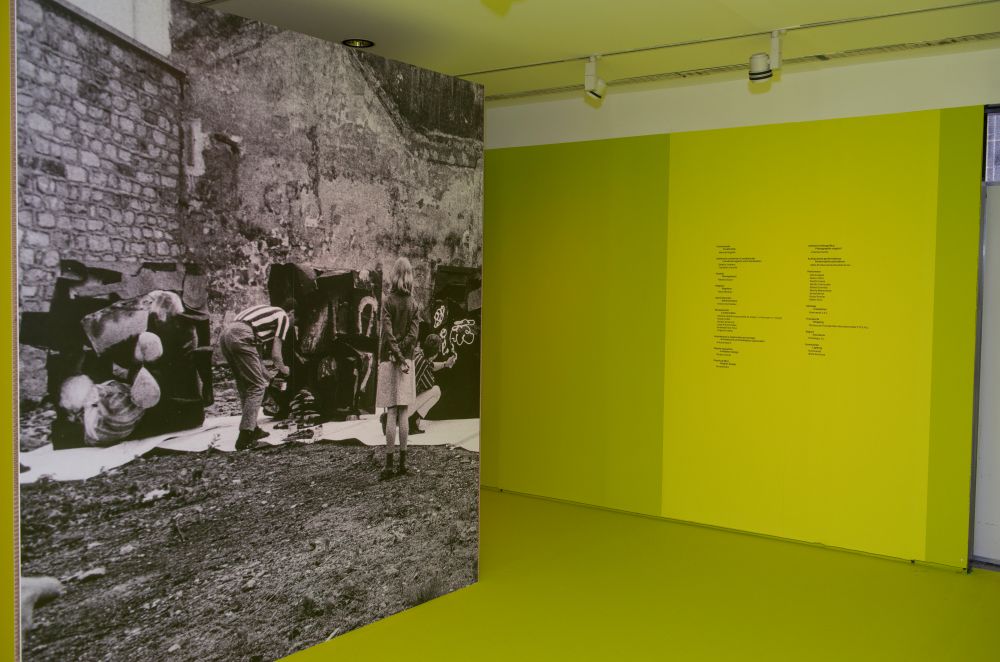
La Menesunda according to Marta Minujín. Reina Sofía Museum, 2026
Usually well surrounded, she conceived together with Allan Kaprow and Wolf Vostell Simultaneity in simultaneityan action that was initially going to be deployed simultaneously in New York, Berlin and Buenos Aires, but that, finally, could only be carried out in the Argentine capital. He interviewed sixty well-known people, photographed them from the front and in profile – like a police file – and, finally, he broadcast the talks alternating them with films of other famous individuals in their daily lives; thus questioned what we understand by popular and what separates it from our routines and drew our attention to what contemporaneity has in terms of simultaneous fragmentation.
Emphasizing his research on the news media and in collaboration with other engineers and artists, among them Rauschenberg, he made in 1967 Minuphone: transformed a (vandalized) New York telephone booth into an interactive device in which to live a very different experience from conversation, which involved smell or seeing a curtain of green water fall. The call became a psychedelic trip.
His next steps took the form of a soft sculpture made of two hundred mattresses on which various activities took place (Soft Gallery); a controversial visit to Sotheby’s to, in an action of body paintingask the participants in a solidarity bid if they were really aware of the consequences in Nicaragua of the earthquake that they would contribute to alleviating; or a tribute to Picasso consisting of the kidnapping of fifteen people during a cocktail party at MoMA. They were sent to other places by surprise; They had previously been selected for that purpose and the action was called Kidnappening.
La Menesunda according to Marta Minujín. Reina Sofía Museum, 2026
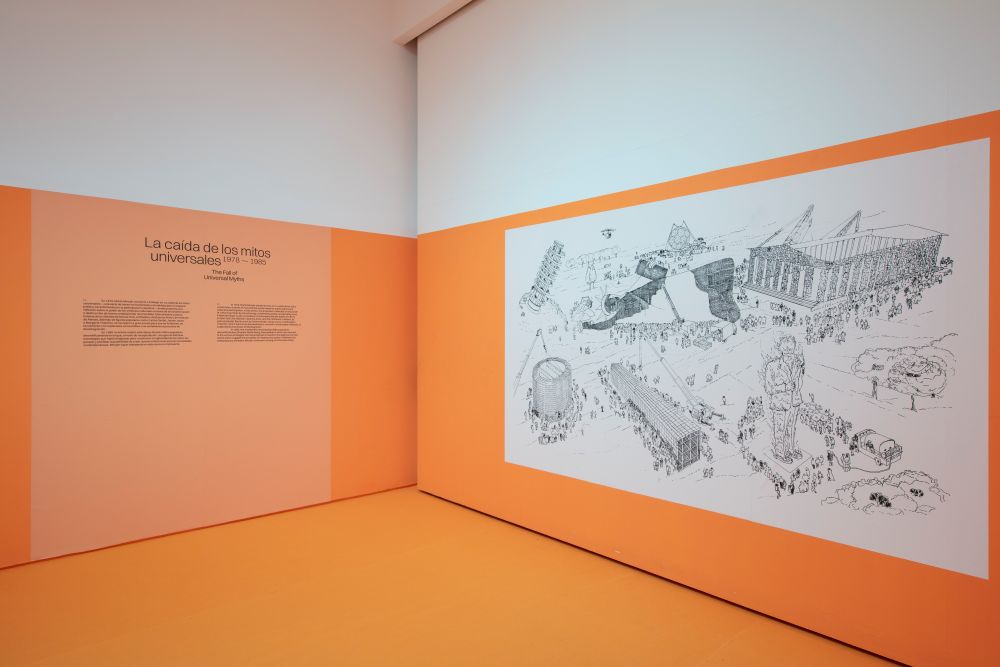
Likewise, Minujín has vaccinated volunteers against failure; has arranged street cubicles where artists could work while being watched by the public (Espi-Art), he introduced grapefruits into an exhibition so that they would rot as the days passed, linking art and life again (Grapefruits); and, above all, it has caused reproductions of universal myths of all kinds to fall, in a cycle still in process. His lying obelisk in Buenos Aires referenced the city’s fallen masculinity and, in another version, he covered it with replicas of sweet bread that could be exchanged for real food. James Joyce’s Tower in Dublin also made it edible; It has yet to reproduce the Statue of Liberty with hamburgers.
Carlos Gardel died, probably burned, in a plane crash; She sculpted it in metallic fabric to make it burn (and mythologize itself again); and with books banned during the Argentine dictatorship he composed a Parthenon to distribute later. He replicated the same project in Berlin, commemorating the Nazi book burning of May 1933.
In relation to Argentina’s high external debt and in a well-remembered action, Minujín paid it to Warhol, as representative of the United States, in ears of corn, then signed and delivered to the public, who accepted them with some reluctance.
After that “philological” reconstruction of The Menesunda (for Minujín everything happened in the sixties), the exhibition culminates by exhibiting the artist’s pieces in the collections of the Reina Sofía: a projection of the documentary record of the installation; two pop serigraphs, erotic in nature, from his series Frozen Sex; and love at first sightone of its mattresses in which every convention (about the body, rest or eroticism) becomes flexible and mutable.
La Menesunda according to Marta Minujín. Reina Sofía Museum, 2026
«La Menesunda according to Marta Minujín»
NATIONAL MUSEUM REINA SOFÍA ART CENTER. MNCARS
C/ Santa Isabel, 52
Madrid
From November 18, 2026 to March 8, 2027