Madrid,
Jordi Teixidor maintains that color is dangerous: he understands that it can lead to delightful and gratuitous results and that it must be used very carefully to make it the protagonist. In his works, more than three are rarely combined and some of them are dominated by black, not the tragic one linked to the Spanish tradition, but one that seeks to be serene. He applies it with a brush, not with a roller, to make himself present as an artist within the painting, granting that form of humanity to abstraction.
His first institutional exhibition can now be visited in the Alcalá 31 room, it has been curated by Ángel Calvo Ulloa and is titled “No-res”, in reference to his interest in the concept of a nothingness that is never total, since it brings with it the option of a presence. The nothing It is nothing for this Valencian artist, but a fundamental concept in the creation of the 20th century.
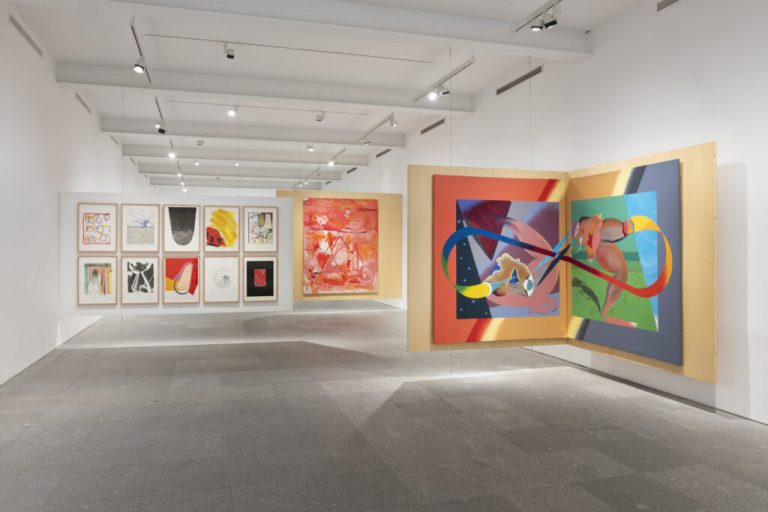
The exhibition is structured in chronological blocks, but it does not highlight the evolution of this author since the sixties, but rather the cracks that we can observe in one period and another and that connect them to each other, sometimes in the form of recurring formal motifs (doors, windows, crosses) and other times based on developments in color and geometry; As the curator emphasizes, there are pieces dated twenty years ago that are closer to the current ones than those from a decade ago.
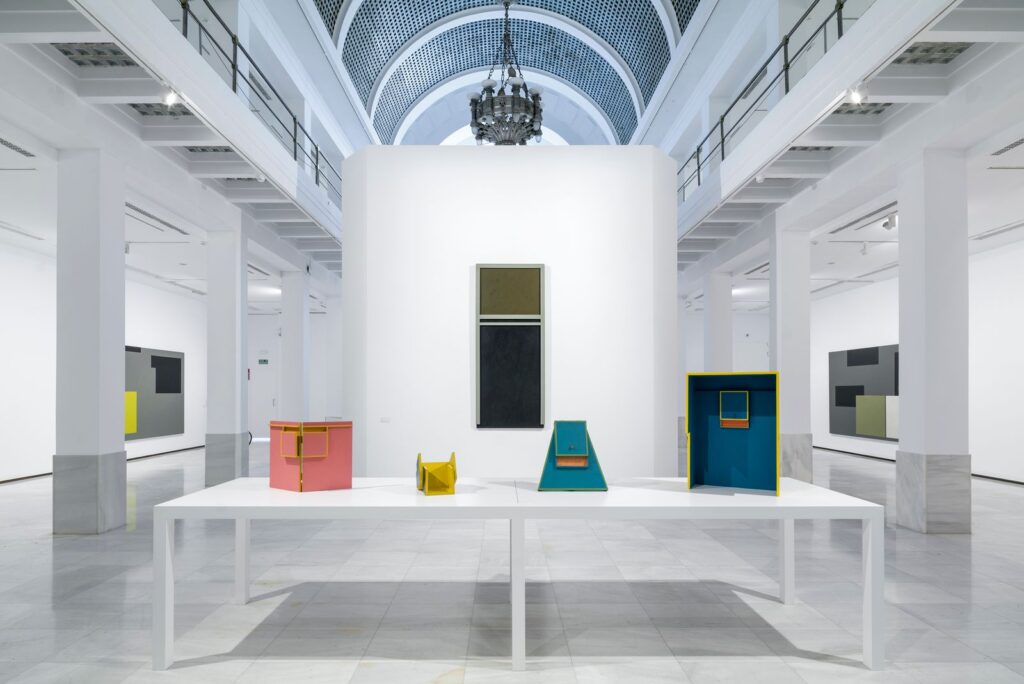
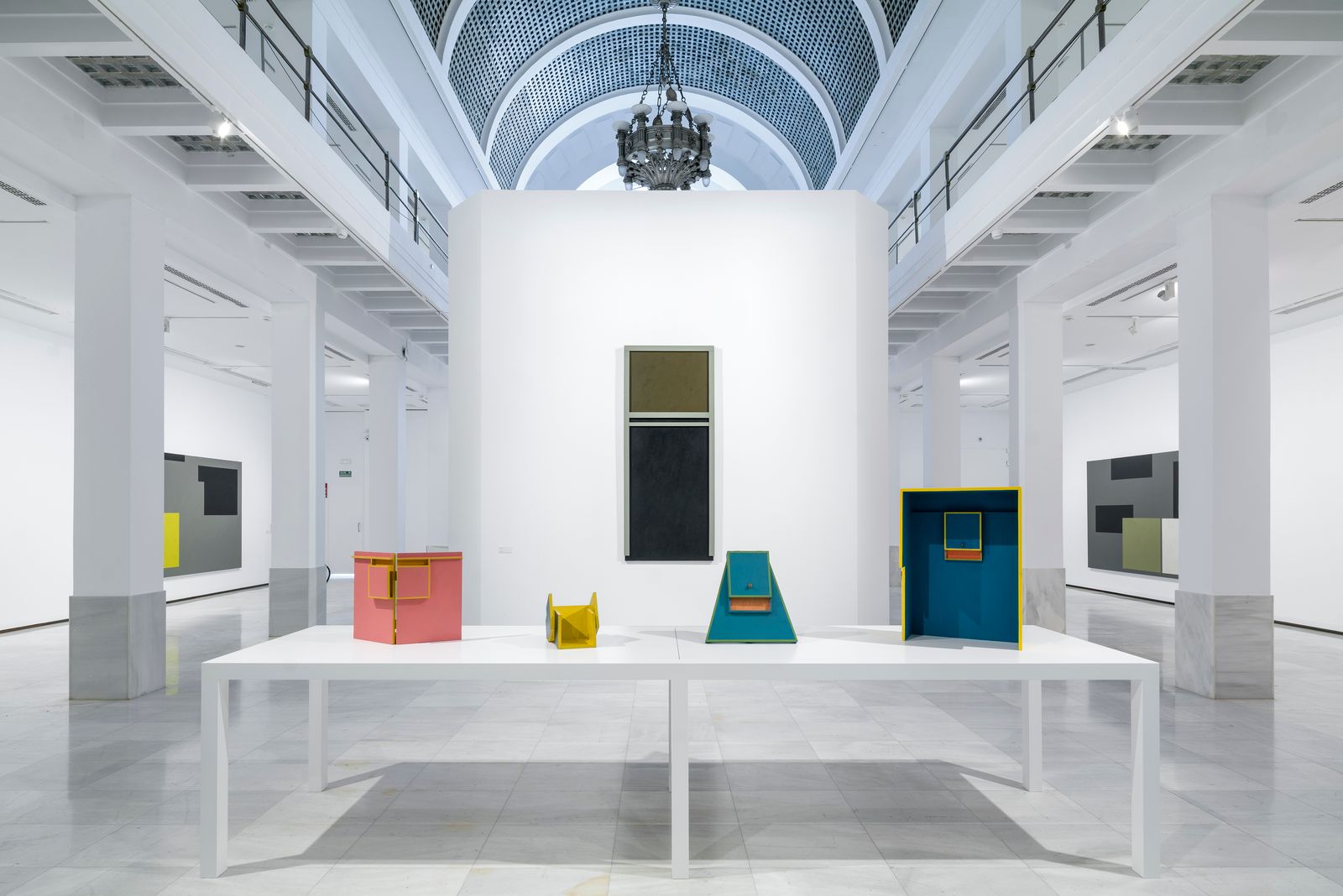
Teixidor does not title his compositions and works in series, sets that he considers finished once he reaches the conclusions he wants to achieve, although these may not be definitive or accurate for him – here we will see six of them, not watertight. He has never been interested in consolidating a style and diversity of execution predominates in his creations, despite the fact that they have geometry and the absence of figuration in common. These ways of doing respond to his own conception of creation: this author affirms that art is neither concrete nor exact, that we are not even sure that it exists and that the ultimate goal of history (of art) throughout the centuries has been to be able to elucidate what said creation is.
Very inclined towards philosophy and literature, he does find a constant and fruitful relationship between painting and the sacred, although our concept of the spiritual has been transformed over the centuries and today screens are modifying our understanding of the close and the supernatural. For Teixidor, surely, rather than helping us look, they stun us.
On the ground floor, a kind of chapel has been arranged, whose own architecture invites the viewer to enter its interior, a type of setup that had already been used in previous exhibitions. We will find in it three very vertical and large-format pieces that share black and greenish tones, but the important thing about this space, for the artist, will not be so much those compositions as the experience of whoever stands between them: the reflections that they can encourage.
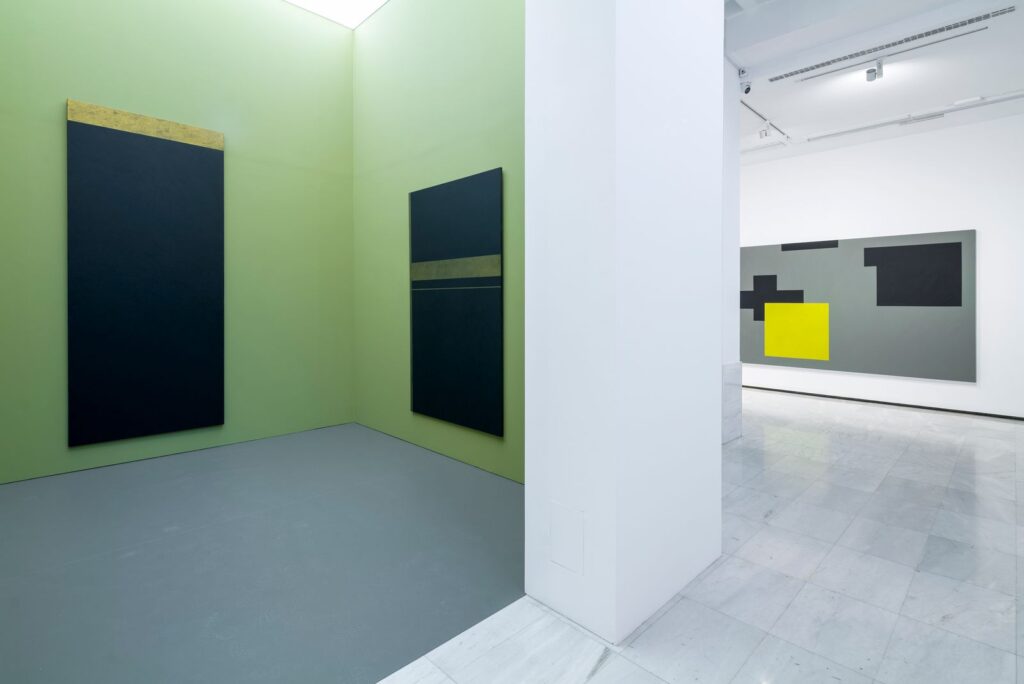
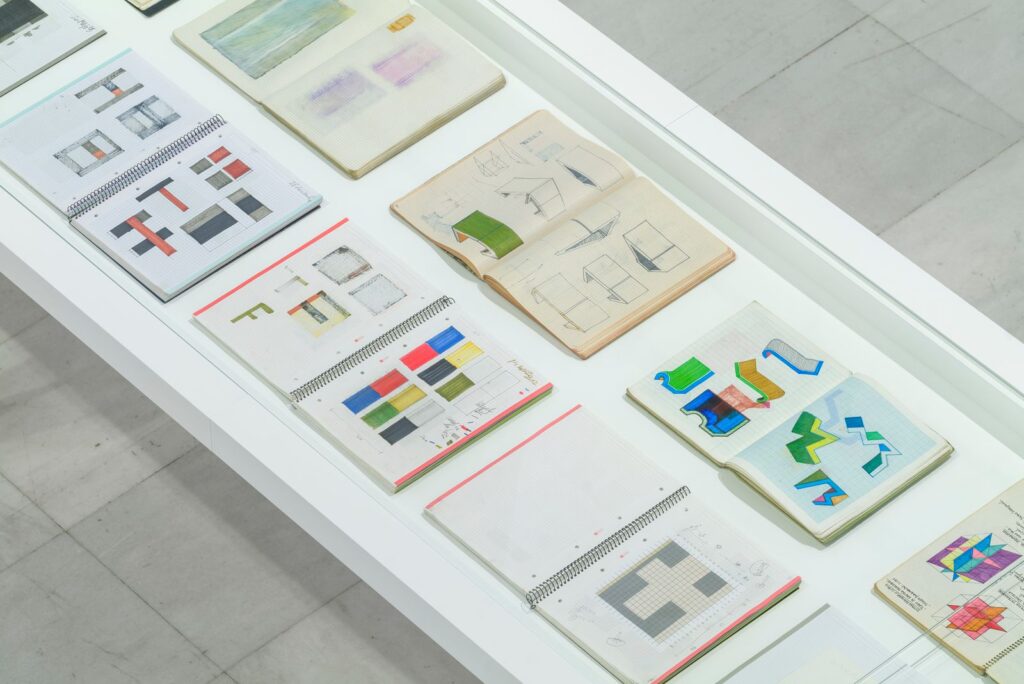
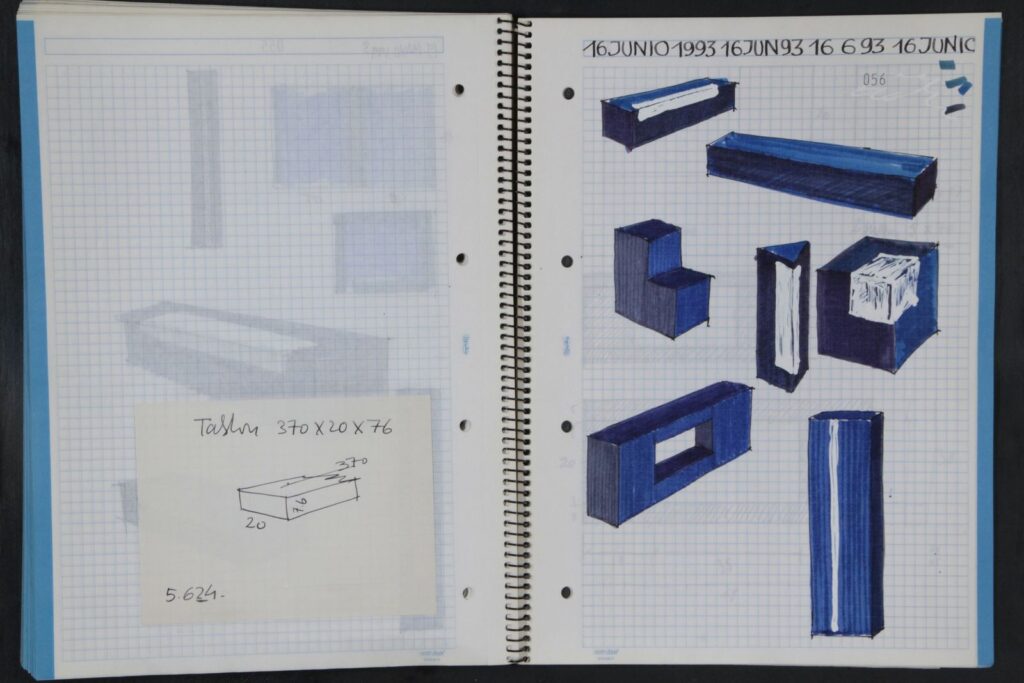
A showcase leads us to that small temple, the backbone of this project, which compiles some of his drawing notebooks, which were partially seen in exhibitions at the March Foundation headquarters in Cuenca and Palma and at the IVAM in Valencia. Eight of them belong to the collections of this last center; the rest remain in the hands of Teixidor and do not consist only of sketches, but of the approaches that he would later deploy in the paintings that surround them in Alcalá 31. Showing them here surrounds the public in a certain intimacy: they make up a kind of creative diary and harbor doubts, mistakes and successes. In both the canvases and the works on paper we will see how, in this author’s production, it is not the subject that makes the painting, but the other way around: he believes that it must be the painting itself that manifests itself on the surfaces.
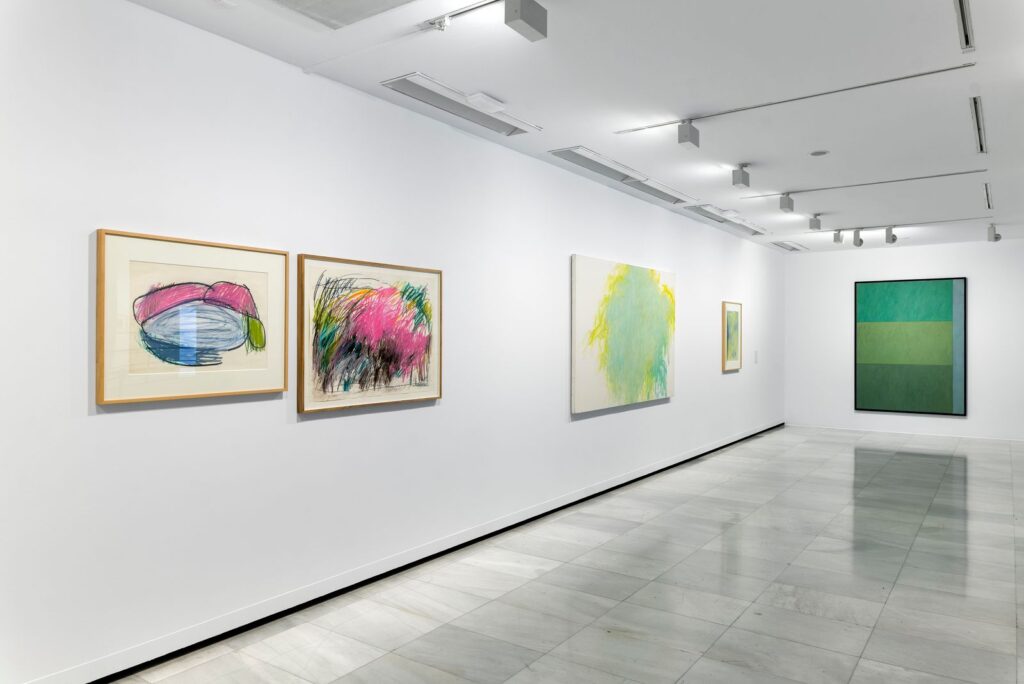
Most of his proposals on the upper floor date from the seventies and eighties, and one of the most interesting was created between New York and Madrid from a large roll of paper that he found in his studio. It was a process of years: every day he drew lines on it with a thick pencil, a small part at a time as a routine, until the piece was completed, due to the fatigue of Teixidor and also of the work itself. Despite its support and the use of pencil, we cannot understand it as a drawing: it is closer to painting and even action art and through that same process it harbors a temporal dimension.
This work has been arranged next to a set of oil paintings on paper in which black geometries sit on white with a musical sense; They seem to have little to do with the previous image – they assume order versus the expressiveness of the free hand; The artist claims that very diverse compositions can come from the same hand and each one has its own particular interest.
The exhibition culminates with a review of its compositional procedures in which, necessarily, the cross (order and line) and also the gesture are very present: as a basic sign of the crossing between a vertical and a horizontal; as a religious symbol, a meaning that neither seeks nor rejects; and as a reference to the initial of his last name. Teixidor does not consider himself a purely geometric painter, but rather one who uses geometry as a tool because its forms take him where he wants; These crosses are examples.
In reference to the primacy of gesture in some of his compositions, we will see pieces inspired by the observation of nature, of reality in general. The Valencian has never worked from photographs, but from his own view of the environment. Even in this case, however, the shapes do not float, but are ordered by clearly visible grids.
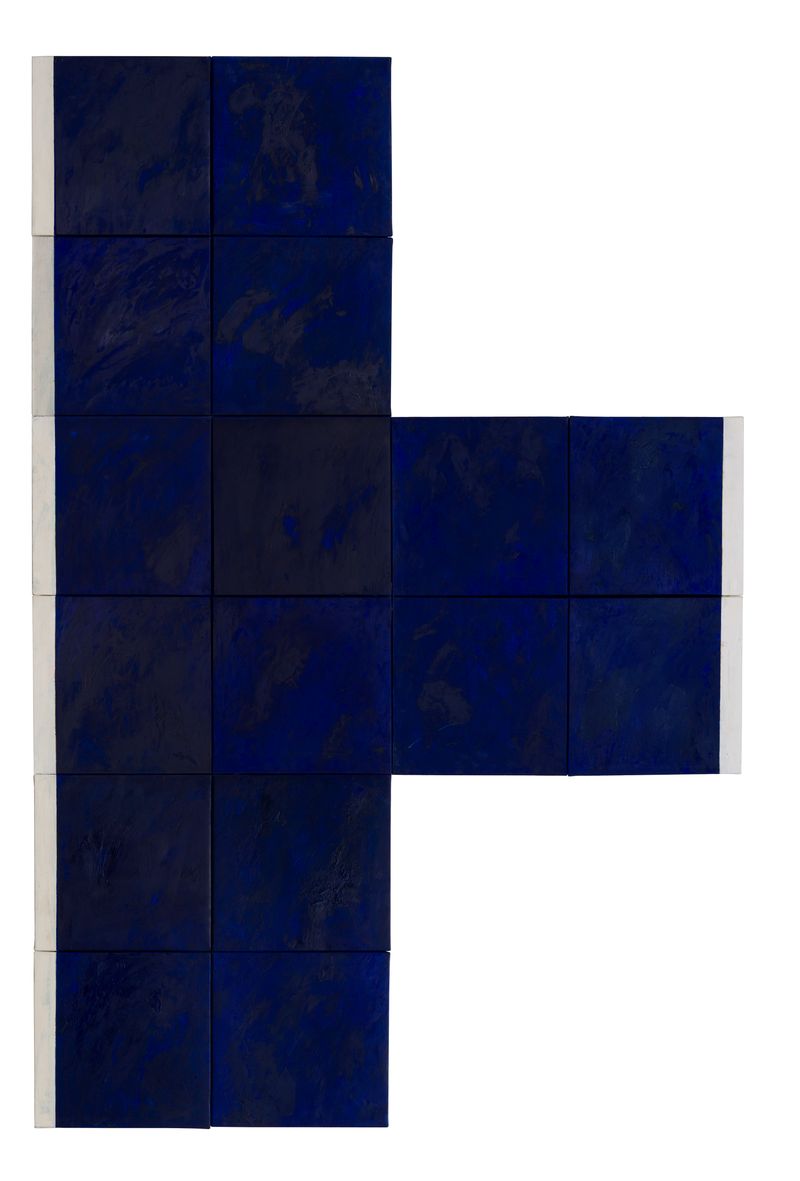
“Jordi Teixidor. No-res”
ALCALÁ ROOM 31
C/ Alcalá, 31
Madrid
From February 19 to April 19, 2026