San Sebastián,
The Museum of the suit, San Telmo Museoa, the National Archaeological, the National Decorative Arts, the Royal Botanical Garden, the Banco de España collection, the Museum of Fine Arts of Valencia, the National Sculpture and the one dedicated to Cristóbal Balenciaga. The list of providing centers to the sample that tomorrow opens its doors at the San Telmo Museum in San Sebastián, “wearing a garden”, already account for the many ramifications and perspectives from which its central theme can be studied: the evolution of fashion in our country in the eighteenth and nineteenth centuries, taking flowers as Leitmotiv.
After passing through the Museum of the Madrid suit last year, and under the Batanero Gema police station, this exhibition analyzes how the clothing of the social classes accommodated in the Baroque period and in the Enlightenment not only responded to passing currents, but also to the new artistic, scientific and philosophical ideas and the transformations in the relationships between society and nature derived from a particular time especially fertile in terms of international expeditions, Scientific findings, commercial exchanges and technical advances.
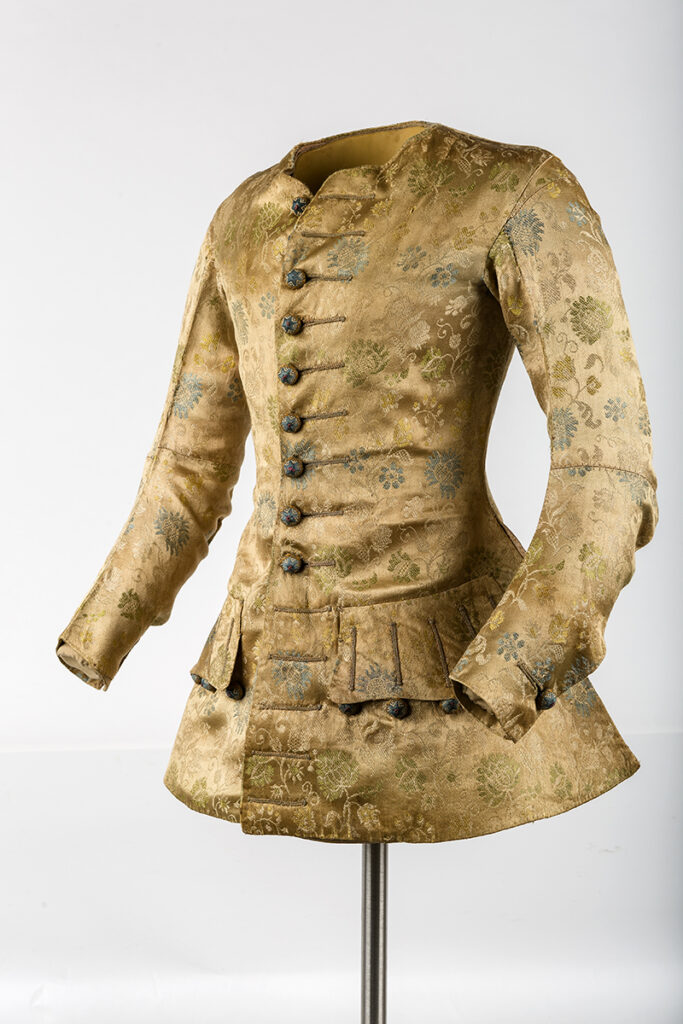
Those looks at the flora and fauna were channeled in a certain evolution of taste between the eighteenth and early nineteenth century and also in a mutation of the floral representations that had its reflection in which they deployed over the clothes. In addition to historical garments and textiles from the funds of the Museum of the Costume and San Telmo, in San Sebastián we can contemplate documents, bibliography, painting, ceramics and decorative arts arriving from these other institutions, pieces that will allow us to enter into an ornamental sense with a period seal, and some contemporary creations. The latter are linked to the Basque context; They correspond to designers of that region or who maintained a sewing house, such as Balenciaga, Fernando Lemoniez, Modesto Lomba or Pedro Rodríguez.
The sample has been structured from a chronological approach, articulating the evolution of floral motifs through successive styles or influences, but also emphasizing social readings of these garments, in relation to the formation of designers, the development of different textile techniques, the progress of knowledge in botany and science and the imaginary of the 18th century around nature.
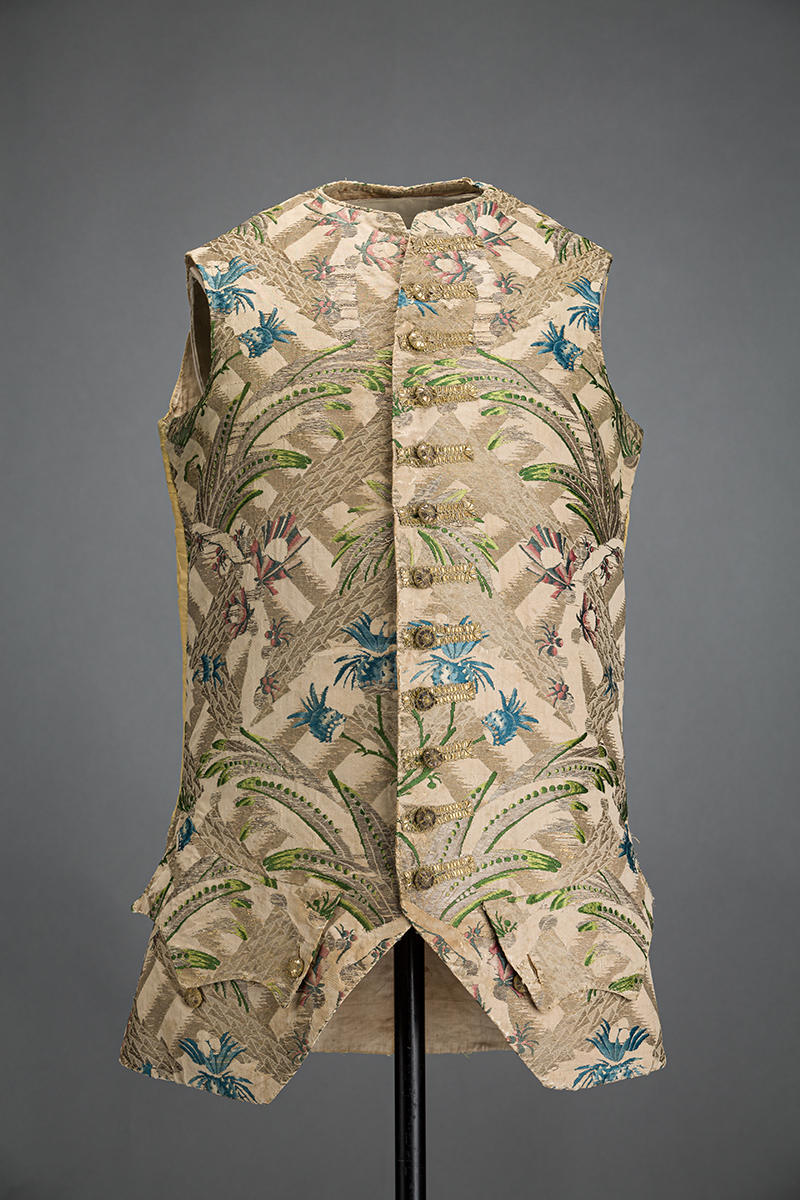
A first section, The Forest of Furiesat the beginning of the eighteenth century, a very relevant phase for textile creativity: extravagant tissues proliferated, also called Furias For recreating their decorative motifs fantastic scenarios in which naturalistic flowers were mixed with others that we can hardly identify due to their distortion, in addition to architectural elements.
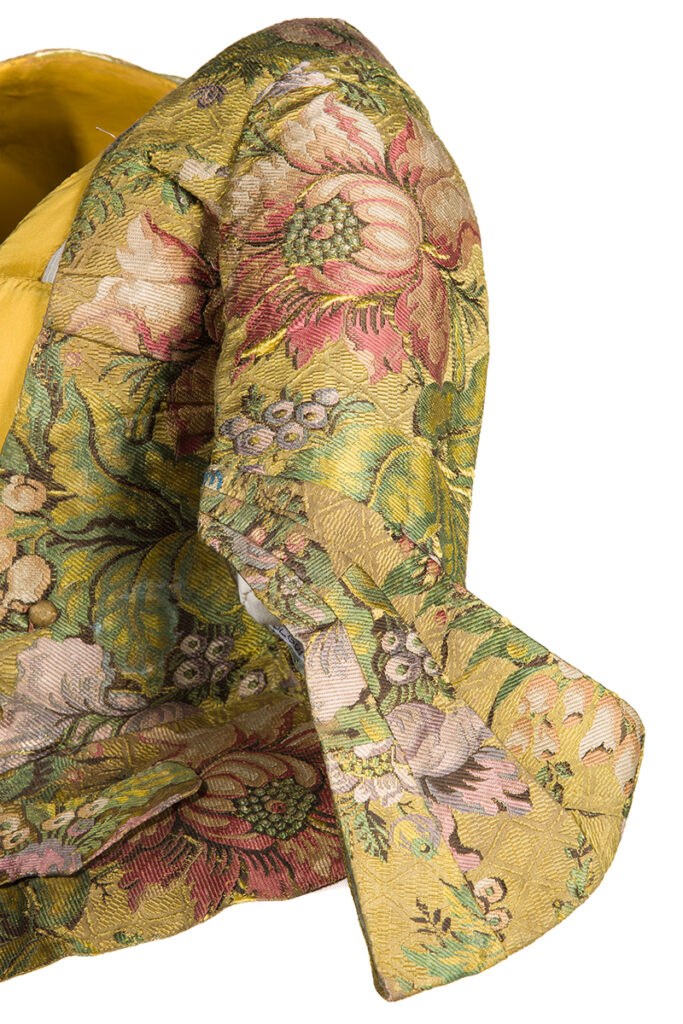
Those strange vegetations will gradually give way to much more naturalistic representations. France, by the hand of Lyon’s great manufacture, was a pioneer in the manufacture of fabrics with large flowers and fruits supported by its branches and roots, which in conjunction with support elements or architectures generated still lifes to dress. That desire to achieve volumes will be consolidated later in the Point-centeranother innovation that Jean Revel introduced from the techniques of the tapestry.
The systematizations of the plant species that will be reflected in herbariums, books and illustrations were the result of the interest of the states illustrated by the promotion of botany, both in what had to do with scientific development and in function of political and commercial interests. It had its translation, as we said, in the textile and ceramic design, areas in which the observation of nature became decorative motifs.
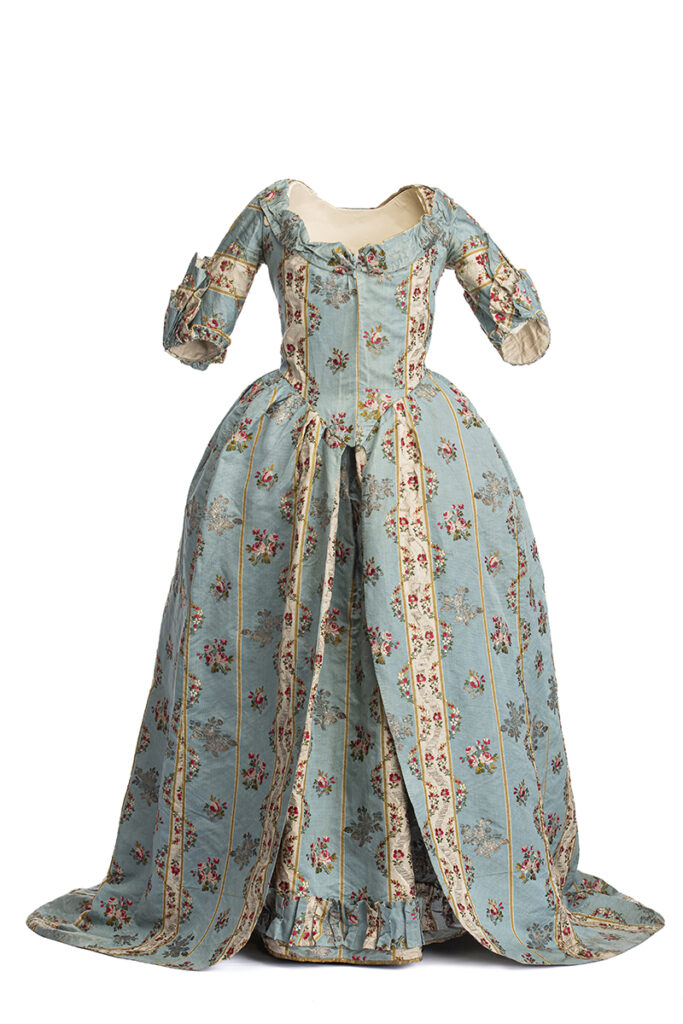
As of the 1840s, the naturalism of these designs headed towards the new Rococó style, highly refined. The floral motifs reduced their size and stylized, grouped in branches, garlands or curvilinear tapes. These compositions were characterized by their undulating lines, to which William Hogarth referred as “the line of beauty”, and won the spot, sensual, light and baptized colors with names that referred to their origin: pink Pompadourthe blue sky, the Celadón green …
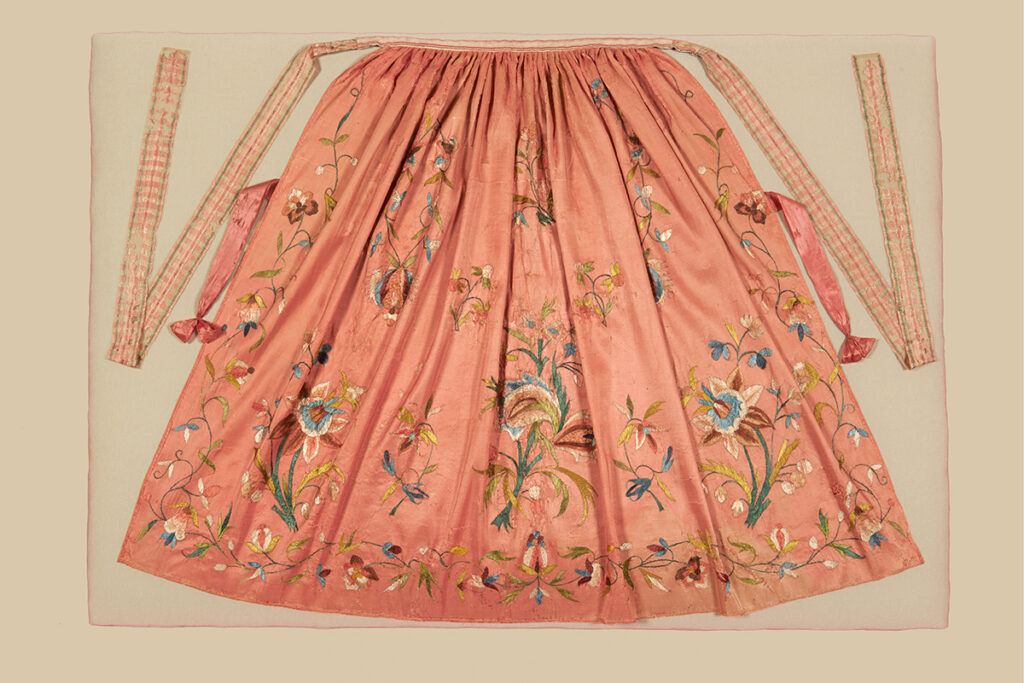
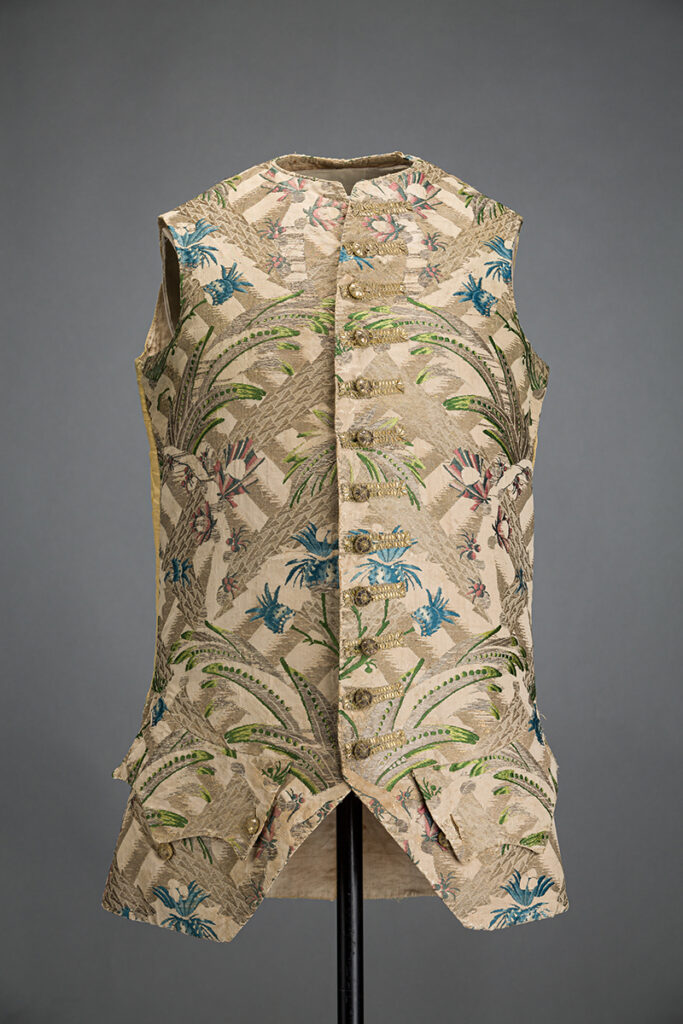
Progressively, the development of enlightened ideas and partial return to the ideals of the classical world materialized in aesthetic changes with respect to Rococo taste. The textiles advanced towards simplicity, rationally ordering their plant decorations, these were schematic or detailed, and the floral motifs of the tissues were reduced, giving way to geometric elements and embroidered branches.
Its own section revives how, since the seventeenth century, the Indianstextiles from India and the Middle East, spread in Europe through the Mediterranean. They soon melted with the western taste and be imitated in our continent.
The culmination of the sample comes from the hand of the genre of the gallant party, which alludes to the social enjoyment of the countryside in the Rococó era. In these representations the classic myth of Arcadia is collected: Bucolic landscapes in which the courtesan and the pastoral. In the last third of the century, the poetic association between the human being and nature remained thanks to the new illustrated philosophical ideas, embodied by Jean – Jacques Rousseau, who defended the alleged intrinsic goodness of man through the myth of the myth of the Good savage and theorized the field as a space of fullness.
“Dressing a garden”
San Telmo Museoa
Zuloaga Square, 1
San Sebastián
From June 7 to September 28, 2025