Huesca,
The new exhibition that houses the Exhibition Hall of the Provincial Council of Huesca, after exhibiting artistic projects by Javier Sáez Castán and Adela Moreno, combines creation and research.
Iñaki Bergera, Professor of Architectural Projects at the University of Zaragoza and also a photographer, curator and researcher, student of contemporary Spanish architecture and its links with landscape and photography, displays here until May “Line P. The bunkers of the Pyrenees”, the fruits of his investigations into the military barrier that the Franco authorities planned and partially built at the end of the Civil War, with the aim of shielding that mountain range Pyrenees against possible incursions by foreign troops.
In 1944, construction began on the mountain of 5,000 settlements, half of those planned, which were built with cement and iron and which were divided into sectors, resistance nuclei, support points, elements and sub-elements, according to the orchestrated classification. Its distribution, taking into account the orography, was designed to guarantee that the firing range of the different types of weapons was covered.
The works were completed in 1956, although as we said they were unfinished compared to the initial projections, and these constructions were shrouded in a certain secrecy until they were completely abandoned in the seventies, without having been used. It was an anachronistic project practically since it began, but this does not detract from its heritage value, and Bergera proposes us to reflect on it, after examining abundant documentation.
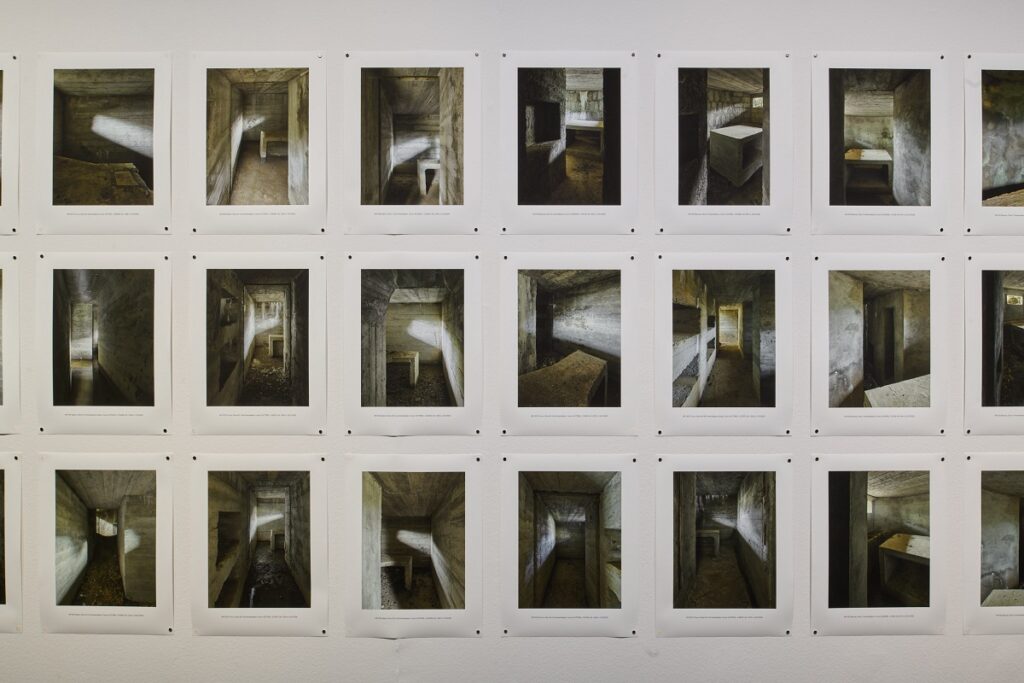
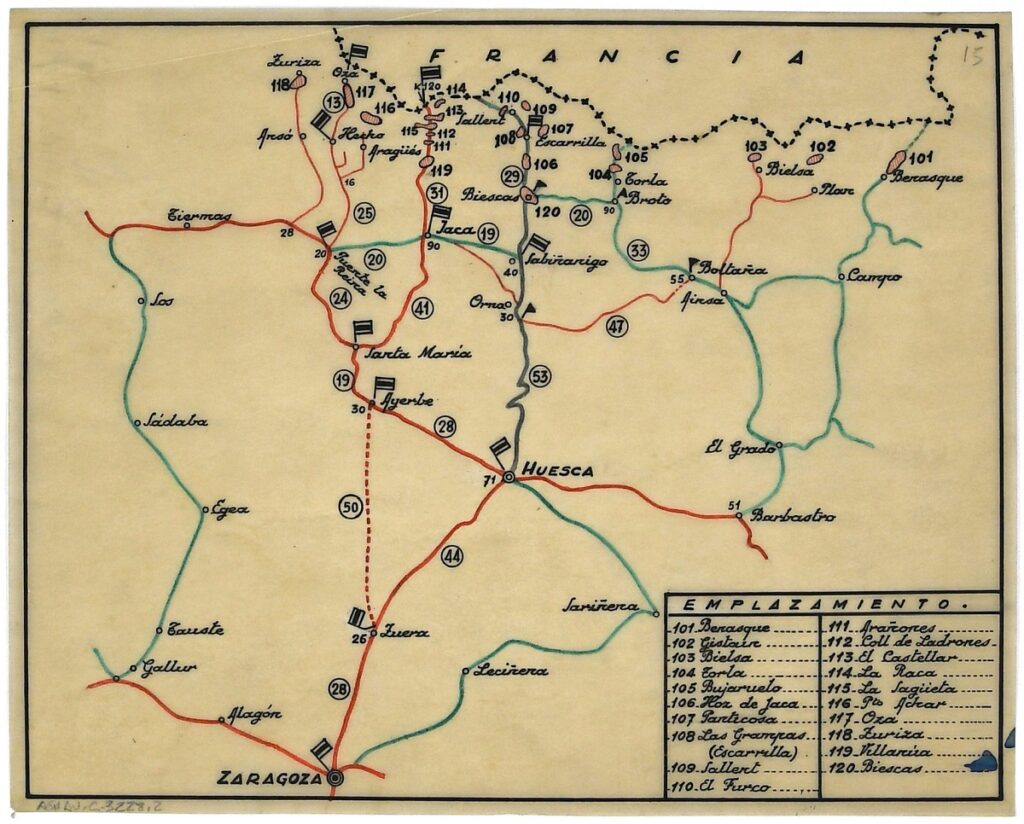
Given the breadth of that call P linethe researcher has decided to focus on one of the sectors of the province of Huesca: number 23, located in the Alto Gállego region, and has taken it as a case study. Using original documents from the General Military Archive of Ávila, with previous research by JM Clúa Méndez and with his own records, he has made an effort to analyze the typological nature of these small fortifications, their landscape implementation, their constructive materiality, their spatial condition determined by light and their form, indebted to their functionality.
Given its proximity to France, this sector 23 was the most important of all, along with the Aragón valley. Half a dozen resistance centers were planned in it (El Furco, Sallent, Las Grampas, Panticosa, Hoz de Jaca and Biescas); Each of them, in turn, was structured into support points and elements of resistance, defensive settlements against each other. Bergera has geolocated and photographed those that survive, at a very high altitude, taking hundreds of exterior, interior and aerial images.
In the documentation of the time, these works were called fortified settlements either casematesterms that in our language would be equivalent to bunker. The most numerous among them were those intended to house and use automatic weapons, that is, machine gun and machine gun, single or double; others were designed for the storage and use of artillery, such as open-air settlements, observatories, command posts, observatories, command posts or personnel and food shelters.
Bergera has studied the architectural peculiarities of these variants, linked, as we said, to their use and location. The standardized design had to be adapted to multiple conditions.
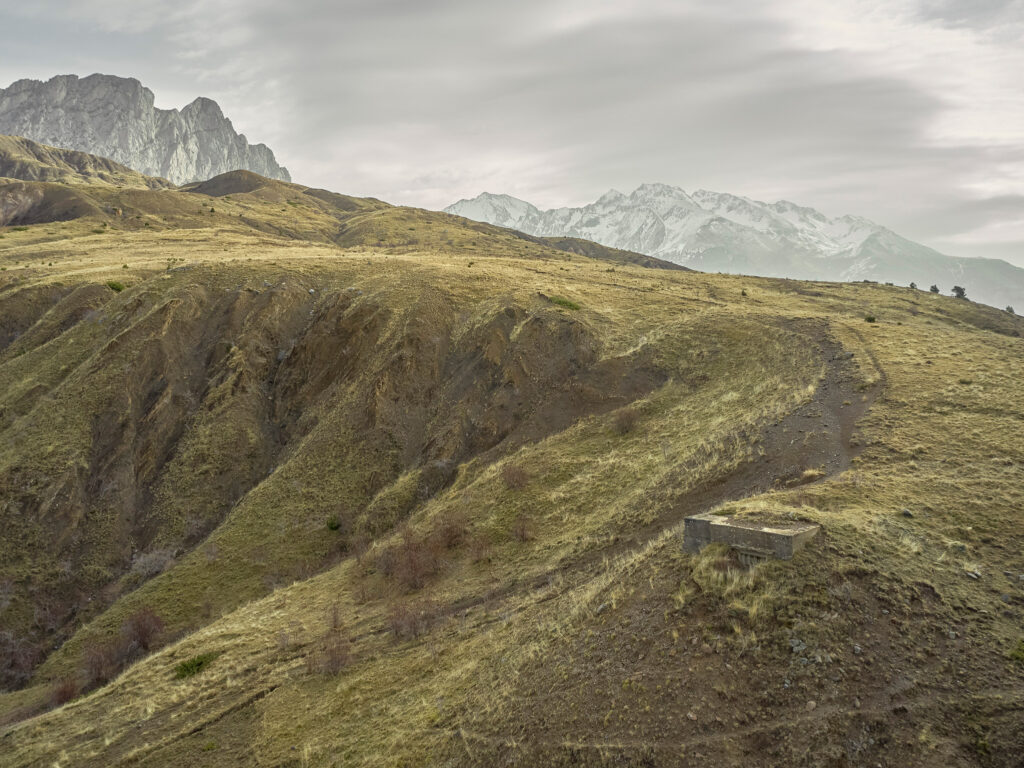
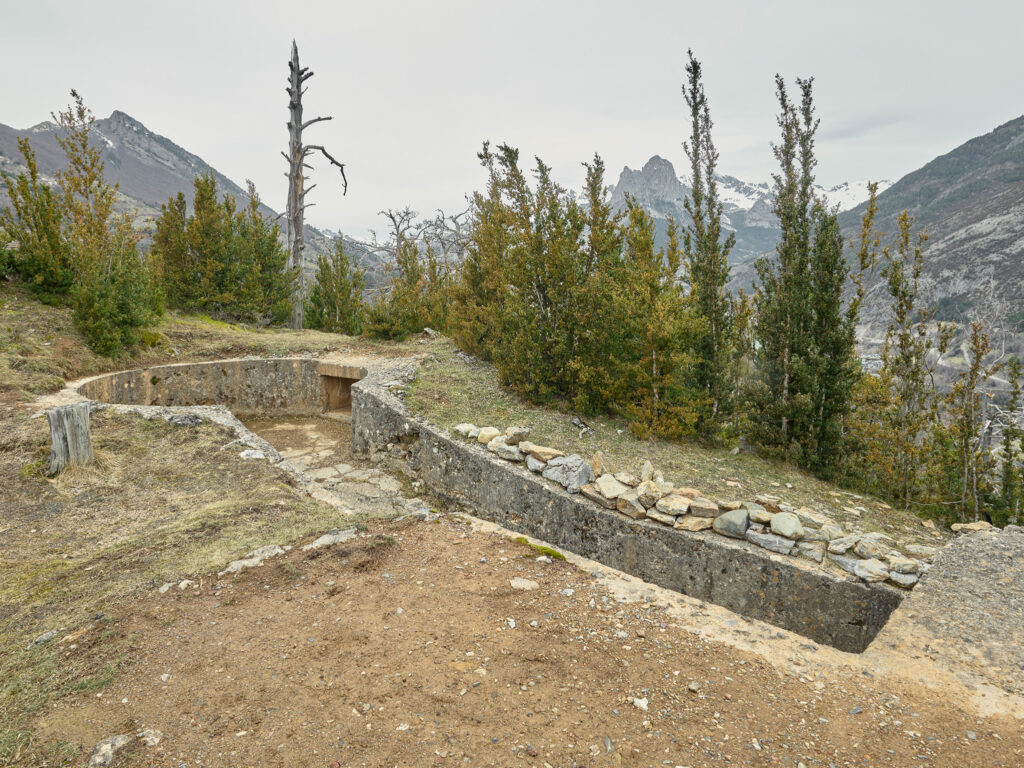
Finding them on the ground, for the layman, is not entirely easy: they used to remain camouflaged in the ground, buried; Bergera talks about territorial acupuncture. Such is its fusion, decades later, with the Pyrenean orography that an unprejudiced eye could draw links with certain land art projects.
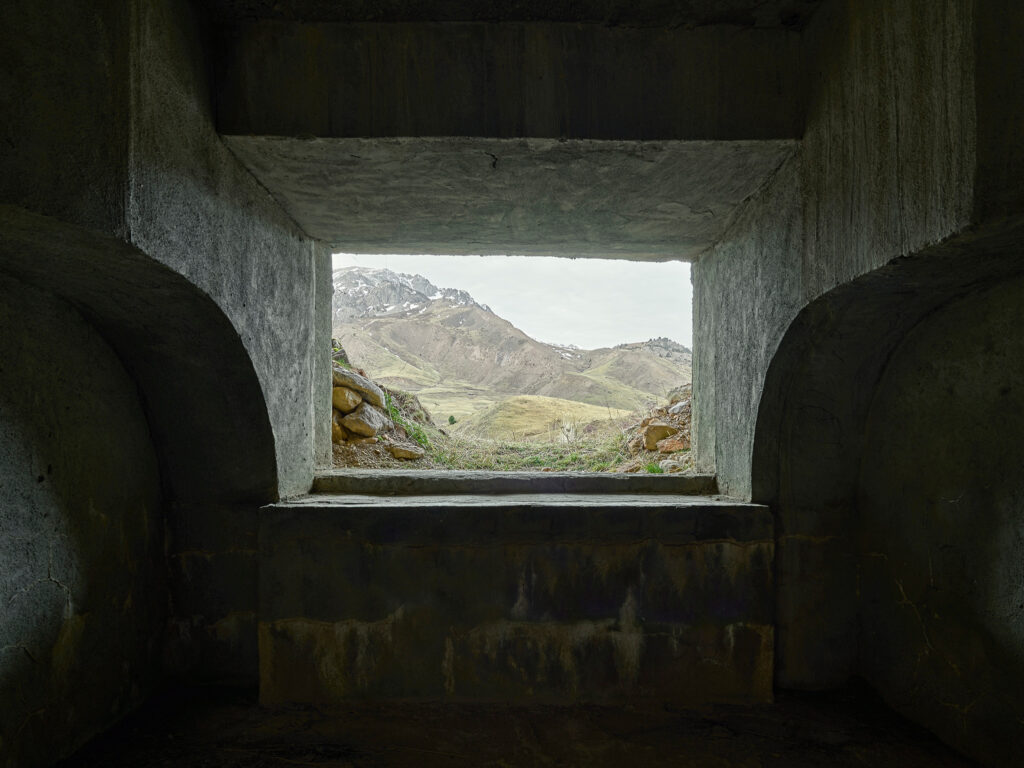
On the outside, they usually appear as small black holes, intended for discreet observation, framed by concrete edges that were to prevent the projectiles from bouncing inward. Basically, they were machines from which to look safely, dark chambers that did not have doors, even though they were originally planned. On the outside, its entrance takes the form of a crack or hole – there are mines, burrows or tombs that can be accessed anyway. Here you don’t enter, you penetrate, going from light to darkness; In the opposite sense, it escapes from night to day, but perhaps also, intentionally, to danger.
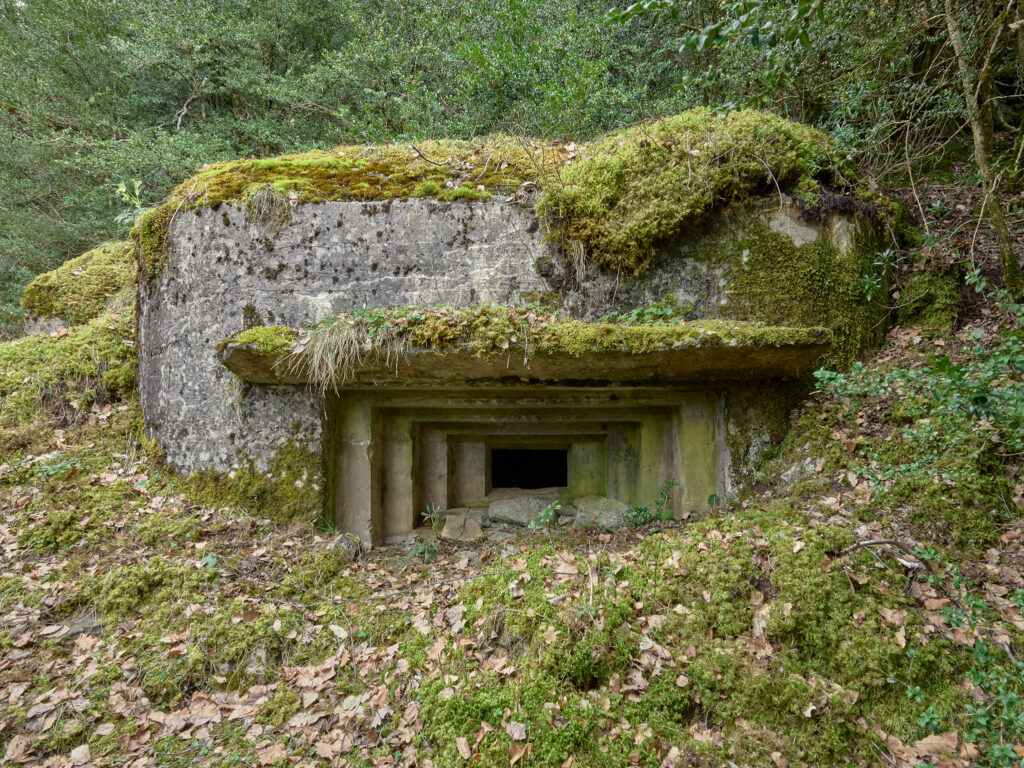
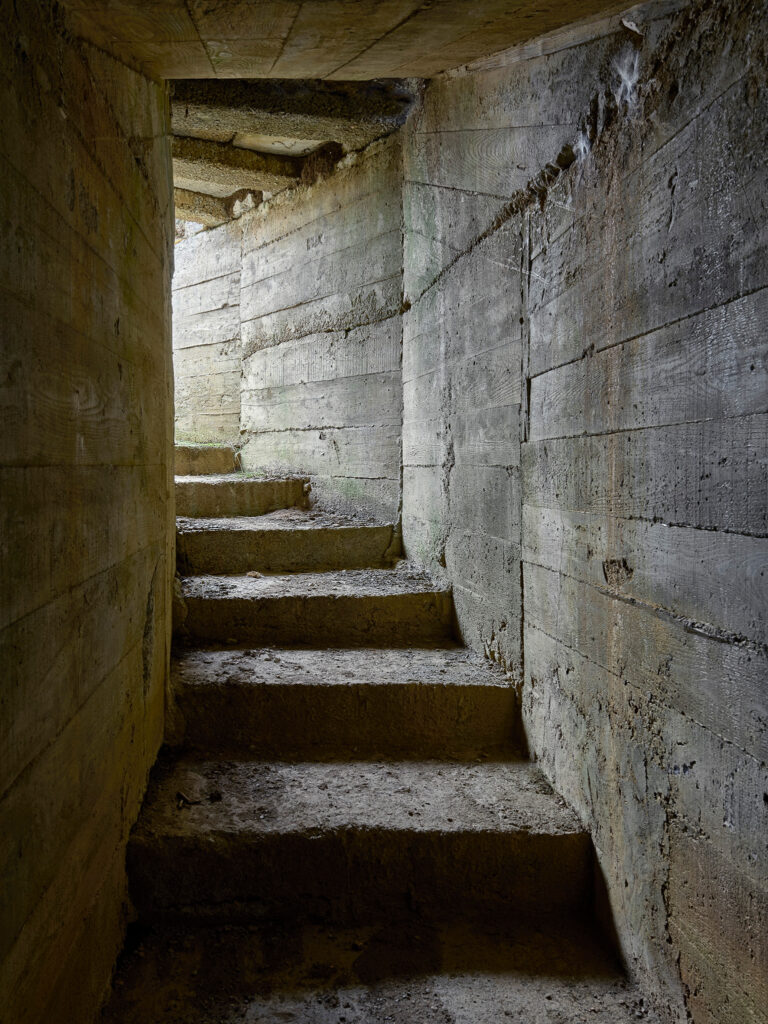
At this point we must talk about the shooting range, the reason for each settlement and the reason for its location. Each settlement has meaning because of what is seen from it, the part of the world that is dominated from there, the scenery to be scrutinized.
To see what spaces they occupy in relation to the extent of the mountains, Bergera used drones. In the images they took, the concretes appear in the grass almost like isolated tombstones, or like especially abstract suprematist squares from above. Inside, space is minimal; the height, just enough to move without slouching; and the humidity has penetrated the cement.
No shots were fired from the loopholes of this sector, but today they continue to frame landscapes, delimiting them for those who enter them, marking possible perspectives from which to understand the most grateful places.
“Line P. The bunkers of the Pyrenees. Iñaki Bergera”
EXHIBITION ROOM OF THE DIPUTATION OF HUESCA
C/ Porches de Galicia, 4
Huesca
From March 6 to May 10, 2026