France. The best known cases of stolen cultural property are the so-called “MNR” works, or “National Museum Recovery Property”: these are pieces recovered in Germany after 1945, undoubtedly stolen, and entrusted to museums. But French museums have tens of thousands of cultural goods acquired in questionable conditions, beyond the MNR. Human remains, objects acquired in former colonies and those resulting from illicit trafficking are also concerned, and the question of provenance is directly linked to the debate on restitution, initiated after Emmanuel Macron’s Ouagadougou speech (2017). Two laws passed in 2023 have since clarified the restitution framework for property stolen between 1933 and 1945 and for human remains, and parliamentarians are currently debating a law to facilitate restitution of property acquired through illicit appropriation (mainly in a colonial context). The subject is now essential for museums, and the Ministry of Culture has organized working groups and missions to help them. This research potentially concerns more than 125 million objects kept in museums, according to the ministry.
A center of expertise serving museums
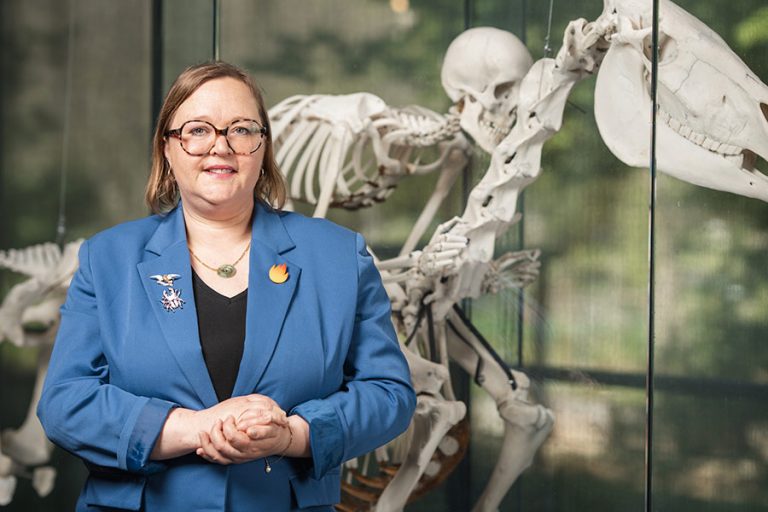
Two missions exist at the ministry: one dedicated to property stolen under Nazism – Mission for the search and restitution of looted cultural property (M2RS) (between 1933 and 1945), and the other, more recent, dedicated to human remains, property acquired in a colonial context and those resulting from illicit trafficking (“Provenance” Mission, in foreshadowing). If the two missions collaborate with museums in a similar way, their history is different: the M2RS was created in 2019 to “ pilot and implement the public policy for repairing the spoliation of cultural property, to ensure and encourage the search for provenance and facilitate restitution”, explains David Zivie who runs it. This mission, made up of six permanent agents, has a “additional research” budget of 220,000 euros per year (for individual cases) as well as 200,000 for territorial museums (jointly with the French Museum Service). It works in collaboration with the Commission for the restitution of property and compensation for victims of anti-Semitic spoliations (CIVS) and therefore manages individual files. The CIVS delegates research concerning cultural property to the M2RS, and returns looted property or compensates victims of recognized spoliation, depending on the case.
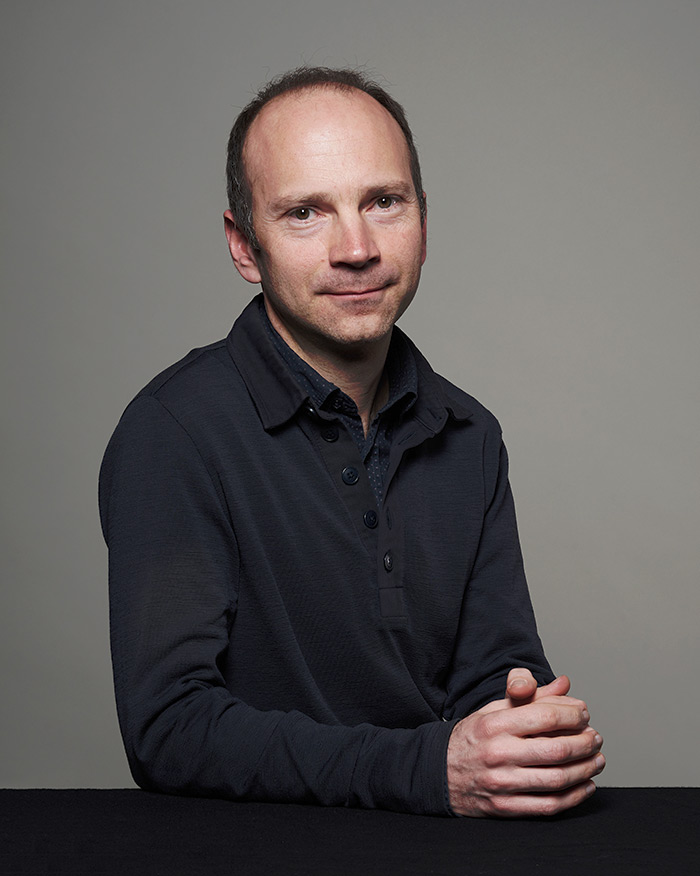
The “Provenance” Mission, led by heritage curator, Catherine Chevillot, dates from 2024 and has a broader field of expertise and a budget of 450,000 euros per year (increasing in 2025 and 2026). Both missions assist museums in their provenance research, but the “Provenance” Mission “is not responsible for this research but provides support”as Catherine Chevillot explains. The M2RS also has the particularity of taking care of books, and collaborates with public libraries where nearly “150,000 looted works entered after the war.” If MNRs are well known to curators and art historians, the search for provenance for other cultural goods remains recent, and often occurs in museums “on the occasion of an acquisition or donation”according to Catherine Chevillot and David Zivie, who note “an awareness of conservatives on the subject”. It is, in fact, rare for a museum to undertake provenance research in all of its collections.
Finding the right starting point
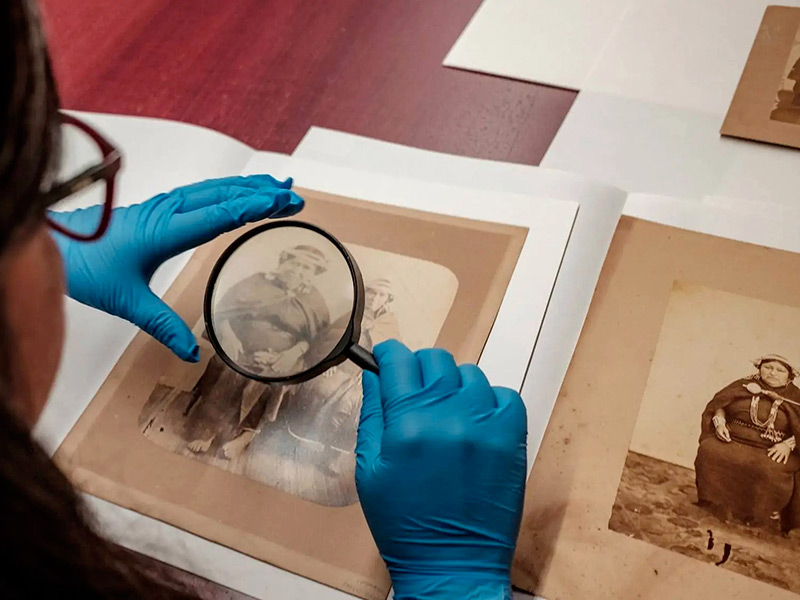
Where to start a provenance search? Should we proceed by fund, by date of acquisition? Which archives are most relevant? These questions worry some heritage curators faced with a search for provenance, despite their training (read page 21). The two missions have therefore set up training and intervene at the request of museums and curators. Since 2024, they have also been carrying out pilot programs in certain regions: Auvergne-Rhône-Alpes and Nouvelle-Aquitaine have thus initiated, since 2025, provenance research processes in their territorial museums, accompanied by long-term training. In addition to the training, the two structures have also developed a methodology presented on the professional blog Hypotheses “RESsources PROVenances MUSées”. Curators and art historians will find lists of resources for provenance research (150 databases and archives), practical advice for getting started (is it an acquisition? research on a collection of collections? What laws apply?) and specific information (the main players in the art market at certain periods). This methodology proves useful for goods acquired in a colonial context: these goods have the particularity of having often been bequeathed to museums by “career soldiers or ethnologists”, indicates Catherine Chevillot. In this case, the military archives of the Defense Service are an essential source, as well as those of the Ministry of Foreign Affairs for example. Art market archives can also be used when works have been sold several times.
With these tools, museums must be able to carry out provenance research on their collections, despite a context of budgetary restrictions. Few establishments have the means to recruit a specialized curator, apart from a few large national museums (Louvre, Quai Branly, Musée de l’Armée, Cité de la Musique, Orsay among others). Other museums train an internal curator, or use external researchers, such as the Rouen Normandy Métropole museums since 2022. “ This search for provenance is part of the large donations and collectors’ funds at the Museum of Fine Arts. explains Robert Blaizeau, director of the Métropole museums. The program was then extended to all the collections of the Beauvoisine center and made it possible to “process all MNRs from the collections, ultimately resulting in a work identified as stolen”, underlines Robert Blaizeau. In Europe, museums can use external researchers or hire specialist curators from. At the Victoria and Albert Museum in London, curator Alexandra Watson-Jones has been responsible for this research since January 2025 (the position was created in 2018). The priority remains“the Nazi period”even if the search for provenance “also includes colonial collections and antiquities trafficking”. In addition to acquisitions, the V&A is working on the question of provenance “ proactively on collections and temporary exhibitions »according to the curator. The United Kingdom, however, has no equivalent of the two French ministerial missions. And there is no “Centralized provenance search service”according to David Zivie who observes that the countries closest to the French model are the Netherlands and Austria, and to a lesser extent, Germany, Switzerland and the United Kingdom. In Germany, the German Lost Art Foundation is a central actor. The agency is subsidized and has a comfortable budget for research on the Nazi period (several million euros per year).
In France, once the provenance research is completed, the museum collections studied are labeled according to the “degree of risk” of spoliation or looting. Each museum then communicates the results of the research, most often with a rewritten cartel and information in its collections database. Some museums organize “ guided tours on the MNR » and “ceremonies during the restitution of a looted work”reports David Zivie. Provenance research therefore requires an investment in resources and time on the part of museums, with a specific methodology. If this question has gained momentum with the debate on restitutions, Catherine Chevillot recalls that “any search for provenance is not intended to result in restitution”.