Madrid and Barcelona,
The MAPFRE Foundation has announced this week the exhibitions that it will offer us, in its rooms in Madrid and Barcelona, in 2026; there will be thirteen.
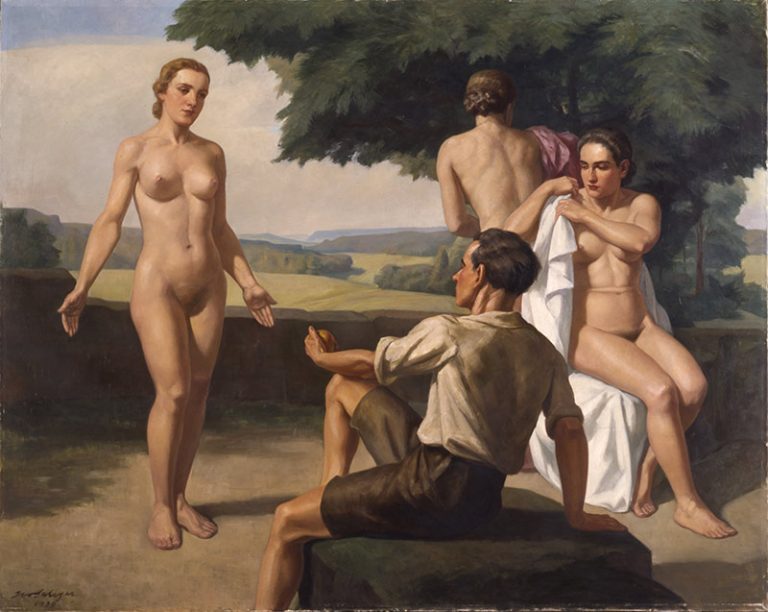
At its headquarters in Recoletos (Madrid), as usual, the season will begin with a painting exhibition, focused on the art of the late 19th and early 20th centuries, and with another dedicated to the American photographer Helen Levitt. The pictorial exhibition will be “Anders Zorn. Travel the world, remember the land”; Zorn was perhaps the most representative Swedish artist around 1900, thanks to his technical virtuosity, and this retrospective will review his career from his first watercolors, his training trips and his settlement in Paris – where he participated in the triumph of naturalist painting – until his return to Sweden in 1896 and his travels through America. We will also see significant works from his journey through Spain: made in Seville, Cádiz and Granada, or linked to his friendship with Joaquín Sorolla or Ramón Casas. The exhibition will be organized in collaboration with the Hamburger Kunsthalle, the Zornmuseet de Mora and the Nationalmuseum in Stockholm.
In parallel, this space will host another anthology by Helen Levitt, who for six decades photographed urban life in New York, her favorite being children while they played. She was a master in sensitively capturing gestures, movements and emotions. This monograph, which can currently be seen in Barcelona, is the first organized from this author’s archives, only recently accessible to researchers. His Mexican works and those he carried out in color since the fifties will be part of the tour.
Starting in June, also in Madrid, you can admire the photographs of Richard Avedon and Alejandro Cartagena. Those of the New Yorker will not correspond to his most celebrated facet, fashion, but to the most unknown aspect of his legacy: he portrayed miners, cowboys, fairgrounds or vendors, alone or in groups, in front of white backgrounds, in order to highlight their expressions and psychology. In this set he offered an image of the American West very different from the usual one. “Richard Avedon – In the American West” is organized by the Fondation Henri Cartier-Bresson in collaboration with Fundación MAPFRE, with works on loan from The Richard Avedon Foundation.
As for the Dominican, resident in Mexico, Alejandro Cartagena, the Foundation will review two more decades of his career, in which he has wanted to question the notion of decisive moment by Cartier-Bresson, opting for seriality and the multiplicity of perspectives to address the complex realities of Mexico. Series will be exhibited such as Suburbia, Mexican, Carpoolers and the border trilogy, emphasizing the author’s desire to highlight certain social and environmental phenomena, linked to identity, memory and the transformation of the landscape. In this case, the San Francisco Museum of Art co-produces.

Finally, the MAPFRE Foundation will host two exhibitions on women and Pre-Raphaelites and the relationship between avant-garde artists and authors with mental health problems.
“Pre-Raphaelism: female itineraries (1850-1914)” will delve into the response of women artists to the emergence of Pre-Raphaelism in Great Britain, very distant from the academicism of that time. The exhibition will examine how female painters in Victorian society approached or adopted features of that movement, through oil paintings, watercolors, drawings and engravings that will be exhibited alongside photographs, textiles, embroidery, enamels and stained glass.
For its part, “The other shore of the avant-garde” will analyze the links between the work made by creators who were psychiatric patients and avant-garde art. Specifically, this proposal focuses on the collection of Hans Prinzhorn, a psychiatrist, art historian, poet and cartoonist who worked temporarily at the psychiatric hospital of the University of Heidelberg, where he collected creations of some of his patients and cataloged them in the book Expressions of madness.
These works will be related to works by artists such as Paul Klee, Kirchner, Schwitters or Max Ernst. The appropriation of this legacy by Nazism in its campaign against “degenerate art” will be studied, as well as the later revaluation of these pieces in the postwar period, especially through figures such as Jean Dubuffet, founder of Art Brut.

In Barcelona the year will begin with the exhibitions “Walker Evans. Now and Then” and “Pérez Siquier. MAPFRE Foundation Collections”. The first will bring together photographs and projects representative of Evans’ entire career, from his self-portraits of the 1920s to the Polaroids of the 1970s, along with books and publications that prove his ability to observe. In addition to documenting his country’s society, he questioned the nature of photography and the perception of reality.
For its part, the exhibition dedicated to Pérez Siquier will feature images from his best-known series, such as La Chanca, Informalisms, The beach, Encounters, Traps for the unwary and La Briseña. The Foundation thus resumes the exhibition they offered to this author in 2020, which closed very soon due to the pandemic.

In summer Minor White and Joaquín Tusquets from Cabirol will arrive at KBr. The former was a very relevant figure in 20th century American photography, for the innovations he introduced and for his teaching work at institutions such as the California School of Fine Arts, the George Eastman House and MIT. In addition, he was co-founder, editor and director of the magazine Aperturelargely supporting the photographic debate in the middle of the last century. It covered various genres (nature, portrait and street photography), from introspection and spirituality. This exhibition will also be seen in Madrid.
Regarding the exhibition “Joaquín Tusquets de Cabirol. The eloquent way”, it is part of the MAPFRE Foundation program for the conservation and dissemination of Catalan photographic archives. The legacy of an amateur author who deserves to be known, published and exhibited after decades of oblivion has been recovered; This archive is made up of approximately one thousand prints and four thousand negatives made between 1940 and 1960.
The KBr programming will end next year with an exhibition by the Dutch photographer Dana Lixenberg and a new edition of KBr FLAMA, a program aimed at promoting the activity of new photographers. From the first we will see works carried out in the United States from 1993 to the present, dedicated to cultural icons and marginalized communities.