
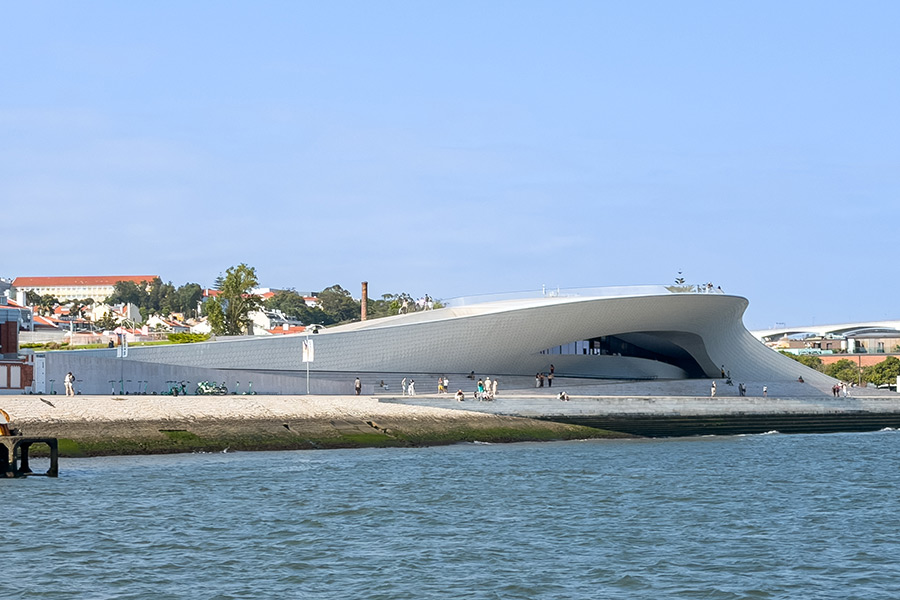
Since August 1, 2024, residents of Portugal have had 52 annual days to visit certain museums, monuments and national palaces for free. A cultural policy contested by the European Commission which, in December 2024, opened an infringement procedure against the Portuguese State, considering the system contrary to the freedom to provide services. The current Minister of Culture, Youth and Sports Margarida Balseiro Lopes has committed to revising it no later than June 27, 2027.
The European Commission intervened on the grounds that the residence criterion, a condition of the Portuguese free policy, contravenes Article 56 of the Treaty on the Functioning of the European Union (TFEU) which prohibits restrictions on the free provision of services between Member States. This principle protects service providers as well as recipients who are EU nationals, and therefore intra-European tourists. The European Commission considers that limiting access to the system only to residents of Portugal could constitute discrimination against non-resident Europeans.
Launched by the first government of Luís Montenegro, the “Acesso 52” program was established in August 2024 by former Minister of Culture Dalila Rodrigues. It builds on a pre-existing policy, put in place in September 2023 by the socialist government of Antonio Costa, which established free access to certain national cultural establishments every Sunday and public holidays for residents of Portugal.
Since August 2024, residents, regardless of their nationality, have had 52 free days per year in 37 state museums, monuments and palaces, which can be used at any time. Activating the daily free pass can give access to several establishments for a single credit spent. This includes, among others, the National Museum of Contemporary Art in Lisbon, the Belém Tower and the Soares dos Reis National Museum in Porto.
The device has met its audience. According to the public establishment Museus e Monumentos de Portugal (MMP), some 450,275 entries were recorded under the “Acesso 52” program during the last five months of 2024. In 2025, the first full year of application of the measure, their number reached 892,637, or more than 18% of the 4.84 million entries recorded in establishments managed by the public operator.
If the procedure initiated by the European Commission is limited, for the moment, to a simple formal notice, measures comparable to “Acceso 52” have already led to the condemnation of EU States. In 1994, the Court of Justice of the European Union (CJEU) ruled that free access to national museums reserved for Spaniards, residents and young people under 21 was illegal, because it excluded older European tourists. A similar sanction was taken in 2003 against Italy, which had implemented preferential rates reserved for nationals and senior local residents in cultural establishments of local authorities. This case law could weigh in the argument against the Portuguese State if the case were brought to the CJEU. For now, Portugal has around 7 months to rectify the situation.
In France, the free policy in cultural establishments attached to the Ministry of Culture does not distinguish residents in France from nationals of the European Economic Area (EEA). The eligibility criteria depend essentially on age, and apply to 18-25 year olds (for those under 18, free admission does not admit any nationality criteria, and also applies to non-Europeans). Since January 14, 2026, the Louvre has applied a rate of 32 euros, compared to 22 euros for nationals or residents of the European Economic Area (EEA). Unlike the Portuguese system, this price differentiation does not distinguish visitors according to their Member State of residence.