Pamplona,
Florencia Baliña, Andrés Ruiz, Aroa Urteaga and Andrea Vargas are the commissioners of the exhibition that has just opened the University Museum of Navarra; They have been students of the seventh edition of the Master in Commissioner Studies of this center and its TFM project has been selected to materialize in a sample open to the public, with the direction of two of its teachers: Gabriel Pérez-Barreiro, in turn director of the MUN, and María Aguilera.
His title is “Dear spectator, what do you look?” And its axis is, precisely, the public destined to complete with their gaze the work of art: Baliña, Ruiz, Urteaga and Vargas have departed from the premise – argued by Umberto Eco – that every artist has in his mind some kind of contemplator when he creates, consciously or not, and develops certain strategies to guide him; They have divided them, to those spectators, in four modalities according to their ways of looking, without claim that they are exclusive or exclusive: the detectivewho wants to solve an enigma; he sea urchinattentive to the sensory dimension of what he sees; he peephole either voyeur; and the projectorhe who wants to find on the works projections of his emotions or fantasies.
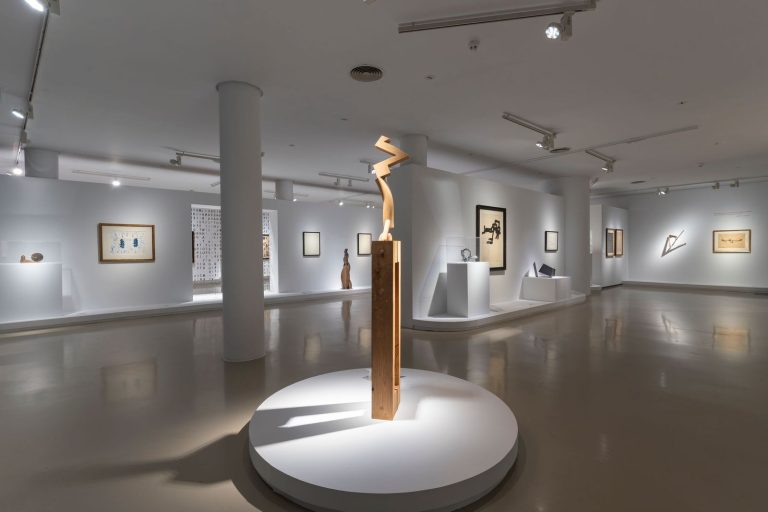
In the funds of the Arc Foundation collection, which houses the Dos de Mayo Art de Móstoles, these students have selected thirty -five pieces based on those sensations that can raise them to who contemplates them, whether emotional, bodily or intellectual; of the type of reception they demand. The ultimate purpose of this assembly, in addition to proposing to visitors an accessible and affable experience in the face of contemporary art, is to invite them to reflect, from a certain humor and a playful tone, about their own attitudes in the face of current creation.
Of course, the look referred to in the title of this proposal does not only refer to the sense of sight, but also and above all to the thoughts and actions that this vision triggers: the selection, comparisons and interpretations.
Among the work of the arc funds chosen for this assembly, two have been especially decisive for the articulation of the route: the installation Small private worlds (2001), by Gustavo Romano, and the video Berlin Zoo Part 2 (2003), by Filipa César. The first, because it consists of a microscope in which the image taken in real time is reproduced by a surveillance chamber installed on the ceiling, so that, when appearing to the device, the public discovers itself being an observer; The second, because it captures faces that observe something in a detained form, without we can know exactly what it is. For practical purposes, your attention, then, is not put in the observed, but in those who look at it and their ways of seeing.
In the chapter dedicated to the spectator detectivehe who contemplates a work of art as a mystery to solve, and intends to unravel it beyond its mere appearance, we will discover pieces that can demand particular attention from us, which perhaps hide clues.
Say Seven (2000), by Arturo Herrera, might seem in a fast look an abstraction elaborated with felt, but contains historical allusions towards those who were forced to emigrate from Europe to the United States in the scoring stage and ended up working in Disney; while Red Palotes – Airmail Paint Nº 39 (1985-2006), by Eugenio Dittborn, one of his Aerposal paintingsrefer to colonialism and traffic of people from drawings, hand -written texts, cuts and photoserigraphies linked to an Andean mummy.
Incidental music (1998), by Jorge Macchi, consists of three large -scale scores; If we get close, we will see that their pentagrams contain london news fragments related to accidents and murders among common people. It also appears what is not Left Page, Right Pageby Massimo Bartolini: two blank sheets of paper that are actually alabaster, fulfilling a desire of the writer Daniil Kharms, that a poetry written on paper and thrown against a window should be able to break it.
They complete this section Dead Letters B.21.91 (1991), from Denmark, and Rasen (1998), by Thomas Demand. The lines of the first, an abstract piece in the distance, are not such, but strips of pressed and glued paper; The second, as is known, builds everyday paper and cardboard that, when photographed, can become real to our gaze.
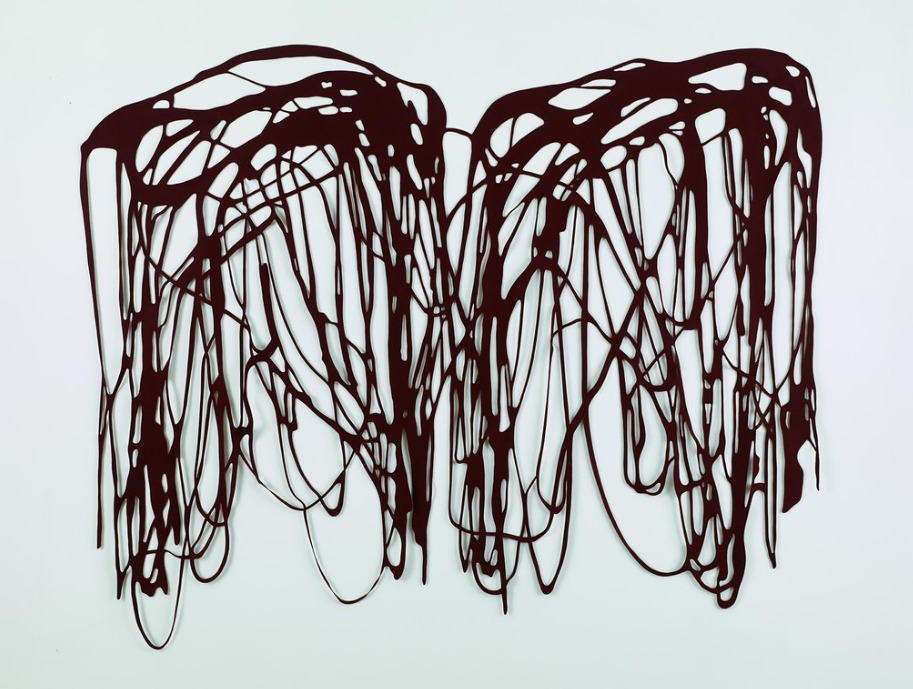
To the Hired hewls They are given In Praise of listening 5 (2008), from Amalia Pica, a monumental audigop that claims the importance of listening and that may surprise us in the field of physical; Tangles tangles tanglespiece of Eva Fàbregas accompanied by audio and destined, like all its inflatable sculptures, to generate experiences that imply almost all our senses; either Institution Pause (2018), by Eva Kotetková, a wall from which mysterious forms emerge, as a fantastic prosthesis.
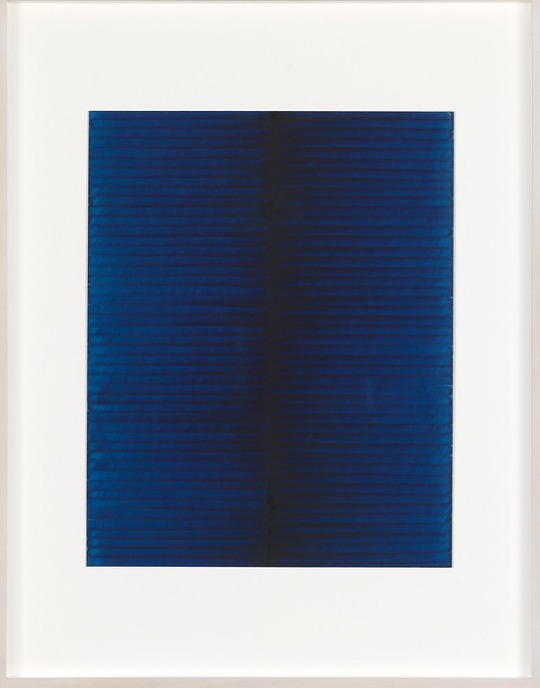
We will see too Helmets VIII (2020), one of the sculptures of Crespo characterized by its anthropomorphic forms, or Radical Writings, Exercitium Nr.4 Vom 19-6-91 (1991), by Irma Blank, a theoretical blue monochromy elaborated with brushstrokes that lasted what the artist’s sighs.
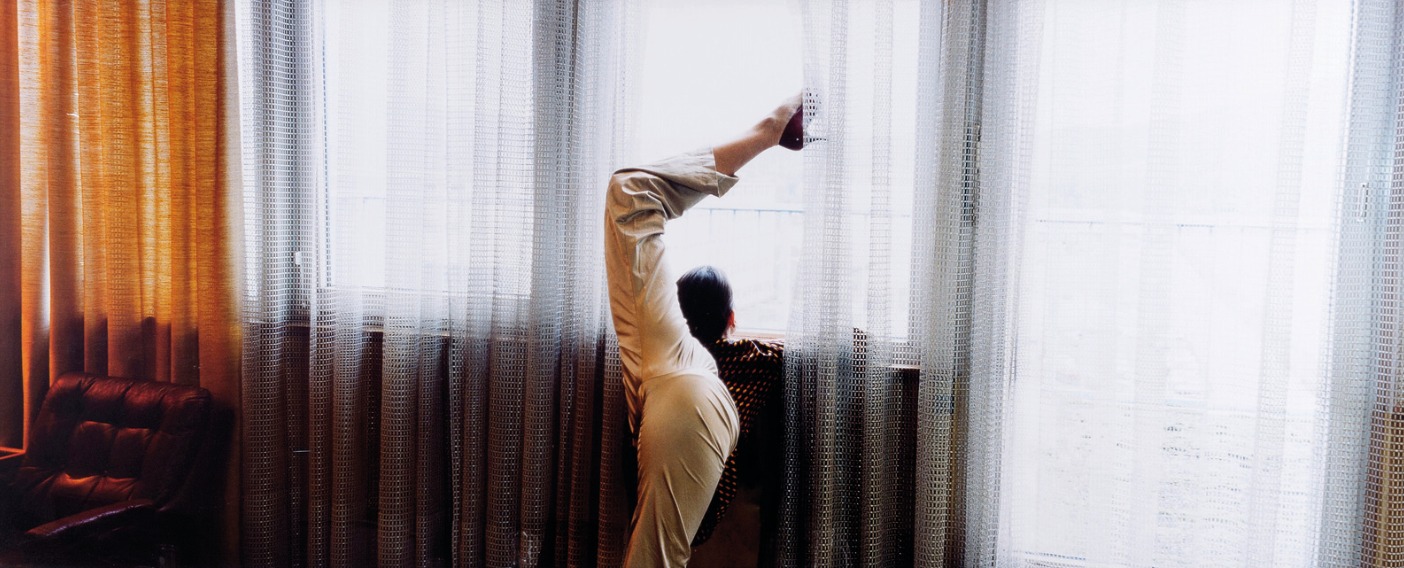
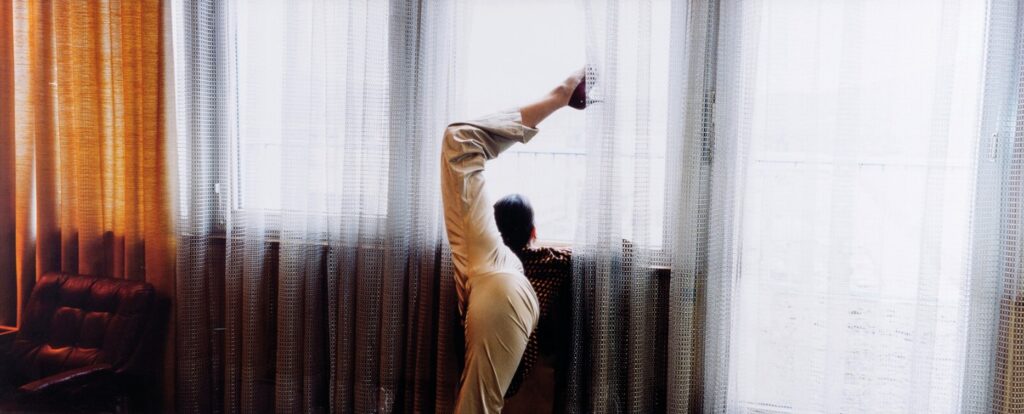
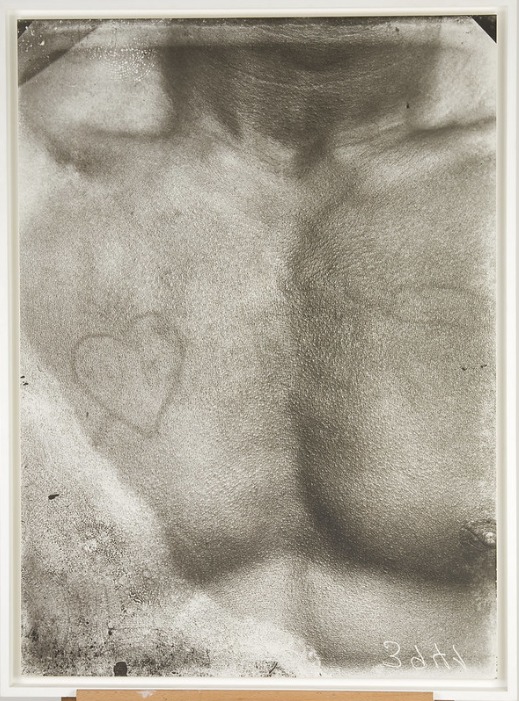
At Miravasthe poachers of intimate places where they would not have to look, the photograph is directed Contortionists (Monika) (2003), by Markus Schinwald, in which they can spy to whom, in turn, spy; Lonely Moon (2017), from Santiago de Paoli, a semblance of the female body enlightened by the moon; Body Sign Action (1970), by Valie Export, an exhibition of own privacy; SEM Title (Tatuagem 5) (1997), from Rosângela Rennó, a fragment of body-another; SAFE ZONES N ° 7 (2001), by Jonas Dahlberg, which makes the viewer a fison and spied potential in a stay as private as the bathroom; either The Window (1997), by Bülent Sangar, photographic assembly dedicated to the preparations for a trip we do not know.
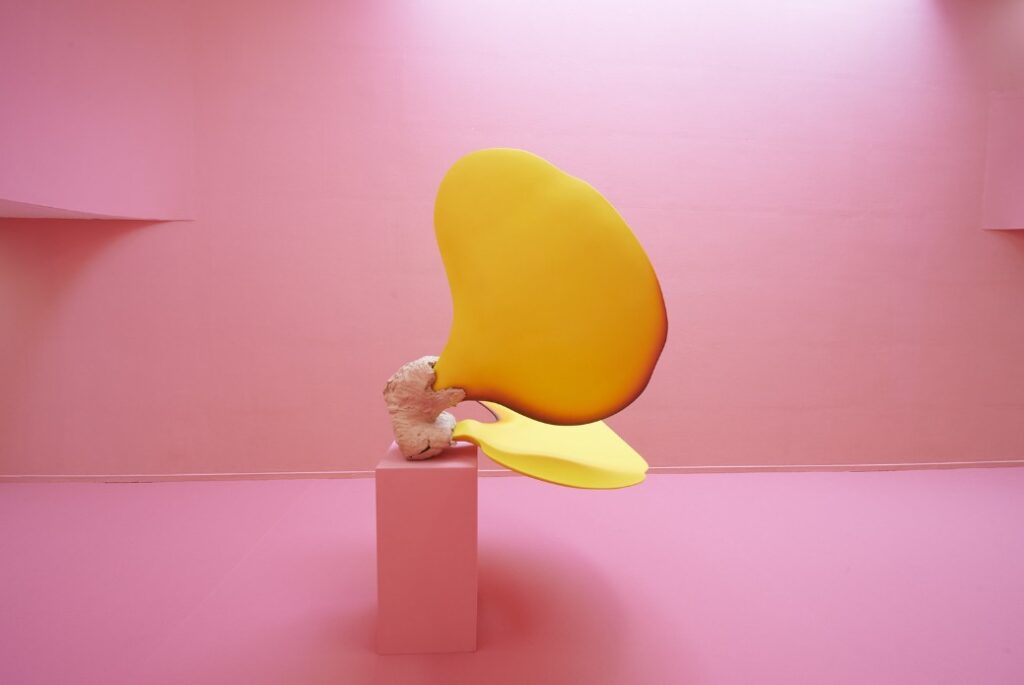
Finally, the spectator projectorwhich deposits those works that contemplate part of yourself, you can do that exercise with the project Scales (2000), by Rubens Mano, a chrome sculpture that reflects who approaches it; Jr Plaza file (2005), by Iñaki Bonillas, with extended reverse from several photographs of his grandfather; Self-Portrait Trending to Be Maria Thereza Alves (2006) and Self-Portrait to Be Maria Thereza Alves As Terminator 2 (2007), by Jimmie Durham, who are reconfigurations of his identity from fiction; Tunnel Boring Machine (2021), by Teresa Solar Abboud, a sculptural series inspired by heavy machinery, but opaque enough to be equipped with content; and Entrelacmento IIof Leda Catunda, another piece of ambiguous materiality and very free interpretation.
All these ways of looking are legitimate, even complementary, and of course not unique; This is underlined by the texts that accompany this exhibition. And the originality of outlineing that classification and putting the viewer in the center will be a good reason to follow the steps to these commissioners.
Since the University of Navarra Museum this year meets its first decade, the entrance will be until December with the support of the City of Pamplona.
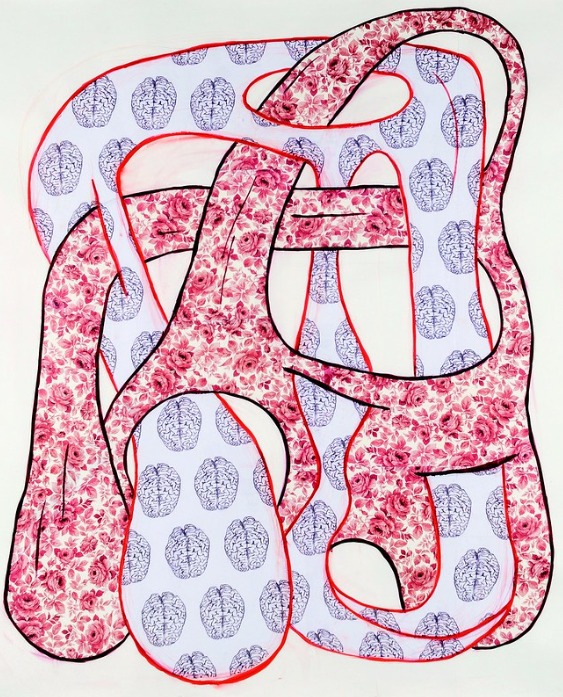
“Dear spectator, what do you look?”
University of Navarra Museum
University Campus, s/n
Pamplona
From September 9, 2025 to February 8, 2026