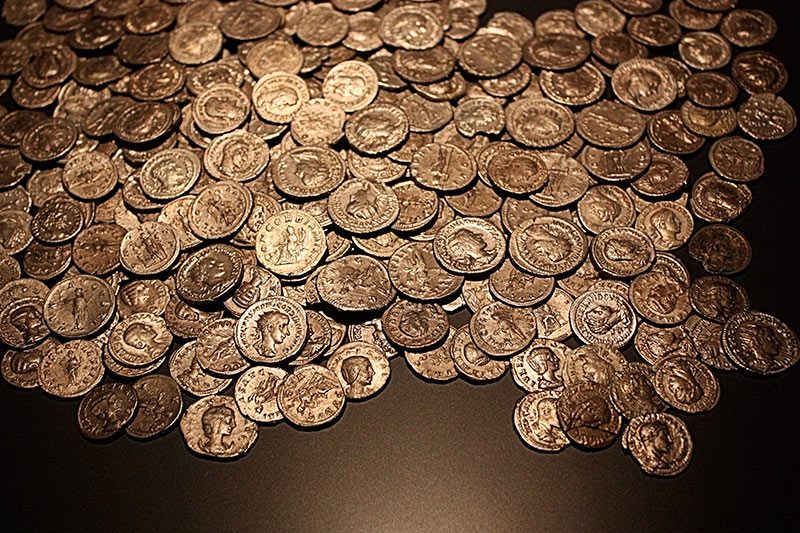
Paris. After the illicit trafficking in narcotics and weapons, that of archaeological cultural goods is the third worldwide! In order to preserve cultural heritage on national soil, article L. 111-2 of the heritage code provides that “Temporary or permanent export outside the customs territory of cultural goods, other than national treasures, which have a historical, artistic or archaeological interest and enter into one of the categories defined by decree in the Council of State, is subject to the obtaining of a certificate issued by the administrative authority”. Cultural goods are therefore those who enter one of the 15 categories which appear in Annex 1 of article R. 111-1 of the said code, like the “Archaeological objects, being over a hundred years old, including currencies directly from excavations, land and submarine discoveries or archaeological sites (…) whatever the value ”. To this heritage legislation, the Customs Code makes it possible to note a flagrant crime customs in the event of the detention of a cultural property without proof of origin, as recalled by a judgment of the Court of Cassation dated April 2, 2025.
In March 2015, a professional numismatist was controlled by customs aboard his vehicle while he was carrying old coins which he was unable to justify the origin. Photographs were then sent to an engineer of study to the Regional Directorate of Cultural Affairs (DRAC) of Île-de-France who considered that “All controlled objects (were) cultural goods within the meaning of the Customs Code ” and constituted “Archaeological objects” for which he was almost certain that they came “From finds to the metal detector ». Taken in flagrance, the numismatist was placed in customs deduction and prosecuted for the detention of cultural goods without proof of origin.
On January 10, 2024, the Dijon Court of Appeal canceled the customs retention measure because it could not be flagrated on the sole basis of the opinion of the study engineer (cancellation of the customs reservoir), and there could be no crime because the mere fact of holding old currency – without precision as to their value and their seniority – was insufficient to characterize the offense of cultural property without original (relaxed). The customs administration and the Attorney General appeared in the cassation.
By a judgment of April 2, 2025, the Court of Cassation censored the judgment of appeal on the grounds that“An opinion issued by a DRAC engineer, in view of photographs of coins having just been seized, qualifying these cultural goods within the meaning of the Customs Code, associated with the fact that the person carrying these parts cannot justify their origin, characterizes (…) the offense of detention of cultural goods without proof of origin in flagrance ».
What about the existence of an archaeological interest?
As laudable as it is to stem illegal exports, this solution is nonetheless subject to questioning about the qualification process of cultural property. Indeed, it is possible to question the absence of demonstration of the existence of an archaeological interest of the disputed parts. It is true that article 38 of the customs code mentions the “Cultural property and national treasures relating to articles L. 111-1 and L. 111-2 of the heritage code”the latter referring to cultural goods having “A historical, artistic or archaeological interest and entry(has)nt in one of the categories (of Annex 1) ”. A strict interpretation of the texts – the “and” is revealing – should have led the engineer to seek the existence of such an interest whose appreciation is however considerable in criminal matters because the line of defense of the defendants often consists in rejecting the archaeological nature of a property in order to evade the offense of illicit excavations. In the present case, it is certain that the documents are cultural goods within the meaning of Annex 1, but are they in the sense of article L. 111-2 of the heritage code? The doubt would be allowed even if the absence of such an interest did not spread the sanction for the absence of an export certificate (article L. 114-1 of the heritage code).
To tell the truth, the justification would reside for the Court of Cassation in the application of article 419 of the Customs Code according to which archaeological documents “Are deemed to have been imported as a smuggling, if not justified by origin, or presentation of one of the documents provided for by these same articles or if the documents presented are false, inaccurate, incomplete or not applicable”. However, the reference to this text questions since it only targets the importation of cultural goods and not export as was the case here. It is therefore possible to be wary because, by having all the regularity of customs detention weigh on the advice of a study engineer, would this document not be overvalued in its consequences, even risky in its hypothesis on the origin of the documents?
There is no doubt that the cultural administration will be pleased with a judgment which shows that no form of indulgence is possible in terms of trafficking in archaeological cultural goods. It is normal to indicate that the State has the right – and the duty – to act to prevent any illegal import or export when it is undoubtedly a cultural property subject to authorization, as was the case for a canvas of Georges Seurat (February 28, 2017), a draft of Philippe Pétain (April 20, 2017) or a book of hours of the Limburg brothers (March 15, 2022). Be that as it may, the formulation of the reported judgment demonstrates that it would be futile to discuss the legality of customs detention in matters of cultural goods in the face of reduced reasons for challenges as a sorrow. It remains to be seen whether the Bisontine judges responsible for re -establishing the case will mark their opposition to this conception.